2027 Evaluating an MPH Practicum in A Correctional Reentry Health Partnership

Co-Founder and Chief Data Scientist
A correctional reentry health partnership can give an MPH student meaningful work at the point where people leaving incarceration need connections to care and community support. But a willing host is not automatically an approved practicum site, and access to sensitive information is not guaranteed.
This guide is for students comparing placements with health departments, community organizations, health systems, or reentry programs. It explains how to judge the work, supervision, academic requirements, safety, and costs before committing—so the placement produces a useful public health contribution rather than observation alone.
Key Things You Should Know
- Choose a project with a defined partner need, qualified supervision, approved learning objectives, and usable deliverables; host-site interest alone does not establish practicum eligibility.
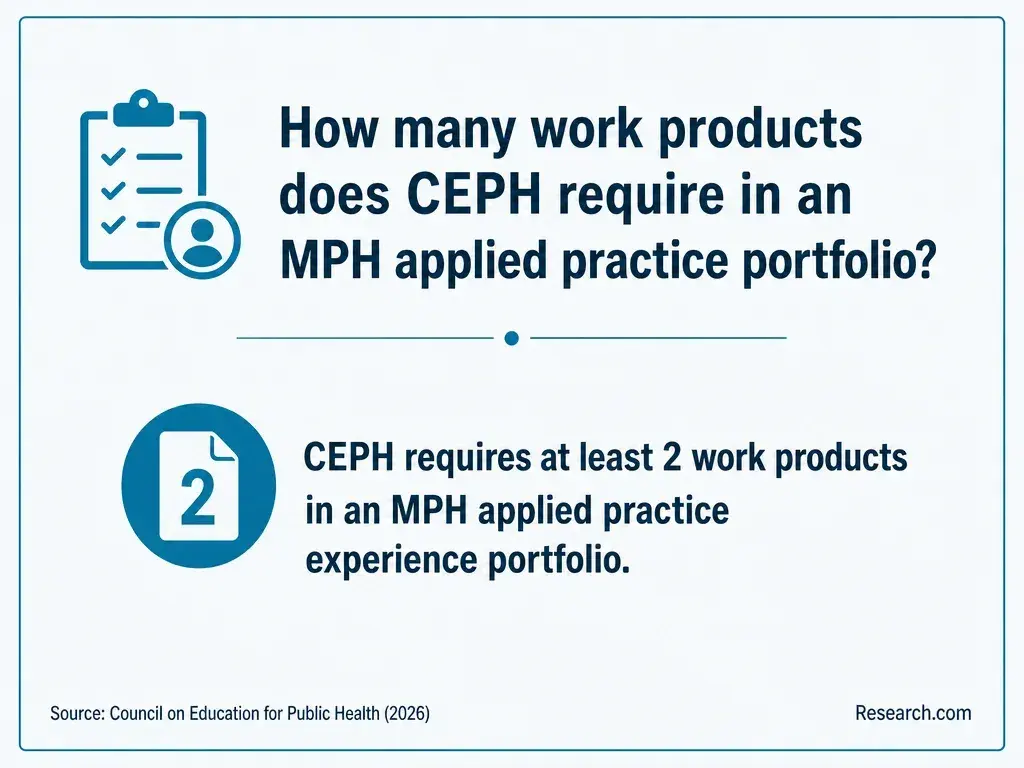
- For a CEPH-accredited MPH program, the applied practice experience must produce at least two products demonstrating competency attainment; the school determines how its requirements are assessed.
- Confirm scheduling, site access, privacy approvals, and unpaid-work costs before accepting. A remote-friendly project may avoid facility entry but still require live partner meetings and restricted-data safeguards.
What Is an MPH Practicum in a Correctional Reentry Health Partnership?
An MPH practicum—often called an applied practice experience—is supervised work in which a student applies public health competencies to a real partner's needs. In a correctional reentry health partnership, that partner might be a health department, community-based reentry organization, federally qualified health center, or health system coordinating services for people returning to the community after incarceration.
The strongest projects address a population-health process rather than treating the student as a clinician or case manager. Examples include mapping referral pathways, developing a plain-language resource guide with partner review, or designing measures to assess whether appointment referrals are completed. Such work must reflect what the partner actually needs and permits; it does not imply access to records, participants, or a correctional facility.
This is graduate-level applied work, not simply a more advanced version of online bachelor's study in public health. The deciding issue is whether the MPH student can take responsibility for a bounded, supervised public health product while remaining within the host's rules and the school's approval process.
What Public Health Skills Can Students Develop Through Reentry Partnerships?
Reentry partnerships bring together healthcare, housing, benefits, transportation, and community support systems. An appropriately scoped practicum can develop skills in cross-agency communication, health-equity analysis, program planning, and evaluation—provided the student does more than attend meetings.
Match the proposed task to evidence of a skill. A referral-process map can demonstrate systems thinking; a partner-reviewed interview guide can demonstrate ethical qualitative planning; a data dictionary or measurement plan can demonstrate evaluation design. None of these products, by themselves, prove that services improved. Students entering an MPH after public health BS programs with shorter academic terms should likewise assess their actual methods experience rather than assume that course pacing establishes readiness for sensitive fieldwork.
Ask who will review drafts, how people with lived experience can inform the work when appropriate, and whether the final product will be useful to the partner after the placement ends. These questions distinguish reciprocal practice from a project designed only to satisfy a course.
How Do CEPH Requirements Apply to a Correctional Reentry Practicum?
The Council on Education for Public Health (CEPH) sets accreditation criteria for covered public health programs. Its MPH applied practice experience calls for at least two products that demonstrate attainment of competencies. A referral-workflow document and an evaluation plan, for example, could be possible products if the school approves them and can assess the competencies they show. Merely logging hours or observing staff is not an adequate substitute for demonstrable work.
CEPH accreditation does not approve individual reentry sites or grant a student access to a facility. The MPH program decides whether the site, supervisor, objectives, products, and assessment satisfy its policies. Check the exact degree's accreditation coverage and practicum procedures when comparing CEPH-accredited distance learning MPH options.
Get written answers from the practicum coordinator about required hours, competency mapping, site agreements, supervisor qualifications, and product-review rules. Separately, obtain the host's permission for the proposed work. If interviews, identifiable information, or publication are contemplated, ask the appropriate institutional and partner offices what privacy, data-use, consent, and review processes apply; course approval alone does not settle those questions.
Useful preparation depends on the project. Program planning and evaluation help a student define a workable referral or service-navigation question. Epidemiology and biostatistics support careful use of denominators, missing data, and descriptive measures. Health policy, behavioral health, and community-engaged practice help students understand how eligibility rules, stigma, and service availability affect continuity of care.
Before proposing an analysis, students should be able to distinguish a measure they can calculate from an outcome they cannot attribute to the program. For example, counting documented referrals is different from establishing that a referral caused someone to receive care. Training in confidentiality, trauma-informed communication, and qualitative methods is especially valuable when a project involves partner staff or people with lived experience.
An elective or practicum does not create specialist or senior leadership qualifications. Students considering later advanced study can compare public health doctorate program selection separately; the immediate coursework choice should serve the approved MPH project.
Students generally enter an MPH program before arranging its practicum. MPH admissions requirements vary by institution and may include a bachelor's degree, transcripts, a statement of purpose, recommendations, and evidence of quantitative preparation or relevant experience. A prior correctional-health role is not a universal admissions requirement. Students from social services, clinical care, policy, data, or community-organizing backgrounds can explain how their experience connects to population-health work.
Admission and placement approval are separate decisions. A program that admits a student may still reject a proposed host because supervision, agreements, safety arrangements, or deliverables do not meet its rules. If admission criteria are a concern, compare MPH programs with broader admissions criteria against their actual practicum support—not presumed access to reentry partners.
Online and campus MPH students may complete the same kind of supervised applied work, but their practical access can differ. A campus program may have established local partners; an online student may need to identify a host near home. Neither format guarantees a correctional facility placement, and a community-based reentry project may be more feasible than facility-based work.
The format comparison matters most at the point of delivery. Confirm whether the site expects weekday meetings, travel, background screening, orientation, or in-person contact; whether the school accepts remote supervision; and who supplies secure technology. Online coursework does not make partner meetings asynchronous. When comparing affordable online public health degrees, include those fieldwork obligations rather than judging flexibility by course delivery alone.
There is no universal reentry-practicum duration or price. The school sets credit, hour, and term requirements; the partner's onboarding and approval timelines can add time before substantive work begins. A narrow project using approved, nonidentifiable operational information may be easier to schedule than one requiring facility entry or access to restricted records.
Build a placement budget that separates tuition and mandatory fees from travel, screening, technology, childcare, and reduced paid-work hours. Ask whether the position is paid, whether tuition is charged during a fieldwork term, and what happens financially if access is delayed. Comparisons of shorter public health study formats and career prospects should not be mistaken for a promise that a partner can compress its approval process.
A well-documented practicum can support applications for reentry-program coordination, community health, health education, referral-system improvement, or program-evaluation roles. Employers will assess the tasks performed—not just the setting's name. A student who can explain how they mapped a workflow, incorporated partner feedback, and documented limitations has more concrete evidence than one who lists a placement without an output.
Entry-level responsibilities may involve outreach support, service navigation, data quality, or reporting. Clinical care, licensed social work, and independent treatment require their own qualifications; an MPH practicum does not confer them. Likewise, management and research-leadership positions commonly depend on substantial experience. Someone exploring online public health doctoral admission options should first determine whether their target work actually calls for doctoral training rather than further supervised practice.
There is no reliable single salary for "reentry-focused MPH graduates." A community health worker, health education specialist, evaluator, and program manager may work for the same partnership but occupy different labor-market categories, with different education and experience expectations. The US Bureau of Labor Statistics reports occupation-wide pay, not earnings attributable to a particular MPH or practicum.
For a useful estimate, identify the actual job title and duties, check the latest Bureau of Labor Statistics wage data for the closest occupation, then compare current local postings for required credentials and experience. Public-agency pay grades and nonprofit budgets can further constrain an offer. Weigh any expected earnings against total education costs; even lower-cost public health PhD degree pathways are not an automatic route to higher pay in service-delivery roles.
How Can Students Evaluate a Reputable MPH Reentry Practicum Program?
Evaluate the school's ability to approve and support this specific placement, not merely its accreditation or a general promise of community partnerships. Request the current practicum handbook and ask whether the program has previously supported comparable projects. Prior experience is useful evidence of administrative capacity, but it is not a guarantee that a partner has an opening.
Before committing, put these questions to both the academic coordinator and the proposed supervisor:
- Project: What partner decision or process will the work improve, and which deliverables can the student realistically finish?
- Approval: Who signs the site agreement and learning objectives, and when must approval occur?
- Supervision: Who reviews work, how often will they meet with the student, and who resolves a change in scope?
- Access and safety: What screening, training, travel, facility rules, and contingency plans apply?
- Information: What data may the student use, who authorizes that use, and what can be shared with faculty or in a portfolio?
Compare answers in writing before accepting an offer or arranging fieldwork. Convenience in applying—including a route through public health graduate programs with no recommendation letters—does not establish the quality of practicum supervision. If the host cannot define a safe, useful project or the school cannot confirm its eligibility, seek another placement rather than relying on an informal promise.
Other Things You Should Know About Public Health
Potentially. Lived experience can be valuable expertise, but the school must approve the supervision arrangement under its policies. A team may also pair community mentorship with an approved site supervisor.
Do not assume so. MPH applied practice and clinical training are different requirements. Ask the relevant licensing program or board whether any activity qualifies before counting it.
Contact the practicum coordinator promptly. The school must decide whether completed work can be assessed and whether revised objectives, another host, or an extension is needed.
Only with the necessary partner and school permissions. Use an approved, redacted version that excludes confidential records and information that could identify participants.
- Step 4 - Gather Credible Evidence | Program Evaluation https://www.cdc.gov/evaluation/php/evaluation-framework-action-guide/step-4-gather-credible-evidence.html
- TJC Toolkit Module Seven | NIC Special Collection | The National Institute of https://nicic.gov/resources/collection/transition-jail-community-tjc-toolkit/tjc-toolkit-module-seven
- Developing Your Evaluation Plans: A Critical Component of Public Health Program Infrastructure - PMC https://pmc.ncbi.nlm.nih.gov/articles/PMC4592485/
- Principles and Best Practices for Protecting Participant Privacy | Grants & Funding https://grants.nih.gov/policy-and-compliance/policy-topics/sharing-policies/dms/privacy/best-practices
- 400. Participant Privacy versus Data Confidentiality | University of Nevada, Reno https://www.unr.edu/research-integrity/program-areas/human-research/human-research-protection-policy-manual/400-participant-privacy-versus-data-confidentiality
- Public Health Practicum | UCLA Fielding School of Public Health https://www.mphhp.ph.ucla.edu/public-health-practicum
- How Community Supervision and Health Partners Collaborate to Support Corrections Reentry - NASHP https://nashp.org/how-community-supervision-and-health-partners-collaborate-to-support-corrections-reentry/
- Beyond Recidivism: Redefining Measures to Understand Reentry Success | CSG Justice Center https://csgjusticecenter.org/publications/beyond-recidivism-redefining-reentry-data-health-housing-employment/