2027 Creating a Referral Resource Verification Checklist

Co-Founder and Chief Data Scientist
A referral directory is only useful if someone can actually access the services it lists. Eligibility rules change, programs reach capacity, and an outdated phone number can delay help. This guide is for public health students, community organization staff, and practitioners building or reviewing a referral resource checklist. You will learn how to confirm service details, document uncertainty, protect client information, and decide when a resource is ready to share. The goal is a usable verification process—not a directory that merely looks complete.
Key Things You Should Know
- Verify eligibility, service area, availability, cost, accessibility, and the referral process directly with the provider; a website listing alone is not confirmation.
- Record the source, date, and status of each check so staff can distinguish a confirmed service from an unverified lead.
- Recheck high-risk or frequently changing details before making a referral, and obtain appropriate permission before sharing a person's information.
What is a public health degree, and what can you do with one?
A referral resource verification checklist is a repeatable tool for deciding whether a service is suitable and reachable for a particular population. It is more than a contact list: it captures what the provider offers, whom it serves, how people enter the service, and when those facts were confirmed. A listing can be accurate in general yet unusable for someone outside its service area or unable to meet its documentation requirements.
For a class project or nonprofit program, define the decision first: whether staff may share the resource, whether they may send a direct referral, or whether further checking is needed. Learning to maintain this tool generally requires supervised community practice, not necessarily another degree. If broader program-planning training is also a goal, inexpensive online public health master's options can be compared against targeted training and workplace mentorship.
Which accreditation should you look for in a public health program?
Accreditation can matter when choosing an academic program, but it does not verify a community referral resource. These are separate checks. A student producing this checklist for coursework should confirm the school's institutional accreditation and, if relevant, whether the specific public health school or program falls within its stated Council on Education for Public Health (CEPH) accreditation scope. Then confirm the assignment's approval and assessment requirements with the instructor.
Advanced study does not remove the need for provider-level verification. Even when comparing online doctorate admission routes in public health, distinguish what a degree program teaches from the permissions and current service facts needed to publish a real referral guide.
What degree do you need for a career in public health?
No particular public health degree is required to draft a useful checklist. A community health worker, program coordinator, or student can assemble one with appropriate training and supervision. The authority to approve a directory, however, depends on the organization's policies—not the author's degree title. Escalation procedures are especially important for urgent needs, disputed eligibility, and services involving sensitive information.
An MPH may support program implementation, a DrPH may support practice leadership, and a PhD may support research; none automatically authorizes access to a provider's records. If the checklist is part of a larger career decision, compare public health doctorates for research and practice against the responsibilities the role actually requires.
An online public health degree can provide relevant preparation, but an online course cannot by itself establish that a local service accepts referrals. A student working remotely needs a feasible way to contact providers, document responses, and obtain any required faculty or site supervisor approval. Confirm live-session schedules and fieldwork rules rather than assuming online delivery makes the project fully asynchronous.
When reviewing online MPH programs by admissions accessibility, ask a separate practical question: can the program support an approved, community-specific project with meaningful supervision?
Public health coursework in community engagement, program implementation, and evaluation can inform the checklist. The deliverable itself should use fields that support a clear referral decision. Adapt the following template to the population served and to your organization's policies:
- Resource and scope: Provider name, specific service, location or remote access, and population served.
- Eligibility: Service area, age or other criteria, required documents, and any stated exclusions.
- Access: Hours, appointment method, current availability, waitlist, and an appropriate urgent-needs alternative.
- Practical fit: Fees or insurance requirements, language access, disability accommodations, and transportation or technology needs.
- Referral steps: Self-referral or staff referral, required forms, contact method, and whether the provider confirms receipt.
- Verification record: Source or authorized contact, date checked, method, unresolved questions, and next review date.
- Decision status: Verified for stated use, needs confirmation, temporarily unavailable, or removed, with a brief reason.
Separate information that is public from information supplied for internal referral work. Do not place client names, protected health information, or private provider correspondence in a student portfolio without the relevant permissions. Data-literacy training, including a career-compatible online biostatistics study, may help with later service-use analysis, but it is not a substitute for confirming whether a service can take a referral today.
Admission requirements for public health programs vary, but they should not be mistaken for qualifications to verify a resource. For this project, the immediate prerequisites are access to the assignment or organizational protocol, a defined service population, and a supervisor who can resolve uncertainties. If contacting providers on behalf of a field site, clarify who may represent the organization and what information may be collected.
Someone considering graduate study after building community experience can review public health master's options after a weak GPA. Admissions flexibility does not change the project's need for accurate records and appropriate oversight.
A checklist's main costs are staff time, provider outreach, accessibility review, secure recordkeeping, and ongoing updates. Budget for maintenance, not just the initial directory. A short list of services that staff can reliably recheck may serve clients better than a large list with unknown availability. Set a review interval according to how quickly each fact can change, and recheck critical details at the point of referral.
For students weighing a degree alongside this work, compare the full cost of study separately using an online MPH tuition comparison guide. A degree budget and a referral-directory maintenance budget answer different questions.
Referral verification appears in community health worker, care-navigation, program assistant, and nonprofit coordination work. Duties differ: one role may maintain a directory, while another may help a person contact a provider and follow up with consent. Neither task should be described as providing a service the organization cannot deliver or confirming an appointment the provider has not accepted.
For an early-career worker, a supervised checklist project can demonstrate careful documentation and community-service knowledge. Public health master's provisional admission pathways may be relevant to a longer-term education plan, but supervised practice is the more direct way to learn the referral workflow.
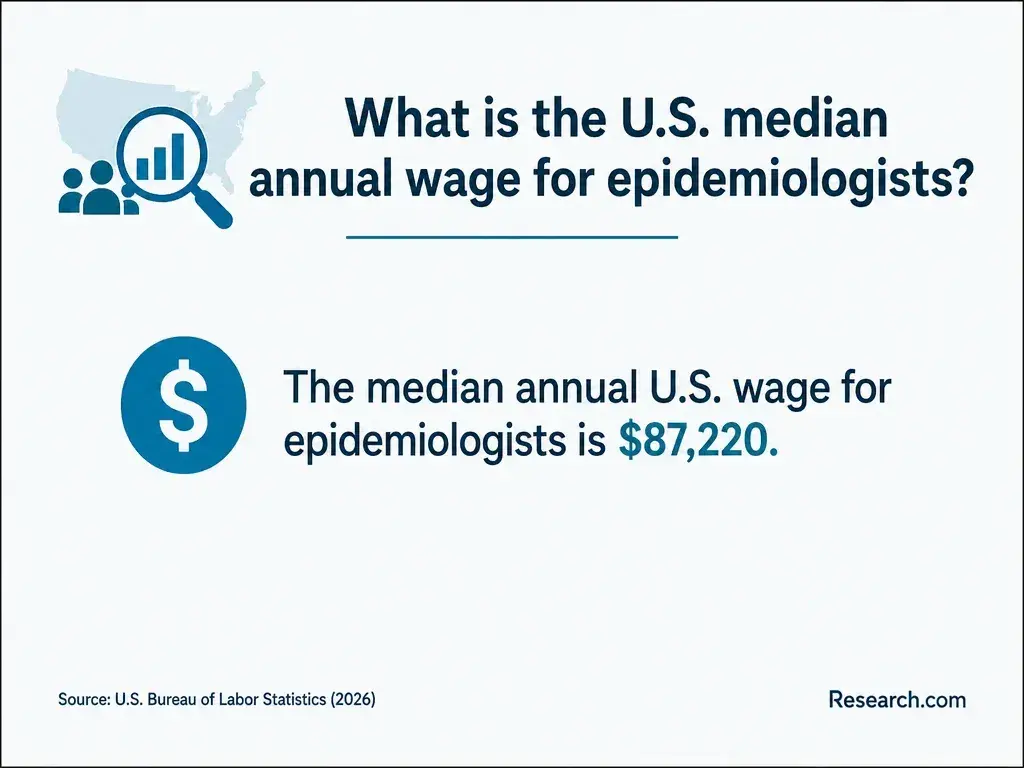
There is no meaningful salary figure for "referral checklist creator": the work is performed across occupations with different duties, employers, and qualifications. Evaluate a training investment against the specific position you want, rather than treating an occupation-wide median wage as an expected return from a checklist project or degree.
If additional education is under consideration, online public health cost-duration tradeoffs can inform the financial comparison. First check whether the target job actually calls for that credential or whether experience with referral systems and community partners would be more relevant.
Do public health careers require certification or licensure?
Maintaining a referral checklist does not ordinarily confer a clinical license or professional certification. A regulated role involved in making referrals may have separate state or employer requirements; verify those against the role's actual duties. Likewise, a public health degree does not automatically award credentials such as CPH or CHES.
When choosing a public health master's specialization, look for coursework and supervised experience that match the intended work. For referral coordination, community engagement and program operations may matter more than a credential whose requirements do not apply to the position.
Other Things You Should Know About Public Health
Use them as leads, not as verified entries. Confirm their claims with the provider and check any restrictions on reproducing the directory's content.
Mark the entry as unverified, record your attempts, and use an approved alternative rather than implying the service is available.
Keep the resource directory separate from client records. Follow organizational rules for consent, access, retention, and secure documentation.
Usually, a blank or suitably redacted template is safer than a live directory. Obtain required site or faculty permission before sharing provider correspondence or project-specific materials.
- High-value referrals | who.int https://iris.who.int/server/api/core/bitstreams/3ea58f50-7068-4cb5-8f54-a17dbcdeaace/content
- Disability Inclusion Strategies | cdc.gov https://www.cdc.gov/disability-inclusion/strategies/index.html
- More than a Database: Understanding Community Resource Referrals within a Socio-Technical Systems Framework - PMC https://pmc.ncbi.nlm.nih.gov/articles/PMC8075446/
- ADA Requirements: Effective Communication https://www.ada.gov/resources/effective-communication/
- Find Shortage Areas by Address | hrsa.gov https://data.hrsa.gov/topics/health-workforce/shortage-areas/by-address
- Guidelines for Assessment and Intervention with Persons with Disabilities | apa.org https://www.apa.org/pi/disability/resources/assessment-disabilities
- Referral Data Metrics: What They Are, What Exists, and Why They Are Important - Network for Nonprofit and Social Impact https://nnsi.northwestern.edu/referral-data-metrics-what-they-are-what-exists-and-why-they-are-important/
- Referral Systems Assessment and Monitoring Toolkit | measureevaluation.org https://www.measureevaluation.org/resources/publications/ms-13-60/at_download/document
- What is I&R | informusa.org https://www.informusa.org/what-is-iandr
- Understanding Health Insurance Referrals and Prior Authorizations | naic.org https://content.naic.org/article/consumer-insight-understanding-health-insurance-referrals-and-prior-authorizations