2027 Planning a Public Health Data Incident Communication Process for DrPH Students

Co-Founder and Chief Data Scientist
A public health data incident can leave an agency needing to protect records, correct decisions based on unreliable data, and explain what happened before every fact is known. For DrPH students and experienced practitioners, the challenge is to design a communication process that is accurate, legally reviewed, and useful to affected communities.
This guide shows how to scope that process as an applied leadership project, identify the right decision-makers, and judge whether a doctoral program offers the training and project access to do the work responsibly.
Key Things You Should Know
- Plan for both privacy breaches and data-integrity failures; the audiences, legal duties, and immediate messages may differ.
- Under the HIPAA Breach Notification Rule, covered entities generally must notify affected individuals without unreasonable delay and no later than 60 calendar days after discovering a reportable breach, but other laws and contracts may impose different duties.
- A strong DrPH project produces an approved, testable workflow - not a fictional breach determination or a message released without agency authorization.
What is a public health data incident communication process?
It is an organization's documented method for deciding who needs to know what, when, through which channel, and with whose approval after data confidentiality, integrity, or availability may have been compromised. Examples include an exposed case-report file, an unauthorized vendor disclosure, a corrupted surveillance dataset, or a prolonged outage that prevents timely reporting. Not every incident is a legally reportable breach.
The process connects technical response to public health decision-making. It specifies how staff verify facts without delaying urgent protective advice; distinguish confirmed facts from unknowns; coordinate legal, privacy, security, program, and communications teams; and correct earlier statements as evidence changes. A DrPH student's appropriate deliverable is usually a proposed workflow and exercise materials, not authority to make an agency's legal determination.
Scope matters: a leader designing incident communications needs to interpret analysts' findings, not necessarily perform forensic analysis. Someone whose primary goal is to build advanced statistical expertise may find flexible routes to a biostatistics master's degree more direct than a DrPH.
Why should DrPH students learn public health data incident communication?
Public health agencies depend on data to allocate resources, monitor risks, and communicate with communities. An incident can therefore create two simultaneous problems: harm from exposure or misuse of information, and harm from decisions made using unavailable or unreliable information. Practice-focused doctoral leaders need to coordinate those consequences across teams with different responsibilities.
This is a useful DrPH applied-leadership problem when the student can work with an authorized partner on a bounded improvement purpose, such as reducing approval bottlenecks or making notices understandable to affected residents. The project should begin with the partner's existing procedures and identified needs, not an assumption that its current process has failed.
If the goal is narrowly to learn breach-notification rules, employer training and supervised exercises will usually cost less time than a doctorate; compare the commitment involved in comparing public health doctorate tuition and length against the broader leadership role you actually want.
What laws govern communication after a public health data breach?
There is no single rule covering every US public health dataset. HIPAA applies to covered entities and business associates in defined circumstances; a health department's status and the function involved must be assessed rather than assumed. State breach-notification and public-sector privacy laws, contracts, and federal program rules may add or change obligations. Legal counsel or the designated privacy officer should determine which rules govern a real event.
Under HIPAA's Breach Notification Rule, a covered entity generally must notify affected individuals without unreasonable delay and no later than 60 calendar days after discovering a reportable breach of unsecured protected health information.
Notification to the US Department of Health and Human Services is also required, with timing that depends in part on the number affected; breaches affecting more than 500 residents of a state or jurisdiction also trigger a media-notification provision. These are legal outer limits, not recommended waiting periods.
Other records may fall under state law, the Family Educational Rights and Privacy Act, or special protections such as 42 CFR Part 2 for covered substance use disorder records. A data-integrity error may require prompt correction and stakeholder communication even when breach-notification law does not apply.
Students comparing educational routes should not mistake a course in health law for authorization to interpret these duties independently; CEPH-accredited online MPH programs may offer relevant foundations, but real notices still require organization-specific legal review.
A relevant DrPH curriculum combines leadership, communication, ethics, policy, and applied evaluation. Students can use those subjects to map decision rights, draft messages for different audiences, test whether instructions are understandable, and evaluate a response exercise. They may need additional instruction in privacy law, cybersecurity, records governance, or incident command; a general communication course is not proof of specialized breach-response training.
Before choosing electives or a project site, request course descriptions and ask whether students can practice an uncertainty statement, an affected-person notice, and a correction to an earlier public update. Ask who supervises legal and technical content. If your need is foundational communication training rather than doctoral organizational leadership, choosing a public health master's specialization may be a better first decision.
Programs offer various opportunities to enhance student learning, such as simulations, emergency-preparedness coursework, partnerships, and applied doctoral projects. However, the specific opportunities vary.
A useful exercise involves presenting students with incomplete information scenarios. Technical staff may still be investigating, a program team may have identified a possible service disruption, and community partners may require an update. In such situations, students should be assessed on their ability to escalate, communicate clearly, ensure accessibility, and revise their claims, rather than just producing a polished press release.
For a proposed partner-site project, the student should obtain academic and organizational approval before accessing incident records or interviewing staff.
A tabletop exercise using invented facts can often test a draft workflow without exposing identifiable information. If the goal is operational preparedness at work rather than a doctoral leadership project, compare employer-supported exercises with the time and cost of a degree; a public health master's degree investment guide can help frame that narrower education decision.
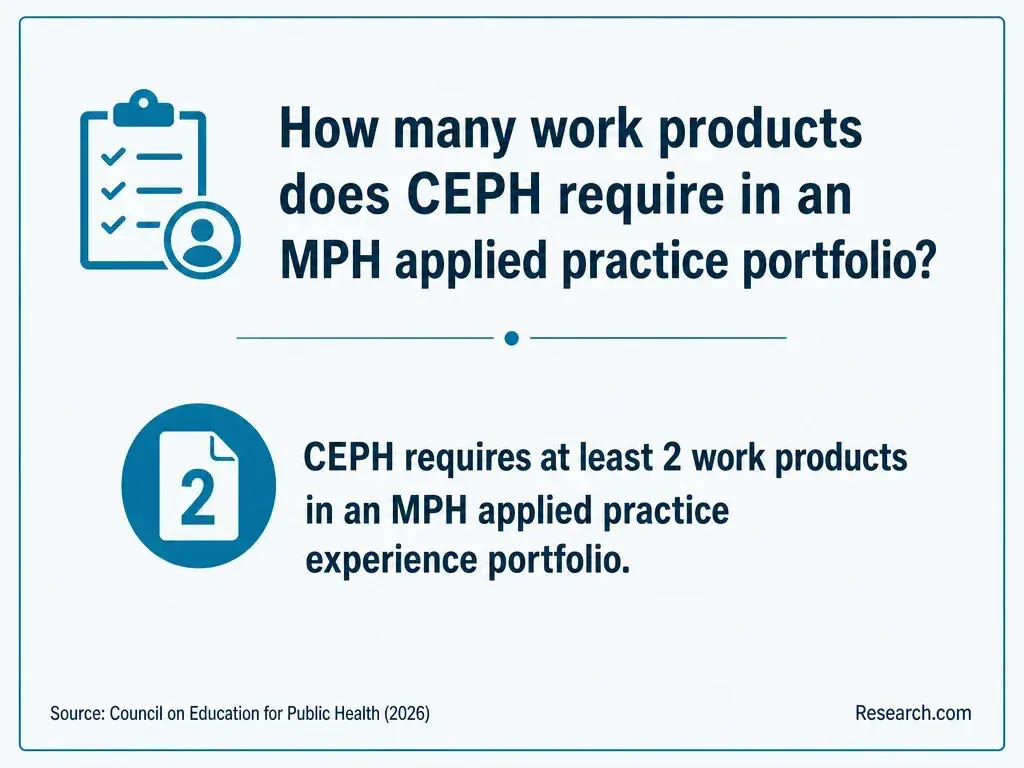
The Council on Education for Public Health (CEPH) accredits eligible schools and programs of public health; it does not grant a separate accreditation specifically for "data incident communication." Check the accreditor's listing and the school's documentation to establish whether the particular DrPH degree falls within the accredited school or program's scope. Institutional accreditation is a separate consideration.
Accreditation establishes a quality framework, not the presence of a particular elective, incident-response partnership, or approved project site. Ask for the current curriculum, applied-project handbook, and examples of permitted deliverable types. Cost also deserves a separate check: an online public health degree tuition guide can help identify charges to investigate, but advertised tuition alone will not show residency travel, project expenses, or required fees for a specific DrPH.
The central skill is translating a changing technical assessment into decisions people can act on without overstating certainty. A DrPH student should be able to convene the right authorities, recognize when a privacy or legal determination is needed, and ask whether a proposed message reaches people who may face language, disability-access, or connectivity barriers.
For an applied project, the following sequence makes those skills observable while keeping approval responsibilities clear:
- Map incident categories, likely audiences, existing escalation rules, and the staff authorized to classify and speak about an event.
- Draft a decision log that records confirmed facts, unknowns, evidence sources, approvers, deadlines, and the next review time.
- Prepare adaptable internal, partner, and public message templates that distinguish protective actions from unverified claims.
- Run an authorized tabletop exercise, then revise the workflow using documented feedback and preselected measures such as approval delays or missing accessibility checks.
A DrPH leader does not replace a forensic investigator or specialist researcher. If the intended career is primarily original epidemiologic methods research, online epidemiology doctorate cost and funding is a more relevant comparison than treating incident leadership as a substitute for research training.
Requirements vary by institution. Programs commonly assess graduate preparation, relevant professional experience, leadership potential, recommendations, and the fit between an applicant's goals and a practice-focused doctorate. Do not assume that every program requires an MPH, a particular job title, or the same number of years in practice.
An applicant from information security, health-system operations, or government communications should document the public health responsibilities and decisions behind the title.
For this topic, readiness includes more than admission eligibility. Ask whether you can obtain a suitable project partner, authorized supervision, and a feasible scope without relying on access to live breach records.
Compare published prerequisites, live-session and residency obligations, and applied-project approval policies when reviewing online doctoral public health entry pathways.
The work appears in health department leadership, public health preparedness, health-system privacy and compliance, data governance, and risk communication. Responsibilities differ: a privacy officer helps assess notification obligations, a communications lead develops and distributes approved messages, an information-security team investigates systems, and a public health leader coordinates operational consequences and community relationships.
Employers may require distinct technical credentials, legal expertise, or substantial experience for these roles.
An experienced practitioner can build toward leadership by taking part in supervised exercises, documenting cross-team decisions, and evaluating improvements. Someone seeking an initial public health role may be better served by a relevant master's program and entry-level practice experience than by applying directly to a DrPH; reviewing eligibility for accessible MPH programs is one possible starting point, not a substitute for checking role-specific hiring requirements.
How much do public health leaders earn after completing a DrPH?
There is no reliable single salary for DrPH graduates who manage data incident communications. Pay depends on the actual occupation, employer, location, seniority, and responsibility; the degree does not itself confer a leadership post.
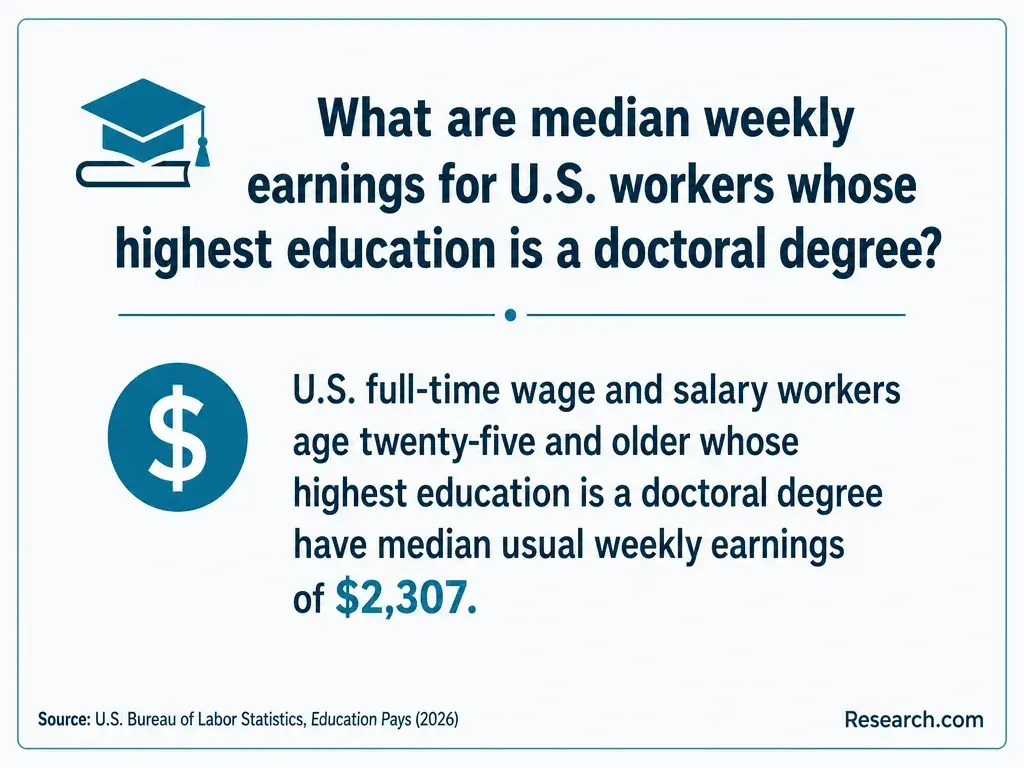
For one broad point of reference, the US Bureau of Labor Statistics reported a 2024 median annual wage of $117,960 for medical and health services managers. That occupation includes many jobs outside public health agencies and is not a DrPH graduate salary or an estimate for incident-communication specialists.
For a realistic return-on-investment decision, compare postings for your target role and employer with your current compensation, then weigh tuition, fees, any required travel, time away from work, and the likelihood that the credential changes your eligibility for advancement.
Public-sector pay bands may limit the gain even when the training improves your work. A narrower employer-funded course or supervised project may be the better financial choice if your desired duties do not require a doctorate.
If you first need graduate public health foundations, ask individual master's programs whether preparatory coursework or an exception is possible; public health master's admissions exceptions explained describes that separate decision.
Other Things You Should Know About Public Health
Yes, if the work is clearly labeled as a simulation. Do not imply that a fictional notice was approved or issued by a real agency.
Only with the agency's permission and any required academic approval. Remove confidential details, and confirm whether the template itself is restricted before posting it.
Send it to the designated academic supervisor and partner-site contact under their agreed review process. They can flag sensitive assumptions before participants see it.
Use approved policies, staff-defined requirements, and synthetic scenarios to build and test a proposed workflow. Access to a real incident is not necessary to demonstrate a well-scoped planning process.
- Emergency Operations Centers and Incident Management Structure | Field Epi Manual | CDC https://www.cdc.gov/field-epi-manual/php/chapters/eoc-incident-management.html
- Getting the most from after action reviews to improve global health security - PMC https://pmc.ncbi.nlm.nih.gov/articles/PMC6785939/
- Communicating Effectively with People with Disabilities | ADA.gov https://www.ada.gov/topics/effective-communication/
- Recommendations - Communicating risk in public health emergencies - NCBI Bookshelf https://www.ncbi.nlm.nih.gov/books/NBK540733/
- Breach Notification Rule | hhs.gov https://www.hhs.gov/hipaa/for-professionals/breach-notification/index.html
- GUIDANCE FOR AFTER ACTION REVIEW (AAR) | who.int https://iris.who.int/bitstreams/79acf9d2-c963-4d25-8c75-9160e8859c7f/download
- CMS Breach Response Handbook https://security.cms.gov/learn/cms-breach-response-handbook
- Key Courses | DrPH in Public Health Preparedness and Response | Emory University https://sph.emory.edu/degrees-programs/drph/public-health-preparedness-and-response/key-courses
- Chapter 6., Section 1. Developing a Plan for Communication | ku.edu https://ctb.ku.edu/en/table-of-contents/participation/promoting-interest/communication-plan/main
- Data Breach Notification Laws: A 50-State Survey (2026 Edition) | Privacy Rights Clearinghouse https://privacyrights.org/resources-tools/reports/data-breach-notification-laws-50-state-survey-2026-edition