2027 From Farmworker Outreach Assistant to Public Health: Planning a Bachelor's Pathway

Co-Founder and Chief Data Scientist
Farmworker outreach may have taught you how to build trust, explain services, and identify barriers to care. A public health bachelor's degree can help you turn that experience into stronger skills in program planning, data interpretation, and prevention - but only if the program fits your credits, work schedule, and career goal. This guide is for outreach assistants considering that next step. It explains what your experience already contributes, what a degree may add, and how to check whether enrolling is more useful than targeted training or advancement at work.
Key Things You Should Know
- Your outreach experience is relevant to public health, but admission, transfer-credit acceptance, and satisfaction of major requirements are separate decisions.
- Choose coursework and supervised projects that add skills you cannot readily gain on the job, especially data literacy, program evaluation, and occupational or environmental health.
- Compare the credits and costs remaining after an official degree audit; a four-year bachelor's pathway may be shorter for a transfer student, but accepted credits do not automatically shorten it.
What does a farmworker outreach assistant do in public health?
A farmworker outreach assistant helps connect agricultural workers and their families with health information, services, and community resources. Depending on the employer, the work may include scheduling outreach visits, explaining available services in appropriate languages, helping people navigate referrals, recording activities, and sharing community concerns with a supervisor. The role supports prevention and access; it is not the same as providing clinical care or independently diagnosing occupational exposures.
This experience gives you a practical starting point for population health study: you have seen how transportation, work schedules, housing, language access, and trust can affect whether a service reaches people. In applications, describe your own responsibilities precisely. Distinguish a referral you coordinated from a program you designed, and protect clients' confidentiality when giving examples.
If your long-term goal is to lead a specialized program rather than continue in frontline outreach, a bachelor's degree can be one step - not the entire pathway. Later public health graduate concentration selection should follow the work you actually want to do, such as community program evaluation or environmental health, rather than the outreach setting alone.
How can you transition from farmworker outreach to a public health bachelor's degree?
Start with a target responsibility, not a degree title. If you want to coordinate outreach, assess whether supervised project work and employer training could get you there. If you want to analyze service gaps, evaluate programs, or qualify for positions that specify a bachelor's degree, formal study may offer a clearer route.
Use the following sequence to test whether a program builds on your experience without making you repeat avoidable coursework:
- Collect transcripts from every college attended, along with course descriptions or syllabi for statistics, biology, and other potentially relevant classes.
- Ask each prospective school for an evaluation showing which credits are accepted and which satisfy general education, prerequisites, the major, and graduation residency requirements.
- Compare remaining required courses with your work schedule, including the terms when courses are offered and any internship or capstone hours.
- Identify an applied opportunity - at your employer or another approved site - that adds measurable skills under appropriate supervision.
Only the receiving institution can approve equivalencies and substitutions. An associate degree, an applied degree, or extensive outreach experience does not automatically clear upper-division requirements. For a starting list of delivery formats, review public health undergraduate degree options online, then request a program-specific degree audit before estimating your finish date.
What jobs can you get with a bachelor's degree in public health?
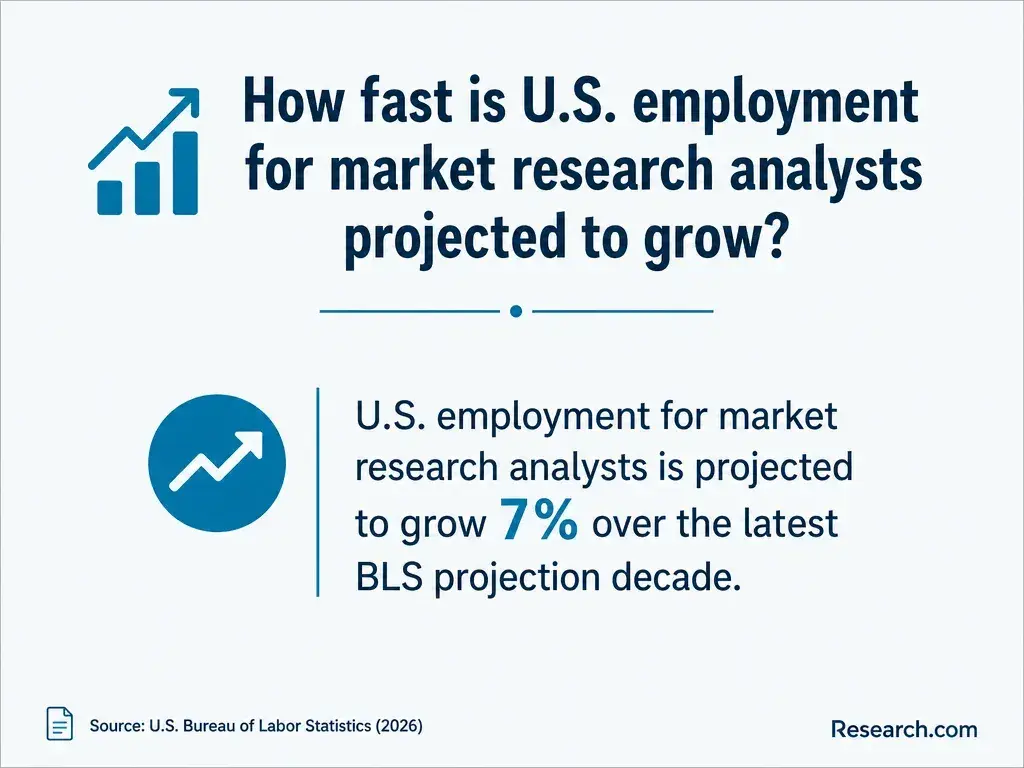
A bachelor's degree may strengthen your candidacy for outreach coordination, health education, program support, and some entry-level evaluation work. It does not by itself qualify you to practice clinically, direct an epidemiology unit, or manage a large program. Employers may value your farmworker outreach experience most when you can pair it with evidence of planning, reporting, or data skills.
The distinctions below can help you choose a realistic next role instead of treating every public health job posting as interchangeable.
| Possible direction | Work to look for | Evidence to develop |
| Outreach or program coordinator | Organizing staff schedules, partners, referrals, and activity reports | Documented coordination and budget or reporting experience |
| Health education role | Adapting messages, delivering education, and assessing understanding | Communication materials and supervised education work; check credential preferences |
| Program or evaluation assistant | Maintaining data, tracking indicators, and preparing summaries | Spreadsheet skills, data-quality checks, and a supervised evaluation product |
| Environmental or occupational health support | Assisting with education, referrals, or program records related to workplace risks | Relevant coursework and familiarity with the specific employer's technical requirements |
For epidemiologist and many advanced analyst roles, employers commonly expect graduate preparation or substantial specialized experience. If you eventually consider that route, compare the actual entry requirements of jobs you want before exploring accessible online public health master's options; ease of admission is not a substitute for appropriate methods training.
Public health bachelor's programs usually combine general education with population-health subjects such as epidemiology, statistics, health behavior, policy, environmental health, and program planning. A BA, BS, BAS, or community health degree can emphasize different sciences, quantitative courses, and applied requirements. Read the catalog rather than assuming similar titles mean interchangeable curricula.
For a farmworker outreach assistant, the highest-value additions may be introductory statistics for interpreting service data, epidemiology for understanding patterns rather than individual cases, and evaluation for checking whether outreach reaches its intended audience. Occupational and environmental health can provide context for workplace risks without making a graduate a licensed inspector or exposure-assessment specialist. Look for supervised assignments that turn those subjects into a usable, privacy-safe work sample.
If graduate study might follow, check prospective programs' prerequisites before choosing electives; requirements vary. Public health master's admissions exceptions explained can help frame that later question, but an exception at one graduate program should not determine your bachelor's course plan.
Online study can reduce commuting, but it does not necessarily remove scheduled meetings, group work, exams, or field placements. Campus study may make it easier to use in-person tutoring and build local connections, but travel and fixed class times can conflict with seasonal outreach demands. A hybrid program can combine both sets of obligations.
Before choosing a format, obtain a sample course schedule and ask whether required classes are asynchronous, whether visits are mandatory, and who finds and approves an applied site. If you hope to use your current employer for a project, confirm that the school permits it, that a qualified supervisor is available, and that your proposed work goes beyond ordinary job duties where required.
Shorter course blocks are not necessarily a lighter workload. Compare public health bachelor's accelerated study schedules against your busiest outreach periods and the time needed for assignments, not just the advertised course length.
Requirements depend on whether you are entering college, transferring, or applying to a major after admission to the university. Schools may request prior transcripts and specified general-education or prerequisite courses; some majors have an additional application or minimum-grade rules. Meeting university admission requirements does not necessarily mean admission to the public health major.
If you have prior college work, ask admissions and the academic department two different questions: "Can I enroll?" and "Which requirements will my courses satisfy?" Ask the registrar or transfer-credit office about equivalencies and appeals, and request an updated degree audit from an adviser. Include any course syllabi needed to assess a statistics class or a laboratory course.
A difficult earlier term need not define your application, but the receiving school decides how it evaluates academic history. If you later pursue graduate study, treat low-GPA public health graduate application strategies as a separate issue: undergraduate transfer and graduate admissions use different policies.
A bachelor's degree is commonly planned as a four-year full-time course of study for a first-time student. Your remaining time depends instead on how transferred credits apply, prerequisite sequences, course availability, enrollment pace, and any residency or fieldwork requirements. An official degree audit is more useful than subtracting accepted credits from an advertised total.
For cost, compare the same remaining pathway at each school: tuition for courses you still need, mandatory fees, books or software, travel, and any time away from paid work for fieldwork. Ask whether your enrollment pace affects aid eligibility and whether employer education assistance is available under a written policy. Do not count reimbursement or a shorter completion time until the relevant office confirms it.
Cost-conscious online public health undergraduate study can help you find programs to investigate, but the least expensive advertised tuition may not be the lowest cost for a transfer student whose credits apply differently.
First, confirm that the institution holds recognized institutional accreditation. Then check the Council on Education for Public Health's directory for public health-specific accreditation, noting the exact school, unit, or program listed and whether your intended bachelor's degree is covered. A university's institutional accreditation does not establish that every public health degree has CEPH accreditation.
Ask the program to identify the status and scope that will apply to your entry term, and verify the answer with the accreditor's listing. Also check any credential or employer requirement that matters to you; accreditation is an important quality check, not a promise of a job or certification eligibility.
Keep degree levels separate when researching a university. Its undergraduate status does not establish the accreditation scope, funding, or fit of a future doctorate; public health PhD costs and program choices would require their own review if research training eventually becomes your goal.
There is no single license required for every public health bachelor's graduate. Outreach and program-support employers may require particular training, a driver's license for travel, language skills, or background checks. Requirements depend on the job and jurisdiction, not simply on the degree title.
For health education positions, check whether an employer requests the Certified Health Education Specialist (CHES) credential and verify your eligibility and exam requirements with its certifying organization. Certified in Public Health (CPH) has its own eligibility routes. Neither credential is automatically awarded with a bachelor's degree, and neither replaces a clinical license. State-specific community health worker credentials may also matter for some positions.
Pay for a credential only after checking target job postings and the certifier's current rules. Likewise, a graduate degree is not a substitute for a required license; compare public health master's fees and earning potential only if the roles you want actually call for further education.
What salaries and job outlook can public health graduates expect?
There is no reliable single salary or growth rate for "public health bachelor's graduates." The U.S. Bureau of Labor Statistics reports occupations, not outcomes for everyone holding a particular degree. Community health worker and health education specialist data may offer useful reference points for outreach-related work, but their duties, entry requirements, employers, and pay differ.
Use the latest Occupational Outlook Handbook profile for the specific occupation you are targeting, noting its wage reference year and projection period. Then compare local postings for the responsibilities you can demonstrate now versus those requiring a bachelor's degree. An occupation-wide median is not an entry-level offer, and projections do not guarantee an opening in your community.
For your own decision, weigh likely job requirements against the full cost and time to finish, including work hours you might give up. Public health degree timelines and salary considerations can inform that comparison, but your approved degree audit and local job market should control it.
Other Things You Should Know About Public Health
Describe your responsibilities and lessons learned without identifying clients or disclosing protected information. Ask your employer and instructor before using workplace records, even if you plan to remove names.
It can be valuable for roles serving multilingual communities. Describe your actual language proficiency and the tasks you performed; do not imply that bilingual ability replaces trained interpretation when that is required.
Often, but feasibility depends on course meeting times, seasonal workload, and fieldwork rules. Test a proposed term-by-term schedule against your busiest work periods before enrolling.
Ask your supervisor about responsibility for a defined reporting, training, or coordination task. Targeted instruction in spreadsheets, evaluation, or health communication may be a better first investment if your next role does not require a degree.
- Community Health Workers' Role in Addressing Farmworker Health Disparities - PMC https://pmc.ncbi.nlm.nih.gov/articles/PMC9395548/
- School-Determined Requirements | 2024-2025 Federal Student Aid Handbook https://fsapartners.ed.gov/knowledge-center/fsa-handbook/2024-2025/vol1/ch1-school-determined-requirements
- Eligibility Requirements | Federal Student Aid https://studentaid.gov/understand-aid/eligibility/requirements
- How Can You Earn College Credit for Work Experience? | UC News https://www.online.uc.edu/blog/work-experience-for-college-credit.html
- Admission as a Transfer Student - Archive - University of Florida https://archive.registrar.ufl.edu/catalog/catalogarchive/00-01-catalog/admissions/adm_005_Admission-as-a-Transfer-Student.htm
- What Can You Do With a Community Health Degree? | Tseng College (CSUN) https://tsengcollege.csun.edu/blog/what-can-you-do-with-community-health-degree
- Occupational and Environmental Health Research | Wake Forest University School of Medicine https://school.wakehealth.edu/departments/family-and-community-medicine/research/occupational-and-environment-health-research
- Transfer Admission Requirements | umn.edu https://admissions.tc.umn.edu/admissions/transfer-admission/transfer-admission-requirements
- Frequently Asked Questions about Transfer | ccsf.edu https://www.ccsf.edu/student-services/counseling/transfer-center/frequently-asked-questions-about-transfer
- Basic requirements | UC Admissions - University of California https://admission.universityofcalifornia.edu/admission-requirements/transfer-requirements/preparing-to-transfer/basic-requirements.html