2027 From Parks and Recreation Program Worker to Public Health: Planning a Bachelor's Pathway

Co-Founder and Chief Data Scientist
Running recreation programs can mean coordinating partners, removing barriers to participation, and helping people be active. Those skills can support a move into public health, but a bachelor's degree is not automatically the fastest or most useful next step. This guide is for parks and recreation workers weighing that transition.
It explains what undergraduate public health study adds, which jobs connect to your experience, and how to check credits, scheduling, costs, and career requirements before enrolling.
Key Things You Should Know
- Parks and recreation experience is relevant to community health work, especially when you can document outreach, accessibility improvements, partnerships, and program results.
- A public health bachelor's degree commonly requires about 120 semester credits in total; the credits you still need depend on an official evaluation and degree audit.
- Choose a degree for a defined skills gap or job requirement - not on the assumption that graduation alone qualifies you for epidemiology, management, clinical work, or a professional credential.
What does a public health bachelor's degree prepare you to do?
A public health bachelor's degree introduces population health: preventing problems and improving conditions across communities, rather than treating one person at a time. For a recreation worker, that can mean learning to use evidence to plan an activity program, identify who cannot access it, communicate with partners, and assess whether it is reaching its intended audience.
Graduates may be prepared to support outreach, health education, program coordination, or basic evaluation under appropriate supervision. Preparation varies by program and does not itself establish advanced analytical expertise, clinical licensure, or eligibility for every health educator position.
If your goal is a specialized or leadership role later, public health master's degree types explained can help distinguish professional and research-oriented next steps; you do not need to choose one before deciding whether a bachelor's degree fits.
How can parks and recreation experience lead to a public health career?
Your strongest bridge is the work you have actually done. Organizing accessible activities, building trust with residents, coordinating schools or nonprofits, and tracking attendance all have public health applications. The distinction is that public health employers may also expect you to define a population need, use appropriate data, consider unequal access, and evaluate results without claiming that participation alone caused a health improvement.
The examples below show how familiar responsibilities can translate into public health work - and where further preparation matters.
| Parks and recreation experience | Related public health task | Likely skills gap |
| Recruiting residents for activities | Community outreach and health communication | Adapting messages using community input and evidence |
| Coordinating facilities and partners | Supporting a community health initiative | Documenting goals, responsibilities, and implementation |
| Recording participation and feedback | Monitoring a program | Selecting useful measures and interpreting limitations |
Before committing to a degree, compare local postings for roles you want. If an adjacent community-program job accepts your current education, seek a supervised project or relevant training first. If postings consistently require a bachelor's degree or skills you cannot readily build on the job, undergraduate study becomes a stronger investment.
An MPH may be useful later for certain positions, but less selective online MPH programs are not a substitute for first checking whether you meet graduate admission and target-job requirements.
What public health bachelor's degree requirements should you expect?
Expect general education, a public health major, electives, and possibly a capstone or internship. A typical bachelor's planning benchmark is about 120 semester credits, but the school determines its own requirements. A BA, BS, or completion-oriented program may differ in science courses, statistics, residency credits, and required fieldwork.
For a returning student, accepted credits are not the same as completed requirements. A previous course might count toward elective credit without satisfying statistics, a laboratory requirement, or the major. Request a written degree audit showing which requirements remain, when required courses are offered, and whether any prior study needs a substitution or appeal.
If your shifts change seasonally, ask whether public health undergraduate study with intensive terms would make deadlines easier to manage or simply compress the same work into fewer weeks.
Common subjects include epidemiology, introductory biostatistics, environmental health, health policy, social and behavioral health, and program planning or evaluation. Offerings and course depth vary. For recreation-related goals, prioritize courses that teach community assessment, accessible communication, program design, and honest interpretation of participation and outcome data.
Statistics is particularly useful if you currently report attendance but want to answer better questions: Who is missing? Are results comparable across sites? What can a small feedback survey actually support? An undergraduate course should build data literacy, not be mistaken for specialist training.
If an analyst role becomes your goal, compare its posted methods requirements with further coursework and online graduate biostatistics options for professionals rather than assuming any public health major provides the same quantitative preparation.
Neither format is automatically better. Online study may remove a commute, while campus study may offer easier access to local partners, scheduled study time, or in-person advising. An online program can still require live meetings, group projects, fixed-deadline assignments, or daytime fieldwork - potential conflicts for someone staffing evenings, weekends, or summer programs.
Compare an actual term schedule, not just the advertised format. Ask whether core courses are asynchronous, whether required courses run every term, whether campus visits are necessary, and who arranges internship sites. When reviewing online bachelor's study in public health, check whether you can complete its applied requirements near home and whether your employer can accommodate them. A predictable campus or hybrid schedule may be more workable than a nominally flexible online program.
A full-time student starting without prior college credit commonly plans around four academic years; a returning worker's timeline depends on the official degree audit, enrollment pace, course availability, and any fieldwork. Do not convert a count of accepted credits directly into a graduation date. Major-course sequencing and institutional residency rules may still control the finish date.
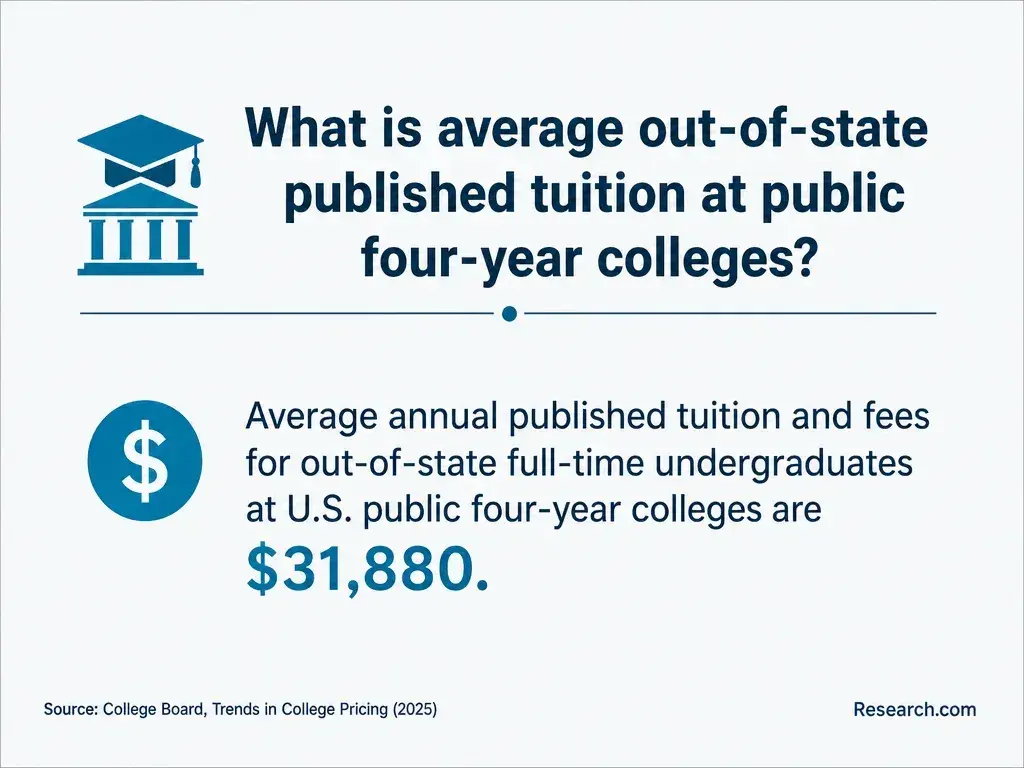
Compare each school's estimate for remaining tuition and mandatory fees, then account for books, travel, possible unpaid fieldwork, and any hours of work you would give up. Ask about employer education assistance and aid eligibility without treating either as guaranteed. A lower price per credit may not produce a lower total bill if fewer prior credits satisfy the degree.
Keep undergraduate costs separate from later options such as public health master's university award comparisons; a possible graduate award cannot make today's bachelor's expenses affordable.
Requirements depend on whether you apply as a first-year student, transfer student, or degree-completion applicant. Schools may ask for prior transcripts and impose separate standards for entry to the institution and entry to the public health major. Some majors require particular introductory courses or a minimum academic standing; others admit students directly. Check the rules for your intended entry term.
If you have prior college work, send transcripts for an official evaluation and ask which courses satisfy general education, prerequisites, and major requirements. Submit work experience where the school requests it, but do not assume employment converts into academic credit. Graduate application rules are a separate issue: online public health master's no-letter application paths should not be used to infer anything about bachelor's admission.
First, confirm the institution's accreditation through its accreditor or the U.S. Department of Education's recognized-accreditation information. Then check the Council on Education for Public Health (CEPH) directory if public health-specific accreditation matters to your plans. Institutional accreditation and CEPH accreditation are different: verify the named accredited school, unit, or program and whether your exact bachelor's degree is within its scope.
Ask the program to identify the accreditation status that applies to your degree and entry term, especially if its website describes an accredited school of public health but your major is housed elsewhere. Use the same scope check for later degrees, including public health doctoral programs with broader entry options. Accreditation does not, by itself, establish transfer-credit acceptance, certification eligibility, or job placement.
Look for jobs by duties and qualifications, not just by a "public health" label. Depending on employer requirements, plausible targets include community outreach coordinator, health program assistant, community health worker, and some health education positions. Your recreation background may be especially valuable to agencies or nonprofits running activity, youth, older-adult, or neighborhood programs.
These roles differ. A program assistant may manage schedules and reporting; a community health worker may connect residents with services; a health education specialist may develop and assess educational activities. Check each posting for degree, experience, language, certification, and state-specific conditions.
Epidemiologist and advanced analyst roles usually call for additional graduate-level preparation or substantial technical experience; a bachelor's degree alone should not be treated as qualification. If graduate study eventually becomes necessary, evaluate budget-conscious MPH study and career outcomes against the particular jobs you seek, not a broad promise of advancement.
What are public health salaries and job outlooks after graduation?
There is no single salary or growth rate for "public health bachelor's graduates." The U.S. Bureau of Labor Statistics reports wages and employment projections for occupations, including community health workers and health education specialists - not for everyone holding a particular degree. Those occupational figures include workers with different experience, education, employers, and locations, so a national median is not an entry-level offer.
For a useful comparison, identify the occupation that matches your target duties, consult its latest Occupational Outlook Handbook wage and projection figures, and compare local postings with your current compensation and benefits.
A move from recreation may improve your career fit without immediately improving pay. Likewise, average earnings after an MPH address a different credential and cannot predict the return on a bachelor's degree. The sounder financial test is whether the remaining education cost opens specific jobs you want that your present qualifications do not.
Other Things You Should Know About Public Health
Possibly, but get the instructor's approval and your employer's permission first. Agree on a feasible question and protect participant information; access to workplace data is not automatic permission to use it for coursework.
Name the population served, your responsibilities, partners, and any documented outputs. Describe outcomes only when you have suitable evidence, and distinguish your own contribution from the wider team's work.
It may be. If your goal is to improve outreach, accessibility, or basic program measurement in your current role - and no target job requires a degree - targeted training and supervised practice may be more direct.
Not universally. Requirements vary by role, employer, and state. Check the credential named in actual postings and its eligibility rules before paying for certification preparation.
- Cost of Attendance (Budget) | 2025-2026 Federal Student Aid Handbook https://fsapartners.ed.gov/knowledge-center/fsa-handbook/2025-2026/vol3/ch2-cost-attendance-budget
- .14 Evaluation and Review Process for Transfer of Courses and Credits. | Library of Maryland Regulations https://regs.maryland.gov/us/md/exec/comar/13B.06.02.14
- Internships & Volunteer Opportunities | cumberlandcountync.gov https://www.cumberlandcountync.gov/departments/public-health-group/public-health/about-us/internships-volunteer-opportunities
- Jobs and Internships - Youth & Young Adult Programs (U.S. National Park Service) https://www.nps.gov/subjects/youthprograms/jobs-and-internships.htm
- Competencies for Public Health Professionals | cdc.gov https://www.cdc.gov/infrastructure/training-professional-development/competencies-for-public-health-professionals.html
- 11.3.8 Allowable and Unallowable Costs | nih.gov https://grants.nih.gov/grants/policy/nihgps/HTML5/section_11/11.3.8_allowable_and_unallowable_costs.htm
- Exploring the Benefits and Value of Public Health Department Internships for Environmental Health Students | nih.gov https://pmc.ncbi.nlm.nih.gov/articles/PMC8205434/
- Public Health | polkcountymn.gov https://polkcountymn.gov/DocumentCenter/View/3259
- Parks, Recreation, & the Outdoors: Majors: Undergraduate | indiana.edu https://publichealth.indiana.edu/undergraduate/degrees-majors/park-recreation-outdoor.html
- Public Health Major | College of Charleston https://charleston.edu/academics/programs/majors/public-health.php