2027 Assessing Community Participation in Program Evaluation: A DrPH Applied Project Planning Guide

Co-Founder and Chief Data Scientist
A community program can collect feedback without giving residents any influence over what happens next. For a DrPH applied project, that distinction matters: an evaluation of participation should show who helps set priorities, interpret evidence, and decide on improvements - not merely who attends meetings. This guide is for experienced public health and nonprofit practitioners considering such a project. It explains how to scope a feasible evaluation, choose measures, secure approvals, and judge whether a DrPH program can support the work.
Key Things You Should Know
- Assess participation as influence over decisions, not just attendance: document who shaped the evaluation question, interpreted findings, and approved or contested proposed actions.
- Before collecting data, secure a willing partner, clarify community decision rights, identify an accessible baseline, and confirm academic, privacy, and review requirements.
- A strong DrPH project produces a usable improvement decision; a methods course or supervised evaluation project may be more proportionate if doctoral leadership training is not the goal.
What Is Community Participation in a DrPH Program Evaluation?
Community participation means people affected by a program have a defined role in its evaluation. That role can range from advising on accessible survey language to sharing authority over evaluation questions, interpretation, and recommendations. Participation is not automatically equitable: a meeting may be well attended while decisions remain entirely with the sponsoring organization.
For example, a health department and neighborhood partners might evaluate how residents influence a chronic-disease outreach program. The practice problem is not presumed to be poor engagement. The project first establishes what decisions residents currently influence, whether the process works for different participants, and what changes the partners consider worthwhile.
A DrPH project generally emphasizes an actionable practice or leadership decision. A research-focused degree may fit better if the primary aim is to develop generalizable theory or a novel method. Practitioners weighing a narrower educational route can start by comparing public health master's career directions.
How Do You Plan a Community-Engaged DrPH Applied Project?
Start with a decision the partner can realistically make, such as whether to revise an advisory group's membership, meeting process, or authority over outreach materials. Then work backward to the evidence needed. The following sequence keeps the project useful without assuming that the student controls the organization or speaks for the community.
- Agree on the decision and boundaries. Ask organizational and community partners what they want to learn, what they can change, and which questions are outside the project's scope.
- Map decision rights. Record who may propose questions, review instruments, interpret findings, approve recommendations, and disagree publicly with the final account.
- Check the baseline. Review available meeting records, outreach procedures, prior feedback, and participation barriers; identify gaps rather than treating missing records as evidence of no participation.
- Set a manageable plan. Choose a limited observation period, feasible recruitment approach, accessible participation options, and a budget for translation, transportation, or compensation where appropriate.
- Agree on outputs and approvals. Specify a partner-facing brief or revised engagement protocol, its reviewers, the approval process, and what may appear in the student's academic submission.
Ask the faculty advisor and partner to confirm timelines, supervision, data permissions, and what happens if staff or community representatives leave. If the immediate goal is simply to learn evaluation techniques, compare a supervised project or targeted training with efficient public health degree pathways and earnings before committing to doctoral study.
What Are the DrPH Applied Practice Experience Requirements?
Do not assume that an MPH practicum and a DrPH applied experience have identical rules. The DrPH program determines how its applied practice requirements, leadership competencies, supervision, products, and any culminating project fit together. A student's current job may offer project access without automatically meeting academic requirements.
Request the current handbook and ask the program director which activities require advance approval, who may supervise the work, how competencies are assessed, and whether work completed before enrollment can count. Separately ask the host organization what it will authorize. School approval does not grant access to confidential records or permission to publish a partner's materials.
An MPH with a well-supported field placement may be sufficient for someone seeking supervised entry into evaluation rather than doctoral-level organizational leadership. When examining that route, online public health master's aid eligibility is one consideration alongside the placement's quality and supervision.
Choose methods according to the decision, the people who can reasonably participate, and the evidence already available. The comparisons below show what each method can reveal - and what it cannot establish on its own.
| Method | Useful evidence | Main limitation |
| Decision-log review | Which suggestions reached a decision and how the response was documented | Informal influence may be absent from records |
| Accessible interviews or listening sessions | How participants experienced influence, barriers, and disagreement | Volunteers may not represent people who could not participate |
| Brief participation survey | Patterns in reported opportunity to contribute across respondents | Small or uneven response groups limit interpretation |
| Meeting observation | Who speaks, facilitates, and receives a response in practice | Presence of an observer can affect behavior |
Attendance is a useful reach measure, not a measure of influence. Pair it with an indicator such as the proportion of documented community recommendations receiving a recorded decision, and report the denominator and missing records. Invite partners to interpret apparent disagreements between meeting records and participant accounts; do not claim that an observed change was caused by the project without an appropriate comparison design.
Before interviews, surveys, or record review, check consent or notice needs, accessibility, secure storage, any data-use agreement, and the institution's process for determining whether review is required. A project labeled "program evaluation" is not automatically exempt from review. If the central goal is original research rather than practice improvement, comparing tuition for public health research degrees may be relevant - but research supervision and design should drive that choice.
Look beyond a course title such as "community engagement." A useful curriculum connects program theory and logic models to qualitative inquiry, basic quantitative interpretation, implementation, ethics, and leadership. Students should practice explaining findings to people who disagree about the program's priorities.
For this project, the most valuable supervised work is often instrument testing, facilitation, analysis of conflicting accounts, and revision of a partner-facing recommendation. Ask whether faculty can advise on community governance and evaluation design, and whether electives are offered often enough to fit the project timeline. An elective is not proof of a formal concentration or advanced methodological competence.
Applicants still building public health foundations may need introductory study before a DrPH. Public health degree choices for undergraduate students can help clarify that earlier pathway, but experienced practitioners should assess their actual skill gaps rather than repeat a credential unnecessarily.
DrPH admissions rules vary. Programs may assess prior graduate education, relevant professional experience, leadership responsibility, academic preparation, recommendations, and a statement of practice goals. An MPH, a particular job title, or a fixed number of years should not be treated as a universal requirement.
For this project interest, a persuasive application explains what the applicant has led, who had authority over the work, what changed or remained unresolved, and how they would approach a partner relationship. Distinguish a plausible project setting from confirmed access: admissions interest does not substitute for site, data, or academic approval.
If doctoral study is premature, a master's program may offer an appropriate bridge. Applicants who lack a conventional reference network can investigate public health graduate admissions with fewer reference documents, while checking each program's actual requirements before applying.
Delivery format changes how a student collaborates; it does not remove the need for sustained partner work. Online study may let a practitioner remain near an established community partner, but live sessions, group work, residencies, and local fieldwork can still be difficult to schedule. Campus study may make faculty consultation easier while requiring travel or a new project relationship.
Compare actual calendars and project support, not an "online" label. Ask when live meetings occur, whether campus visits are mandatory, how remote supervision works, and what happens if a partner cannot attend academic meetings. A lower-commitment online MPH may be worth considering for applicants seeking a first supervised evaluation experience; exploring less selective MPH study pathways is not a substitute for checking fieldwork quality.
Completion time depends on credit load, course scheduling, applied-project approvals, and the time needed to work with partners. A part-time plan is only realistic if the program's milestone rules and the partner's decision calendar align. Ask for the program's published completion expectations and continuation policy rather than relying on an advertised minimum.
Build a cost estimate from tuition and mandatory fees, then add travel, campus visits, project materials, accessibility services, possible participant compensation, and earnings affected by reduced work hours. Confirm who pays project expenses and whether funding or employer reimbursement covers part-time enrollment and later terms. No project should depend on community members donating labor without a conversation about resources.
Compare that full estimate with the cost of a narrower route, such as online MPH programs by tuition affordability, a methods course, or employer-supported training. Lower tuition alone does not establish lower total cost or better project access.
This work can support responsibilities in health departments, nonprofits, health systems, and evaluation organizations: directing partnerships, managing evaluation teams, translating findings into program changes, or overseeing accountability to communities. Hiring usually depends on documented leadership, technical judgment, and organizational experience as well as education.
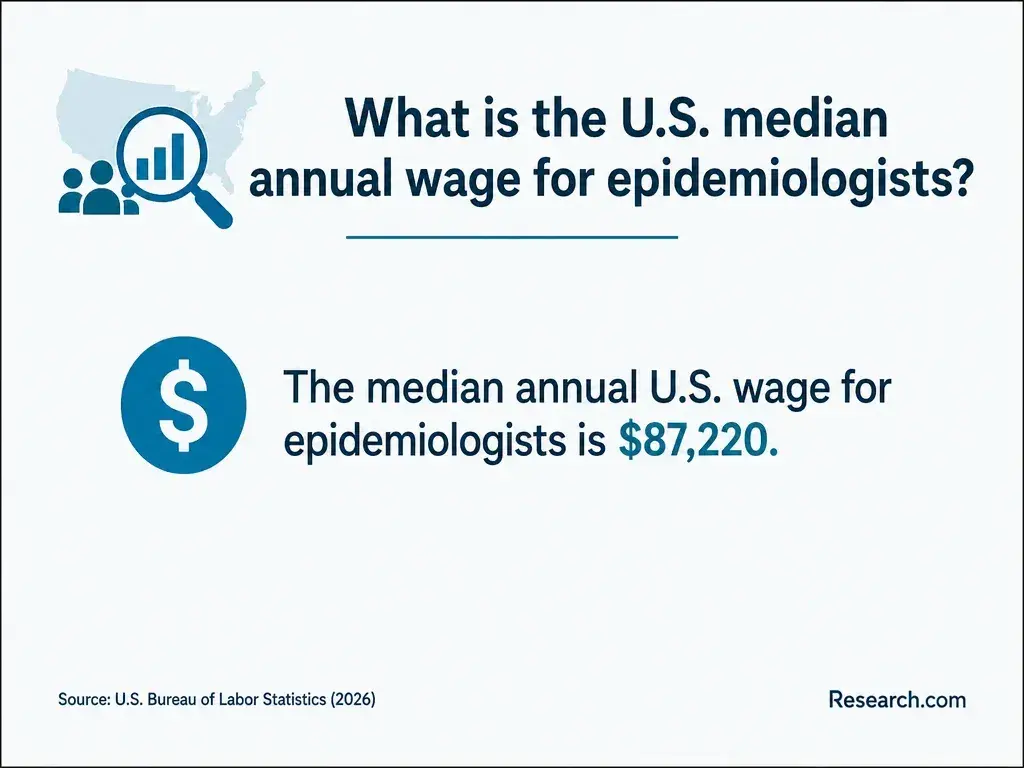
There is no single "community evaluation DrPH salary." US Bureau of Labor Statistics occupational data describe jobs, not outcomes for graduates of a particular degree. A health education specialist's wage data may inform some community-program roles, while a senior director position requires comparison with that specific employer's duties, location, and pay range. Do not use a broad management median as a predicted doctoral salary.
For practitioners considering advancement, compare likely responsibilities and foregone earnings - not just a prospective title - with the public health doctorate career value guide. If the target job mainly requires stronger facilitation or analysis, supervised experience may offer a more direct return.
How Do You Choose an Accredited DrPH Program?
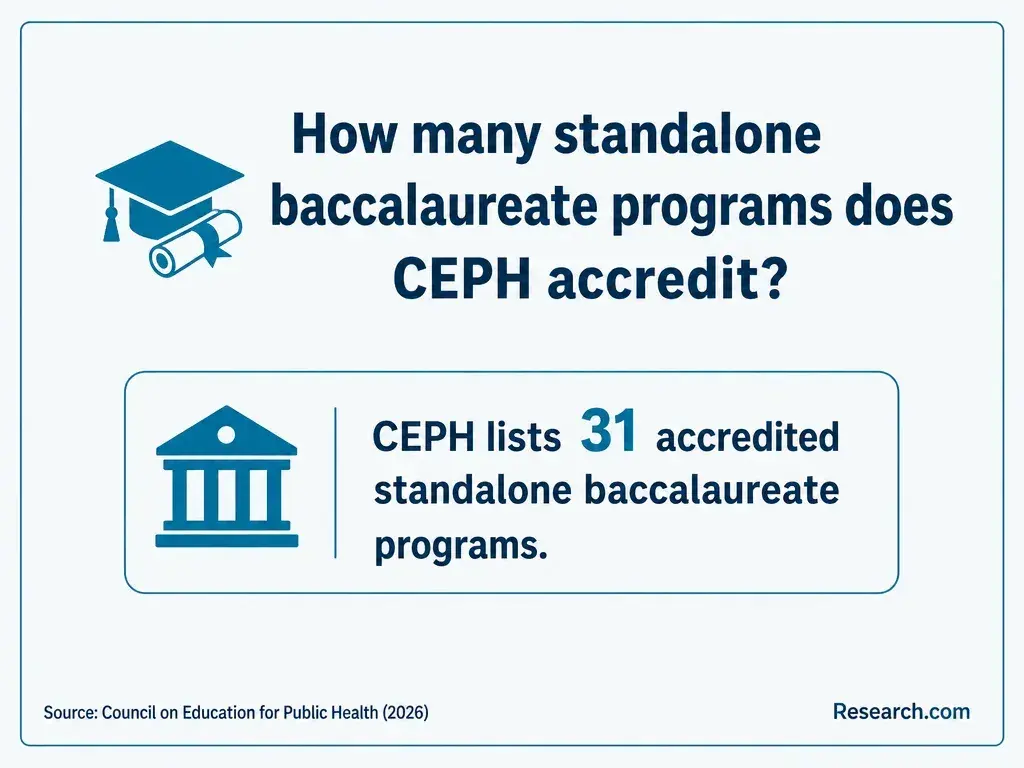
Confirm institutional accreditation and check the Council on Education for Public Health listing for the exact school, unit, or program and the degree's coverage. Institutional accreditation and CEPH accreditation answer different questions; neither establishes that a particular faculty member can supervise your proposed project.
Shortlist programs by examining published project requirements, faculty evaluation expertise, partner-site rules, milestone support, and total cost. Then ask a program representative whether a community organization may help govern questions and interpretation, what approvals precede data collection, and how a disagreement with the partner would be handled in the final academic product.
If an MPH is the better fit, comparing accreditation across online MPH programs offers a separate starting point. For either degree, verify current accreditation scope and policies directly before enrollment.
Other Things You Should Know About Public Health
Often, if the organization, funder, and institution permit it. Agree on the work, payment process, and budget before inviting participation; compensation should not depend on giving favorable feedback.
Describe who is missing, ask partners about barriers, and offer accessible ways to contribute where feasible. Do not present attendees' views as those of the entire community.
Ownership and permitted use depend on institutional policy and partner agreements. Clarify control of recordings, data, instruments, reports, and public presentations before collection begins.
Document the differing interpretations accurately and use the agreed decision process. A credible evaluation need not manufacture consensus or promise that every recommendation will be adopted.
- WHAT IS MEANT BY SOCIAL PARTICIPATION IN DECISION | who.int https://iris.who.int/bitstreams/555e2255-c0b8-4c19-823e-910648144460/download
- Evaluation of Community Engagement Activities | Community Engagement Playbook https://www.atsdr.cdc.gov/community-engagement-playbook/php/activities/evaluation-activities.html
- Framework for Program Evaluation in Public Health | cdc.gov https://www.cdc.gov/mmwr/preview/mmwrhtml/rr4811a1.htm
- Section 5. Ethical Issues in Community Interventions | ku.edu https://ctb.ku.edu/en/table-of-contents/analyze/choose-and-adapt-community-interventions/ethical-issues/main
- Engage for Equity Community Engagement Survey | NAM https://nam.edu/product/engage-for-equity-community-engagement-survey/
- Participatory evaluation | betterevaluation.org https://www.betterevaluation.org/methods-approaches/approaches/participatory-evaluation
- 6. participatory evaluation events | fao.org https://www.fao.org/4/t7838e/T7838E05.htm