2027 MPH Programs: Checking Disability Support in Field Placements

Co-Founder and Chief Data Scientist
An MPH program may offer accessible classes yet leave essential questions unanswered about its required field placement. For students with disabilities, the deciding details are often who arranges accommodations, whether a host site can support them, and what happens if a placement falls through.
This guide explains what to expect from an applied practice experience, how to verify support before enrolling, and which questions to put in writing. It focuses on making a feasible fieldwork decision - not assuming that online classes or a general disability-services policy settle it.
Key Things You Should Know
- Check both the MPH program's accommodation process and the proposed host site's accessibility; approval by one does not automatically resolve the other.
- CEPH-accredited MPH programs require an applied practice experience with at least two practice-based work products, but individual schools set placement schedules and other operating rules.
- Before enrolling, request written answers about accessible sites, remote-work eligibility, placement replacement, supervision, and any added travel or technology costs.
What disability support should MPH students expect during field placements?
An MPH applied practice experience, often called a practicum or field placement, is supervised work that applies public health competencies in a practice setting. Disability support should extend to this required academic activity, not stop at classroom accommodations. The university's disability-services office typically assesses requests, while the MPH fieldwork coordinator and host site help determine how approved arrangements will work in practice.
Depending on the student's needs and the work, support could include accessible meeting and work spaces, compatible software, captioned meetings, an adjusted schedule, an accessible way to travel to required activities, or a different approved project or site. The student should be able to participate meaningfully and produce usable public health work - not merely observe because a site has failed to make its tasks accessible.
Ask who will provide and pay for each support before accepting a placement. The answer can depend on the university, the host's responsibilities, and whether the student is also its employee. An MPH practicum should not be confused with a later doctoral applied project: public health doctorate eligibility comparisons address a different degree decision, not the accessibility of an MPH site.
How do MPH programs provide reasonable accommodations for practicum requirements?
Students generally begin with the university's disability-services process, then work with the fieldwork coordinator on an individualized plan. Depending on the institution, federal disability protections may include the Americans with Disabilities Act and Section 504 of the Rehabilitation Act. A reasonable accommodation changes access to an activity; it does not automatically waive an essential academic requirement or require a fundamental alteration of the program.
The strongest plan identifies the actual tasks and barriers rather than asking a site to approve "accessibility" in the abstract. For example, an approved remote arrangement might allow a student to develop a community health evaluation tool and attend accessible virtual supervision meetings. It may not fit a placement whose essential work requires in-person environmental sampling. In either case, the school should assess feasible alternatives individually rather than assume that every student needs the same format.
Confirm the division of responsibilities before work starts. The academic coordinator approves competencies, supervision, and deliverables; disability services handles the accommodation determination; and the host confirms what it can implement at its location. Keep admission status separate from this process: public health master's conditional admission options concern entry requirements and do not replace a practicum accommodation agreement.
How can students verify disability services before choosing an MPH program?
Do not rely solely on a general statement that the university offers accommodations. Request the current MPH fieldwork handbook and ask disability services and the practicum office how they coordinate on off-campus placements. You can ask about the process without disclosing a diagnosis to admissions staff.
Send the same scenario-based questions to each school so the answers are comparable:
- Who identifies accessible sites, and must students find their own placements?
- When should an accommodation request begin, and who confirms arrangements with the host?
- Can a project be remote or hybrid if its competencies and supervision requirements can still be met?
- What happens if an approved site cannot implement an arrangement or becomes inaccessible after work begins?
- Who handles concerns, placement reassignment, and any resulting change to graduation timing?
Ask for applicable policy language and a named contact, not a promise that any preferred site will be approved. When building a realistic online MPH application list, treat fieldwork support as a separate screening criterion from admission accessibility or online course delivery.
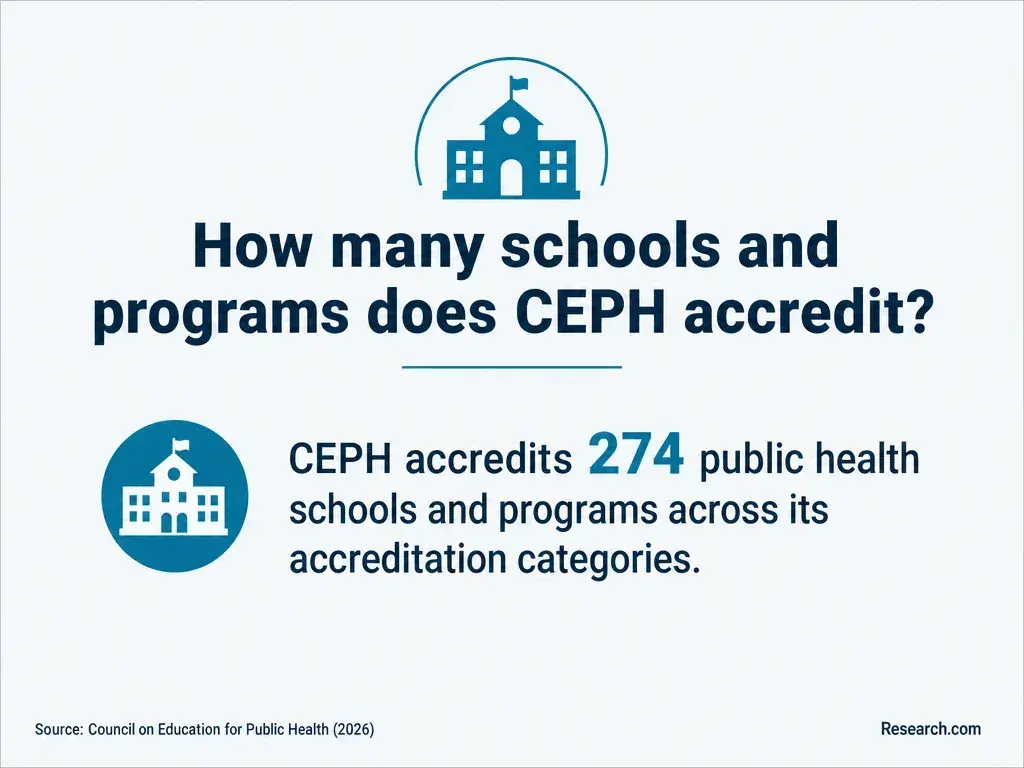
The Council on Education for Public Health (CEPH) requires MPH students in programs it accredits to complete an applied practice experience that demonstrates competencies through at least two practical work products useful to a practice setting. CEPH does not make every school use the same calendar, placement-finding process, or weekly schedule. Consult the requirements that apply to your program and entry term before committing to a site.
A credible placement must allow appropriate supervision, work aligned with approved competencies, and deliverables the program can assess. A host's willingness to accept a student is not the same as school approval; permission to use organizational data or share a finished product may require separate agreements. An existing job can sometimes serve as a setting, but only if the program approves the proposed work under its rules.
Verify that CEPH accreditation covers the specific MPH program, school, or unit under consideration; institutional accreditation alone does not establish that scope. A starting point for reviewing accredited online MPH pathways is useful only if you then confirm each program's current accreditation coverage and fieldwork handbook.
Online coursework does not necessarily mean remote fieldwork. Some programs help arrange local hosts; others expect students to propose a site for approval. A local placement can reduce relocation costs, but its meetings, travel, technology, and on-site tasks still need to be workable.
Ask whether the school has approved remote or hybrid projects when the work supports meaningful practice, what qualifies as local supervision, and whether accessible meeting platforms and project tools are available. Also ask how staff support students when a local host withdraws. A program with a clear replacement process may be more practical than one advertising flexibility without explaining its fieldwork obligations.
For someone still finishing an undergraduate degree, comparing accelerated public health undergraduate schedules may help plan the path to graduate study. Faster undergraduate coursework, however, does not shorten an MPH program's separately approved placement.
Each university sets its documentation procedures. Disability services may ask for information establishing a disability, its functional impact in the relevant setting, and the reason a requested adjustment would address the barrier. Existing records may be sufficient; a school should explain if it needs additional information. Contact the office early enough to allow review and coordination before site work begins.
Describe the placement tasks as concretely as possible: required travel, live meetings, software, data handling, community activities, and expected hours. For a data-focused project, the issue might be whether a host's analysis platform works with assistive technology. That question also matters to students considering biostatistics graduate study while working, but the MPH program must assess its own placement requirements.
Students can ask which documents the school will accept, who reviews them, and how to challenge a decision. Do not send detailed medical records to a potential host merely because it asks how an accommodation will work; first consult disability services about what information the host actually needs.
Disability documentation should go through the university's designated process. Fieldwork staff and site supervisors generally need to know the approved arrangements they must implement, not every detail of a student's medical history. Ask the university who can access records, what it shares with a host, how consent is handled, and where to report an improper disclosure.
University student records may receive protections under the Family Educational Rights and Privacy Act (FERPA); other rules may apply to information held by a host, especially when the student is also an employee. Do not assume HIPAA governs every student accommodation record. Keep the placement's own client or community data separate from disability documentation, and confirm any data-use and confidentiality requirements before beginning project work.
Financial-aid discussions are another distinct process. Even if a student later investigates epidemiology doctorate scholarships and grants, they should ask what information a funding office needs rather than assume their MPH accommodation file must be shared with it.
An accessible practicum is valuable partly because it lets a student demonstrate work that employers recognize: a program evaluation plan, a health communication product, a policy analysis, or a responsibly prepared data report. With relevant skills and experience, MPH graduates may pursue roles in health education, program coordination, evaluation, epidemiology, or public health policy. Job titles and requirements vary; the degree alone does not qualify someone for every analyst, leadership, or regulated clinical role.
Choose fieldwork tasks with the intended role in mind. A prospective evaluator benefits more from defining measures and producing a usable evaluation deliverable than from a placement limited to observation. A student interested in community programs should look for supervised collaboration and ethical communication, while an aspiring epidemiologist should check the role's quantitative expectations and the project's data access.
Further education is not automatically the next step after an MPH. A student considering research or advanced practice leadership can use a public health doctoral degree comparison guide to distinguish those goals, while someone seeking a narrower skill may be better served by supervised experience or targeted training.
Duration depends on the program's approved hours or other workload rules, term schedule, site availability, and the time needed to finish and assess deliverables. A placement can also take longer when access arrangements or a replacement site must be coordinated. Ask for the required workload and the earliest and latest terms in which students normally complete it; do not infer fieldwork hours from a program's total degree length.
Budget beyond tuition. Potential expenses include transportation, parking, accessible travel, required technology, background checks, and reduced paid-work hours. Ask which costs the university or host covers, whether placements are paid, and whether extending a placement triggers another term of tuition or fees. An unpaid local placement may cost more in lost earnings than a better-supported remote project, even when both meet the same academic requirement.
If funding is a constraint, compare the terms of scholarship-supported online public health master's options with the actual term in which fieldwork occurs. Verify award eligibility, renewal conditions, and coverage directly with the school; a scholarship listing is not proof that placement-related expenses will be paid.
How should students compare accredited MPH programs for accessibility?
Compare programs on evidence that predicts whether you can complete the practicum, not just access online classes. The table separates claims worth checking from stronger evidence to request before enrollment.
| Decision factor | Less informative claim | More useful evidence |
| Placement access | "Students find local opportunities" | Written site-search responsibilities and a replacement process |
| Accommodations | "Disability services are available" | A procedure covering off-campus work and host coordination |
| Format | "Online and flexible" | Rules for remote work, live supervision, travel, and site attendance |
| Completion | "Career-focused fieldwork" | Current workload rules, deliverable criteria, and extension policies |
A workable choice has an approved path from accommodation request to accessible site, supervised tasks, assessed products, and a contingency if the original plan fails. Document the answers from disability services, the fieldwork coordinator, and the host; resolve contradictions before committing. For students balancing work or caregiving, budget and pacing choices for public health students deserve the same scrutiny as accessibility, because a flexible class schedule does not make a fixed-hours placement feasible.
Other Things You Should Know About Public Health
Generally, you can ask about accessibility and apply without disclosing a diagnosis to admissions staff. Contact disability services through its designated process when you want accommodations arranged.
Raise this with disability services before placement. Site access may involve setting-specific safety rules, but the university and host should address the request individually rather than assume a blanket prohibition.
Report the barrier promptly to the site supervisor and university coordinator. They can assess an accessible format, compatible tool, or approved task adjustment while maintaining the host's data-security rules.
Not necessarily. Ask about reassignment, revised tasks, academic appeals, and leave or extension policies. The available remedy depends on the circumstances and the program's rules, so obtain the decision in writing.
- Auxiliary Aids and Services for Postsecondary Students with Disabilities | U.S. Department of Education http://www.ed.gov/laws-and-policy/individuals-disabilities/auxiliary-aids-and-services-for-postsecondary-students-with-disabilities
- Disability and Reasonable Accommodations Policy | Michigan State University https://u.policies.msu.edu/doctract/documentportal/08DB6212DB9C091C57460E1C66191C38
- MPH Practicum/Internship | School of Public Health https://www.publichealth.pitt.edu/research-practice/mph-practicum
- Internships, Externships, Practicum, and Fieldwork | The University of Utah https://disability.utah.edu/accommodations-services/fieldwork.php
- MPH Fieldwork | Public Health | Binghamton University https://www.binghamton.edu/decker/public-health/academics/fieldwork.html
- Placement Setting Considerations | our.ric.edu https://our.ric.edu/department-directory/center-disability-access/unique-accommodation-considerations/placement-setting-considerations
- Degree Requirements - Chicago https://www.depaul.edu/academics/programs/public-health-mph/degree-requirements
- Support and Accommodations for Internship Experiences | Plone site https://equity.psu.edu/offices/student-disability-resources/accommodations/common/accommodations-internship-experiences
- Internship/Practicum Accommodation Procedures | ucdenver.edu https://www.ucdenver.edu/offices/disability-resources-and-services/accommodations/internship-practicum-accommodations
- Accommodation Appeal and Grievance Procedure | Dakota State University https://dsu.edu/student-life/disability-services/ada-appeal.html