2027 A Lead Prevention Outreach Coverage Assessment: A Graduate Public Health Portfolio Project

Co-Founder and Chief Data Scientist
A lead prevention campaign may distribute thousands of materials yet still miss families most likely to benefit. A graduate public health portfolio project can examine that gap by assessing where outreach was offered, who could access it, and what the available records can and cannot show.
This guide is for students planning a capstone, applied practice deliverable, or independent portfolio artifact. It explains how to scope a credible coverage assessment, choose appropriate training and supervision, and produce recommendations without overstating results or exposing private information.
Key Things You Should Know
- Define coverage before collecting data: distinguish households eligible for outreach, households contacted, and people who took a documented next step. Those are different denominators and different claims.
- A useful student deliverable can include a service-area map, an indicator dictionary, a gap analysis, and a decision brief, even when restricted household or blood lead data are unavailable.
- An MPH with community health, environmental health, or evaluation training is one route. The right choice depends on project access, supervision, cost, and whether the goal is outreach practice or specialized exposure research.
What Is a Lead Prevention Outreach Coverage Assessment?
It is a structured comparison between a defined population or area that a lead prevention effort intends to serve and the outreach it can document. The decision-maker might be a local health department or community organization deciding where to place staff time, translated materials, referrals, or partnerships. The assessment concerns outreach coverage, not a clinical determination that someone has or does not have lead exposure.
Start with one setting and one decision. For example, an organization might want to know whether its child lead prevention information reached the neighborhoods included in its service plan. Publicly available housing-age indicators may help describe potential need, but they do not identify an exposed child or establish that a particular home contains a hazard.
The indicator definitions are the heart of the project. "Materials distributed," "households contacted," "households eligible," and "families referred" measure different activities.
If records count events rather than unique people, call the measure outreach activity, not the share of residents reached. If an eligible-population denominator is unavailable or unreliable, report counts and geographic distribution instead of manufacturing a coverage rate.
Students still building foundational public health skills can use accelerated course planning for a public health degree to consider an earlier academic route. Faster coursework, however, does not replace the time needed to secure a partner, agree on definitions, and review data permissions.
How Does This Portfolio Project Apply Public Health Practice?
The project combines environmental health, community engagement, health communication, and program evaluation. Its value is practical: it can show whether an outreach process is documented consistently enough to guide the next allocation of effort. It cannot, on its own, prove that outreach reduced exposure or changed health outcomes.
A feasible assessment moves from a partner's decision to a small set of defensible outputs. The following sequence keeps the work within a student project's likely scope:
- Agree with a faculty supervisor and, if applicable, a site partner on the service area, target audience, decision deadline, and permitted use of records.
- Document how outreach occurs, including events, visits, referrals, languages, and partner channels; identify where contacts may be counted twice.
- Choose indicators and denominators that the available data can support, then record missingness and differences in reporting periods.
- Compare activity across areas or channels without equating low recorded activity with low community interest or high exposure.
- Present a concise decision brief with data limitations, feasible follow-up questions, and proposed changes the partner can accept, reject, or revise.
People with community health or nonprofit experience may already understand outreach operations. A graduate project adds explicit definitions, reproducible documentation, and careful interpretation.
For readers considering an earlier entry point, an online bachelor's public health education guide can help distinguish foundational preparation from the supervised evaluation work this portfolio requires.
What Degree Pathways Prepare Students for Lead Prevention Work?
The best pathway depends on the work the student wants to do after the portfolio, not on the prominence of the degree title. An MPH often fits outreach planning and evaluation; a research-oriented MS may better fit intensive exposure analysis. Neither degree alone authorizes environmental inspection, clinical care, or another regulated activity.
This comparison focuses on preparation relevant to a coverage assessment rather than treating every lead-related role as interchangeable.
| Pathway | Best fit for this project | Important limit |
| MPH in community health, environmental health, or a related area | Partner-based outreach design, equity-focused assessment, and actionable reporting | Course titles do not establish access to a partner or its records |
| Research-oriented MS | Deeper study of exposure measurement, epidemiology, or quantitative methods | A research emphasis may offer less practice-based outreach work; verify the program |
| Graduate certificate or targeted training | Adding evaluation or environmental health skills to an existing community role | May not provide a supervised field project or satisfy a job's degree requirement |
| DrPH or PhD | Experienced practice leadership or a sustained research agenda, respectively | Usually disproportionate if the immediate goal is one outreach assessment |
A practitioner who already has partner access and only needs stronger mapping or evaluation skills may benefit more from a focused course and mentorship than another degree. Readers whose goal is advanced organizational leadership can investigate online doctorates in public health, while checking each program's actual project and residency requirements.
A useful curriculum lets students move from a prevention question to a defensible decision brief. Environmental health provides context about lead exposure and prevention; epidemiology and biostatistics support population measures; program evaluation clarifies what outreach records can establish; and community-engaged practice helps students interpret gaps without blaming residents for barriers in service design.
For this particular portfolio, students should look for opportunities to practice defining an eligible population, building an indicator dictionary, checking duplicate and missing records, comparing geographic patterns, and writing accessible recommendations.
Mapping software can help, but a polished map is not evidence that the underlying address or denominator data are sound. Qualitative input from a partner may explain how outreach is delivered, provided its collection and use are authorized.
A methods-heavy student may want to compare professional-friendly biostatistics master's programs. That route makes more sense when the career goal requires substantial statistical analysis; a coverage assessment can often be done well with descriptive methods, careful data management, and strong supervision.
Requirements vary by institution and degree. Graduate public health applicants generally need to establish eligibility under a program's published degree and application rules, but an undergraduate major outside public health is not automatically disqualifying. A statistics course, relevant work, community experience, or an explanation of the proposed project may strengthen preparation without being a universal admission requirement.
For this project, distinguish admission from project feasibility. Before applying, ask whether the program permits a partner-based portfolio or capstone, who approves the site, when approval occurs, and whether a student may use an existing workplace. A willingness to host the student does not itself grant access to records or satisfy a school's applied-experience rules.
Applicants concerned about academic history can review low-GPA eligibility for public health graduate programs, then check the specific school's policy rather than assuming a general threshold or waiver. The most useful preparation is evidence of current readiness: relevant coursework, an appropriately scoped project idea, and a clear account of the skills the applicant still needs.
There is no reliable single price or completion time for a graduate public health pathway. Total cost depends on required credits, tuition and fees, enrollment pace, funding, and whether an applied experience entails travel or unpaid time. A project's schedule also depends on site approval, data access, partner feedback, and revision, not just the number of terms shown in a course catalog.
When comparing programs, request a written estimate for the intended enrollment pattern and check whether required methods courses are offered often enough to support it. Budget for possible fieldwork travel and time away from paid work. A lower advertised tuition rate may offer little practical advantage if a student cannot complete the assessment with available supervision or must delay graduation while arranging a site.
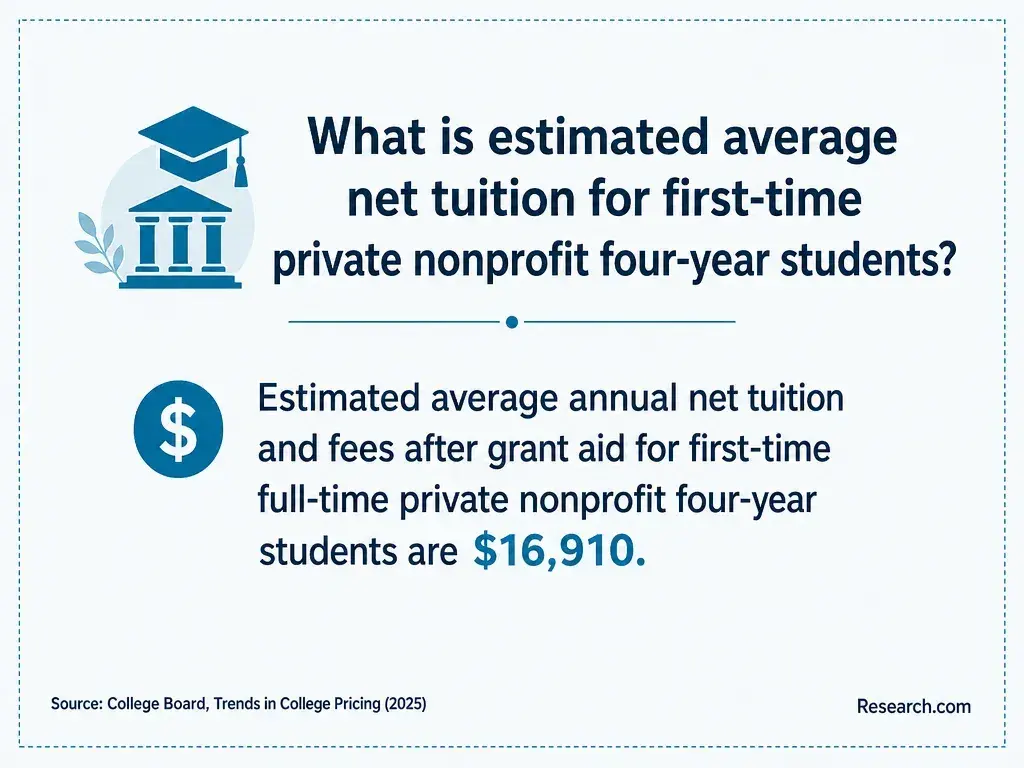
Budget-conscious MPH study and career outcomes provides a broader comparison starting point. For this project, the more useful financial question is whether the program's total cost buys the methods training, approved applied opportunity, and advising the student actually needs; career earnings are not guaranteed by the degree.
Neither format is inherently better. An online program may allow a student to work with a local organization, while a campus program may offer easier access to faculty and nearby partners. The decisive features are approved field-site options, supervision, partner communication, data security, and enough schedule flexibility for meetings and revisions.
Ask how often classes meet live, whether group work or site visits have fixed hours, how remote fieldwork is approved, and who helps if a partner withdraws. Online delivery does not make confidential outreach records appropriate for a personal device, nor does campus attendance guarantee a placement.
Students comparing speed with feasibility can consult public health program speed and career value. For a coverage assessment, the fastest course sequence is not necessarily the fastest route to an approved, ethically usable portfolio artifact.
The strongest match is a role that needs to turn incomplete service records into better prevention decisions. A health education specialist might plan and assess communication activities; a program coordinator might monitor outreach across partner sites.
An environmental health program employee might connect outreach findings to agency operations. Job titles and required qualifications vary by employer and state.
Entry-level candidates can demonstrate the skills through an authorized portfolio brief, an indicator dictionary, and a clear explanation of limitations. Those artifacts show more than a claim of "data experience," but they do not establish independent authority to inspect homes, interpret clinical results, or direct a lead prevention program. Seek supervised work when those responsibilities are the goal.
A student drawn primarily to sustained research on exposure or interventions should evaluate research mentorship and funding rather than choose a practice degree solely for a portfolio assignment. An online public health PhD tuition guide is relevant to that different career decision; a PhD is not a prerequisite for assessing outreach coverage.
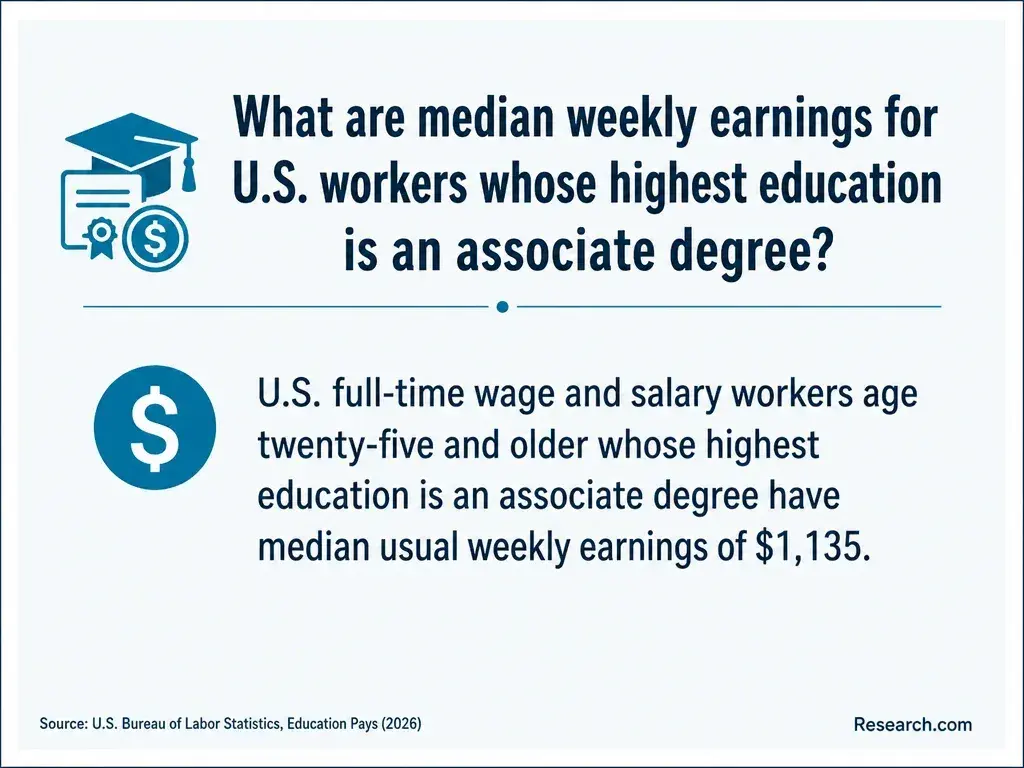
There is no occupation-wide wage or growth figure for "lead prevention outreach assessor," and a public health degree does not carry a standard salary. A useful comparison starts with the actual job posting.
Determine whether its duties align most closely with health education, community outreach, program evaluation, environmental health, or another occupation, then consult the corresponding US Bureau of Labor Statistics occupation and the employer's posted range.
Occupational medians describe workers across settings and experience levels; they are not starting offers or outcomes for graduates of a particular program. Government pay scales, nonprofit budgets, location, and prior experience may matter more to an individual offer than a degree concentration.
Public health master's salary outlook can provide broader context, but compare its occupational categories with the duties of the roles you intend to pursue before using it to evaluate tuition.
How Can Students Choose an Accredited Public Health Program?
First verify the institution's accreditation, then check the Council on Education for Public Health (CEPH) listing for the specific school, unit, or program and whether the intended degree falls within its scope. Institutional accreditation and CEPH accreditation answer different questions; neither proves that a student can complete this particular project.
Next, ask an academic coordinator for the current applied-experience and capstone rules. Confirm who approves the partner and project, what supervision is required, whether public or workplace data can be used, and what may be shown in a portfolio.
Request examples of acceptable formats, not access to another student's restricted materials. If an application gap remains, review public health graduate bridge and entry pathways and verify any conditional or preparatory option directly with the program.
Choose the program that can support a bounded, approved assessment, not merely one that advertises lead-related coursework. A strong final artifact states its audience and decision, defines each indicator and source, records data-quality checks, distinguishes documented reach from inferred need, and presents feasible recommendations.
Before sharing it publicly, obtain any required partner approval and remove identifying or restricted information; a proposed framework must not be presented as completed fieldwork.
Other Things You Should Know About Public Health Programs
Yes. Create a clearly labeled proposed assessment template using public information and hypothetical field names. Do not imply that an agency supplied data, endorsed the recommendations, or approved the work.
No. Housing-age patterns can inform outreach planning, but they cannot establish a household hazard, an individual exposure, or a child's blood lead result.
Only after checking the data-use terms, school rules, and partner permissions. Aggregated displays can still reveal information when geographic areas or counts are small.
Call it a gap in documented outreach and explain the missing records or uncertain denominator. Recommend what to verify before treating it as a gap in actual service delivery.
- Learn About Lead | US EPA https://www.epa.gov/lead/learn-about-lead
- Community Engagement and Outreach Programs for Lead Prevention in Mississippi - PMC https://pmc.ncbi.nlm.nih.gov/articles/PMC7795914/
- Healthy People Objectives | Childhood Lead Poisoning Prevention | CDC https://www.cdc.gov/lead-prevention/php/data/healthy-people-objectives.html
- Defining Outreach | acf.gov https://liheapch.acf.gov/delivery/outreach.htm
- Chapter 23., Section 6. Using Outreach to Increase Access | ku.edu https://ctb.ku.edu/en/table-of-contents/implement/access-barriers-opportunities/outreach-to-increase-access/main