2027 Public Health PhD Research: Planning Longitudinal Exposure Measurement

Co-Founder and Chief Data Scientist
A dissertation on air pollution, workplace hazards, or another changing exposure can fail before analysis begins if measurements miss the period that matters for health. For prospective public health PhD students, the central task is to design an exposure record that matches the research question, available data, and realistic fieldwork capacity.
This guide explains how to choose measurement timing and methods, anticipate bias and approvals, and assess whether a doctoral program can support the study. It also distinguishes research training from less costly routes for learning a specific technique.
Key Things You Should Know
- Define the exposure window, outcome timing, and target population before choosing sensors, surveys, or statistical models.
- Repeated measurements are not automatically better: prioritize intervals that capture meaningful changes and document missing observations.
- Choose a PhD program for suitable supervision, feasible data access, and dependable funding, not an advertised concentration alone.
What Is Longitudinal Exposure Measurement in Public Health Research?
Longitudinal exposure measurement records a potentially health-relevant condition for the same people, places, or groups at multiple points in time. The exposure might be particulate matter near a home, noise during work shifts, heat during pregnancy, or a changing psychosocial condition.
Researchers link those records to an outcome measured later or repeatedly, while accounting for when exposure could plausibly affect health.
The unit and time scale must match the question. A neighborhood monitor may describe ambient conditions but not an individual's inhaled dose. An annual address history may support a long-term pollution estimate but miss short peaks.
The distinctions below show why an exposure summary is a scientific choice, not merely a convenient data field:
| Exposure summary | Information retained | Important limitation |
| Baseline value | Conditions at study entry | Misses later changes |
| Average across follow-up | Overall level during the observed period | Can conceal peaks and changes in timing |
| Time-varying record | Sequence of measured or estimated values | Requires careful alignment with outcomes and missing data |
A student who mainly wants quantitative training rather than an independent research career might compare biostatistics master's format and scheduling comparisons before committing to a PhD. Statistical training helps, but it does not replace a defensible exposure-assessment plan.
Why Pursue a Public Health PhD in Exposure Measurement Research?
A research-focused PhD fits someone who wants to formulate new population-health questions, improve exposure methods, and conduct sustained, supervised research.
A dissertation might test how alternative exposure windows change an estimate, assess measurement error, or investigate how exposure patterns differ across settings. Its contribution must be more than applying a device to an available sample.
Doctoral fit depends on the whole research environment: a potential supervisor's expertise, collaborators who understand the exposure, access to an appropriate population or dataset, and support for measurement and analysis.
An MPH usually emphasizes professional public health practice; a research-oriented MS may offer a thesis and substantial methods training without the longer commitment to doctoral scholarship. Compare research expectations and actual funding terms, not just advertised tuition, when reviewing inexpensive public health research doctorates.
What Does a Public Health PhD Program in Epidemiology Require?
Epidemiology PhD programs generally combine advanced coursework, supervised research, and a dissertation, but each school sets its own qualifying examinations, proposal, residency, publication, and progression rules. For an exposure-focused dissertation, identify who can supervise exposure assessment as well as epidemiologic design. A methods advisor alone may not be able to secure field access, maintain monitoring equipment, or interpret an environmental or occupational measure.
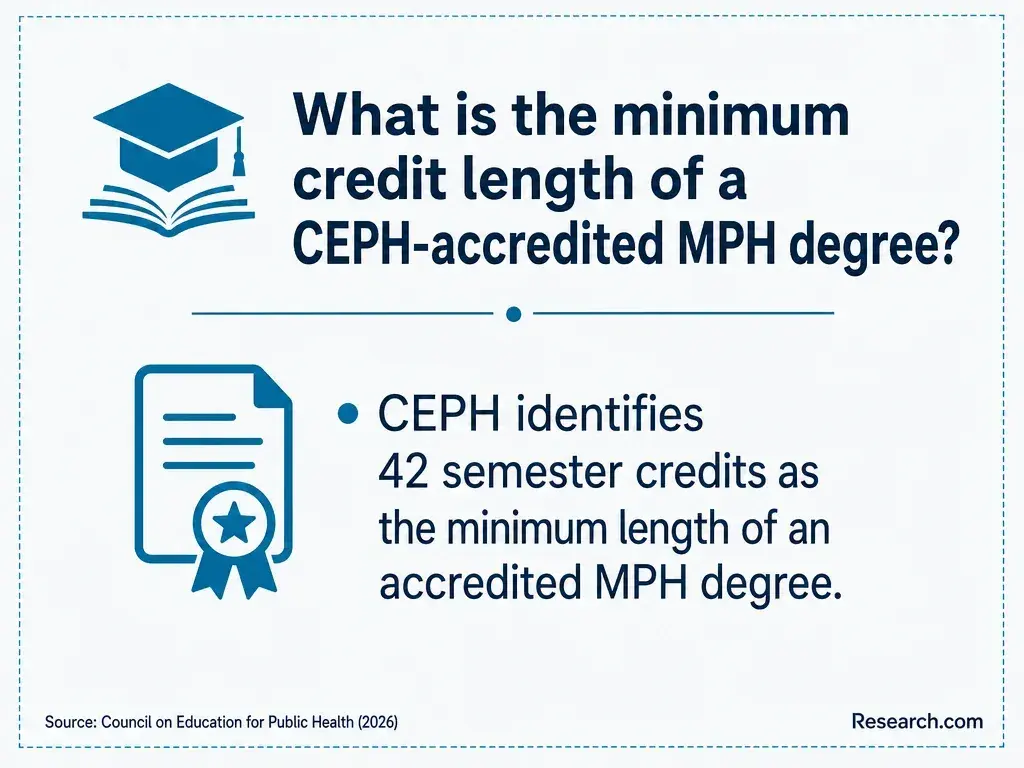
Ask the program and prospective research group what data students can realistically use, who pays for collection and storage, when dissertation proposals are approved, and what happens if recruitment or a partnership changes. Access to a lab's project is not the same as permission to use its data in a dissertation. Institutional accreditation and public health-specific accreditation also have different scopes; guidance on CEPH accreditation for online MPH study should not be taken as evidence that a particular PhD is covered. Check the accreditor's listing and the university's description of the exact doctoral degree.
Useful preparation combines epidemiologic study design, longitudinal and causal-inference methods, biostatistics, and subject-specific exposure assessment. Environmental or occupational health courses can clarify what a monitor measures and how conditions vary; database management and reproducible computing help preserve timestamps, units, device histories, and analysis decisions. Depending on the question, courses in spatial analysis, survey design, toxicology, or community-engaged research may be more useful than another general public health elective.
Sequence learning around a proposed study: establish epidemiology and statistical foundations, learn the exposure domain, then develop advanced analysis alongside a supervised pilot or existing dataset. Check prerequisites and whether the relevant courses run often enough to support dissertation timing. If the goal is to contribute to an established study rather than lead original research, an affordable MPH with appropriate electives and mentored research may be sufficient; online MPH affordability rankings can start a cost comparison, but course availability and research access still need direct confirmation.
Start with the scientific target: who is exposed, what is being measured, which period could affect the outcome, and whether the intended estimate concerns a brief peak, cumulative exposure, or a changing level. Only then choose among personal sensors, fixed-site monitors, repeated questionnaires, biological samples, administrative records, modeled estimates, or combinations of these. Each observes a different aspect of exposure; none is automatically a measure of an individual's received dose.
A feasible protocol makes timing and data quality explicit. The following sequence helps turn a proposed association into a measurement plan that a supervisor can evaluate.
- Specify the population, comparison, outcome, exposure window, and observation schedule; ensure exposure is recorded before the outcome it is intended to predict.
- Identify what the instrument or source actually measures, its resolution and validation evidence, and likely differences between measured values and the target exposure.
- Plan how to record timestamps, location or context where permitted, calibration, device changes, nonwear, missed visits, and participant moves.
- Prespecify exposure summaries and sensitivity analyses for alternative windows, missing records, and plausible measurement error.
- Confirm participant consent, institutional review requirements, community or site permissions, data-use terms, and safeguards before collecting or linking restricted information.
For example, a hypothetical heat study could compare daily neighborhood estimates with repeated personal measurements. The former may cover more days; the latter may better reflect time indoors but have gaps when devices are not worn. Neither approach alone resolves confounding or proves that heat caused a later outcome. If learning to manage repeated measurements is the immediate objective, affordable public health programs with faster schedules may be worth comparing with a targeted methods course before undertaking a dissertation.
Requirements vary by program. Schools may evaluate prior degrees, grades, quantitative preparation, research experience, a statement of interests, recommendations, and evidence of fit with available supervision. An MPH, publication, thesis, particular software package, or GRE score should not be presumed universally required. Applicants from environmental science, engineering, statistics, clinical fields, and other disciplines can bring relevant preparation, but should identify gaps in epidemiology and population-level research reasoning.
A strong application explains a tractable question, why repeated exposure measurements are needed, the likely data source, and what the applicant has already done with research or quantitative work. It should distinguish a promising project idea from confirmed data access or an advisor's commitment. If grades do not reflect current ability, documented later coursework and substantive research work may help; low-GPA public health graduate application strategies offer ideas to adapt, although doctoral selection places particular weight on research readiness. Confirm the PhD's actual requirements with its admissions office.
A PhD takes multiple years, with timing shaped by coursework and examinations, recruitment or data access, repeated collection, analysis, and dissertation approval. A study that must observe a future outcome may extend beyond the time needed to finish classes. Ask for the program's completion-time distribution rather than relying on a single advertised timeline.
Calculate the cost from the written offer: tuition and mandatory fees, stipend and benefits, guaranteed funding period, summer support, teaching or research duties, continuation charges, and any fieldwork or travel expenses. Determine who funds monitors, replacements, calibration, participant visits, secure storage, and analysis after a grant ends. Epidemiology doctorate net tuition planning can help frame the comparison, but low tuition does not make an unfunded measurement protocol feasible.
Online coursework can support some doctoral work, particularly analysis of approved existing longitudinal data with dependable remote supervision. It is less straightforward when the dissertation requires instrument training, laboratory processing, participant visits, or regular work at a community or occupational site. Online delivery does not itself guarantee asynchronous classes, remote fieldwork approval, or a fully remote dissertation defense.
Before comparing online doctorates in public health, confirm that each option is actually a research-focused PhD rather than a practice-focused DrPH. Request the current residency and live-session rules, supervision arrangements, access to specialist collaborators, and policies for collecting data away from campus. A locally supported field site and clear agreements may matter more than the location of lectures.
Relevant paths include university research and teaching, government epidemiology, research institutes, health systems, and environmental or occupational health research teams. Work may involve designing cohorts, evaluating exposure data quality, developing analyses, publishing findings, or collaborating with communities and technical specialists. Positions differ: some prioritize independent grants and publications; others emphasize applied surveillance, team science, or communication for policy decisions.
A PhD does not confer clinical licensure or qualify its holder for every technical or regulatory role. Build evidence of the target job's tasks through supervised projects, reproducible analyses, and clear explanations of uncertainty. For someone who wants to coordinate established studies or enter an applied public health role rather than lead independent research, an MPH plus experience may be a more direct route; compare actual net cost, including any university-funded aid for online MPH programs, against the doctoral opportunity cost.
What Salary and Job Outlook Can Public Health PhD Graduates Expect?
There is no single reliable salary or employment-growth figure for "longitudinal exposure research PhD graduates." The US Bureau of Labor Statistics reports occupation-wide figures, not outcomes for this dissertation specialty or degree. Its Occupational Outlook Handbook entry for epidemiologists is a relevant benchmark for some roles, but an academic researcher, a government epidemiologist, and an industry scientist can have different duties and compensation structures. Consult the latest published wage reference year and projection period rather than treating an occupational median as a starting offer.
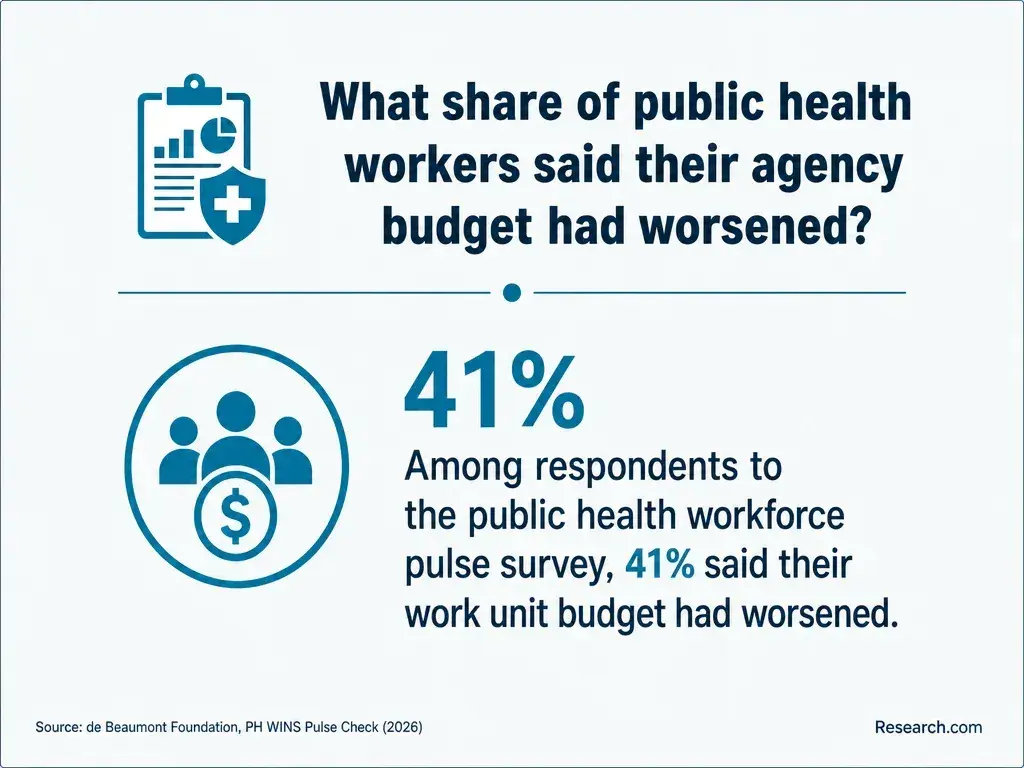
For a realistic decision, compare posted positions requiring the skills you plan to develop, their degree and experience requirements, location, and funding stability. Then weigh potential earnings against stipend terms, years out of full-time work, and the research opportunities the program provides. Discussions of online public health doctoral costs and professional opportunities can provide comparison questions, but neither a low-cost degree nor a projected occupational growth rate promises a particular job.
Other Things You Should Know About Public Health
Possibly. Confirm that its measurements cover your proposed exposure window, that relevant outcomes and covariates are available, and that the data owner and doctoral committee permit the intended use.
Only with appropriate permissions and a defensible harmonization plan. Different instruments, units, sampling schedules, and populations can make apparently similar measurements difficult to compare.
Not by default. Detailed timestamps and locations can reveal sensitive information. Follow consent terms, data-use agreements, institutional policy, and an approved sharing plan; share code or appropriately protected summaries when permitted.
A defensible dissertation can still contribute through careful measurement, uncertainty analysis, and transparent reporting. Discuss scientific contribution and dissertation expectations with the committee before treating a statistically significant association as the project's goal.
- Incidental findings found in "healthy" volunteers during... - PMC https://pmc.ncbi.nlm.nih.gov/articles/PMC3473586/
- Exposure Definition and Measurement - NCBI - NIH https://www.ncbi.nlm.nih.gov/books/NBK126191/
- Bias of time-varying exposure effects due to time-varying covariate measurement strategies - PubMed https://pubmed.ncbi.nlm.nih.gov/34251702/
- Ethical Guidelines for Research Using Pervasive Data | Federal Register https://www.federalregister.gov/documents/2024/12/11/2024-29064/ethical-guidelines-for-research-using-pervasive-data
- Thinking within-persons: Using unit fixed-effects models to describe causal mechanisms - ScienceDirect https://www.sciencedirect.com/science/article/pii/S2590260121000333
- Inverse Probability Weighting with Missing Predictors... - Apollo https://www.repository.cam.ac.uk/items/aabf0321-f267-4570-95f5-1a6a41fb7001
- Missing Data and Multiple Imputation | Columbia University Mailman School of Public Health https://www.publichealth.columbia.edu/research/population-health-methods/missing-data-and-multiple-imputation