2027 Graduate Public Health Preparation for Rural Health Program Manager Roles

Co-Founder and Chief Data Scientist
Rural health program managers turn community priorities into workable services, partnerships, budgets, and evidence of results. Graduate public health study can build those skills, but the right preparation depends on what you have already managed and what local employers expect.
This guide is for students, community organization staff, and career changers considering that next step. It explains which education and field experiences matter most, when an MPH is worth pursuing, and how to compare programs without mistaking a degree for management experience.
Key Things You Should Know
- An MPH can strengthen rural program planning and evaluation, but employers may value relevant management experience as much as or more than the degree.
- Prioritize supervised work involving community partnerships, grants, budgets, implementation, and evaluation; a rural-focused course alone is weaker evidence of readiness.
- There is no single federal salary category for "rural health program manager," so compare actual job postings rather than treating a broad occupational median as an expected offer.
What education prepares you for rural health program manager roles?
Preparation starts with the work itself. A manager may coordinate a mobile screening initiative, support a county prevention program, oversee grant reporting, or connect a hospital with community organizations.
Each setting calls for population-health knowledge alongside operational skills: setting priorities with residents, supervising staff, managing resources, and showing a funder what the program did.
A bachelor's degree in public health or an adjacent field can support entry into program coordination. Experience in social services, nursing, healthcare operations, tribal health, or a community organization may also provide a strong foundation.
Applicants still building that foundation can use comparing online undergraduate public health programs to explore coursework, but should check whether a prospective program offers local field opportunities rather than judging it by delivery format alone.
Before choosing graduate study, collect several target job descriptions. Note which duties you can already document, which require training, and which require authority or experience that coursework cannot provide.
Is an MPH required for rural health program management?
No universal rule requires an MPH. Qualifications depend on the employer, funding agreement, and position. Some roles accept a relevant bachelor's degree plus substantial program experience; others prefer or require graduate education.
An MPH is most useful when you need structured preparation in population-level planning, epidemiology, evaluation, and health systems and can apply it in a relevant setting.
If you already manage grants and partnerships but lack a specific skill, a course in evaluation, budgeting, or public health data may be a more direct investment. If you need broader preparation, assess curriculum and fieldwork before comparing selectivity across online MPH options.
Admission accessibility does not establish that a program fits rural management work or that its degree will satisfy a particular employer.
Which public health degrees lead to rural health program manager careers?
The best degree depends on the gap between your current responsibilities and your target job. These pathways serve different purposes; none substitutes automatically for experience leading people or programs.
| Pathway | Best fit for this goal | Important limitation |
| MPH | Broad population-health practice, program design, evaluation, and applied work | May not provide substantial budgeting or supervisory experience |
| MHA or MPA | Healthcare operations or public-sector administration when those dominate the job | May offer less community health and prevention training |
| Research-oriented MS | Specialist analysis or research supporting rural programs | Usually less direct preparation for day-to-day program management |
| DrPH or PhD | Advanced practice leadership or research careers, respectively | Generally more education than is needed to enter a program manager role |
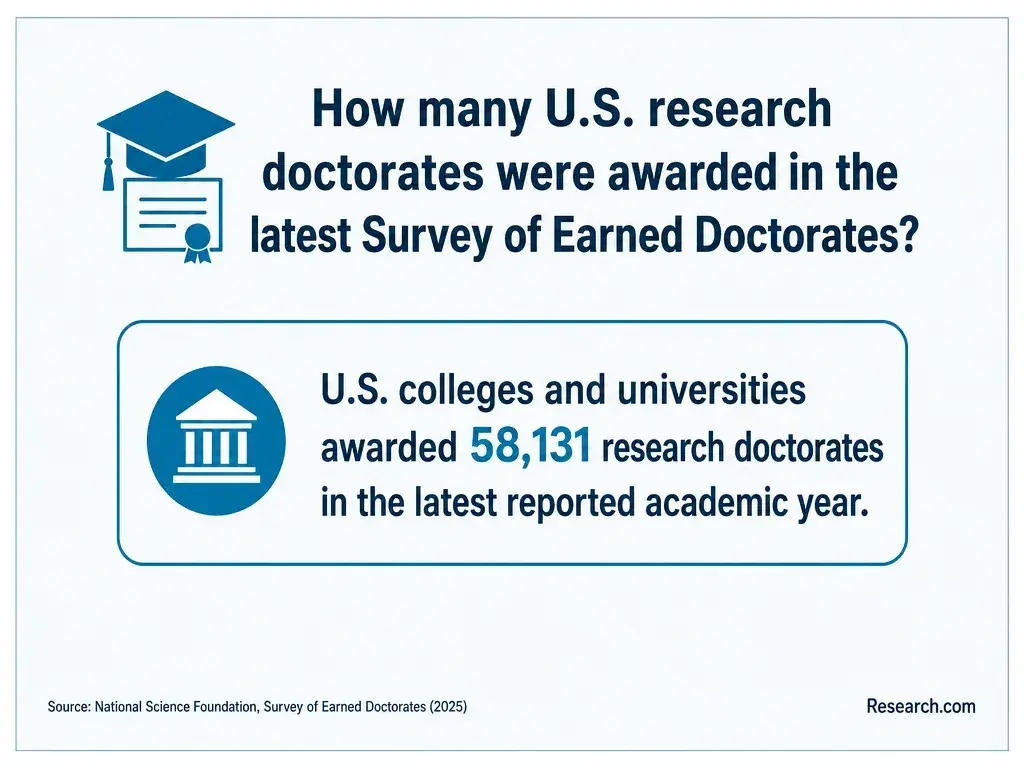
Do not choose a doctorate simply because the desired title includes "manager." A PhD is primarily a research pathway, even when its subject is rural health. Affordable online public health PhD programs are more relevant if your goal shifts toward independent research; confirm supervision, research access, and funding before considering that route.
Employer Confidence in Online vs. In-Person Degree Skills, Global 2024

Online study can let a rural employee remain near their community partners. Campus study may offer easier access to faculty and established placement networks. Neither format guarantees a rural practicum, and "online" does not necessarily mean asynchronous: live classes, group meetings, travel, or daytime fieldwork can determine whether a program is feasible.
Ask for a sample course schedule, required campus visits, and the process for approving a placement near home. Employees considering short-session courses for online public health majors should note that faster course blocks are an undergraduate scheduling option, not a substitute for checking a graduate program's pacing and field requirements.
Choose the format that permits sustained work with a suitable community partner, not merely the one with the fewest trips to campus.
Useful graduate preparation connects population-health methods to decisions a manager actually makes. Epidemiology helps identify patterns and interpret local data; evaluation helps determine whether implementation is reaching the intended population; policy and health-systems coursework clarifies funding and governance constraints. Community engagement and communication matter when a proposed service must earn trust and accommodate travel, staffing, and access barriers.
Look for an applied assignment that produces a usable planning or evaluation tool, with faculty oversight and an approved community partner. For example, a student might develop an evaluation plan that defines who the program intends to reach, what activities staff can record, and how findings will be shared without exposing private information.
Advanced modeling is not essential for every manager. Flexible online biostatistics master's options fit better when the target job centers on specialist analysis rather than directing service delivery.
Requirements vary by degree and institution. Many practice-oriented MPH programs consider applicants from different undergraduate majors, while a methods-intensive MS may expect more quantitative preparation.
Check each program's stated degree, GPA, prerequisite, test, and experience policies; do not treat a recommended course as a formal requirement or assume an unrelated major rules you out.
For a rural management application, document responsibilities rather than relying on a job title: budgets handled, partners coordinated, reports produced, and problems solved with community input. Ask admissions staff whether your experience supports the application and whether any statistics preparation should be completed before enrollment.
If letters pose a barrier, comparing public health master's recommendation requirements can help identify policies to verify directly with each school.
Completion time depends on required credits, course availability, enrollment pace, and applied-work requirements.
An employed applicant should request a term-by-term plan, including when fieldwork occurs. A shorter advertised duration is not useful if it assumes a course load or placement schedule you cannot sustain.
Compare written cost estimates using the same assumptions about pace and residency. The items below can change the total even when two programs advertise similar tuition:
- Tuition and mandatory fees across all required credits.
- Travel, technology, and any campus-visit or field-placement expenses.
- Income lost if coursework or an unpaid placement requires reduced work hours.
- Available employer assistance and its eligibility or repayment conditions.
For an initial comparison, comparing tuition with public health graduate outcomes can surface questions to ask. Verify charges and completion requirements with the institution, and do not treat occupation-wide earnings as a return promised by a particular degree.
Certifications may demonstrate complementary knowledge, but no single public health credential licenses someone to manage a rural program. The Certified in Public Health credential and health education credentials such as CHES or MCHES have distinct eligibility and examination rules.
Verify them with the issuing organization before planning coursework around them. Grant administration, project management, or emergency preparedness training may be more immediately useful if those duties dominate the job.
Match any credential to a documented gap in target postings. A certificate or short training program can be proportionate when you need one skill; a doctorate is not a higher-level substitute for a job-specific certification.
Even when doctoral public health study costs and career directions appear attractive, that commitment makes sense only if advanced leadership or research responsibilities justify it.
Titles vary across local health departments, community health centers, hospital systems, nonprofit organizations, and state or regional initiatives. A coordinator may track activities and support partners.
A program manager may also own a budget, supervise staff, negotiate work plans, and answer for grant deliverables. Moving between those levels generally requires evidence of responsibility, not just a new degree.
There is no reliable national salary figure for the exact title "rural health program manager." Federal occupational categories such as health education specialists or medical and health services managers cover different work and should not be presented as the expected pay for this role.
Compare posted salary ranges for jobs with similar duties, locations, supervisory scope, and funding sources. Grant-funded positions also warrant questions about the award period and what happens when funding ends.
Before borrowing for school, test whether prospective roles offer a plausible return relative to your current pay and local opportunities. Budget and pacing choices for public health students can frame that comparison, but your own costs and realistic target positions should drive it.
How do you choose an accredited public health program?
First, verify the institution's recognized accreditation. Then check the Council on Education for Public Health listing to determine whether the specific school, unit, or program, and the degree you intend to earn, falls within its accreditation scope. Institutional accreditation and CEPH accreditation answer different questions; neither proves that the curriculum or placement support fits your career goal.
Compare programs against three concrete tests: relevant management and evaluation coursework, a feasible approved field experience, and a schedule you can complete while meeting work obligations. Ask who finds rural placements, whether an existing workplace may be considered, who supervises the work, and what approvals are required. Employer willingness alone does not make a site eligible.
Price-focused comparisons of affordable online public health degrees can narrow a search. Make the final choice using the institution's current accreditation scope, curriculum, placement rules, and written total-cost estimate.
Other Things You Should Know About Public Health Programs
No. Programs may focus on prevention, outreach, transportation coordination, or access to services. Clinical tasks require the appropriate licensed professionals; a program manager's role may instead be to coordinate and evaluate the work.
Only with the necessary permissions. Ask the organization and school what data may be accessed, whether an agreement or review is needed, and what can be shared publicly. Remove identifying information from any portfolio example.
It depends on the service area and partners. Ask employers about site visits, vehicle requirements, travel time, and reimbursement rather than assuming that remote meetings replace in-person work.
People affected by the program and the organizations serving them should have meaningful input. A manager should establish how community partners can shape priorities and review findings, rather than relying only on available datasets or funder targets.
- Master of Public Health Education in the United States Today | nih.gov https://pmc.ncbi.nlm.nih.gov/articles/PMC10467497/
- MPH Program Skills: What You Learn and Where They Lead | NMSU Global Campus https://global.nmsu.edu/blog/healthcare/mph-program-skills-what-you-learn-and-where-they-lead/
- Accreditation | Department of Public Health | ECU https://public-health.ecu.edu/accreditation/
- NACE's Guide to Internships - Harvard FAS | Mignone Center for Career Success https://careerservices.fas.harvard.edu/resources/naces-guide-to-internships/
- Public Health Accreditation and Competencies | Arcadia University https://www.arcadia.edu/majors-and-programs/public-health-mph/accreditation-competencies/
- MHA vs MPH | Online MHA | NYU Wagner https://onlinemha.wagner.nyu.edu/insights/comparing-master-health-administration-vs-master-public-health
- Master of Public Health (MPH) - Graduate Programs | University of Minnesota School of Public Health https://www.sph.umn.edu/academics/graduate/mph/
- Rural Health Transformation Program Manager | The Chronicle of Higher Education Jobs https://jobs.chronicle.com/job/38054247/rural-health-transformation-program-manager/