2027 Evaluating an MPH Practicum in A Regional Air Quality Agency

Co-Founder and Chief Data Scientist
A regional air quality agency can offer an MPH student something a classroom cannot: a chance to turn monitoring data, community concerns, and public health evidence into a usable decision tool. But access to an agency does not automatically make a placement an approved practicum.
This guide is for students comparing field sites, projects, or MPH programs. It explains what to confirm with the school and agency, which projects are realistic, and how to judge whether the experience supports your career goals without overstating what a short placement can accomplish.
Key Things You Should Know
- Choose a placement with a defined public health task, an available supervisor, approved learning objectives, and deliverables the agency can actually use—not observation alone.
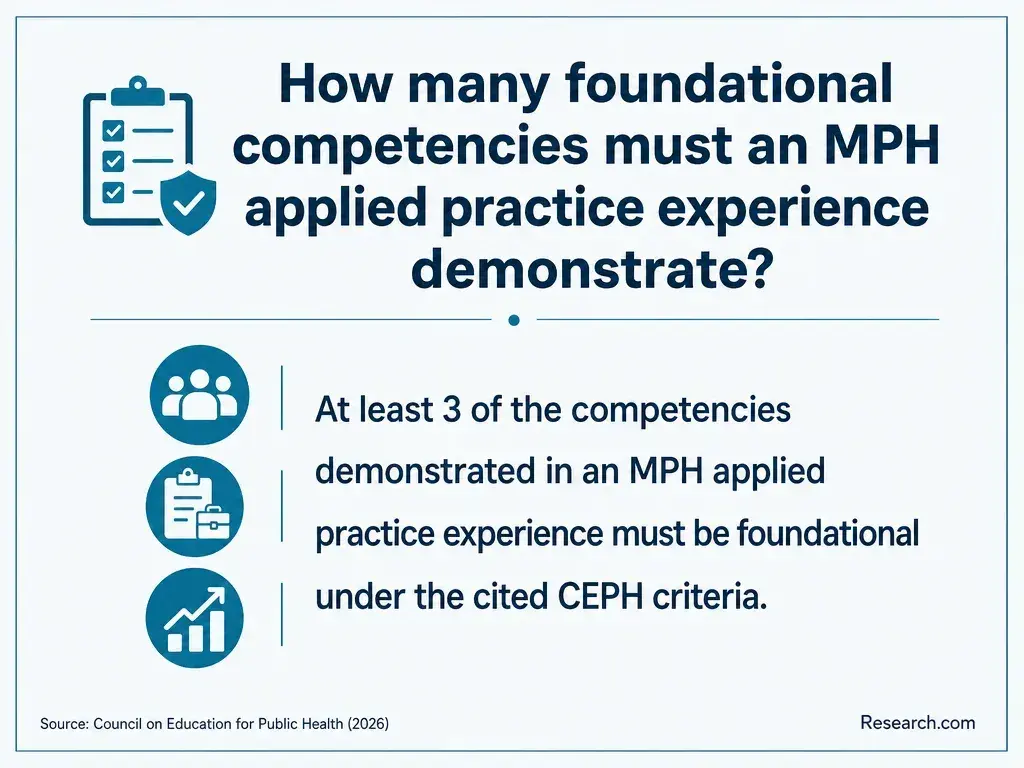
- CEPH's MPH applied practice framework calls for at least two work products demonstrating five competencies; your school determines the applicable approvals, documentation, and assessment.
- Confirm data permissions, work location, schedule, travel costs, and portfolio restrictions before accepting; an agency's willingness to host you is not school approval.
What Is an MPH Practicum at a Regional Air Quality Agency?
An MPH practicum, often called an applied practice experience, is supervised work in which a student applies public health competencies to a partner organization's needs. A regional air quality agency may monitor pollution, administer air-quality programs, communicate conditions to the public, or coordinate with local and state partners. Its precise authority varies by jurisdiction.
The public health contribution is not necessarily operating a monitor or making a regulatory determination. It might be explaining particulate matter patterns to a community audience, assessing the accessibility of an alert, or developing an evaluation plan for outreach. The strongest placement connects an identifiable agency decision to a feasible student-produced tool.
Students still considering their undergraduate route can use low-cost public health bachelor's programs online to compare earlier educational options. An undergraduate internship, however, should not be assumed to meet a future MPH program's applied practice requirements.
What Requirements Should an MPH Practicum at an Air Quality Agency Meet?
Start with the MPH program's written rules. CEPH-accredited MPH programs must assess applied practice competencies through work products, but schools set their own placement procedures, timelines, supervision arrangements, and additional requirements. Check the specific degree's coverage when comparing CEPH-accredited online MPH programs; accreditation of a university alone does not establish that its MPH is covered.
Before committing to an agency, get clear answers to these approval questions:
- From the academic coordinator: Can this site and proposed supervisor be approved, which competencies must the work demonstrate, what products are required, and when must the agreement be signed?
- From the agency supervisor: What decision will the student's work support, who will review drafts, and how much time can staff devote to supervision?
- From both parties: What are the schedule, location, safety training, accessibility arrangements, travel expectations, data permissions, and rules for presenting or publishing the products?
Separate four decisions that are easy to conflate: the agency agrees to host; the school approves the site and plan; the agency authorizes specific data use; and the school assesses the completed work. Existing employment or volunteering does not bypass any of these decisions.
How Does an Air Quality Agency Practicum Prepare Students for Public Health Careers?
A useful practicum demonstrates how environmental evidence becomes public action. Students can practice checking the limitations of monitoring data, explaining uncertainty, incorporating community concerns, and revising a product after agency feedback. Those are more convincing examples for an entry-level application than a claim to have "worked on air quality" without a defined responsibility.
Ask the supervisor to identify who will use the final product and what a satisfactory version must contain. A communication brief reviewed by outreach staff, for example, demonstrates a different capability from a reproducible analysis reviewed by an analyst. Neither makes a student a qualified air-quality engineer or an independent exposure scientist.
Students aiming primarily to design original exposure research rather than work in agency practice may eventually compare economical routes to a public health PhD. A practicum can test that interest, but doctoral research training and an MPH field placement serve different purposes.
Match the concentration to the project's work, not the agency's name. Environmental health is a natural fit for exposure concepts and risk communication. Epidemiology or biostatistics may be more useful for a carefully scoped analysis of population-level patterns. Health policy can support implementation or regulatory communication, while community health can strengthen outreach design and evaluation.
The concentration label alone is weak evidence of readiness. Compare actual courses, available method training, and faculty guidance against the agency's proposed task. An epidemiology student can produce a strong outreach evaluation; an environmental health student may need additional instruction before analyzing complex monitoring data.
If you are still seeking admission, applying to an MPH with incomplete prerequisites is a separate question from practicum readiness. Confirm both the program's admission policy and whether you can complete the methods coursework needed before fieldwork begins.
Good projects are narrow enough to finish during the approved placement and useful enough to merit staff review. The comparison below shows how similar agency interests can lead to different student products; each proposal still needs a supervisor, a data-access decision, and school approval:
| Agency need | Feasible MPH product | Important boundary |
| Make public alerts easier to use | Plain-language message set and accessibility review | Agency approves any public release |
| Understand outreach performance | Evaluation plan with indicators and data definitions | A plan is not evidence that outreach improved outcomes |
| Summarize available monitoring information | Documented descriptive brief or reproducible workflow | Monitor readings do not automatically represent individual exposure |
| Support partner coordination | Stakeholder map and briefing template | Community priorities require input, not assumptions |
Scope the analysis to available data and an answerable question. For example, a descriptive brief can explain where monitors are located and where coverage is limited; it cannot infer residents' personal exposure from a regional average. If interviews, restricted records, or identifiable information are proposed, ask the agency and university what permissions, privacy protections, and ethical review apply before collecting or accessing them.
Students earlier in their studies may use reviewing online public health BS programs to find undergraduate applied opportunities. The project ideas above can inspire smaller assignments, but only an MPH program can approve them as its practicum products.
Useful preparation depends on the assignment. Environmental health introduces pollutant sources, exposure pathways, and the distinction between ambient monitoring and personal exposure. Epidemiology and biostatistics help students choose defensible comparisons and communicate uncertainty. Program evaluation, policy, and health communication support products intended for agency or community decisions.
For a data-focused placement, practice cleaning a small permitted dataset, recording definitions and exclusions, and explaining what the analysis cannot establish. For an outreach placement, practice plain-language writing, accessible presentation, and requesting feedback without treating a single stakeholder as representative of a whole community. Ask whether the agency expects a particular software tool; an MPH course alone does not establish proficiency in it.
Applicants balancing preparation with admission logistics may compare MPH programs with no recommendation letter requirement. That application feature does not replace checking whether the curriculum provides the skills needed for an air-quality placement.
An online MPH student may work with an agency near home, remotely with a more distant agency, or through a hybrid arrangement - if the school and host approve it. Remote work is most plausible for document review, permitted data analysis, evaluation planning, or drafting communications. Field observations, meetings, equipment-related work, and community engagement may require scheduled in-person participation.
Get the practical arrangement in writing: expected weekly hours and meeting times, who provides equipment and secure access, any required agency-office visits, and how drafts will be reviewed. Students combining fieldwork with employment should check whether agency staff are available outside standard business hours. "Online" describes course delivery; it does not promise an asynchronous practicum.
Online MPH programs with flexible entry criteria can address an admissions concern, but their placement rules may be less flexible. Ask specifically whether a locally sourced agency site and your proposed remote tasks are eligible.
Distinguish a documented placement pathway from a website's general claim about community connections. Ask the program whether students have recently completed approved work at comparable agencies, who initiated those placements, and whether the program will help secure a supervisor. A past partnership is useful evidence, not a promise of an opening for your term.
Request the practicum handbook and compare programs on approval lead time, site-search support, competency mapping, faculty feedback, remote-work policy, and any travel or placement-related costs. These details can matter more than a concentration name. When comparing tuition-conscious pathways to a public health master's, include unpaid fieldwork time and possible travel rather than judging cost from tuition alone.
Before enrolling, describe a specific air-quality project to the practicum coordinator and ask what could prevent its approval. A clear, policy-based answer is more valuable than an assurance that students can "find placements anywhere."
A placement can provide evidence for environmental health program assistant, public health outreach, program evaluation, or junior analyst roles, depending on the actual work completed. Environmental scientists and specialists, epidemiologists, and regulatory staff may do related work, but their employers can require different technical training, experience, or credentials. Read job postings for tasks and qualifications rather than assuming an MPH concentration or agency placement makes every title accessible.
Translate the practicum into a specific portfolio or interview example: the decision the agency faced, your authorized contribution, how you checked limitations, and how feedback changed the product. Seek permission before sharing any agency material; otherwise, describe the work without disclosing restricted data or unpublished findings.
Later-career leadership or research goals call for a separate education decision. For example, public health doctorate application accessibility does not indicate whether a doctoral program fits agency practice leadership—or whether a doctorate is needed for the role you want.
What Salaries and Job Outlook Apply to Air Quality Public Health Careers?
There is no reliable single salary or growth rate for "MPH air quality practicum careers." The US Bureau of Labor Statistics Occupational Outlook Handbook reports occupation-wide wages and projections for defined roles such as environmental scientists and specialists and epidemiologists. Neither category measures the earnings of practicum participants, and their typical duties and entry requirements differ.
For a meaningful comparison, first identify the job title and tasks in your target region, then check the latest BLS occupation profile and actual public-agency postings. Public-sector pay grades, location, technical requirements, and prior experience can matter more than the placement's subject. Use efficient public health degree pathways and earnings as a starting point for education cost comparisons, not as a forecast of your salary.
If the positions you want accept your existing degree plus targeted environmental data or communication experience, additional graduate education may not be the most direct investment. If they require graduate-level population-health methods, evaluate the MPH's total cost alongside the specific skills and supervised work it will let you demonstrate.
Other Things You Should Know About Public Health
Do not assume they are. Ask the agency about compensation and the school about any funding, then budget for the hours and travel the placement requires before accepting.
Yes, if the agency has a suitable task and approves the scope. A bounded communications or evaluation product is more realistic than expecting a student to manage an active emergency response.
That can still produce a useful product. Document data quality, uncertainty, and what the agency can and cannot conclude rather than searching for a more dramatic result.
Possibly, if the school and agency agree. Each student should have identifiable responsibilities and work products that allow the program to assess their own competencies.
- Review of MPH practicum requirements in accredited schools of public health - PubMed https://pubmed.ncbi.nlm.nih.gov/23334673/
- Responsible Practices for Data Sharing - PMC - NIH https://pmc.ncbi.nlm.nih.gov/articles/PMC5967383/
- Outline of Measurement Technologies | California Air Resources Board http://ww2.arb.ca.gov/capp-resource-center/community-air-monitoring/outline-of-measurement-technologies
- Community Air Risk Evaluation (CARE) Program | baaqmd.gov https://www.baaqmd.gov/Community-Health/Community-Health-Protection-Program/Community-Air-Risk-Evaluation-CARE-Program
- Social Determinants of Health (SDOH) | cdc.gov https://www.cdc.gov/about/priorities/why-is-addressing-sdoh-important.html
- MPH Practicum - Master of Public Health https://keck.usc.edu/mph-program/mph-practicum/
- Master of Public Health Practicum | UC Davis Health https://health.ucdavis.edu/phs/academic/mph/practicum
- Practicum Examples | UW School of Public Health https://sph.washington.edu/mph-practicum/examples
- Public Health Practicum | UCLA Fielding School of Public Health https://www.mphhp.ph.ucla.edu/public-health-practicum
- Air Quality ⋆ Capital Area Council of Governments (CAPCOG) https://www.capcog.org/divisions/regional-planning-services/air-quality/