2027 MPH Admissions With a Non-U.S. Medical Degree

Co-Founder and Chief Data Scientist
A medical degree earned outside the United States can be strong preparation for an MPH, but it does not make every admissions requirement, or every U.S. career pathway, the same. If you are considering public health study, you need to know how programs assess your degree, which documents take time to obtain, and whether your preferred format supports your goals.
This guide explains the admissions steps and the decisions worth making before you spend money on evaluations, applications, or enrollment.
Key Things You Should Know
- A non-U.S. medical degree can qualify you to apply to U.S. MPH programs if the school accepts its academic equivalency; U.S. medical licensure is generally a separate matter.
- Confirm each program's transcript, credential-evaluation, and English-proficiency rules before ordering reports or tests; requirements and waiver policies differ.
- Compare the full cost, CEPH accreditation scope, applied practice arrangements, and immigration implications of each option, not just its admission requirements or advertised format.
What Is an MPH for Applicants With a Non-U.S. Medical Degree?
A Master of Public Health is a professional graduate degree focused on the health of populations. It can help a physician trained abroad move from treating individual patients toward work in prevention, epidemiology, health policy, program evaluation, or community health.
Your clinical training may give you useful knowledge of disease and health systems; the MPH adds methods for studying and improving outcomes across groups.
An MPH is not a conversion of a foreign medical degree into a U.S. medical degree. It does not grant a U.S. physician license, replace medical residency, or establish eligibility to practice medicine. If your sole objective is U.S. clinical practice, evaluate that pathway independently before paying for an MPH.
If your longer-term goal is advanced public health leadership or research, compare the MPH's practice orientation with doctoral study, including online public health doctoral costs and professional opportunities; a doctorate is not a substitute for clinical licensure either.
Can International Medical Graduates Apply to U.S. MPH Programs?
Yes. Many U.S. MPH programs consider applicants whose medical degrees were awarded abroad. The controlling question is whether the program recognizes your credential as meeting its graduate-entry standard, not whether you have passed U.S. medical licensing examinations.
A program may also consider your grades, clinical or community work, quantitative preparation, and reasons for pursuing population health.
Separate admission eligibility from competitiveness. An accepted degree can make you eligible to apply, while a clear public health objective and evidence of readiness can strengthen your application.
Research-focused doctoral programs may assess a different profile, so advice about reviewing selectivity in public health doctoral study should not be treated as an MPH admissions rule.
Nationality, degree location, and current residence are also distinct. A person with a non-U.S. medical degree may already live in the United States; another may plan to study entirely from abroad. Neither MPH admission nor online enrollment by itself grants permission to enter, remain in, or work in the United States.
What Are the Admission Requirements for an MPH With a Foreign Medical Degree?
Requirements belong to the individual program and entry term. Most applications involve evidence of prior higher education and a statement of purpose, but schools differ on minimum grades, entrance tests, prerequisite courses, references, interviews, and professional experience. Some use SOPHAS, the centralized public health application service; others accept applications directly.
The table separates common admissions categories from assumptions that could lead you to spend time or money unnecessarily. It describes what to check, not universal requirements:
| Admissions category | What may vary by program | Why it matters for a foreign-trained physician |
| Prior degree and grades | Accepted degree equivalencies and grading policies | A medical diploma may satisfy the degree standard without being graded like a U.S. bachelor's degree. |
| Academic preparation | Required or recommended statistics, research methods, or other coursework | Clinical study does not necessarily document the quantitative preparation a particular concentration expects. |
| Application materials | References, essays, résumé, tests, interviews, and deadlines | Clinical supervisors may speak to your work, but your application must also explain your public health purpose. |
| Experience | Whether practice, research, or community experience is required or preferred | Patient care can be relevant without automatically satisfying a program's definition of public health experience. |
Start by selecting programs that match your intended work, then request a written answer to three questions: whether your specific degree meets entry requirements, whether any coursework is missing, and which application service and documents the program requires.
If a prerequisite is outstanding, ask whether it must be completed before applying or before enrollment. Public health graduate prerequisite completion options can help frame that discussion, but only the admitting program can approve an exception or completion plan.
A credential evaluation helps a U.S. program interpret study completed under another country's education system. It may describe degree equivalency, courses, grades, or credits. It does not license you to practice medicine, and an evaluation accepted by one university may not satisfy another's rules.
Before ordering anything, confirm whether the school or its application service requires an evaluation, which evaluator and report type it accepts, and whether records must be sent directly by your medical school.
Ask how it handles transcripts issued in another language, official translations, internship records, and a diploma awarded separately from academic transcripts. Processing can depend on how quickly your original institution releases documents.
If you are considering more than one graduate pathway, check each program's document rules before paying for duplicate reports. An MPH application's requirements should not be assumed to match those of lower-cost public health PhD degree pathways. Keep copies of your submitted records and evaluation reference numbers so you can resolve discrepancies promptly.
It may be. Programs set their own policies on accepted tests, minimum scores, score validity, and exemptions. A school might consider the language of instruction for a prior degree or other evidence of English study, but do not assume that being a physician, or holding citizenship in a particular country, automatically qualifies you for a waiver.
Check the policy for your intended entry term and ask what proof a waiver requires. If your medical education was taught in English, the program may want an official statement from the institution rather than your own description. Confirm the rule early enough to arrange testing if needed, particularly when transcripts and test scores have separate delivery deadlines.
A waiver can reduce application expense, but it is only one part of the budget. When considering lower-cost routes through online public health study, account for required testing, evaluations, and any travel as well as tuition.
The Council on Education for Public Health (CEPH) accredits public health schools and programs. Institutional accreditation and CEPH accreditation answer different questions: a university's institutional status alone does not establish that its MPH is covered by CEPH.
Confirm the exact school or program, degree, and applicable accreditation status directly with CEPH and the institution before enrolling.
Accreditation is a starting point, not proof that a program fits your goals. Compare its curriculum, faculty expertise, applied practice arrangements, support for international students, and evidence about graduates' work.
For a physician interested in epidemiology, for example, the depth of methods courses and access to supervised analytic work may matter more than a broad list of elective topics. A comparison of CEPH-accredited graduate public health programs can help you build a shortlist, provided you verify each program's present scope and policies yourself.
Employer Confidence in Online vs. In-Person Degree Skills, Global 2024

Choose the format around where you intend to study and what experiences you need. Online enrollment from abroad may allow you to keep a clinical or public health job, but live classes can fall outside convenient local hours, and fieldwork may require an approved site and supervisor. Campus study may make local networking easier while adding relocation, living costs, and immigration questions.
The comparison below highlights constraints that are easy to miss when a program advertises its delivery format:
| Format | Potential fit | Constraint to verify |
| Online from outside the United States | Continuing work and studying without relocation | Overseas enrollment permission, time zones, fieldwork-site approval, and payment arrangements |
| Online while in the United States | Studying alongside other U.S.-based commitments | Whether the delivery pattern is compatible with your immigration status, if applicable |
| Campus-based or hybrid | In-person academic and professional contact | Required attendance, relocation costs, and any visa-related conditions |
An online MPH does not itself provide visa sponsorship or U.S. employment authorization. If you would study in the United States on a student visa, ask the school's designated international-student official how its specific format fits applicable rules.
When comparing affordable online public health colleges, also check degree level: an affordable public health bachelor's program is not an MPH alternative for someone seeking graduate training.
MPH study typically moves beyond clinical diagnosis and treatment to population-level questions: who is affected, what patterns the evidence supports, which interventions are feasible, and how outcomes should be assessed.
Coursework commonly addresses epidemiology, biostatistics, social and environmental influences on health, policy, and program planning. The depth of each subject depends on the program and concentration.
Your medical background may make clinical terminology familiar, but it does not replace training in study design, interpretation of population data, or community partnership.
Look closely at the applied practice experience and other required projects: determine whether a suitable site is available where you live, who will supervise you, what the school must approve, and whether you may use work from your current employer. Access to clinical records or patients should never be assumed for a student project.
Choose a concentration by the work you want to do rather than by its name alone. Epidemiology may fit a physician moving toward surveillance or research support; policy or community health may better fit someone working on health-system or prevention programs.
Guidance on public health graduate concentration selection is useful for comparing directions, but the actual courses and practice opportunities determine the skills you can develop.
There is no dependable single price or completion time for an MPH with a foreign medical degree. Tuition may be charged per credit or term, and the amount can vary by institution, enrollment status, and sometimes residency classification.
The required credit load, course schedule, and pace of enrollment determine how long you will study. Do not assume prior medical coursework will shorten the degree unless the school confirms an applicable waiver or credit policy.
Build a program-specific budget that includes fees, credential evaluations, language testing if required, books or software, and any travel or relocation. Ask whether the applied practice experience can be completed where you live and whether it may be unpaid.
International applicants should also check payment methods and eligibility for each scholarship or funding source; U.S. federal student aid should not be assumed available.
For a meaningful comparison, request the total required credits, the published tuition basis, mandatory fees, expected course sequence, and any fieldwork expenses from each school. Online MPH degree options on a budget can provide a shortlist, but the lowest advertised tuition is not necessarily the lowest total cost for your circumstances.
What Careers, Salaries, and Certifications Can MPH Graduates Pursue?
A foreign-trained physician with an MPH may pursue nonclinical public health work in epidemiology, program evaluation, health policy, research coordination, or health-system improvement, depending on demonstrated skills and an employer's requirements.
Clinical experience can be an advantage in work that connects patient care with population health, but it does not substitute for required analytic experience or U.S. medical licensure.
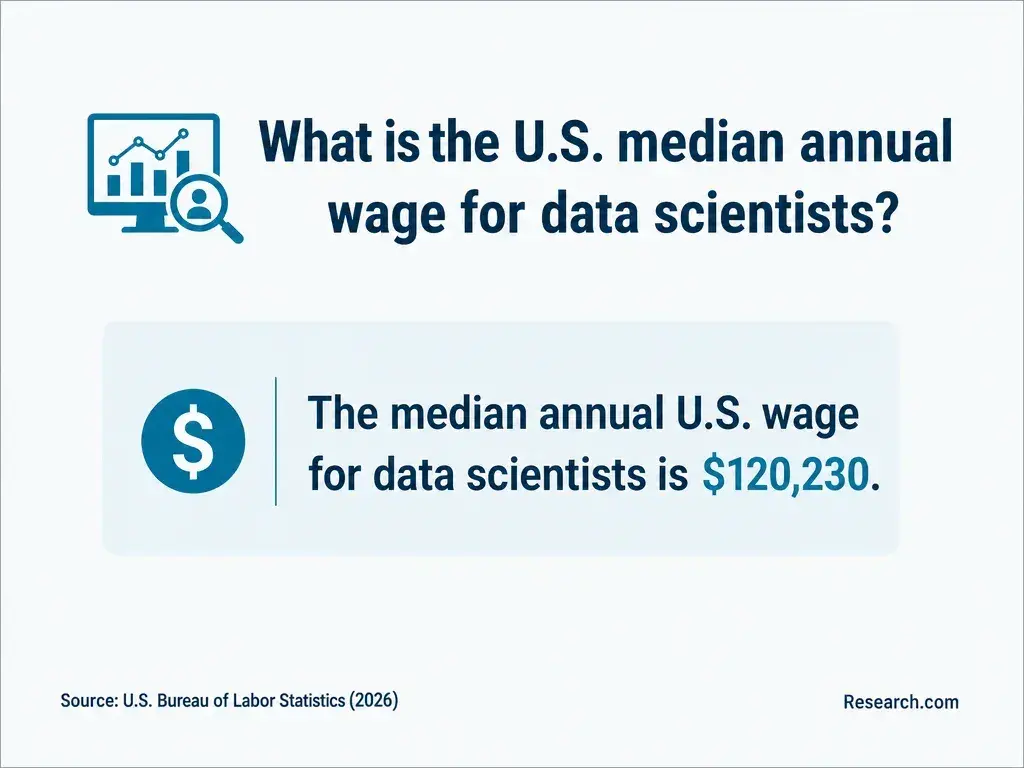
Salary comparisons should begin with a specific occupation, location, and level of experience. U.S. Bureau of Labor Statistics occupational wage figures describe people working in a named occupation, not the expected earnings of MPH graduates or foreign-trained physicians. Compare relevant job postings with your existing experience before treating an advertised career outcome as a likely return on the degree.
Professional credentials are separate decisions. The Certified in Public Health credential and health-education credentials have their own eligibility and examination rules; an MPH does not award them automatically.
Before enrolling for career reasons, check whether your target employer values an MPH, a particular skill, certification, supervised experience, or U.S. work authorization.
Weigh any available funding against the full price: comparisons of online public health master's scholarship awards are useful only after you confirm that international applicants qualify and that an award applies to your program and entry term.
Other Things You Should Know About Public Health
Possibly. Some programs review applicants who are completing a degree, but they may require proof of graduation before enrollment. Ask what provisional records they accept and when final documents are due.
Tell the admissions office and credential evaluator before submission. They may request documentation connecting the names so your records can be matched.
Only if the MPH program's policy permits it and the school approves the specific coursework. A waiver may also differ from credit that reduces the total degree requirement.
Recognition depends on the employer, university, or professional authority making the decision. Check its rules before enrolling if you plan to use the degree for a specific job or further study outside the United States.
- Financial Ability - Study in the States - Homeland Security https://studyinthestates.dhs.gov/students/prepare/financial-ability
- Recognition of Foreign Qualifications | ed.gov http://www.ed.gov/about/initiatives/international-affairs/recognition-of-foreign-qualifications
- Evaluation of Foreign Degrees for a United States Government Application - United States Department of State https://2017-2021.state.gov/family-liaison-office/family-member-employment/family-member-employment-in-the-d-c-area/evaluation-of-foreign-degrees/
- Chapter 2 - Eligibility Requirements https://www.uscis.gov/policy-manual/volume-2-part-f-chapter-2
- MPH Application Requirements - Program in Public Health https://publichealth.stonybrookmedicine.edu/mph/admissions/MPH
- English Proficiency - Graduate Admission https://gradadm.usc.edu/prospective-international-students/english-proficiency/
- Standardized Testing Requirements | yale.edu https://gsas.yale.edu/admissions/phdmasters-application-process/standardized-testing-requirements
- Admissions | Master of Public Health | SUNY Downstate https://www.downstate.edu/education-training/school-of-public-health/programs/master-of-public-health/admissions.html
- English Language Proficiency Requirement - Graduate School https://gradschool.cornell.edu/admissions/application-steps/required-tests/english-language-proficiency-requirement-2/