2027 Improving Coordination in a One Health Partnership: A DrPH Applied Project Planning Guide

Co-Founder and Chief Data Scientist
A One Health partnership can bring public health agencies, veterinarians, environmental specialists, and community organizations together without giving them a reliable way to make joint decisions. For an experienced practitioner, that coordination gap can become a strong DrPH applied project, but only if partners have a reason to participate, authority to change a process, and a workable way to assess progress.
This guide shows how to scope the improvement, meet academic expectations, and judge whether a DrPH program can support the work. It will help you turn a promising collaboration into a feasible project plan rather than an unfunded promise.
Key Things You Should Know
- Choose one coordination problem, such as inconsistent referral or notification procedures, rather than proposing to improve an entire One Health system.
- Secure separate academic approval, partner authorization, and any necessary data or ethics review before treating a proposed workflow as an approved DrPH project.
- Measure whether coordination changes in practice—for example, whether responsible teams receive usable notifications on time—not merely how many meetings occur.
What Is a One Health Partnership in a DrPH Applied Project?
One Health is a collaborative approach to health issues that connect people, animals, and their shared environment. In a DrPH project, the partnership is the set of organizations and community representatives with defined roles in addressing one such issue. It is not simply a list of agencies that support the idea.
For example, a proposed project might examine how a local health department, animal health authorities, environmental staff, and community organizations coordinate reports of a potential exposure. The practice problem would be the handoff between organizations, not an unverified claim that the community has poor health outcomes.
Partners might disagree about what information can be shared, who contacts affected residents, or when a case should be escalated. Those are concrete processes a practitioner could help improve.
A DrPH is appropriate when the candidate can lead organizational change and evaluate its implementation. Someone still building foundational public health knowledge may be better served by an MPH or supervised work experience; low-tuition online MPH options can be a more proportionate starting point than a practice doctorate.
How Does a DrPH Applied Project Improve One Health Coordination?
A useful project changes a decision pathway. The candidate first documents how a concern currently moves among partners, identifies where responsibility or information becomes unclear, and works with authorized representatives to test a narrower process.
Possible outputs include an agreed escalation protocol, a referral guide, a shared meeting-to-action log, or a training and feedback process. A draft tool is an output; its adoption and use require separate evaluation.
Process evaluation asks whether the new procedure was used as intended. Program improvement uses that evidence to adjust operations. A claim that the procedure reduced disease or exposure would require stronger outcome evidence and a design capable of supporting that conclusion.
In a short applied project, measures such as complete referrals, time from notification to acknowledgment, and unresolved handoffs are often more feasible than population-level health effects. Partners should define each measure and its denominator before collecting data.
Coordination may also expose an analytical skills gap. If the project truly depends on advanced modeling rather than workflow leadership, biostatistics graduate study while working may fit that goal better than a DrPH project centered on partnership management.
What Are the Requirements for a DrPH Applied Practice Experience?
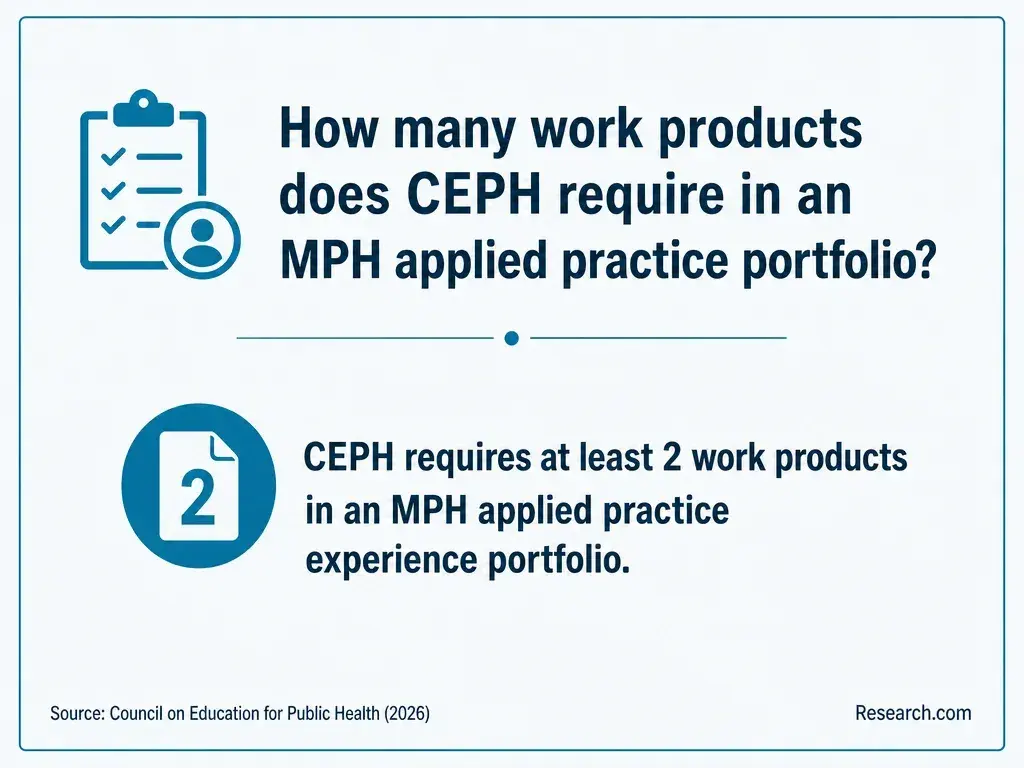
Requirements depend on the program and its accreditor-approved curriculum. Ask the DrPH director whether the proposed work is an applied practice experience, an integrative project, a dissertation, or a sequence of related requirements. Those labels are not interchangeable, and an existing job does not automatically satisfy any of them.
Before committing to a site, obtain the program's written rules for eligible activities, competency assessment, faculty oversight, deliverables, and whether work performed before approval can count.
Separately, confirm that a partner can provide an appropriate supervisor, time for participation, and permission to use the proposed information. Academic approval does not grant access to agency records; a host's willingness to collaborate does not grant academic credit.
These distinctions matter at every education level. Accelerated online coursework for public health undergraduates may help someone enter the field sooner, but undergraduate fieldwork cannot be assumed to meet a DrPH program's leadership-level applied requirements.
For a CEPH-accredited DrPH, examine the program's published doctoral competencies and how it assesses them; do not assume that a course title proves a competency has been demonstrated.
One Health coordination particularly calls for leadership, communication across sectors, systems thinking, ethical decision-making, and evaluation. The candidate should be able to connect each selected competency to observable work, such as negotiating responsibilities, presenting a decision brief, or revising a protocol after partner feedback.
A competency map should remain selective. If the project concerns notification handoffs, advanced statistical modeling is not necessary merely to make the project look doctoral. Conversely, a candidate whose aim is technical epidemiologic research should ask whether a research-focused degree offers more suitable methods training and supervision.
Earlier admissions shortcuts do not establish readiness for this work. For instance, online MPH study without reference letters may remove an application hurdle, but a DrPH applicant still needs evidence of responsibility, collaboration, and capacity to lead an approved project.
Write the plan for both the academic reviewer and the people who must operate the proposed change. The following sequence keeps the project small enough to approve, implement, and assess.
- Define the decision: Name the specific handoff or joint decision to improve, the setting, the affected population, and what falls outside the project.
- Establish governance: Identify the process owner, participating agencies, community representatives, decision authority, and how disagreements or withdrawals will be handled.
- Document the baseline: Map the existing workflow using authorized documents, staff input, or permitted aggregate records; distinguish observations from assumptions.
- Specify the change: Describe the proposed protocol or tool, who will use it, required training, resources, and a fallback if an agency cannot participate.
- Plan evaluation: Define a small set of process measures, data sources, denominators, review dates, and who may see results.
- Confirm oversight and outputs: Obtain required site and academic approvals, check privacy and human-subjects review requirements, and agree on a usable final deliverable.
Do not assume that removing names makes every dataset shareable. Agency agreements, confidentiality rules, community expectations, and institutional review requirements can still apply. If approvals or access are uncertain, a protocol and implementation plan may be a more defensible academic deliverable than a promised outcome evaluation.
A different doctoral route may suit a different question. If the central task is producing new epidemiologic research rather than changing a partnership process, compare research supervision and financial support for online epidemiology doctoral study before choosing a DrPH.
Neither format is inherently better. A working practitioner with reliable local partners may benefit from online coursework while conducting an approved project in their own region. A campus-based program may offer easier access to local collaborators or in-person methods support. In either case, partner authority and supervision matter more than the location of lectures.
Compare the actual schedule: required live sessions, residencies, travel, group work, faculty meetings, and whether project approvals can accommodate agency timelines. An online program can still require daytime participation or travel. Ask how faculty supervise work across organizational boundaries and what happens if a partner changes staff or withdraws.
If an applicant needs generalist preparation before doctoral leadership work, compare the full cost of an MPH, including aid and fieldwork obligations, rather than assuming the online format is cheaper. A guide to online MPH net tuition after scholarships can frame that separate decision.
There is no universal "One Health DrPH" admissions standard. Programs may ask for a relevant graduate degree, professional experience, recommendations, a statement of purpose, or evidence of leadership.
Each school decides which backgrounds qualify and how experience is counted. An MPH, a particular number of years, or a managerial title should not be assumed mandatory everywhere.
A strong applicant can describe responsibility rather than relying on job titles: which organizations they coordinated, what decisions they influenced, how they handled competing priorities, and what evidence informed a change.
They should also distinguish a potential project partner from a confirmed one. In the application, explain how the proposed work fits the program's competencies without claiming site approval that has not been granted.
Applicants who do not yet meet a program's experience expectations can examine accessible admissions pathways for online MPH study alongside opportunities for supervised cross-sector work. Easier entry to a master's program is not a substitute for the practice responsibility expected in doctoral work.
Completion time depends on required credits, enrollment pace, project milestones, and how quickly partners can authorize and use the work.
A candidate can finish coursework on schedule yet be delayed by data agreements, a change in agency leadership, or a project that needs rescoping. Request the program's typical completion information and its rules for continuous enrollment, leave, and time-to-degree limits.
For cost, compare more than advertised tuition. Ask for the charges that apply to your enrollment pattern, including required fees, any project or continuation charges, residency travel, and the cost of time away from paid work.
Check employer education assistance and its repayment conditions before counting it as available support. Weighing the cost of public health graduate study can help frame the opportunity-cost question, although a master's cost comparison is not a DrPH price quote.
A shorter project is not necessarily cheaper if it depends on access the candidate cannot secure. Before enrolling, ask the program what happens financially and academically when an approved partner or data source becomes unavailable.
A One Health coordination project can provide evidence for roles involving interagency preparedness, zoonotic-disease program leadership, environmental health partnerships, or cross-sector policy implementation.
The relevant qualification is the combination of prior experience, demonstrated work, and the employer's requirements, not the DrPH alone. Veterinary, clinical, and other regulated responsibilities still require their own credentials.
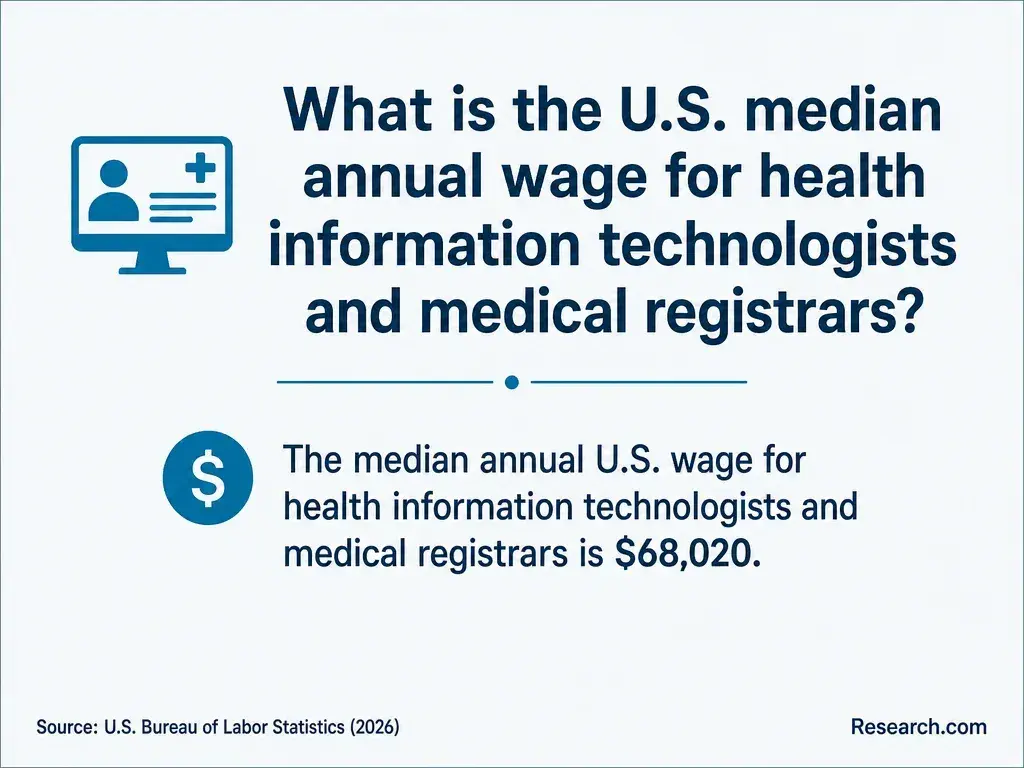
There is no defensible single "One Health DrPH salary." Pay varies by occupation, agency, location, seniority, and whether the position is governed by a public-sector pay scale. When comparing an actual vacancy, use its posted range and requirements; use US Bureau of Labor Statistics occupational wage data only for a closely matching occupation, not as a predicted salary for degree holders.
If the immediate goal is an analyst or program role rather than doctoral-level leadership, compare that job's stated requirements with the cost and time of further study. Affordable public health programs with faster schedules may be worth examining, but supervised experience or targeted training could be the more direct step.
How Can You Choose an Accredited One Health DrPH Program?
Start with the exact degree, not a school's general reputation or a One Health course description. Confirm institutional accreditation and check the Council on Education for Public Health's current listing for the accredited school, unit, or program and the scope relevant to the DrPH. Then ask the program how its applied requirements accommodate a project involving multiple organizations.
Shortlist programs by the support your project would actually need: faculty experience with cross-sector practice, clear approval and supervision procedures, workable scheduling, and a realistic route to partner and data permissions.
Request a current handbook and speak with the project coordinator about what happens if an agency changes its priorities. Public health doctoral programs with broader entry options may help generate candidates, but admission accessibility cannot establish accreditation scope or project fit.
The best choice is the program in which you can carry out a bounded, authorized improvement and explain its limits honestly. If you cannot identify a process owner, feasible measures, and a partner able to consider the proposed change, strengthen the partnership before committing to a doctoral project built around it.
Other Things You Should Know About Public Health Programs
Yes. A narrowly defined issue can be stronger than a broad initiative if it requires meaningful coordination across relevant sectors and meets the program's doctoral expectations.
No. Partners may be able to assess a workflow using permitted aggregate counts or documented process steps. Confirm what each organization can lawfully and ethically disclose.
Yes. Agree early on how community representatives will influence the question, interpret findings, and review materials intended for public release; do not treat consultation as permission to speak on their behalf.
Report that limitation plainly. Document the decision process, barriers, and revisions your partners authorize, and ask your faculty supervisor whether the resulting work still meets the academic requirements.
- One Health - PAHO/WHO https://www.paho.org/en/one-health
- Framework for Program Evaluation in Public Health | cdc.gov https://www.cdc.gov/mmwr/preview/mmwrhtml/rr4811a1.htm
- Constructing a One Health governance architecture - PMC https://pmc.ncbi.nlm.nih.gov/articles/PMC11631453/
- Summary of the HIPAA Security Rule | hhs.gov https://www.hhs.gov/hipaa/for-professionals/security/laws-regulations/index.html
- One Health | who.int https://www.who.int/news-room/fact-sheets/detail/one-health
- Full article: Analyzing One Health governance and implementation challenges in Mexico | tandfonline.com https://www.tandfonline.com/doi/full/10.1080/17441692.2024.2377259
- DrPH Program Leadership and Operating Guidelines | Fay W. Boozman College of Public Health https://publichealth.uams.edu/future-students/academics/doctoral/drph/drph-program-leadership-and-operating-guidelines/
- One Health governance: theory, practice and ethics | sciencedirect.com https://www.sciencedirect.com/science/article/pii/S2949704324000283