2027 From Emergency Medical Technician to Public Health: Planning a Bachelor's Pathway

Co-Founder and Chief Data Scientist
EMT work offers firsthand knowledge of emergencies, access barriers, and community needs. A public health bachelor's degree can help you turn those observations into skills for prevention, outreach, and program work - but the right pathway depends on your existing credits and the job you want next. This guide explains how to evaluate transfer credit, choose a program that fits shift work, build evidence of public health skills, and judge the likely time and cost before enrolling.
Key Things You Should Know
- EMT certification and field experience strengthen an application, but they do not automatically satisfy public health major requirements; obtain a written degree audit before relying on transfer credit.
- A bachelor's degree can support applications for outreach, program-support, and some health education roles; it does not by itself qualify you as an epidemiologist, manager, or licensed clinician.
- Compare remaining required courses - not just accepted credits - alongside fieldwork schedules, total cost, and local job requirements before choosing a program.
How Can EMTs Transition Into a Bachelor's Degree in Public Health?
Start with the work you want to do beyond patient care. An EMT interested in injury prevention or community outreach needs a different learning plan from one aiming for surveillance or data analysis. EMS experience supplies useful context and communication skills, but population-level work also requires methods for studying patterns, designing programs, and evaluating results.
The following sequence helps you avoid choosing a school based on an optimistic credit estimate.
- Collect transcripts from every college attended, EMT training records, and any documented college credit awarded for prior learning.
- Ask each prospective school which credits it will accept and which will satisfy general education, prerequisites, the public health major, and campus-residency requirements.
- Request a degree audit showing remaining courses, their sequence, and when each is offered; ask the department to review proposed substitutions in writing.
- Match remaining coursework and any internship to your EMS schedule, then compare the complete cost of finishing at each school.
Admission to a university, admission to its major, and approval of transfer equivalencies are separate decisions. If you hold an applied associate degree or completed noncredit EMT training, ask specifically how that work is evaluated. The receiving institution has final authority. Compare online public health bachelor's admissions and coursework as a starting point, then obtain a school-specific audit before making plans.
What Can You Do With a Bachelor's Degree in Public Health?
The strongest initial targets combine your EMS experience with newly demonstrated public health skills. Job titles vary by employer, so read duties and minimum qualifications rather than assuming a degree makes you eligible.
This comparison separates plausible entry routes from roles that usually require further preparation or substantial experience.
| Potential direction | How EMT experience helps | What else to demonstrate |
| Community outreach or health education support | Clear communication under pressure and familiarity with barriers to care | Audience-appropriate materials, community partnership, and program delivery |
| Emergency preparedness or injury-prevention program support | Knowledge of response workflows and recurring safety concerns | Planning, documentation, training support, and basic evaluation |
| Public health data or surveillance assistant | Understanding of how EMS information is recorded | Data quality, descriptive analysis, privacy, and careful interpretation |
| Epidemiologist or program manager | Useful field perspective | Typically additional education or substantial relevant experience; check each posting |
For a substantial switch, seek a supervised internship or project that produces an appropriate work sample, such as a deidentified outreach plan or evaluation brief. An EMT whose goal is specifically EMS supervision may get more direct value from agency leadership training or an administration pathway.
If your longer-term target requires graduate study, public health master's compensation outlook can inform that separate decision; it should not be treated as a bachelor's-level pay forecast.
What Are the Requirements for a Public Health Bachelor's Degree?
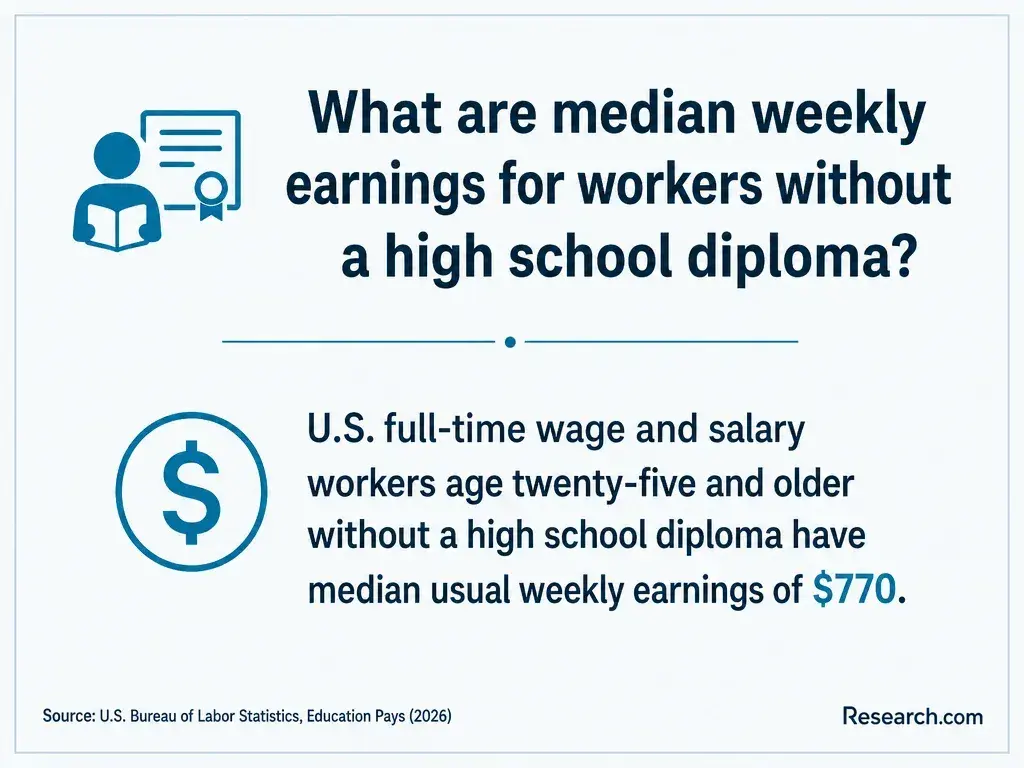
Requirements commonly span university general education, introductory science or statistics, public health courses, electives, and sometimes an internship or capstone. Schools differ on prerequisites, minimum grades, course recency, and the number of credits that must be earned there. A BA, BS, or applied bachelor's pathway may also treat prior EMS coursework differently.
Ask an adviser for the catalog requirements that apply to your entry term and a degree audit that distinguishes credit accepted from requirements satisfied. Check statistics and any laboratory prerequisites early: a course that transfers as an elective might not unlock the next course in the major. If a substitution is needed, get departmental approval before enrolling elsewhere.
Grades matter if you might later seek graduate admission, but master's programs set their own standards and review more than a single number. If your earlier record is uneven, strengthening a lower-GPA public health master's application offers a later-stage planning perspective; it does not change the requirements for completing your bachelor's degree.
First, confirm that the university holds recognized institutional accreditation. Then determine whether public health-specific accreditation matters for your goals. The Council on Education for Public Health (CEPH) accredits defined schools, units, and programs; its status does not automatically cover every degree at a university.
Ask whether the specific bachelor's degree is included in the relevant accredited unit's scope, and verify the current listing with CEPH and the school.
Next, compare the evidence that affects your completion plan: written transfer evaluations, course rotation, advising access, field-placement rules, and outcomes reported for comparable students.
Ask whether required classes or internships conflict with ambulance shifts. If you expect to pursue an MPH later, public health master's programs accredited by CEPH address a distinct graduate-level choice; do not mistake an MPH's accreditation listing for confirmation about an undergraduate degree.
Public health studies patterns and prevention across populations rather than treating one patient at a time. Relevant coursework may include epidemiology, introductory biostatistics, environmental health, health behavior, policy, communication, and program planning. For an EMT, the transition is from noticing repeated problems on calls to asking what evidence supports a broader intervention - and how its effects could be assessed.
Choose electives and applied work around a realistic target. Injury-prevention work calls for community engagement and evaluation; preparedness work benefits from planning and interagency communication; data-support roles call for stronger statistics and data-handling practice.
Ask what software, projects, and supervised experiences the curriculum actually provides. One epidemiology course does not establish specialist research competence.
If independent research eventually becomes the goal, a doctorate is a separate, much longer decision. Reviewing budget planning for a public health PhD may help you understand that future commitment, but it should not drive your bachelor's course choices ahead of immediate skill gaps.
Neither format is automatically better. Online asynchronous courses may accommodate rotating shifts, while campus classes may provide more predictable access to faculty, peers, and local placement partners. Online programs can still require live meetings, group work, proctored assessments, campus visits, or field hours during standard business days.
Before enrolling, request a sample term schedule and written internship rules. Check whether missed live sessions can be made up, whether courses are offered when you need them, and whether your EMS employer could host an approved public health project.
Employer willingness alone is not program approval: academic supervision, suitable population-health tasks, and any data permissions remain separate requirements. Delivery questions become important again if you later consider online public health doctorate pathways. For now, judge the bachelor's program by its actual weekly obligations, not the word "online."
A student entering from the beginning generally plans for several years of full-time undergraduate study. An EMT with college credit may finish sooner, but accepted credits alone cannot establish a graduation date. Prerequisite sequencing, infrequently offered courses, residency rules, and part-time enrollment can extend the timeline.
Build a school-specific estimate from remaining required credits multiplied by the applicable tuition rate, then add mandatory fees, books, travel or technology, and any unpaid fieldwork. Compare that total with earnings you may give up by reducing shifts.
Ask financial-aid staff how your planned enrollment intensity, transferred credits, and satisfactory academic progress affect eligibility; do not assume employer tuition support until your agency confirms its terms.
If the role you ultimately want requires an MPH, that is a separate cost decision. Compare lower-cost Master of Public Health study online only after establishing whether graduate education is necessary for your target job.
A public health bachelor's degree does not grant a clinical license or automatically award a professional certification. Keep EMT certification active if you plan to continue practicing, following the rules of your state and certifying authority. Public health employers may specify their own credentials, while requirements for particular health education or other regulated roles vary.
Credentials such as Certified in Public Health (CPH) and Certified Health Education Specialist (CHES) have distinct eligibility and examination rules. Check the responsible certifying organization's current criteria and the job posting before paying for preparation or assuming your degree qualifies you. A certificate is not a substitute for supervised experience or a degree explicitly required by an employer.
Likewise, do not buy extra credentials to approximate a graduate qualification that a target position specifically requires. If graduate study becomes necessary, investigate funding - including university awards for online public health graduate education - and verify eligibility and renewal conditions directly with each institution.
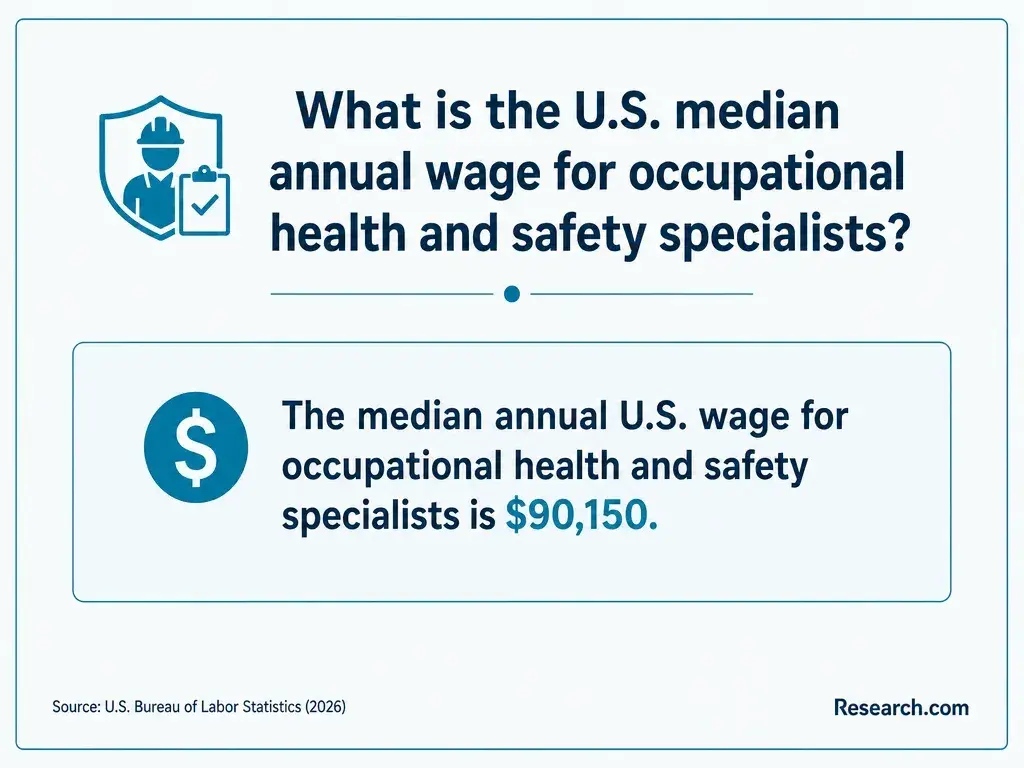
There is no reliable single salary for "public health bachelor's graduates." Pay depends on the occupation, location, employer, responsibilities, and prior experience. EMT work may strengthen your candidacy for a preparedness or outreach role, but it does not guarantee that an employer will count those years as experience in public health program work.
For a defensible estimate, match a specific job posting to the closest occupation in the US Bureau of Labor Statistics Occupational Outlook Handbook, check the wage reference year, then compare the published occupational median with local postings and public-sector pay grades. A national median includes workers at many career stages; it is not an entry offer or a degree-specific graduate outcome.
If you are weighing eventual graduate study against earnings, public health master's affordability and earnings can frame the comparison. Include tuition, time away from work, and whether the intended role actually requires a master's degree.
What Is the Job Outlook for Public Health Careers?
Public health is not one occupation with one growth rate. Community outreach, health education, preparedness, and epidemiology have different hiring patterns and entry requirements. Use the latest Bureau of Labor Statistics projection for the specific occupation you are considering, then test it against local openings. National growth can coexist with limited entry-level positions in your area.
Look for postings that match both your new coursework and EMS background, and note recurring requirements you cannot yet demonstrate. An internship, agency project, or relevant entry-level role may close that gap more directly than another degree.
Research leadership is a different, longer pathway; if it becomes your objective, comparing online doctorate admission routes in public health should begin with the roles and research preparation those programs actually support, not an assumption that a doctorate is needed to enter the field.
Other Things You Should Know About Public Health
Possibly. Obtain your instructor's approval of the learning objectives and your employer's permission for the setting, supervision, and any information you would use. Working there does not automatically satisfy an internship requirement.
Use caution. Follow your agency's privacy rules and your school's guidance; removing a name may not prevent someone from being identifiable. Prefer approved, deidentified or hypothetical examples when appropriate.
No. EMT practice authority depends on the destination state's rules and your credential status. Check with that state's EMS authority before accepting shifts there.
Yes, if you meet that program's admissions requirements. An undergraduate public health major is not universally required for an MPH, and completing one does not guarantee admission.
- Cost of Attendance (Budget) | 2025-2026 Federal Student Aid Handbook https://fsapartners.ed.gov/knowledge-center/fsa-handbook/2025-2026/vol3/ch2-cost-attendance-budget
- Types of Financial Aid: Grants, Work-Study, and Loans | studentaid.gov https://studentaid.gov/understand-aid/types
- EMS Equivalency | Texas DSHS https://www.dshs.texas.gov/dshs-ems-trauma-systems/ems-equivalency
- Certified in Public Health (CPH) | osd.mil https://www.cool.osd.mil/dciv/credential/index.html
- College of Public Health Competencies - Catalog Home | The University of Oklahoma Health Sciences Course Catalog https://catalog.ouhsc.edu/public-health/bulletin/competencies/
- How to Become a Public Health Professional | West Coast University https://westcoastuniversity.edu/about/career-guides/how-to-become-a-public-health-professional
- Emergency Medicine (BS) Degree Completion Program | Pitt SHRS https://www.shrs.pitt.edu/academics/chsrs/em/degree-completion-program/
- Admissions | GW School of Medicine and Health Sciences https://ems.smhs.gwu.edu/admissions
- Master of Public Health Jobs in High-Demand Fields | Saint Mary's University of Minnesota https://www.smumn.edu/blog/master-of-public-health-jobs-high-demand/
- Entry-Level Public Health Jobs You Can Get With an MPH | EWU https://online.ewu.edu/degrees/healthcare/masters-public-health/general-concentration/entry-level-jobs-mph/