2027 MPH Employer Sponsorship Without a Public Health Job Title

Co-Founder and Chief Data Scientist
Your job title may be in operations, nursing, analytics, human resources, or community services, yet your work may already affect population health. That overlap can support a request for employer-funded Master of Public Health (MPH) study - but it does not make you automatically eligible for tuition assistance. This guide shows working professionals how to connect an MPH to their current responsibilities, identify available funding, check the rules before enrolling, and calculate what they would still owe. The aim is to help you pursue support for a degree that serves both your career and your employer's needs.
Key Things You Should Know
- A public health job title is usually less important than your employer's written eligibility rules and a credible connection between MPH coursework and your work.
- Under a qualifying employer educational assistance program, up to $5,250 in benefits per calendar year is generally excluded from federal taxable wages; the employer decides whether and how much to offer.
- Get written approval before committing: reimbursement may depend on your course, grade, employment status, payment deadline, and continued service after graduation.
Can you get MPH employer sponsorship without a public health job title?
Yes. Employer sponsorship can mean tuition reimbursement, direct payment to a school, a professional-development award, or paid time for study. Eligibility typically turns on the employer's policy and budget, not whether "public health" appears in your title. A hospital quality analyst, city emergency planner, benefits manager, or nonprofit program coordinator may have a stronger work-related case than someone with a public health title whose proposed coursework is unrelated to current duties.
Start by identifying the decision you want the degree to help you make at work. If it involves population-level prevention, program evaluation, health communication, or policy, an MPH may fit. If your goal is primarily hospital operations, a Master of Healthcare Administration may be easier to justify; for specialized research methods, an MS may be more appropriate. A guide to comparing graduate public health degree types can help you distinguish those aims before requesting funding.
There are two separate approvals to secure: your employer must authorize the benefit, and a school must admit you. Neither approval guarantees the other.
How do you prove an MPH benefits your current employer?
Make the case around responsibilities you already hold or a documented need your team expects you to address. For example, an operations employee who tracks missed appointments could connect epidemiology and evaluation coursework to better analysis of access patterns. A community organization employee who manages grants could connect program-planning coursework to stronger measures and reporting. These are proposed uses of training, not promises that a degree will improve outcomes.
A useful business case names the work problem, the relevant MPH competencies, an approved way to apply them, and the person who could assess the result. A proposed deliverable might be an evaluation plan or a revised reporting process. Any use of patient, employee, or community data still needs the appropriate organizational permissions and privacy safeguards.
Show why the timing and cost are reasonable alongside the anticipated benefit. A comparison of public health degree timelines and salary considerations may help frame your personal decision, but do not present a possible future salary increase as a return your current employer will receive. If a short course can meet the workplace need, acknowledge it; that makes an MPH request more credible when the broader training is genuinely necessary.
What employer sponsorship options can help pay for an MPH?
"Tuition assistance" may describe several arrangements with different cash-flow consequences. The distinctions below matter most when tuition is due before your employer releases funds.
| Funding arrangement | How it generally works | Main financial exposure |
| Tuition reimbursement | You pay first and submit proof after meeting policy conditions. | You may need savings or financing until repayment. |
| Direct tuition payment | The employer pays an approved school or education partner. | Uncovered charges may still be due before classes begin. |
| Professional-development funding | A department or grant supports approved learning. | Funding may be limited to certain courses or budget periods. |
| Paid study time or schedule support | A supervisor permits time for classes or fieldwork. | It reduces scheduling pressure but may not reduce tuition. |
Ask whether employer assistance can be combined with institutional funding and whether an award reduces the amount eligible for reimbursement. University awards for online public health graduate education are worth checking separately; an award is not employer sponsorship, and its eligibility and renewal terms may differ.
Health systems, insurers, government agencies, universities, research organizations, and larger nonprofits may offer education benefits relevant to MPH study. Availability varies by employer, bargaining agreement, position, and funding source; an organization's public health mission does not establish that it pays for graduate degrees.
Different employers may value different applications. A health system might prioritize quality improvement or community health needs assessment, while a local government office might value preparedness or policy analysis. A small nonprofit may favor a focused evaluation course over a multi-year tuition commitment. If your employer funds undergraduate education but not graduate study, public health undergraduate program comparisons may be useful to eligible colleagues, but an undergraduate benefit should not be mistaken for MPH approval.
The best evidence is your employer's current benefits document and a decision from the office authorized to interpret it. A supervisor's enthusiasm alone may not commit organizational funds.
Approach the request as a funding decision, not just a statement of career interest. Before applying or paying a deposit, gather the policy and a program estimate, then follow the employer's approval sequence.
- Ask HR or benefits staff for the written education policy, eligible degree levels, payment method, deadlines, and required forms.
- Confirm with your manager which current duties or approved future assignments the coursework would support.
- Request an itemized school estimate showing tuition, mandatory fees, schedule, and any campus or fieldwork obligations.
- Submit a brief proposal linking specific courses to a feasible workplace deliverable, with expected time away from work clearly stated.
- Obtain written approval identifying the program, covered charges, funding period, conditions, and approving authority before relying on payment.
Compare the employer's ceiling against actual program charges rather than an advertised starting price. Listings of affordable distance learning public health degrees can provide candidates to investigate, but your school's itemized estimate and employer's covered-expense rules control the request.
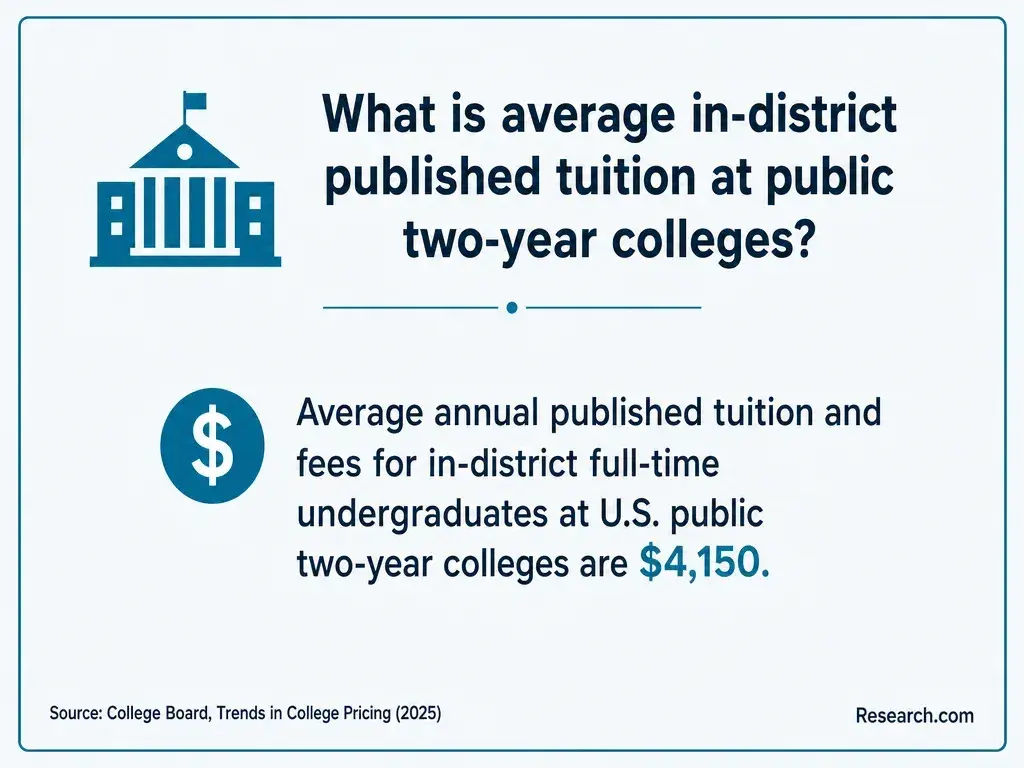
Read the policy for eligibility waiting periods, minimum work hours, approved schools and degrees, grade standards, annual or lifetime limits, deadlines, and repayment obligations if you leave. Check whether the limit applies when a course starts, when it ends, or when the employer pays. That distinction can affect which calendar year's benefit is available.
The Internal Revenue Service generally allows an employer to exclude up to $5,250 per calendar year of benefits under a qualifying educational assistance program from an employee's federal taxable wages. That is a tax rule, not a required employer contribution or a universal limit on assistance. Benefits above that amount require separate tax review; ask payroll how the employer administers them.
Degree-level restrictions deserve particular attention. A policy that covers an MPH may not cover subsequent doctoral study, and a promise of annual support is not necessarily a promise for the entire degree. If doctoral education is a longer-term possibility, budget planning for a public health PhD is a separate exercise rather than an extension of your MPH approval.
Online delivery may reduce commuting, but it does not necessarily eliminate live classes, group meetings, campus visits, or fieldwork during business hours. Campus study may offer convenient local partnerships yet require a less flexible work schedule. Give your manager a realistic timetable for the format you propose, including recurring class times and periods when applied work could compete with job duties.
Check both institutional accreditation and whether the specific public health school, program, or unit - and the degree you intend to earn - falls within any Council on Education for Public Health (CEPH) accreditation you need. Also ask the program whether your existing workplace could serve as an applied practice site; employer willingness and academic approval are separate requirements.
Course length is another scheduling variable, not a shortcut to assume is manageable. Resources on undergraduate public health programs with faster course cycles describe a different degree level; use them only as a reminder to verify the MPH program's own course calendar and workload.
MPH applicants generally need a bachelor's degree and the materials specified by each program, which may include transcripts, a statement of purpose, recommendations, and a résumé. Programs differ in their prerequisite courses, test policies, and treatment of professional experience. A non-public-health major does not automatically rule you out; explain how your existing work prepares you for the population-health questions you want to study.
Ask admissions staff which requirements are mandatory, which preparation is recommended, and when any missing coursework must be completed. If your undergraduate record is uneven, review guidance on MPH applications after uneven undergraduate grades and ask the program how it evaluates later coursework and professional evidence. Employer approval cannot waive a school's admissions rules, so check academic feasibility before committing to a reimbursement agreement.
Your remaining cost is tuition and required expenses minus confirmed employer payments and other applicable aid, plus costs the employer will not cover. Account for mandatory fees, books or software, travel, fieldwork expenses, and financing costs if reimbursement arrives after the tuition deadline. Do not subtract a proposed award or an unapproved future year of assistance as though it were guaranteed.
Build the estimate term by term. Match each payment to the employer's benefit year and your school's billing date; then test what happens if you study more slowly, lose eligibility, or leave the job before satisfying a service commitment. A less expensive program may still create cash-flow problems if you must pay upfront.
Application requirements can also affect the practical timeline. If obtaining recommenders would delay enrollment, information on public health master's applications without recommender submissions may help you identify programs to check, but verify each MPH's current requirements before budgeting around a start date.
Which MPH careers offer strong salary and job outlook potential?
An MPH can support a move into roles such as health education specialist, epidemiologist, or public health program manager, but their qualifications and daily work differ. Health education specialists develop and assess educational programs; epidemiologists investigate population-level health patterns and often need substantial quantitative preparation; managers oversee people, budgets, and delivery and commonly need relevant experience. An MPH alone does not qualify someone for every role or confer clinical licensure.
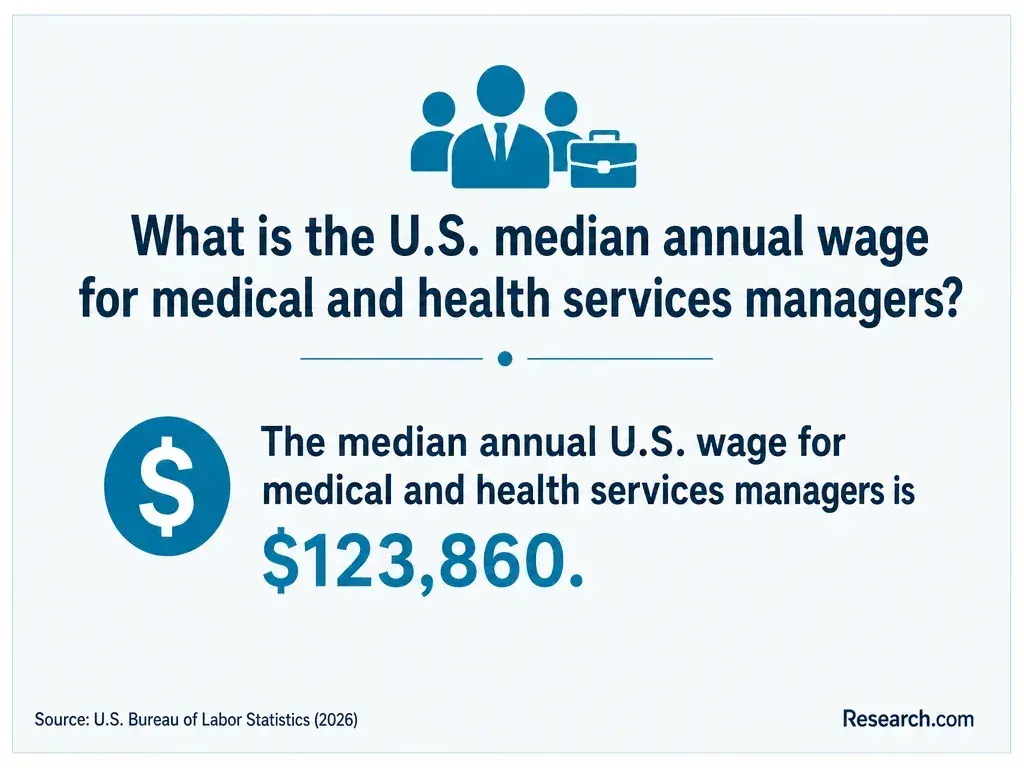
For salary and outlook, compare the latest U.S. Bureau of Labor Statistics Occupational Outlook Handbook entries for the specific occupations you are considering, including their wage reference year, projection period, and typical entry requirements. Occupational medians are not forecasts of your pay. Your strongest near-term case for sponsorship may be advancement within your current function, even if your longer-term goal is a different public health role.
Further study should follow a defined career need, not automatically follow an MPH. Public health doctoral programs with broader entry options can be a starting point for a later comparison, but doctoral admission, employer funding, and suitability for a leadership or research goal require separate verification.
Other Things You Should Know About Public Health
Potentially. Tell the school's financial aid office about employer payments so it can explain how they affect your aid package and which charges remain eligible for aid.
No. The MPH program must approve the site, supervision, learning objectives, and deliverables. It may also require work distinct from your usual paid duties.
Possibly. Check your collective bargaining agreement and the benefit administrator's rules; eligibility may differ from the employer's general tuition policy.
Generally, you cannot use the same expenses for both tax-free employer assistance and an education tax benefit. Ask a qualified tax professional about expenses you paid yourself and your individual circumstances.
- Accreditation in the U.S. | ed.gov http://www.ed.gov/laws-and-policy/higher-education-laws-and-policy/college-accreditation/accreditation-in-the-us
- Frequently asked questions about educational assistance programs | Internal Revenue Service https://www.irs.gov/newsroom/frequently-asked-questions-about-educational-assistance-programs
- HHS PMAP Handbook, Resource Guide for Supervisors and Employees | HHS.gov https://www.hhs.gov/about/agencies/asa/ohr/hr-library/hhs-pmp-handbook/index.html
- Types of Financial Aid: Grants, Work-Study, and Loans | studentaid.gov https://studentaid.gov/understand-aid/types
- Public Health Agencies: Their Roles in Educating... - NCBI - NIH https://www.ncbi.nlm.nih.gov/books/NBK221185/
- Careers in Public Health - New York State Department of Health https://www.health.ny.gov/prevention/public_health_works/careers/
- and Ask For - Employer Tuition Reimbursement Benefits | Harvard Extension School https://extension.harvard.edu/blog/how-to-use-and-ask-for-employer-tuition-reimbursement-benefits/