2027 Evaluating a School Health Partnership Governance Model: A DrPH Applied Project Planning Guide

Co-Founder and Chief Data Scientist
A school district, health department, and community organizations may share a commitment to student health while disagreeing about who sets priorities, authorizes data use, or resolves problems. For an experienced practitioner, those questions can form a focused DrPH applied project - but only if the partners want an evaluation and can act on its findings.
This guide shows how to define the governance decision, assess it ethically, and produce a useful improvement plan. It also helps prospective students judge whether a DrPH program offers the supervision, flexibility, and project support the work requires.
Key Things You Should Know
- Evaluate governance - not just program activity - by examining who makes decisions, whose perspectives count, how resources are committed, and how disagreements are resolved.
- Scope the project around one partnership and a decision its leaders can make; secure site, data, and academic approvals before collecting information.
- A DrPH is most useful when the practitioner needs advanced leadership and organizational-change preparation; a narrower evaluation course or supervised project may be more efficient otherwise.
What Is a School Health Partnership Governance Model?
A school health partnership governance model is the set of agreements and practices through which schools, public health agencies, healthcare organizations, families, students, and community groups direct shared work. It covers authority as well as participation: who chooses priorities, approves services, controls funds and information, answers to the community, and can change course.
Governance differs from service delivery. A clinic may report how many students it served; a governance assessment asks who decided which services to offer, whether families helped shape access, and what happens when a proposed service conflicts with district policy. Written agreements matter, but the project should test whether actual decisions follow them.
The table separates governance questions that are often mistakenly treated as one measure of "partnership quality." It can help a practitioner identify the specific decision the project will support.
| Dimension | Question to examine | Possible evidence |
| Decision authority | Who can approve priorities or change services? | Charters, agreements, decision records |
| Representation | Whose perspectives reach decision-makers? | Membership rules, attendance, participant accounts |
| Accountability | How are commitments reviewed and disputes resolved? | Reporting schedules, escalation procedures |
| Resources and information | Who provides staff, funding, and authorized data access? | Budgets, work plans, data-sharing agreements |
Not every participant needs doctoral training to contribute. Staff seeking foundational population-health education can compare public health undergraduate study options; the DrPH project's distinct task is to evaluate and improve a partnership's leadership system.
How Does a DrPH Applied Project Evaluate School Health Governance?
A feasible applied project begins with a decision, such as whether a partnership should revise its steering committee charter before expanding school-based services. The student documents the current arrangement, gathers perspectives from people affected by it, compares practice with agreed responsibilities, and presents options that authorized leaders can accept, revise, or reject.
This is usually a process and organizational improvement evaluation, not a test of whether the partnership caused a change in student health. Meeting records and interviews may show how decisions were made; they generally cannot establish that a governance change improved attendance or health outcomes. A project could produce a governance map, findings brief, revised charter options, and a monitoring plan. Proposed changes are recommendations, not evidence of successful implementation.
If the practitioner mainly wants advanced statistical training rather than responsibility for organizational change, biostatistics master's schedules for employed students may be a more relevant comparison than another leadership degree.
What Are the Core Components of Effective School Health Partnerships?
An effective partnership makes its purpose, authority, and obligations understandable to the people doing the work and those affected by it. In a school setting, that includes clarity about district control of school operations, the responsibilities of health and community partners, and meaningful ways for families and students to raise concerns. Representation is not the same as attendance: a student or parent seat has limited value if its holder cannot influence an agenda or receive a response.
The model also needs workable resource commitments, lawful information-sharing procedures, and a way to handle disagreements without silently transferring responsibilities to already stretched staff. Evaluation should distinguish a missing agreement from an agreement that exists but is not followed. It should not label either as a failure before checking the partners' circumstances and authority.
Partnership capacity depends on people with different levels of preparation. For a staff member whose goal is to coordinate school health activities rather than lead a doctoral-level governance evaluation, inexpensive public health bachelor's education may be one option to assess alongside employer training and supervised experience.
The strongest competency case is tied to work the student can actually show: leading across organizations, engaging affected communities, assessing policy and organizational constraints, using evidence responsibly, and communicating recommendations to decision-makers. A project should demonstrate these through its approved plan, documented methods, interpretation, and usable output - not by claiming that the student personally improved student outcomes.
For example, a student might show leadership by negotiating the evaluation scope with partners, equity-oriented practice by examining whose concerns enter decisions, and evaluation skill by explaining why interview accounts and documents support a recommendation. Faculty must determine which competencies and deliverables meet the specific program's requirements.
A practitioner seeking to generate broadly generalizable knowledge or build a research career should compare the DrPH with a research-focused doctorate. An epidemiology doctoral education funding guide can inform that separate comparison, but research funding and project expectations should not be assumed to match a DrPH's.
Keep the unit of analysis manageable: one named partnership, its defined governance period, and a decision that authorized partners expect to revisit. Before proposing interviews or requesting records, the student should confirm that the academic supervisor and site agree on the purpose, boundaries, timetable, and intended audience.
The following sequence keeps the project oriented toward a usable decision rather than an unbounded review of school health services.
- Define the decision: for example, whether to revise voting rights, referral oversight, or a dispute-resolution process.
- Map partners, formal authorities, affected groups, and any existing commitments that the evaluation cannot override.
- Agree on questions and criteria, such as clarity of authority, meaningful participation, timeliness, and accountability.
- Check record availability, recruitment feasibility, privacy obligations, partner permissions, and institutional review requirements.
- Set a realistic analysis and feedback schedule, including time for participants to correct factual misunderstandings.
- Deliver options with owners, resource implications, unresolved disagreements, and measures for later review.
A student employed by a partner should disclose that dual role and plan for interviews in which colleagues can decline without workplace pressure. If limited time or site authority permits only a narrow skills project, compare online public health cost-duration tradeoffs before committing to a doctorate; a shorter credential does not, however, replace a DrPH program's approved applied-project requirements.
Useful evidence may include partnership charters, memoranda of understanding, agendas, minutes, budgets, approved work plans, and existing reporting procedures. Interviews or small-group discussions can reveal how people understand authority and whether formal routes for input work in practice. Selecting participants across roles - including those who experience decisions but do not sit on committees - helps expose differences a leadership-only sample might miss.
Document review and stakeholder accounts should be interpreted together. A charter can establish assigned authority but not prove it is exercised; an interview can describe an experience but not establish how often it occurs. Keep a record of document dates, sampling decisions, conflicting accounts, and gaps. Report small-group findings cautiously, especially where a role description could identify a student, family member, or staff participant.
School records and health information require particular care. Access to one partner's systems does not authorize use for a student project. Determine applicable district and organizational rules, data-use permissions, confidentiality safeguards, and whether the institution requires an ethics or IRB determination before collection. Use the least sensitive information capable of answering the governance question; avoid individual student records if agreements and decision-process evidence will suffice.
Applicants still building public health methods preparation can examine online MPH admission options for varied backgrounds. Admission accessibility is separate from whether a program provides the stakeholder and evaluation training needed for this work.
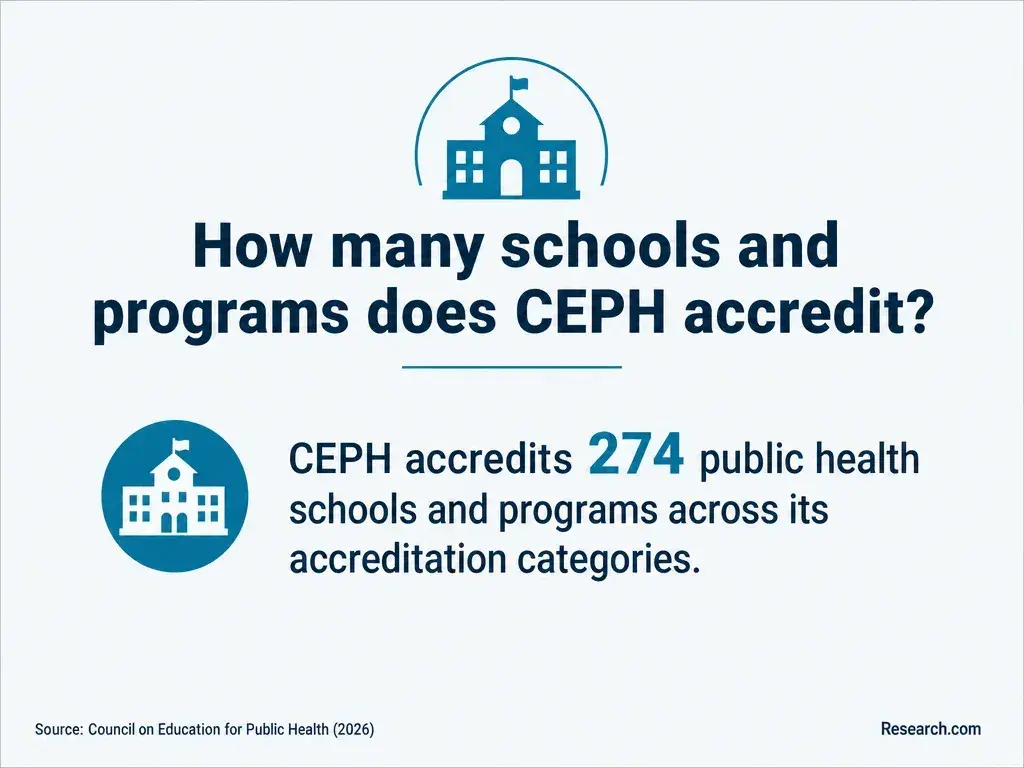
The Council on Education for Public Health (CEPH) accredits public health schools and programs within a defined scope; institutional accreditation is a separate matter. CEPH standards address doctoral public health preparation, but they do not prescribe one universal school health project, site, document format, or interview method. The enrolled program translates applicable standards into its own competencies, milestones, supervision, and assessment rules.
Before selecting a project site, ask the program to identify the current handbook requirements for the student's entry term: eligible projects, approval sequence, committee or adviser roles, practice-site agreements, competency documentation, and final product. Check the accreditor's current listing for the exact school or program and whether the proposed DrPH is within its accredited scope; a university's general accreditation or a related public health course is not enough to establish that.
When comparing public health doctoral programs with broader entry options, treat entry flexibility and accreditation scope as separate checks. Neither confirms that a school will approve this partnership or its proposed evaluation.
DrPH admissions rules vary. Programs may assess prior graduate education, public health practice, leadership responsibilities, academic preparation, recommendations, and fit with a practice-focused doctorate. Some specify experience or degree requirements; others consider different routes. An MPH, managerial title, or set number of years should not be treated as a universal threshold.
For this project, readiness means more than meeting an admissions minimum. A strong applicant can explain a real governance decision they have helped address, their role and authority, the prospective partner's interest, and how they would work respectfully with district, agency, family, and community stakeholders. Site interest is not the same as permission to conduct the eventual doctoral project; that approval belongs to the site and program under their applicable procedures.
Someone without sufficient practice responsibility may benefit first from a coordinating role, supervised evaluation work, or an MPH. Applicants considering that route can review online MPH study without reference letters, while checking each program's actual entry and fieldwork requirements rather than treating an MPH as automatic preparation for a DrPH.
There is no reliable single duration or price for a DrPH. Total cost depends on the program's credit and tuition structure, fees, enrollment pace, required visits, and whether the student continues paying tuition or continuation charges while finishing the project. The governance evaluation may add travel, transcription, secure data handling, or time away from paid work.
Request a term-by-term estimate for the pace you can sustain, including the project phase and what happens if a school district's approval or calendar delays data collection. For an employed practitioner, also check live class times, group work, campus visits, leave policies, and whether an employer will provide protected project time. Online delivery alone does not resolve those constraints. Compare assumptions, not advertised starting prices, when reviewing online public health doctoral tuition and duration.
What Careers and Salaries Follow a DrPH in Public Health?
A DrPH can strengthen preparation for practice-focused leadership, evaluation, policy implementation, and cross-sector partnership roles in public agencies, health systems, and nonprofits. It does not itself confer a promotion, clinical license, or authority over a school district. Employers will also assess the applicant's record of managing people, budgets, change, and relationships.
For this project, the most useful career evidence is a permitted, nonconfidential account of the governance decision, the student's methods, competing stakeholder needs, and the recommendations delivered. If the goal is primarily to become an evaluator rather than lead organizations, a master's degree plus substantial supervised practice may be a better investment; tuition-conscious pathways to a public health master's offer a starting point for that cost comparison.
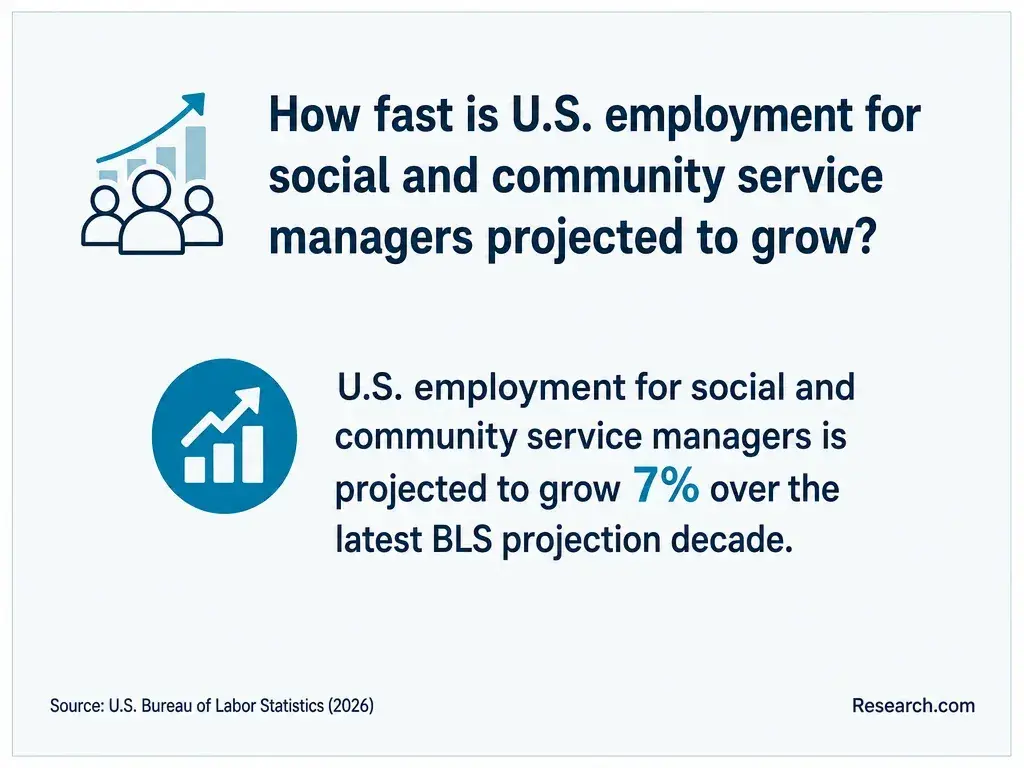
Salary comparisons should use a current US Bureau of Labor Statistics occupation that matches the target job's duties, alongside local public-sector pay scales or actual job postings. An occupation-wide median is not a DrPH graduate salary, and broad management figures can misrepresent a school health partnership role. The best financial test is whether the degree develops capabilities and opens roles that the practitioner's existing experience and a narrower training option would not.
Other Things You Should Know About Public Health
Possibly, if the program and partners permit remote participation and the student can engage stakeholders appropriately. Confirm meeting access, secure records, supervision, and any required campus or site visits before relying on a remote plan.
Notify the faculty supervisor promptly. A reduced scope or replacement site may require new approvals; do not reuse partner records or recruit elsewhere on the assumption that the original permission transfers.
Publication depends on agreements, confidentiality commitments, institutional requirements, and any applicable review determination. Permission to submit academic work does not automatically permit public release of identifiable documents or partner findings.
Describe differing views accurately, separate them from documented facts, and avoid implying consensus. A useful final brief can identify decisions that remain with the partners rather than resolving those decisions on their behalf.
- FERPA | Protecting Student Privacy - Department of Education https://studentprivacy.ed.gov/ferpa
- Developing Your Evaluation Plans: A Critical Component of Public Health Program Infrastructure - PMC https://pmc.ncbi.nlm.nih.gov/articles/PMC4592485/
- CDC Program Evaluation Framework, 2024 | MMWR https://www.cdc.gov/mmwr/volumes/73/rr/rr7306a1.htm
- Chapter 27., Section 11. Building Inclusive Communities | ku.edu https://ctb.ku.edu/en/table-of-contents/culture/cultural-competence/inclusive-communities/main
- Elements of Accountable Communities for Health | NAM https://nam.edu/perspectives/elements-of-accountable-communities-for-health-a-review-of-the-literature/
- recommendations for - strengthening partnerships | CDC Foundation https://www.cdcfoundation.org/recommendations-strengthening-partnerships-HDs-CBOs
- A Guide to Enhancing School Partnerships | childrenshospitals.org https://www.childrenshospitals.org/news/childrens-hospitals-today/2024/02/a-guide-to-enhancing-school-partnerships