2027 Public Health BS Course Selection Before Applying to an MPH

Co-Founder and Chief Data Scientist
If you plan to apply for a Master of Public Health (MPH), your remaining bachelor's courses should do more than complete your major. The right choices can close an admissions gap, make graduate methods courses less daunting, and give you work to discuss in your application. This guide is for public health BS students choosing electives, concentrations, and applied experiences.
It explains which courses deserve priority, when specialized preparation matters, and what to verify with prospective MPH programs before you register.
Key Things You Should Know
- Prioritize an introductory statistics course, epidemiology, and a course that requires you to evaluate evidence or analyze data; check each target MPH program for actual prerequisites rather than assuming these are universally required.
- A public health BS is not required for most MPH pathways. Strong preparation can also come from another major, relevant experience, and any program-specific prerequisite coursework.
- A bachelor's degree commonly spans about 120 semester credits over four academic years, but the best elective is the one that fills a documented skill gap without delaying graduation or adding unnecessary cost.
What Is a Public Health BS, and Is It Required for an MPH?
A public health Bachelor of Science (BS) typically combines population health with science, quantitative, and general-education coursework. Its exact requirements vary: one program may emphasize biology and statistics, while another gives students more room for policy, community health, or environmental health electives.
You generally do not need a public health BS to apply to an MPH. MPH programs commonly consider graduates from other disciplines, though an individual program or concentration may require particular preparation. A psychology student with statistics and community research experience, for example, may be better prepared for some MPH tracks than a public health major who has avoided quantitative work.
An MPH is generally a professional, population-health degree; a research-oriented MS may expect deeper preparation for a specific method or discipline. If you are still deciding which graduate qualification fits your goal, start by comparing graduate public health degree types. That distinction can change which undergraduate electives are worth taking.
What Courses Should You Take Before Applying to an MPH Program?
Start with statistics, epidemiology, and research methods if you can fit them into your degree plan. These subjects help you interpret population-level evidence, but they are recommended preparation, not a universal MPH prerequisite list. Check the admissions page for each program and concentration before treating any course as mandatory.
The comparison below separates broadly useful preparation from electives whose value depends more heavily on your intended MPH work.
| Undergraduate course area | Preparation it provides | When to prioritize it |
| Introductory statistics | Interpreting estimates, uncertainty, and comparisons | High priority if you have not completed a college-level quantitative course |
| Epidemiology | Understanding disease patterns, study designs, and sources of bias | Especially useful before an epidemiology or population-health methods track |
| Research methods or program evaluation | Appraising evidence, selecting measures, and recognizing study limitations | Useful for practice, policy, and research interests |
| Writing-intensive policy or health communication | Explaining evidence to decision-makers or communities | Valuable when your transcript shows little analytical writing |
| Biology, calculus, programming, or advanced statistics | Discipline-specific scientific or quantitative depth | Prioritize when a target concentration requires it or your goal is technical analysis |
If you have limited elective space, use a sequence: complete any published prerequisite first, then address your weakest foundational skill, then choose an applied course that produces work you can explain. A second broad survey course may add less value than a statistics course with a real analysis assignment. Conversely, do not take calculus solely because it sounds rigorous if none of your target programs requires it and it displaces a needed course.
Students aiming for advanced quantitative work should inspect syllabi, not just course titles. A class labeled "data science" may or may not cover the statistical reasoning expected in graduate study; flexible routes to a biostatistics master's degree also illustrate why method-intensive goals may call for a different preparation path than a generalist MPH.
What Are the Admission Requirements for Public Health BS Graduates Applying to an MPH?
Completing the BS establishes that you have a bachelor's degree; it does not automatically meet every MPH program's admissions conditions. Programs set their own policies for minimum academic performance, prerequisites, application materials, tests, and deadlines. A published requirement is different from a recommended course or a quality that makes an applicant more competitive.
Before selecting your final courses, compare each target program's admissions instructions with your degree audit. This short sequence helps distinguish a real gap from a course that would merely be nice to have:
- Record each program's required degree, prerequisite courses, grades if specified, and deadline for completing outstanding coursework.
- Check whether your existing courses match by content and credit, and ask admissions staff about an unclear equivalency or permitted alternative.
- Use remaining electives to address confirmed gaps; build the application narrative around specific academic work, community experience, and your MPH goal.
Transcripts, a statement of purpose, a résumé, and recommendations are common application materials, but their requirements vary. Do not assume a particular application system, entrance test policy, or number of letters applies everywhere. If obtaining references is a genuine constraint, investigate public health graduate entry without reference letters while checking each program's own instructions for your entry term.
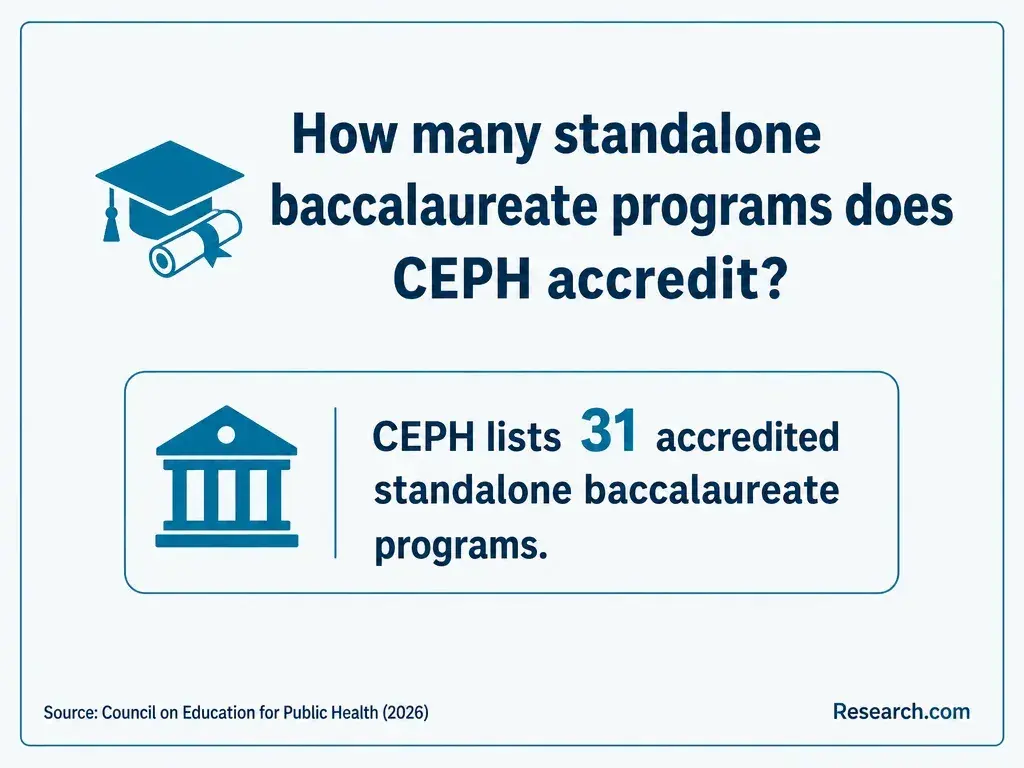
Do not assume CEPH accreditation of your BS is a universal MPH admissions requirement. The Council on Education for Public Health (CEPH) accredits eligible public health schools and programs; a university's institutional accreditation is a separate matter. MPH admissions decisions are governed by the graduate program's stated rules, not by a blanket rule that every applicant's bachelor's major must hold CEPH accreditation.
Check what, exactly, is accredited. A university may have a CEPH-accredited public health school or program, but that does not mean every degree it offers has the same accreditation status or coverage. Ask your undergraduate program which degree and unit its accreditation statement covers, and ask a prospective MPH program directly if its policy mentions an accredited bachelor's program.
This distinction continues to matter if your plans later extend beyond the MPH. When exploring public health doctorate pathways for advanced study, verify the accreditation and eligibility rules of the specific graduate degree rather than carrying forward an assumption about your BS.
There is no single best BS concentration for every MPH applicant. Choose one that supports your intended graduate work and still leaves room to remedy a weakness on your transcript. A concentration is useful when its required courses and projects develop relevant skills; its label alone is weak evidence of readiness.
An epidemiology-oriented student may benefit from additional statistics, study design, and computing. Someone interested in community health may gain more from program evaluation, qualitative methods, and supervised partnership work. A policy-focused student should look for analytical writing, policy analysis, and opportunities to explain evidence to nontechnical audiences. In each case, introductory statistics and evidence appraisal remain useful foundations.
If you are considering a research PhD eventually, that longer-term goal may justify more advanced methods or a faculty-supervised research project during the BS. It does not mean you need to select an undergraduate concentration by comparing graduate prices now; comparing affordable public health PhD pathways is a separate decision with different questions about research fit and funding.
For MPH preparation, compare what you can take and demonstrate, not just where classes meet. An online BS can provide access to statistics, methods, and writing-intensive courses, but it may still require scheduled meetings, group work, exams at set times, or an approved local placement. A campus program may make faculty research and nearby field opportunities easier to access, though those opportunities are not guaranteed.
Ask whether the courses you need are offered in the terms you can attend, whether statistics includes substantial analysis, and how students obtain supervised projects or community placements. If you work while studying, confirm live-session hours and fieldwork expectations before assuming asynchronous lectures make the whole program flexible.
Delivery format also matters when you move to graduate study. If you expect to remain online, compare a future MPH's placement and scheduling requirements alongside online MPH affordability rankings; the lowest advertised tuition will not resolve a timetable you cannot meet.
A bachelor's degree often requires about 120 semester credits and is commonly planned over four academic years of full-time study. Your actual timeline depends on prior credits, course sequencing, enrollment pace, and whether required classes are available when you need them. An elective that delays a required course or graduation may cost more than its academic benefit warrants.
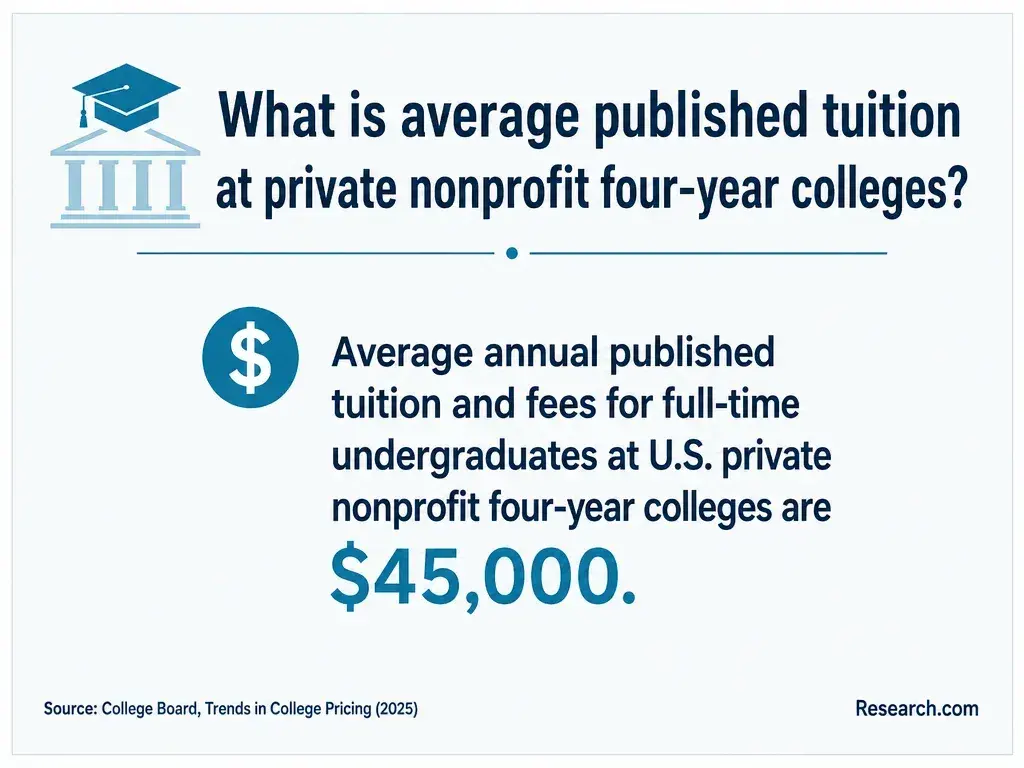
There is no reliable single price for a public health BS. Compare each school's tuition and required fees against the credits you still need, then account for books, travel, placement expenses, and potential lost earnings. Accepted transfer credit matters financially only if it applies to a requirement or reduces remaining enrollment; an official degree audit is more useful than a general transfer-credit promise.
If you are weighing a quicker route against another term of potentially useful electives, use public health degree affordability and completion planning as a starting comparison. Then ask an academic adviser to map both options through graduation and an MPH admissions contact whether the extra course addresses an actual requirement.
A BS can support applications for entry-level work such as program assistant, outreach coordinator, research assistant, or community health worker, depending on the employer and your experience. These roles can build MPH-relevant evidence: implementing a program, communicating with community partners, maintaining records, or helping collect and interpret data under supervision.
Match the job to the gap you want to close. If your transcript is strong in methods but light on practice, community-facing program work may be valuable. If you have extensive outreach experience but little analytical work, seek a supervised evaluation or data-support role. Keep a record of your responsibilities and outputs while protecting confidential information; a job title alone says little about what you learned.
Do not assume a BS qualifies you to work as an epidemiologist, lead independent research, or enter a regulated clinical profession. Those roles can have different degree, experience, and licensing expectations. Likewise, public health doctoral tuition and career comparisons concern a much later career decision, not a qualification needed to gain useful experience before an MPH.
There is no single salary or employment projection for "public health BS graduates." The U.S. Bureau of Labor Statistics reports pay and projected employment by occupation, not by undergraduate major. A community health worker, health education specialist, research assistant, and epidemiologist have different tasks and entry requirements, so combining their wages would give a misleading picture of what your BS might lead to.
For a useful comparison, first identify jobs whose posted requirements you meet. Then check the Bureau of Labor Statistics Occupational Outlook Handbook entry for the closest occupation, noting its wage reference year, projection period, and typical entry education. Treat its national median as context - not an entry-level offer, a local pay estimate, or the return on an MPH.
If graduate school is part of your financial plan, comparing earnings across MPH career paths may help frame the question. Compare realistic roles before and after the degree, including the experience employers request, rather than attributing every pay difference to the credential.
Which Certifications and Experience Strengthen an MPH Application?
Relevant, well-documented experience is usually more informative than collecting unrelated credentials. An internship, faculty-supervised project, volunteer role, or paid job can strengthen an application when you can explain the population served, your responsibilities, the methods you used, and what the work taught you. Describe your own contribution accurately; participation in a project is not the same as directing it.
Credentials such as Certified in Public Health (CPH) or Certified Health Education Specialist (CHES) have eligibility rules set by their certifying organizations. Neither is a universal prerequisite for MPH admission, and a public health BS does not automatically award either credential. Check current eligibility before paying for coursework or an exam primarily to improve an application.
If your grades or experience do not yet make your preferred program a strong match, ask what evidence its reviewers value and consider time to build it. Less selective online MPH programs may be worth investigating, but apparent accessibility does not replace checking prerequisites, educational fit, cost, and the applied opportunities you need.
Other Things You Should Know About Public Health
Yes, especially for statistics, methods, and specialized electives. A syllabus can help a graduate admissions office assess course content when a title alone does not establish whether it meets a stated prerequisite.
Some universities permit approved graduate coursework during a bachelor's degree. Get written confirmation of eligibility, tuition treatment, and whether the credits would later apply to the MPH; permission to enroll does not guarantee graduate credit.
Ask well before your earliest deadline, after confirming each program's requirements. Choose people who can describe your academic work, judgment, or public health responsibilities with specific examples.
Yes. Adapt the explanation to each program's prompts and goals, state your contribution accurately, and omit confidential data or material you lack permission to share.
- FAQs | USC Online Master of Public Health https://keck.online.usc.edu/mph/faqs/
- MPH Selective Admissions Criteria | Zuckerman College of Public Health https://publichealth.arizona.edu/admissions/graduate/criteria/mph/selective/admissions
- PH: MPH Program | Florida International University Catalog https://catalog.fiu.edu/programs/PH%3AMPH/requirements-uz47h
- Admissions - Master of Public Health - The University of Chicago https://publichealth.bsd.uchicago.edu/about/admissions/
- Prerequisites | University of Michigan School of Public Health https://sph.umich.edu/undergrad/apply/prerequisites.html
- Core Curriculum | yale.edu https://catalog.yale.edu/ysph/traditional-two-year-mph-program/core-curriculum/
- Master of Public Health Program - MPH Application Process https://www.med.wisc.edu/education/master-of-public-health-mph/application-process/
- MPH core competencies | ufl.edu https://phhp.ufl.edu/academics/masters-programs/mph/program-requirements/
- Key Courses | MPH in BSHES - Rollins School of Public Health | Emory University https://sph.emory.edu/degrees-programs/mph/behavioral-social-and-health-education-sciences/key-courses
- Competencies | Master of Public Health - Brown MPH program https://mph.sph.brown.edu/about/competencies