2027 Does a Public Health BS Prepare You for Behavioral Health Prevention Coordination?

Co-Founder and Chief Data Scientist
A public health BS can teach you how to plan and evaluate prevention programs, but a coordinator must also work with community partners, manage activities, and respond responsibly when behavioral health needs arise. If you are considering this career, the distinction between classroom preparation and demonstrated practice matters.
This guide maps the job's tasks to coursework and experience, explains which credentials may matter, and shows how to judge whether a bachelor's program or a shorter route into prevention work fits your goal.
Key Things You Should Know
- A public health BS can prepare you for prevention coordination, especially with supervised work in behavioral health; the degree alone does not establish job readiness or clinical authority.
- Graduates may begin as program assistants or health educators, while coordinator postings can require prior implementation, partnership, or grant-reporting experience.
- A bachelor's degree commonly takes four academic years from first enrollment, but transfer decisions, placement requirements, and total costs vary by school.
Does a public health BS prepare you for behavioral health prevention coordination?
A BS in public health can prepare you for the population-level work but usually not by itself for independent coordination. Behavioral health prevention aims to reduce risks and strengthen protective conditions related to mental health and substance use before problems develop or worsen.
A coordinator may organize a school or community initiative, support a coalition, select appropriate educational materials, track participation, and report progress to a funder. The role is distinct from diagnosing conditions, providing therapy, or independently managing clinical care.
A strong public health BS provides a foundation in community assessment, social and behavioral influences, communication, program planning, and basic evaluation. Its main limitation is that knowing a planning framework is not the same as facilitating a partner meeting, adapting an activity with community input, or maintaining a usable reporting system. Look for a supervised project that produces evidence of those tasks.
If you already coordinate activities in a nonprofit, school, or health department, a second bachelor's degree may add less value than targeted coursework and documented experience. If a specific employer requires graduate education for higher-level program leadership, review online public health master's entry requirements rather than assuming another undergraduate credential is the necessary step.
What behavioral health prevention jobs can public health graduates pursue?
Job titles are inconsistent: one employer's "prevention coordinator" may primarily schedule workshops, while another's manages a funded regional program. Compare duties and supervision, not titles alone. The distinctions below show plausible entry points, not guaranteed eligibility.
| Role | Typical prevention contribution | Likely experience question |
| Program assistant or outreach specialist | Schedules activities, prepares materials, tracks attendance, and supports partners | Can you communicate reliably with participants and maintain accurate records? |
| Community health worker | Builds relationships, shares resources, and connects people with services | Does the employer require local knowledge, training, or a state-specific credential? |
| Health education specialist | Develops and delivers education and helps assess its effectiveness | Can you plan accessible, evidence-informed activities? |
| Prevention coordinator | Coordinates partners, implementation, budgets, and reporting | Have you already managed activities and resolved delivery problems? |
Government agencies, community organizations, schools, and health systems may house these roles. A first job supporting a prevention program can be a sound route toward coordination because it lets you demonstrate implementation and reporting under supervision.
Doctoral study generally addresses different goals, such as advanced practice leadership or research; online public health PhD and DrPH comparisons are relevant to those later decisions, not a typical requirement for an entry-level prevention job.
What education and experience does a behavioral health prevention coordinator need?
There is no universal US education requirement attached to the job title. A posting may accept public health, health education, psychology, social work, or a related bachelor's degree; another may emphasize prevention experience or prefer a master's. Employer requirements, funding agreements, and state rules determine eligibility.
For a new graduate, the strongest evidence of readiness is a record of doing relevant work with supervision: helping deliver an activity, documenting reach, maintaining a partner schedule, and explaining what feedback changed.
Work in a youth-serving organization or recovery-support setting can be relevant, but it does not replace clinical qualifications or automatically satisfy an employer's definition of prevention experience.
If a posting calls for a master's, first ask whether that is required, preferred, or substitutable with experience. Application rules also differ across graduate programs; online graduate public health options without letters may help with one application constraint, but they do not change what the employer requires.
Prioritize courses that connect prevention decisions to practical outputs. Social and behavioral health can help you examine why an intervention may or may not fit a community.
Epidemiology and introductory statistics support responsible interpretation of needs data; health communication and community engagement support work with participants and partners. Program planning and evaluation should teach you to define an activity, select feasible measures, and recognize what those measures cannot establish.
Course names matter less than the work you complete. A useful portfolio might include a clearly labeled student-created logic model, an accessible outreach product, and a sample evaluation plan using hypothetical or authorized data. An elective on substance use does not, by itself, establish a formal concentration or expertise in treatment.
Advanced analysis is a separate skill path. If your goal shifts from coordinating delivery to designing complex evaluations, compare the methods depth and scheduling demands of biostatistics master's schedules for employed students with the narrower analytical skills the jobs you want actually request.
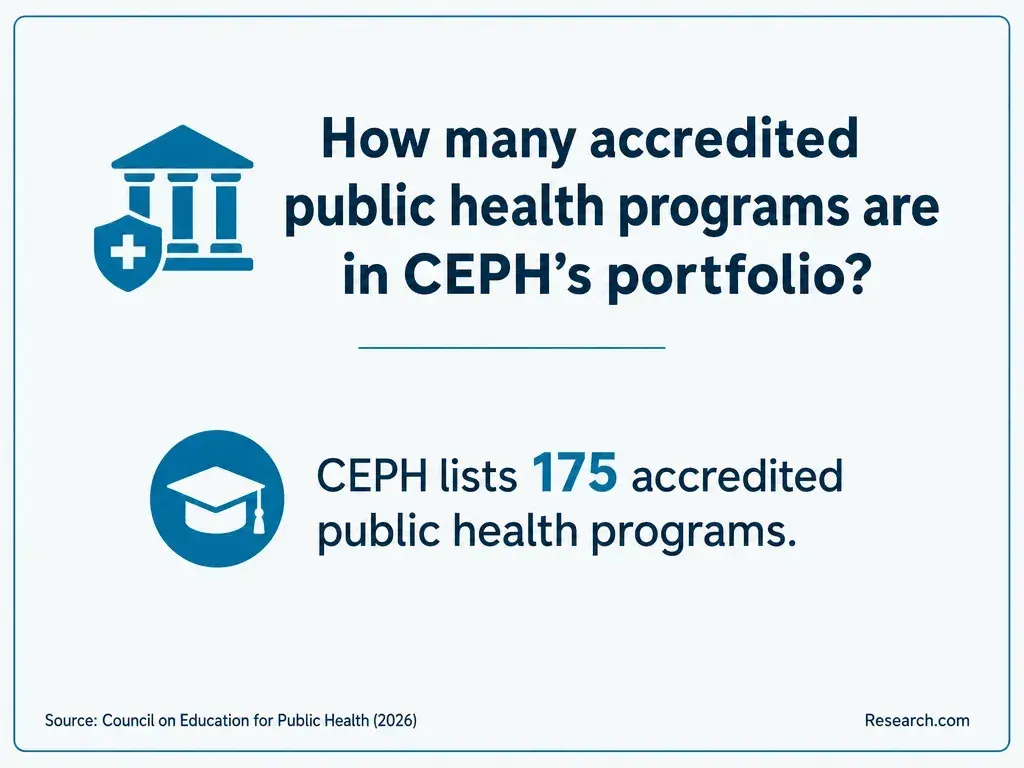
CEPH accreditation is a useful signal that an eligible public health school or standalone program has been evaluated against public health education standards. It is not a prevention credential, a promise of placement, or proof that a particular BS includes behavioral health fieldwork. Institutional accreditation is a separate matter.
Check the Council on Education for Public Health directory for the exact school or program and accreditation scope, then ask the institution whether your intended bachelor's degree is covered.
Also inspect the actual curriculum and placement arrangements. A program outside the scope of CEPH accreditation may still be worth considering if it is institutionally accredited and demonstrably fits the job requirements you have found.
If you later consider graduate study, online MPH program accreditation comparisons can inform that separate decision. Do not infer a bachelor's program's status from an institution's accredited MPH.
Online lectures can cover planning and evaluation, but prevention coordination also depends on facilitating conversations, building trust, and navigating community schedules. An online degree is not automatically an asynchronous degree, and a remote class does not necessarily mean a remote field placement.
Before enrolling, ask who finds placement sites, whether your current workplace can be proposed, what supervision is required, and whether meetings or campus visits occur at fixed times. A school must approve any placement under its own rules; a willing host alone is not enough. Compare those obligations alongside the curriculum in an online bachelor's public health education guide.
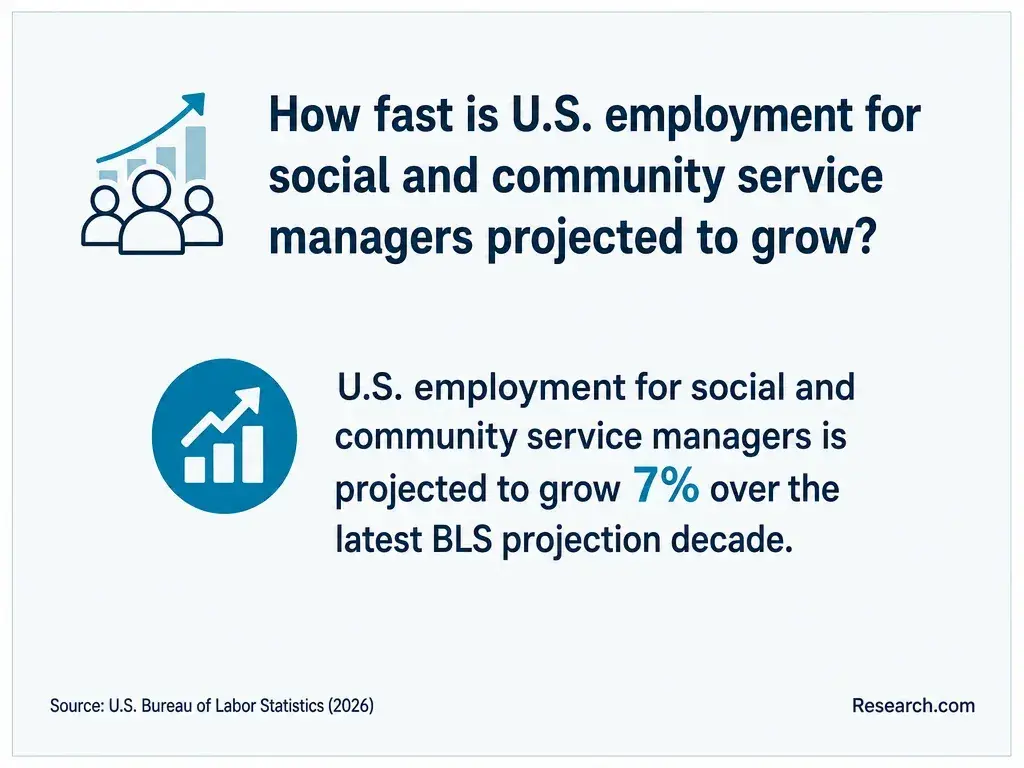
A full-time bachelor's pathway commonly spans four academic years from initial enrollment. Your remaining time depends on admitted credits and how they apply to general education, prerequisites, the major, and any residency requirement. A school's written degree audit is more useful than a general estimate of credits accepted.
There is no defensible single price for this career path: tuition varies by institution and residency status, while fees, books, travel, and potentially unpaid fieldwork add to the total. To compare public health degree cost and duration comparisons, request a term-by-term estimate based on your own credit evaluation and intended pace. Do not assume the shortest advertised program is the least expensive once required courses and placement costs are included.
Credentials can strengthen a particular application, but none follows automatically from earning a public health BS. The Certified Health Education Specialist (CHES) credential is relevant to health education; eligibility and examination rules belong to its certifying organization.
The Certified in Public Health (CPH) credential has separate eligibility pathways. Prevention-specific credentials may also be administered through state systems, with requirements that differ by jurisdiction.
Start with local coordinator postings: note which credentials are required, preferred, or absent, then confirm eligibility, supervised-experience rules, fees, and renewal obligations with the responsible certifier.
If your gap is a specific prevention skill rather than a degree requirement, employer training and supervised work may be more direct than graduate study. Compare the full investment before pursuing tuition-conscious pathways to a public health master's.
The US Bureau of Labor Statistics does not publish a wage or employment projection for a single, uniformly defined "behavioral health prevention coordinator" occupation. Its health education specialist and community health worker categories offer useful comparisons, but they contain jobs with different duties, employers, and experience levels. Their occupational medians are not starting salaries or outcomes for public health BS graduates.
For a decision you can act on, compare current local postings that specify pay, degree requirements, grant-funded status, and the scope of coordination. Then weigh that compensation against your remaining education costs and the value of experience you could gain while working.
The same caution applies when comparing lower-tuition MPH programs: a lower price does not establish a salary increase, and a master's may not be needed for the roles you want.
How can you choose a reputable public health BS program?
Judge programs against the prevention coordinator work you want to do, using published requirements and direct answers from the school rather than a degree label alone. A practical comparison should cover institutional accreditation, any applicable CEPH scope, relevant courses, supervised experience, and evidence that students can obtain the classes they need.
Ask admissions for a written estimate of remaining requirements and costs, and ask the department who approves field sites and what students actually produce there. Career services should be able to explain how they support searches for community, government, and nonprofit roles without promising placement.
If aid affects affordability, comparing university scholarships for MPH study is appropriate only if a master's is part of your plan; request bachelor's aid terms directly from each school.
Choose a BS when it fills identifiable knowledge gaps and offers feasible applied experience. If you already have a relevant degree and access to supervised prevention work, test that more direct route against actual job postings before committing to another four-year credential.
Other Things You Should Know About Public Health Programs
Prevention programs address population-level risks and protective conditions; treatment addresses an individual's clinical needs. A prevention worker can share approved referral information but should not present that work as diagnosis or therapy.
Follow the organization's safety and referral protocol, involve an authorized supervisor or emergency response as the situation requires, and stay within your training. Learn that protocol before working independently with participants.
No. Evidence from prior settings helps guide selection, but local needs, cultural fit, resources, and faithful implementation still matter. Document adaptations and monitor whether the program reaches its intended audience.
Usually, if you have permission to share it. Label proposed work accurately and remove participant details, restricted data, and unpublished partner materials unless the relevant organization explicitly authorizes their use.
- Culturally Informed Community Engagement: Implications for Inclusive Science and Health Equity - NCBI Bookshelf https://www.ncbi.nlm.nih.gov/books/NBK592587/
- Real-world public health interventions demonstrate how research evidence informs program scale-up - PMC https://pmc.ncbi.nlm.nih.gov/articles/PMC11419317/
- General Schedule Qualification Policies | U.S. Office of Personnel Management https://www.opm.gov/policy-data-oversight/classification-qualifications/general-schedule-qualification-policies/
- Behavioral Health Career Descriptions | samhsa.gov https://www.samhsa.gov/about/careers/behavioral-health-workforce/careers-by-state/descriptions
- Prevention and Behavioral Health Promotion | texas.gov https://www.hhs.texas.gov/providers/behavioral-health-services-providers/prevention-behavioral-health-promotion
- What Can You Do With a Public Health Degree? | University of North Dakota https://und.edu/blog/what-can-you-do-with-a-public-health-degree.html
- Practicum & Capstone | Colorado School of Public Health https://coloradosph.cuanschutz.edu/education/practicum-capstone
- Practicum and Capstone: COPHP MPH | Health Systems and Population Health https://hspop.uw.edu/cophpmph/program-experience/practicum-capstone/
- Public Health Approach to Substance Use - Mental Health Guide https://mhguide.hogg.utexas.edu/policy-environment/public-health-approach-to-substance-use/