2027 Generalist MPH vs Health Promotion Concentration for an Outreach Professional

Co-Founder and Chief Data Scientist
If you already build relationships with community members, an MPH should help you do more than repeat the outreach skills you use at work. The decision is whether you need broader public health preparation or deeper training in planning, communicating, and evaluating health programs.
This guide compares a generalist MPH with a health promotion concentration through the tasks outreach professionals actually perform. It also shows how to assess fieldwork, cost, credentials, and career opportunities before committing to a degree.
Key Things You Should Know
- Choose a generalist MPH if you want room to move from outreach into policy, operations, preparedness, or cross-program management; check that its electives still cover program evaluation.
- Choose health promotion if your next role centers on designing, delivering, and assessing community education or behavior-focused programs; a concentration is not a separate degree or an automatic certification.
- Compare the applied experience, not just the label. A relevant, approved project and manageable total cost may matter more than the concentration name; full-time MPH study often takes about two years, but schedules vary.
What Is the Difference Between a Generalist MPH and Health Promotion Concentration?
Both options lead to a Master of Public Health. A generalist MPH distributes advanced coursework across public health disciplines, usually with electives for individual interests. A health promotion concentration adds a defined sequence focused on how people and communities encounter health information, services, and opportunities for prevention. Schools may call a similar track community health, health behavior, or health education, but those names do not guarantee identical curricula.
For an outreach professional, the distinction is breadth versus planned depth - not whether one path values communities more. Both should develop population-health reasoning and ethical engagement; the concentration should provide more sustained practice in intervention design and evaluation.
The comparison below shows where that difference is most likely to affect your work. Confirm the actual requirements in each school's catalog rather than relying on the track name.
| Decision point | Generalist MPH | Health promotion concentration |
| Typical emphasis | Broad public health practice across multiple functions | Community-informed program planning, communication, implementation, and evaluation |
| Flexibility | Often more room to combine policy, management, data, and community-health electives | Often more prescribed concentration courses |
| Potential limitation | Relevant outreach courses may require deliberate elective choices | May leave less room for policy, operations, or quantitative specialization |
| Degree awarded | MPH | MPH, with the concentration recorded according to school policy |
If you do not yet hold a bachelor's degree, neither MPH route replaces that admission requirement. A public health BS program selection guide addresses that earlier educational decision; an undergraduate public health major is not necessarily required for MPH admission.
Which MPH Path Is Better for an Outreach Professional?
Health promotion is usually the closer fit when your goal is to advance from delivering outreach activities to designing interventions, adapting messages with community partners, training staff, and evaluating whether a program reaches its intended population. Look for instruction in needs assessment, communication, implementation, and evaluation - not simply courses with "community" in their titles.
A generalist MPH is often better if outreach is your entry point to broader responsibilities: coordinating multiple programs at a health department, managing grants and operations, contributing to policy, or working across preparedness and prevention. It can also be the stronger choice when its electives and applied experience let you build the same health promotion skills at a lower total cost or on a workable schedule.
Start with your next job description, not an eventual leadership title. Compare the skills it requests with your current evidence: community relationships, accessible communication, basic data handling, budgets, supervision, and evaluation deliverables. If you already perform the target duties and need only one missing skill, supervised work, an evaluation course, or a certificate may be more direct than an MPH.
If a bachelor's degree is your immediate gap, compare inexpensive public health bachelor's education before pricing graduate study.
What Careers Can You Pursue With Each MPH Option?
Neither concentration limits you to a fixed list of job titles. Employers assess experience, methods skills, and the responsibilities of a particular opening. Your existing outreach work may be especially valuable when you can show how you built partnerships, adapted a program, documented participation responsibly, or reported findings to a community organization.
The roles below illustrate differences in emphasis, not guaranteed outcomes or universal degree requirements.
| Potential role | Relevant preparation | What to demonstrate beyond the degree |
| Health education specialist or program coordinator | Health promotion coursework or a generalist MPH with aligned electives | Audience-informed materials, facilitation, and program evaluation |
| Community health program manager | Either path, with management and budgeting preparation | Staff supervision, grant reporting, partner accountability, and implementation experience |
| Health department program specialist | Either path; generalist breadth may suit varied assignments | Ability to work with public-sector data, policy, and operational constraints |
| Evaluation associate | Either path with substantial methods coursework | Sound measures, data-quality checks, and clear interpretation |
An MPH alone does not make someone an epidemiologist, clinical provider, or director. If your long-term aim is senior practice leadership requiring doctoral study, compare doctoral public health study costs and career directions only after establishing whether relevant leadership experience - not another credential - is the immediate gap.
MPH curricula commonly cover epidemiology, biostatistics, population health, health systems, and social and behavioral factors. A generalist program may use electives to connect those subjects to an outreach goal. A health promotion concentration typically requires more coursework in health behavior, communication, program planning, community engagement, and evaluation. Exact course titles, sequences, and elective availability vary.
For this decision, examine how far each course takes you. An introductory evaluation class may teach you to read a logic model; a stronger sequence may let you select indicators, plan data collection, interpret limitations, and present findings to a partner. Outreach professionals who want to lead programs need the latter kind of applied evidence. Ask whether a faculty-supervised project can produce a usable evaluation plan or communication product for an approved community partner.
If your intended move is primarily into advanced statistical analysis rather than program delivery, compare the MPH methods sequence with online biostatistics master's programs for working professionals. A health promotion concentration is not a substitute for intensive quantitative training.
Delivery format changes how you attend class, not whether you need access to partners, supervisors, or applied work. Online study may let an outreach employee remain in their community and develop an approved project near home. Campus study may make it easier to attend local events, work with faculty, or find a placement through established partnerships. Neither advantage is automatic.
Before choosing an online program, check whether classes are asynchronous, whether live sessions or campus visits are required, and who secures the applied-practice site. Ask whether your current employer can host a project and what approval, supervision, and separation from ordinary job duties the school requires. A promising workplace project does not count merely because it relates to public health.
When comparing CEPH-accredited graduate public health programs, evaluate the specific MPH, its concentration availability online, and its placement support - not the convenience of the delivery label alone.
Applicants generally need a bachelor's degree and must submit materials that allow the school to assess academic preparation and professional goals. Programs set their own policies for transcripts, references, essays, tests, prerequisites, and experience. An outreach background can strengthen an application when you explain your responsibilities and the skills you need next, but it does not automatically satisfy a formal prerequisite.
Review each program's requirements for your entry term. In particular, distinguish a required statistics or methods course from a recommended one, and ask whether relevant work can support an exception if the school permits it. Your statement should connect a specific task - such as improving program evaluation - to courses and applied opportunities the program actually offers.
If obtaining references is a barrier, public health graduate admissions with fewer reference documents can help you identify policies to check. Confirm requirements directly with each school; a streamlined application does not establish academic or professional fit.
Full-time MPH study often takes about two years, while part-time and accelerated schedules vary substantially. A concentration can affect completion time if required courses are offered infrequently or must be taken in sequence. For someone employed in outreach, the decisive scheduling question may be whether classes, group work, and fieldwork can coexist with community meetings and seasonal program demands.
There is no reliable single price for either pathway. Compare the full cost using each school's published tuition and required credits, then add mandatory fees, travel or campus visits, materials, and any income you would forgo. Check whether part-time enrollment changes aid eligibility and whether your employer offers education assistance. The online MPH tuition comparison guide can help establish a shortlist, but request a program-specific estimate before enrolling.
When comparing two offers, calculate cost per feasible path to completion, not just price per credit. A less expensive program may cost more overall if its required schedule forces you to reduce paid work or delay graduation.
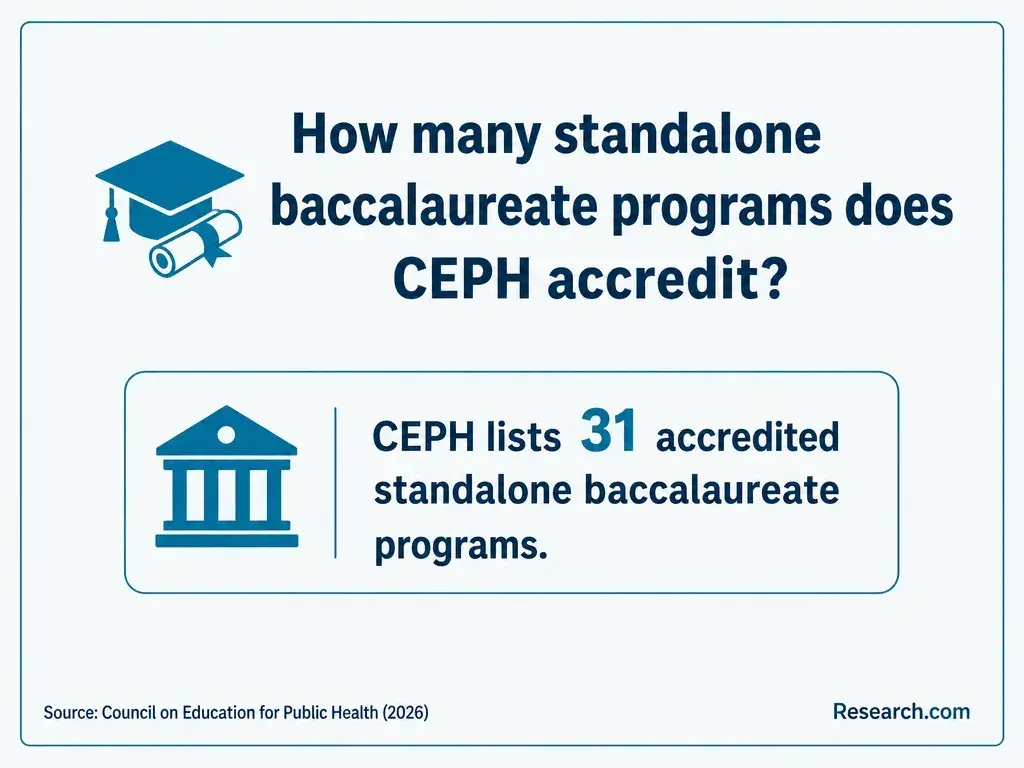
The Council on Education for Public Health (CEPH) accredits eligible schools, programs, and units of public health. Institutional accreditation and CEPH accreditation answer different questions. Before relying on a school's claim, confirm the accredited entity, whether the MPH you would enter is within its scope, and the status relevant to your intended enrollment. Do not assume an unrelated degree at the same university has the same coverage.
CEPH status is an important quality and eligibility consideration, but it cannot tell you whether the health promotion courses are deep enough for your goal or whether you can obtain an appropriate placement. Check those features separately.
If you are also considering a doctorate, do not carry an MPH accreditation conclusion over to a different degree: an online public health doctorate admissions guide addresses a separate program-selection process, and the exact doctoral degree still needs its own accreditation check.
The MPH is an academic degree, not a certification. The Certified in Public Health (CPH), Certified Health Education Specialist (CHES), and Master Certified Health Education Specialist (MCHES) credentials have separate eligibility and examination rules set by their respective certifying organizations. Neither a generalist MPH nor a health promotion concentration automatically awards one of them.
Health promotion courses may align more directly with health education competencies, but a concentration name alone does not establish CHES or MCHES eligibility. A generalist student may also be able to assemble relevant coursework. Ask the program to identify its graduates' applicable eligibility pathways, then confirm them against the certifier's current rules before using a credential as the reason to enroll.
If missing undergraduate preparation prevents you from entering the MPH you want, consider addressing prerequisite gaps before MPH enrollment rather than assuming later graduate courses will solve an admissions requirement.
What Salaries and Job Outlook Can MPH Graduates Expect?
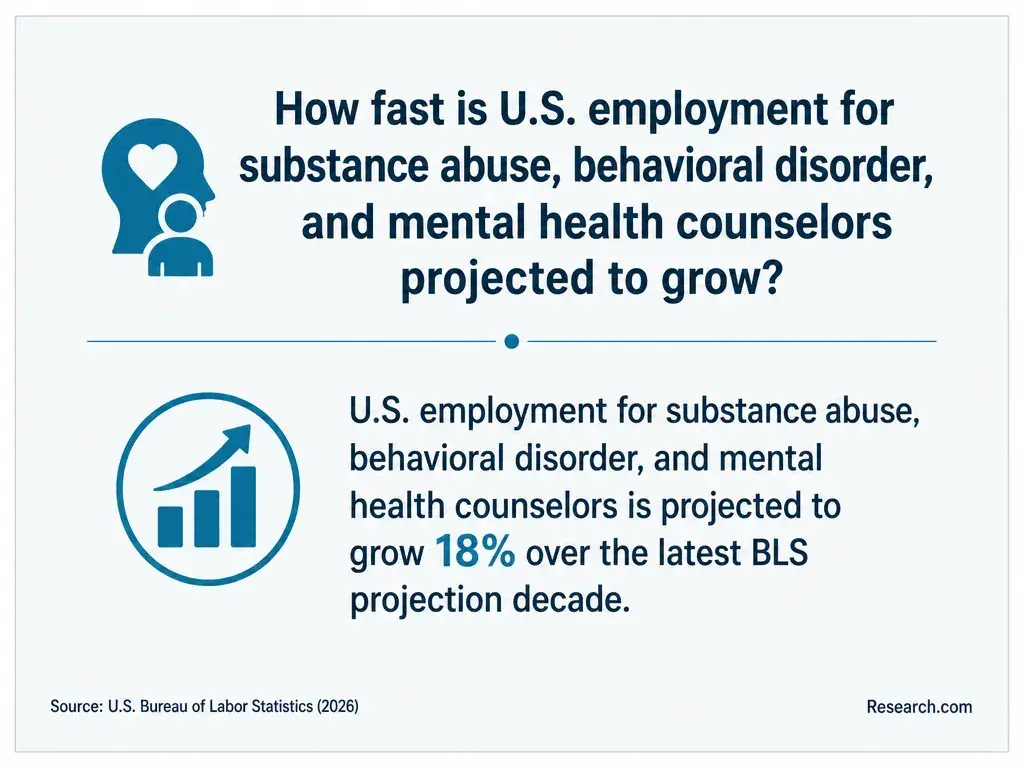
There is no single salary or employment outlook for "MPH graduates." Outcomes depend on the occupation, location, employer, prior experience, and duties. A community health worker, health education specialist, evaluation associate, and program manager may work on related initiatives while entering different labor markets. The U.S. Bureau of Labor Statistics reports occupation-wide wages and projections, not the earnings attributable to a generalist MPH or health promotion concentration.
For a useful estimate, identify the job titles you would realistically seek after graduation, compare their listed requirements with your experience, and consult the corresponding BLS occupational data alongside local postings. Public-sector pay grades and nonprofit budgets can be especially relevant to an outreach professional.
An MPH-related occupations and earnings overview offers context, but do not treat a published occupational median as your starting offer or as proof that one concentration pays more.
Other Things You Should Know About Public Health
Often, but obtain permission before using workplace materials. Remove identifiable information, respect partner agreements, and explain your own contribution. A portfolio example should not imply that a proposed activity produced measured results.
Yes, if you can do so without placing the decision on them. Ask which skills would help you support their priorities - such as accessible communication, evaluation, or grant reporting - and compare the answers with each curriculum.
Neither MPH path provides clinical licensure. Identify the profession and its state-specific education and licensing requirements first; an MPH may complement that training but does not replace it.
No. A certificate is a separately defined academic credential, while a concentration is a structured focus within an MPH. Compare the actual courses, credential awarded, and cost before deciding that either meets your goal.
- Certified Health Education Specialist (CHES) | NNLM https://www.nnlm.gov/training/specialization/certified-health-education-specialist-ches
- Framework for Program Evaluation in Public Health | cdc.gov https://www.cdc.gov/mmwr/preview/mmwrhtml/rr4811a1.htm
- MPH Capstone experiences: promising practices and lessons learned | nih.gov https://pmc.ncbi.nlm.nih.gov/articles/PMC10213715/
- What Is the Difference Between an MPH and MSPH Degree? | Emory University https://sph.emory.edu/degrees-programs/faq/mph-msph
- Which MPH Program is Right For Me? | Health Systems and Population Health https://hspop.uw.edu/cophpmph/which-mph-program-is-right-for-me/
- WashU MPH Generalist Concentration Overview https://publichealth.washu.edu/education/mph/generalist-concentration/
- Master's of Public Health (MPH) | Bouvé College of Health Sciences https://bouve.northeastern.edu/programs/master-of-public-health-mph/
- Program: Public Health (MPH) - University of Southern California https://catalogue.usc.edu/preview_program.php
- How to Become a Certified Health Education Specialist | UF HEB https://hebmastersonline.hhp.ufl.edu/articles/how-to-become-certified-health-education-specialist/