2027 From Social Work Case Management to Public Health: Choosing a Graduate Pathway

Co-Founder and Chief Data Scientist
Social work case management gives you a close view of how housing, income, healthcare access, and policy shape clients' lives. If you want to work on those conditions at a population level, graduate public health study may help - but an MPH is not always the right next credential. This guide is for case managers weighing a move into programs, evaluation, policy, or research. It compares degree pathways, identifies skills your experience already demonstrates, and shows what to verify before committing time and money.
Key Things You Should Know
- Choose by target task: An MPH generally fits population-level program and policy work; an MSW fits social work practice and its licensure pathway; a methods-focused MS fits deeper research or analysis.
- Case management is relevant experience, not a substitute for every qualification: Epidemiology, evaluation, clinical licensure, and management roles may require distinct training or experience.
- Check the whole investment: CEPH-accredited MPH programs require at least 42 semester credits, but schedules, fieldwork, total charges, and career outcomes vary by school.
What public health graduate degree best follows social work case management experience?
For most case managers seeking to improve services across a community rather than provide individual treatment, an MPH is the strongest graduate-degree starting point. It connects your knowledge of clients' barriers to skills in population assessment, program design, evaluation, and policy. The best concentration depends on the work you want to do, not simply the population you currently serve.
The comparison below starts with the responsibility you hope to hold. Program titles differ, so examine required courses and projects before relying on a concentration's name.
| Target responsibility | Pathway to consider | Important limitation |
| Design or evaluate community services | MPH with community health, health policy, or evaluation coursework | A degree alone does not confer program-management experience. |
| Provide clinical social work services or pursue social work licensure | MSW meeting the relevant state's educational rules | An MPH does not replace an MSW for social work licensure. |
| Conduct substantial statistical or epidemiologic research | Methods-intensive MPH or research-oriented MS | Compare quantitative prerequisites, thesis expectations, and access to research experience. |
| Manage healthcare operations rather than population-health initiatives | MHA or another relevant management pathway | Case management knowledge helps, but operational and financial responsibilities differ. |
If your immediate goal is to improve referral workflows or report outcomes at your current agency, a supervised evaluation project or targeted methods course may be more direct than another degree. Before applying, compare your academic record with online public health master's entry requirements; case management experience can strengthen an application, but it does not automatically satisfy a program's prerequisites.
How does an MPH compare with an MSW for public health careers?
The MPH prepares you to address patterns across populations; the MSW prepares you for social work practice with individuals, families, groups, and communities. Both can lead to community-serving work, but they are not interchangeable credentials. An MSW may be necessary for a clinical social work license, subject to state rules and supervised-practice requirements. An MPH can better match roles centered on prevention strategy, health policy, or population-level evaluation.
Case managers sometimes encounter jobs labeled "public health social worker." Read the duties before choosing a degree: a position delivering clinical services may require an MSW and license, while one coordinating a community prevention initiative may value an MPH and implementation experience. A dual MSW/MPH can make sense when you genuinely need both sets of competencies, but compare its added cost and time with the qualifications in actual job postings. If compensation is part of the decision, assess MPH compensation and career advancement against your specific target occupation - not an assumed pay increase from adding initials after your name.
What careers can social work case managers pursue with a public health degree?
Your strongest near-term transitions are often roles that retain a connection to service delivery while adding responsibility for a program or population. You may already bring interviewing, resource navigation, cross-agency coordination, documentation, and trust-building skills. You will need to demonstrate new competencies rather than assume those strengths cover data analysis or budget ownership.
These examples distinguish an adjacent move from a larger career change. Exact qualifications depend on the employer and job description.
| Role direction | What the work involves | Evidence to build |
| Community health program coordinator | Coordinate partners, outreach, referrals, and implementation | Documented project coordination and community-engagement work |
| Program evaluation associate | Define measures, assess implementation, and explain findings | An evaluation plan, appropriate data handling, and clear reporting |
| Health policy or advocacy associate | Analyze service gaps and communicate policy implications | Policy briefs and familiarity with the relevant public systems |
| Epidemiology or research analyst | Manage and interpret population-level data | Substantial statistics, study-design, and analytical experience |
Moving into coordination may be possible through an internal project before graduate school. An analyst transition usually needs more deliberate quantitative preparation. Leadership positions generally require a record of managing people, budgets, or programs in addition to a degree. If that becomes your long-term goal, examine online doctoral public health entry pathways only after checking whether a practice-focused doctorate would add capabilities your target role actually requires.
Check institutional accreditation and public health-specific CEPH accreditation separately. Confirm that the institution holds recognized institutional accreditation, then use the Council on Education for Public Health's directory to identify the accredited school, unit, or program. Ask the university whether your exact degree is included in that accreditation scope for your intended entry term. A university offering a CEPH-accredited MPH may also offer other degrees that are not covered in the same way.
This matters when comparing curricula and when a job or certification pathway specifies an accredited degree. Accreditation does not establish that a program offers evening fieldwork, strong career placement, or a particular concentration. Likewise, convenient application policies - such as those found among public health master's programs that omit reference letters - say nothing by themselves about accreditation or educational fit.
An MPH teaches you to work upstream from an individual service encounter: identify a population-health problem, assess its distribution and causes, select a feasible response, and evaluate what happens. Core study typically includes epidemiology, biostatistics, health systems and policy, social and behavioral approaches, and environmental health. Applied learning connects those areas to real organizations and decisions.
For a case manager, program evaluation is an especially useful bridge. Instead of only recording that a client received a referral, you might learn to define who was eligible, measure whether referrals reached services, examine differences across groups, and report limitations without exposing client information. That is a different task from proving that the referral program caused a health outcome. If your goal is advanced modeling rather than program implementation, compare MPH course depth with biostatistics graduate programs for busy professionals.
Before enrolling, request sample syllabi and applied-project requirements. Look for enough instruction and supervised practice to produce the kind of work your target employers ask applicants to show.
Yes, many students study online while employed, but online delivery does not guarantee a schedule that fits case management. Live classes, group meetings, and fieldwork can conflict with client appointments or unpredictable caseloads. Ask for a term-by-term schedule, not just an "online" label, and check whether required campus visits or local placements apply.
An MPH applied practice experience may involve an approved site, supervisor, competencies, and deliverables. Your existing employer might be an option, but the school must approve the arrangement; ordinary job duties should not be assumed to count. Ask whether you can undertake a distinct evaluation or planning project, how work hours will be supervised, and whether your agency can permit the proposed data use.
If you are a case manager without a bachelor's degree, plan that prerequisite separately before comparing graduate schedules. Resources on comparing accelerated public health undergraduate schedules can help frame questions, but an accelerated course format does not establish how prior credits will apply or when you can enter an MPH.
MPH programs generally expect a completed bachelor's degree and an application demonstrating readiness for graduate study. Schools set their own policies for GPA, prerequisite coursework, essays, references, tests, and application systems. A social work or other non-public-health major does not automatically disqualify you. Your work can provide strong examples of community needs assessment and interagency collaboration, while statistics or research-methods preparation may need more attention.
Build an application around a specific shift in responsibility: identify a service problem you have encountered, explain why individual case management alone cannot resolve it, and connect that problem to the program's curriculum and applied opportunities. If your grades are a concern, review applying to an MPH with a lower GPA and ask each admissions office which evidence of recent academic readiness it considers. Do not assume professional experience creates an automatic GPA or prerequisite waiver.
Duration depends on credit requirements, course availability, enrollment pace, and applied-work scheduling. CEPH-accredited MPH programs require at least 42 semester credits; a working case manager may spread those credits across more terms than a full-time student. An MS or combined degree may have different research, fieldwork, or credit requirements. Request the actual course sequence for your intended pace.
For a usable cost comparison, obtain each school's tuition basis - per credit or per term - plus mandatory fees, expected travel, and any placement-related expenses. Then consider income you might lose if fieldwork requires reduced hours. Compare that total with employer education assistance, its repayment conditions, and any aid you are eligible to receive; do not treat advertised tuition as the complete investment.
If you later consider doctoral research, evaluate its funding separately from MPH pricing. Online epidemiology doctoral funding options require particular scrutiny because assistance, research expectations, and continued support can differ markedly by program.
Many public health program, policy, and evaluation jobs do not have a single universal license. Requirements attach to the role, however: clinical social work practice is governed by state social work boards, while particular health education positions may prefer or require a professional certification. An MPH itself does not grant social work licensure or automatically award a public health certification.
If a posting mentions Certified in Public Health (CPH), Certified Health Education Specialist (CHES), or another credential, check the issuing organization's current eligibility rules and the employer's wording. Distinguish "required" from "preferred," and verify whether your exact degree and coursework meet the relevant pathway. Similarly, flexible MPH admission when some requirements are incomplete should not be mistaken for an exemption from later certification or licensing rules.
What salary and job outlook can public health graduates expect?
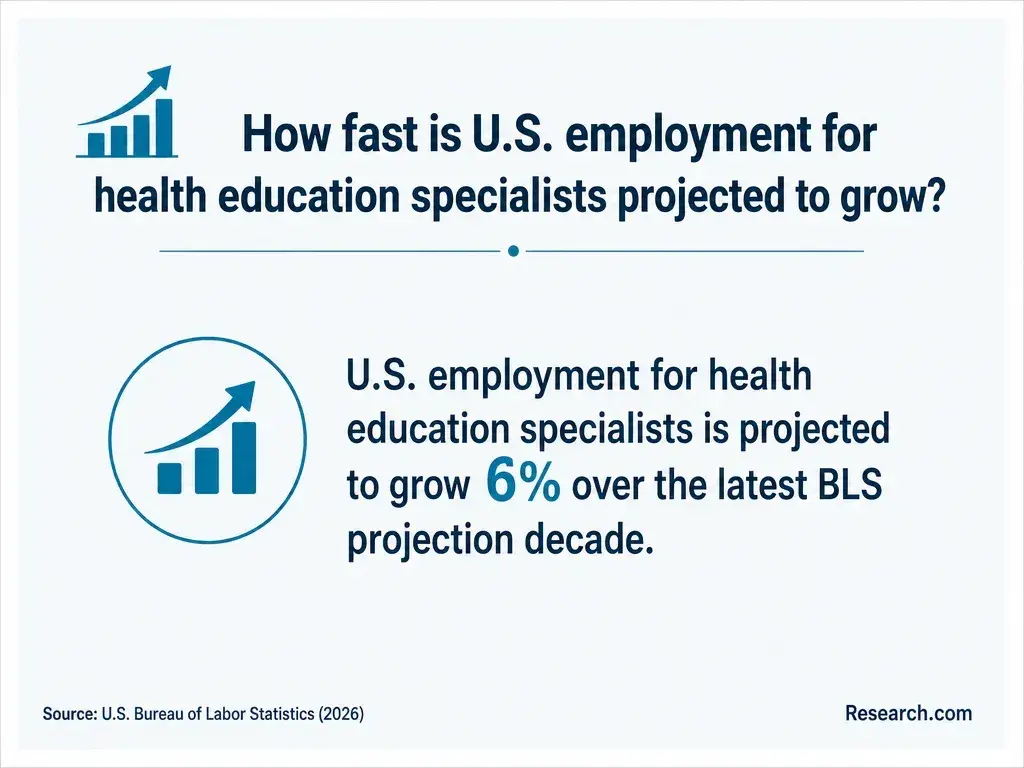
There is no reliable single salary for "public health graduates." Pay and demand differ among community health workers, health education specialists, epidemiologists, analysts, and program managers - and your case management experience may qualify you for some positions more readily than others. The U.S. Bureau of Labor Statistics Occupational Outlook Handbook publishes occupation-specific median wages, projected employment change, and typical entry education. Those figures describe entire occupations, not the expected salary or placement rate of graduates from a particular MPH.
For a practical return-on-investment check, choose several jobs you would realistically seek, note their required skills and pay ranges in your location, and compare them with your current compensation and the full cost of study. Use the closest matching BLS occupation for broader context, then ask prospective schools for clearly defined outcomes for their own graduates. A higher-paying occupation is not a sound degree rationale if its typical duties require analytical or management experience the program will not provide.
If the financial case is uncertain, MPH compensation and career advancement can inform the comparison, but an internal project, methods training, or a move into program coordination may be a lower-cost first test of your career direction.
Other Things You Should Know About Public Health
Do not use identifiable client information without the required agency permissions and institutional review. Ask about approved, appropriately deidentified data or a project that does not require client records.
Possibly, but the receiving school decides whether graduate credits transfer and satisfy specific MPH requirements. Request a written evaluation before budgeting for a shorter program.
Potentially. Ask to support an approved outreach, quality-improvement, or evaluation project with clearly defined responsibilities. That experience can help you test the transition before enrolling.
Consider it if your intended work genuinely requires both social work preparation and population-health skills. Confirm licensing alignment, added cost, and whether employers value both degrees for the roles you want.
- Levels and Eligibility Requirements | North Carolina Social Work Certification and Licensure Board https://www.ncswboard.gov/levels-and-eligibility-requirements/
- Social Worker and Social Worker Associate - Licensing Requirements | Washington State Department of Health https://doh.wa.gov/licenses-permits-and-certificates/professions-new-renew-or-update/social-worker-and-social-worker-associate/licensing-requirements
- NASW Standards for Social Work Case Management | nycourts.gov https://www.nycourts.gov/reporter/webdocs/nasw_standards_socialwork_casemgt.htm
- Mapping Dual-Degree Programs in Social Work and Public Health: Results From a National Survey - PMC https://pmc.ncbi.nlm.nih.gov/articles/PMC5036576/
- Public Health M.P.H. | Saint Louis University https://www.slu.edu/public-health-social-justice/programs/public-health/public-health-mph.php
- Admissions: Community-Oriented Public Health Practice MPH | Health Systems and Population Health https://hspop.uw.edu/cophpmph/admissions/
- Admissions - Master of Public Health - The University of Chicago https://publichealth.bsd.uchicago.edu/about/admissions/
- Public Health Employment Outcomes | Columbia University Mailman School of Public Health https://www.publichealth.columbia.edu/become-student/career-services/public-health-employment-outcomes
- Master of Public Health in Health Systems and Policy | Rutgers School of Public Health https://sph.rutgers.edu/academics/degree-programs/master-public-health-mph-degrees/master-public-health-health-systems-and
- What Is Case Management in Social Work? | University of Nevada, Reno https://onlinedegrees.unr.edu/blog/what-is-case-management-in-social-work