
2027 Best HBCU Online MBA Programs

Co-Founder and Chief Data Scientist
It's a common point of frustration. You've proven you can do the work, but you're not getting the leadership opportunities. This isn't just a feeling; it's a documented reality. Black professionals face a median wage gap of about 30%.
At the same time, the market for leaders is expanding, with about 1.1 million management roles opening up each year. An online MBA from an HBCU is a direct response to this challenge and a clear path to that opportunity. Our career planning experts, with 10 years of experience, created this guide to help you evaluate the best HBCU online MBA programs as a practical investment in your future.
What are the benefits of getting an HBCU online MBA program?
- Access a targeted career pipeline with corporations that actively recruit from a powerful and supportive alumni network.
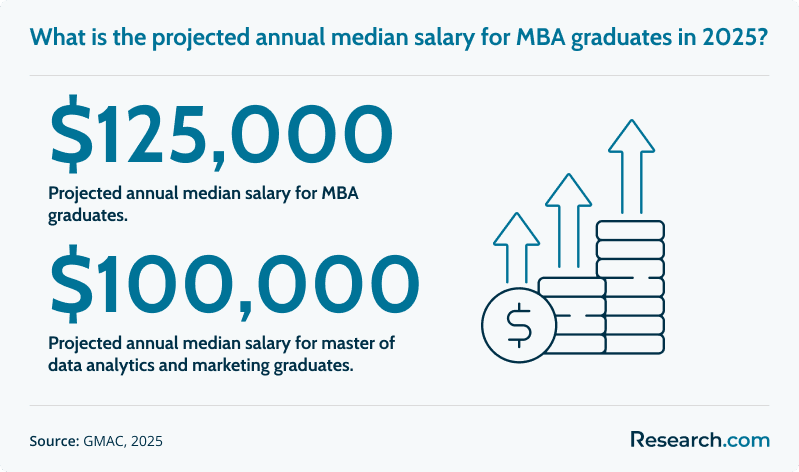
- Significantly increase your earning potential, with the projected median salary for MBA graduates reaching $125,000.
- Develop leadership skills in a flexible online format, surrounded by a community that understands and validates your professional experience.
What can I expect from an HBCU online MBA program?
You can expect a rigorous, accredited business curriculum that is respected by employers everywhere. The core courses in finance, marketing, and strategy are the same as in any top MBA program.
The real difference—and the real advantage—is in the context. The classroom conversations, case studies, and faculty perspectives are enriched by being centered on the experiences of Black business leaders and diverse markets. While other schools are just now trying to diversify their materials, HBCUs have been leading in this area for decades.
This approach provides more than just a degree. It offers a powerful learning environment that prepares you to lead with confidence and authenticity. It's why so many professionals seek out the best HBCU online MBA programs for a truly comprehensive education.
Where can I work with an HBCU online MBA program?
Graduates work across every industry, from Fortune 500 companies and management consulting to tech startups and entrepreneurship.
There's a common misconception that career paths might be narrow, but the reality is the opposite. Top global companies don't just accept applications; they have intentional, formal recruiting partnerships with HBCUs.
These corporations are actively seeking to hire and promote Black leaders, and they recognize that HBCU business schools are a primary source of top-tier talent. This gives you a unique on-ramp, helping you bypass the crowded general application pool and gain direct access to exclusive opportunities.
How much can I make with an HBCU online MBA program?
The projected median salary for new MBA graduates is $125,000. Of course, your exact starting salary will depend on your previous work experience, the industry you enter, and your geographic location.
However, this figure serves as a powerful benchmark. It clearly demonstrates the degree's potential for significant financial returns. It provides a strong data point for calculating your personal return on investment.
- List of the Best HBCU Online MBA Programs for 2027 L
- How long does it take to complete an HBCU online MBA program? Completion Time
- How does an HBCU online MBA program compare to an on-campus program? How does an HBCU online MBA program compare to an on-campus program?
- What is the average cost of an HBCU online MBA program? Program Cost
- What are the financial aid options for students enrolling in an HBCU online MBA program? Financial Aid
- What are the prerequisites for enrolling in an HBCU online MBA program? What are the prerequisites for enrolling in an HBCU online MBA program?
- What courses are typically in an HBCU online MBA program? What courses are typically in an HBCU online MBA program?
- What types of specializations are available in an HBCU online MBA program? Specializations
- How to choose the best HBCU online MBA program? How to choose the best HBCU online MBA program?
- What career paths are available for graduates of an HBCU online MBA program? Career Paths
- What is the job market for graduates of an HBCU online MBA program? Job Market
- Is an HBCU Online MBA Program a Cost-Effective Investment Compared to Other Options? Is an HBCU Online MBA Program a Cost-Effective Investment Compared to Other Options?
Best HBCU Online MBA Programs for 2027
Choosing an online MBA from a Historically Black College or University is not just a question of convenience. For many working professionals, it is a decision about career mobility, leadership preparation, cultural fit, alumni access, affordability, and whether the program can realistically fit around a full-time job.
This guide is designed for professionals comparing HBCU online MBA programs and trying to decide which option offers the right mix of accreditation, cost, flexibility, concentrations, networking, and career value. You will find a ranked program list, side-by-side comparisons, cost and financial aid guidance, admissions expectations, curriculum details, career paths, and practical questions to ask before applying.
Quick Answer: What Is the Best HBCU Online MBA Program?
The best HBCU online MBA program depends on your career goal, budget, schedule, and preferred specialization. Howard University may appeal to professionals seeking a nationally recognized brand and a strong cohort experience. Jackson State University, Delaware State University, Albany State University, and Hampton University may fit students who want a faster 12-month path. Southern University and A&M College, Lincoln University, Albany State University, and North Carolina A&T State University stand out for lower listed cost per credit compared with several other options in this ranking.
Before choosing, confirm three things: the program’s business accreditation, the total cost after fees and aid, and whether its concentrations match the role you want after graduation.
How We Rank Schools
Because an MBA can require a major financial and time commitment, our ranking process emphasizes transparent data and decision-useful factors. Research.com evaluates programs using information from sources such as the IPEDS database, Peterson's database, the College Scorecard database, and The National Center for Education Statistics.
These sources help compare HBCU online MBA programs across measurable criteria such as institutional data, affordability indicators, academic structure, and student outcomes where available. You can review the broader evaluation process on Research.com’s methodology page.
Top HBCU Online MBA Programs at a Glance
| Rank | School | Program Length | Credits | Cost per Credit | Accreditation | Best Fit |
| 1 | Howard University | 2.5 years | 48 | $2,020 | Association to Advance Collegiate Schools of Business (AACSB) | Professionals who want a high-touch cohort experience and access to a large global network |
| 2 | Florida Agricultural and Mechanical University | 2.5 years | 44 | $792 | Association to Advance Collegiate Schools of Business (ACBSP) | Working managers who value corporate partnerships, bundled learning materials, and global exposure |
| 3 | Jackson State University | 1 year | 30 | $724.50 | Association to Advance Collegiate Schools of Business (AACSB) | Students who want an accelerated online MBA structured around eight-week terms |
| 4 | Morgan State University | 2 years | 36 | $834 | Association to Advance Collegiate Schools of Business (AACSB) | Professionals seeking leadership development with elective flexibility in accounting, finance, and marketing |
| 5 | Delaware State University | 1 to 1.5 years | 30 | $715 | Association to Advance Collegiate Schools of Business (AACSB) | Students who want a flexible pace and concentrations in Business Analytics, Finance, Information Systems, or Hospitality and Tourism Management |
| 6 | Southern University and A&M College | 2 years | 39 | $475 | Association to Advance Collegiate Schools of Business (AACSB) | Professionals who want career-focused concentrations and the option of a two-week study abroad experience |
| 7 | Lincoln University | 2 years | 36 | $372 | Accreditation Council for Business Schools and Programs (ACBSP) | Students seeking a lower cost per credit and emphasis areas such as Accounting, Agribusiness, Management, or Management Information Systems |
| 8 | Albany State University | 1 year | 30 | $300 | Accreditation Council for Business Schools and Programs (ACBSP) | Students interested in a 12-month path and concentrations including Accounting, Healthcare, Supply Chain & Logistics, and Public Administration |
| 9 | Hampton University | 1 year | 30 | $695 | International Assembly for Collegiate Business Education (IACBE) | Professionals who prefer a cohort-based accelerated MBA with options in Business Analytics, Marketing, Supply Chain Management, or General MBA |
| 10 | North Carolina A&T State University | 2 years | 36 | $416.67 | Association to Advance Collegiate Schools of Business (AACSB) | Students seeking dual AACSB accreditation in business and accounting, four concentrations, and strong industry connections |
1. Howard University Online MBA
Howard University’s online MBA begins with a required three-day orientation in Washington, D.C., giving students an early chance to form relationships before moving into online coursework. The program is built around cohort connection, ethical leadership, and access to Howard’s broad global network, which can be valuable for professionals targeting executive or senior management roles.
- Program length: 2.5 years
- Required credits to graduate: 48
- Cost per credit: $2,020
- Accreditation: Association to Advance Collegiate Schools of Business (AACSB)
2. Florida Agricultural and Mechanical University Online MBA
Florida Agricultural and Mechanical University designs its online MBA for working managers who want a structured business education with practical support included. Tuition covers a laptop and required e-books, and the program connects students with over 100 corporate partners. A short-term international residency adds direct exposure to global business practice.
- Program length: 2.5 years
- Required credits to graduate: 44
- Cost per credit: $792
- Accreditation: Association to Advance Collegiate Schools of Business (ACBSP)
3. Jackson State University Online MBA
Jackson State University offers one of the faster options in this list, with an accelerated 12-month online MBA for working adults who want to move quickly. Courses run in eight-week terms, which helps students concentrate on a limited course load at one time while continuing their professional responsibilities.
- Program length: 1 year
- Required credits to graduate: 30
- Cost per credit: $724.50
- Accreditation: Association to Advance Collegiate Schools of Business (AACSB)
4. Morgan State University Online MBA
Morgan State University emphasizes leadership capabilities that students can apply in their current organizations while progressing through the degree. Its elective structure gives students room to shape the program around interests in accounting, finance, marketing, and related business areas.
- Program length: 2 years
- Required credits to graduate: 36
- Cost per credit: $834
- Accreditation: Association to Advance Collegiate Schools of Business (AACSB)
5. Delaware State University Online MBA
Delaware State University gives students a choice between an accelerated 12-month completion plan and a more moderate 18- to 24-month pace. Its concentrations help students align the MBA with specific leadership tracks in data, finance, systems, and hospitality-related business management.
- Program length: 1 to 1.5 years
- Concentrations: Business Analytics, Finance, Information Systems, and Hospitality and Tourism Management
- Required credits to graduate: 30
- Cost per credit: $715
- Accreditation: Association to Advance Collegiate Schools of Business (AACSB)
6. Southern University and A&M College Online MBA
Southern University and A&M College allows students to build depth in one of five career-oriented concentrations: Accounting, Entrepreneurship, Human Resources Management, Supply Chain Management, and Healthcare Management. Students who want international exposure can also consider the optional two-week study abroad trip focused on global business operations.
- Program length: 2 years
- Concentrations: Accounting, Entrepreneurship, Human Resources Management, Supply Chain Management, and Healthcare Management
- Required credits to graduate: 39
- Cost per credit: $475
- Accreditation: Association to Advance Collegiate Schools of Business (AACSB)
7. Lincoln University Online MBA
Lincoln University offers a practical MBA pathway with emphasis areas that connect to defined business needs, including Accounting, Agribusiness, Management, and Management Information Systems. Students may choose fully online or in-person study, and qualifying students can pursue an accelerated one-year track.
- Program length: 2 years
- Emphasis areas: Accounting, Agribusiness, Management, and Management Information Systems
- Required credits to graduate: 36
- Cost per credit: $372
- Accreditation: Accreditation Council for Business Schools and Programs (ACBSP)
8. Albany State University Online MBA
Albany State University offers a 12-month online MBA intended for professionals who want a fast route to advanced business training. Its Supply Chain & Logistics concentration is especially notable because it incorporates a Lean Six Sigma Green Belt certification into the curriculum.
- Program length: 1 year
- Concentrations: Accounting, Healthcare, Supply Chain & Logistics, and Public Administration
- Required credits to graduate: 30
- Cost per credit: $300
- Accreditation: Accreditation Council for Business Schools and Programs (ACBSP)
9. Hampton University Online MBA
Hampton University’s online MBA is an accelerated 12-month program that uses a cohort model to help students build a professional network while completing the degree. The curriculum blends core business training with concentration options in Business Analytics, Marketing, Supply Chain Management, and General MBA.
- Program length: 1 year
- Concentrations: Business Analytics, Marketing, Supply Chain Management, and General MBA
- Required credits to graduate: 30
- Cost per credit: $695
- Accreditation: International Assembly for Collegiate Business Education (IACBE)
10. North Carolina A&T State University Online MBA
North Carolina A&T State University combines industry connections with a business curriculum supported by dual AACSB accreditation in business and accounting. The school reports a job placement rate of over 90% for graduates, and students can choose from Accounting, General Management, Human Resource Management, and Supply Chain Management concentrations.
- Program length: 2 years
- Concentrations: Accounting, General Management, Human Resource Management, and Supply Chain Management
- Required credits to graduate: 36
- Cost per credit: $416.67
- Accreditation: Association to Advance Collegiate Schools of Business (AACSB)
How Long Does It Take to Complete an HBCU Online MBA Program?
Most HBCU online MBA programs are built for working professionals and usually take 12 months to 2.5 years. The right timeline depends on how much weekly study time you can realistically commit, how quickly you need the credential, and whether you want more time for networking, internships, employer-sponsored projects, or career exploration.
| Program Pace | Typical Length | Best For | Main Trade-Off |
| Accelerated | 12 to 18 months | Students who can handle a heavier workload and want to finish quickly | Less breathing room for work, family, networking, and career planning |
| Standard | 2 years to 2.5 years | Professionals with demanding jobs or family responsibilities | Longer time before you receive the full career benefit of the degree |
| Flexible or part-time | Varies by school | Students who need to adjust course loads around work cycles | May extend the total time and require more self-discipline |
Should You Choose a One-Year or Two-Year MBA?
A one-year MBA can make sense if you already have clear career goals, strong time management habits, and support from your employer or family. A two-year format may be better if you want more time to develop relationships, strengthen weaker quantitative skills, or explore a new business function before changing roles.
It is useful to compare an accelerated MBA with other short academic routes. Some career-focused credentials, such as the shortest real estate degree programs, may take less time, but an MBA is broader and is designed to develop leadership, finance, strategy, operations, and management decision-making skills.
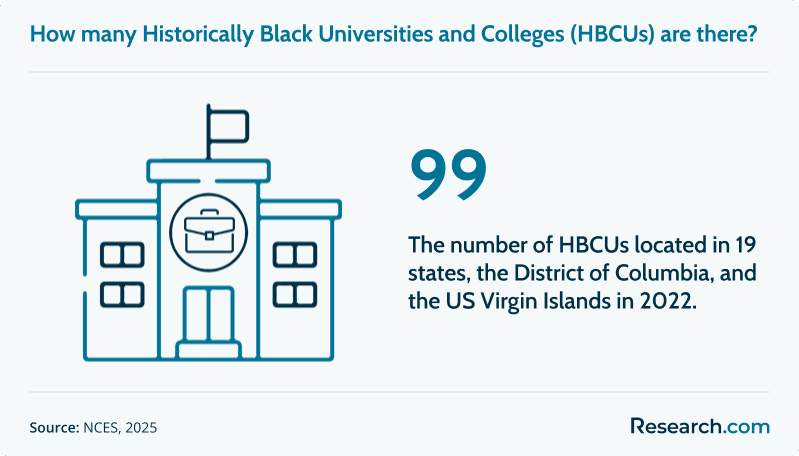
HBCUs also operate within a long-established national higher education network. There are 99 HBCUs across the country, and many have adapted their graduate business programs for online learners who need flexible access without giving up institutional identity or alumni connection.
HBCU Online MBA vs. On-Campus MBA: What Is Different?
In a well-designed online MBA, the credential, core business subjects, and faculty expectations should be comparable to the on-campus version. The biggest differences are how you attend class, how you interact with classmates, how networking is structured, and how much flexibility you have around work and family obligations.
Graduates may pursue leadership roles across many business areas. Some MBA pathways can also support specialized management careers, including roles connected to engineering management; students comparing that route may want to review how an MBA can relate to MBA engineering management salary considerations.
Online vs. Campus Comparison
| Factor | Online HBCU MBA | On-Campus MBA |
| Schedule flexibility | Stronger fit for full-time workers, parents, and students outside the school’s region | Better for students who can relocate or attend classes at fixed times |
| Networking | Built through cohorts, live sessions, group projects, residencies, and alumni events | More spontaneous in-person access to classmates, faculty, and campus events |
| Learning environment | Requires strong self-management and comfort with digital collaboration tools | Provides face-to-face discussion and campus-based structure |
| HBCU community experience | Can be strong when the program uses cohorts, live classes, mentorship, and residencies | Often more immersive because students are physically present on campus |
| Best fit | Professionals who cannot pause their careers or relocate | Students who want daily campus access and can accommodate a less flexible schedule |
How Online Programs Build Community
The strongest online MBA programs do more than post recorded lectures. They use live discussions, team-based assignments, cohort sequencing, faculty access, and residency experiences to create relationships that continue after graduation. This kind of online community design is also important in other graduate fields, including HBCU MSW programs, where peer connection and applied discussion can shape professional growth.
Howard University’s required in-person orientation in Washington, D.C., is one example of how an online program can add face-to-face connection early. Online MBA students also practice skills employers increasingly value: remote leadership, digital communication, virtual project management, and disciplined independent work.
What Is the Average Cost of an HBCU Online MBA Program?
The total tuition for HBCU online MBA programs can range from under $10,000 to nearly $100,000, with the average for in-state students falling around $28,000. The sticker price, however, does not tell the full story. Students should compare total program cost, mandatory fees, travel costs for residencies, books or technology charges, employer reimbursement, scholarships, and the opportunity cost of time spent studying.
Why Costs Vary So Widely
- Public vs. private institution: Public universities often charge lower tuition, especially for in-state students, though online pricing policies vary.
- Brand strength and network: Programs with broader national or global recognition may charge more because of alumni reach, employer visibility, and career services investment.
- Included services: Some programs include items such as laptops, e-books, international residencies, career coaching, or technology resources in the cost.
- Program length and credit requirement: A lower cost per credit does not always mean a lower total cost if the program requires more credits.
Cost Should Be Compared With Career Fit, Not Just Tuition
A lower-cost MBA is not automatically weaker, and a higher-cost MBA is not automatically the better investment. The better question is whether the program gives you access to the courses, network, employer relationships, and credibility needed for your target role.
Some expensive institutions operate like highly selective professional networks, similar in concept to the reputational value students may seek from the best music conservatories in the US. Other schools may deliver strong value through lower tuition, regional employer connections, and flexible scheduling. The right choice depends on your career market and expected use of the degree.
Financial Aid Options for HBCU Online MBA Students
Most MBA students should build a funding plan using more than one source. Do not assume the listed tuition is what you will actually pay. Start early, ask each school about graduate business scholarships, and confirm whether employer benefits can be used for an online MBA.
- Federal financial aid: Submit the Free Application for Federal Student Aid (FAFSA) to determine eligibility for federal aid options.
- Employer tuition assistance: Many employers reimburse part of MBA tuition when the degree supports your current or future role.
- Institutional and alumni scholarships: HBCUs may offer school-based awards, alumni-supported scholarships, and graduate business funding opportunities.
- Corporate fellowships and external awards: Organizations such as the National Black MBA Association (NBMBAA) and corporate partners may support Black professionals pursuing graduate business education.
How to Reduce Your Net MBA Cost
- Ask for the full cost of attendance. Include tuition, fees, books, residencies, technology, travel, and graduation costs.
- Apply for aid before you assume you cannot afford the program. Scholarships and employer support can change the value calculation.
- Request employer reimbursement in writing. Clarify grade requirements, repayment obligations, annual limits, and whether the employer pays upfront or reimburses later.
- Compare total cost, not only cost per credit. Credit requirements range from 30 to 48 in this list.
- Ask about payment plans. A monthly payment structure can reduce reliance on loans for some students.
Institutional Support for HBCU Students
HBCU graduate students may benefit from an ecosystem of alumni, corporate partners, and public initiatives focused on expanding opportunity and leadership pipelines. The U.S. Department of Education has announced historic investments in HBCUs, and many employers continue to invest in diverse leadership development. Students should still verify specific aid availability directly with each school because funding amounts, eligibility, and deadlines vary.
What Are the Prerequisites for an HBCU Online MBA Program?
Admissions requirements vary by university, but HBCU online MBA programs generally look for applicants who can contribute professional experience, academic readiness, and clear leadership goals. A business undergraduate degree is often not required, but students without prior coursework in accounting, economics, statistics, or finance may need foundation courses depending on the school.
- Accredited bachelor’s degree: Applicants typically need a bachelor’s degree from an accredited institution, and the major can often be in any field.
- Professional work experience: Many programs prefer applicants with two to five years of relevant experience.
- Essays or statement of purpose: These materials should explain your career direction, leadership experience, and reason for choosing the program.
- Letters of recommendation: Strong recommendations usually come from supervisors, clients, faculty, or professional mentors who can describe your leadership potential.
- GMAT or GRE scores: Some programs require standardized tests, while others offer waivers for applicants with strong grades, advanced degrees, or substantial work experience.
Should You Take the GMAT or Request a Waiver?
Many MBA programs have shifted toward holistic review, giving more weight to professional achievements, academic history, leadership evidence, and career fit. If a program offers a GMAT or GRE waiver, ask whether your GPA, work history, military experience, graduate credits, or certifications qualify.
If you do need to test, review benchmarks carefully rather than guessing. Understanding MBA average GMAT scores can help you set a realistic target, but waiver eligibility should be your first question if testing would delay your application or add unnecessary cost.
What Courses Are Usually Included in an HBCU Online MBA?
An HBCU online MBA typically covers the major functions of business so graduates can understand how decisions in finance, operations, marketing, analytics, leadership, and strategy affect the entire organization. Programs vary by concentration, but most include a common core before electives or specialized coursework.
- Managerial Accounting & Finance
- Marketing Management
- Managerial Economics
- Statistics & Data Analytics
- Operations & Supply Chain Management
- Organizational Behavior & Leadership
- Strategic Management, often through a capstone course
How MBA Coursework Builds Leadership Judgment
The value of the MBA is not only the list of subjects. It is the way those subjects are integrated. A student may learn finance through capital budgeting, marketing through market segmentation, analytics through decision modeling, and leadership through case discussions involving complex organizational trade-offs.
This is different from a narrower technical credential. For example, students exploring technology training may compare the easiest IT programs to get into, but an MBA prepares students to manage technology, people, budgets, strategy, and organizational change together.
What Specializations Are Available in HBCU Online MBA Programs?
Specializations help students connect the MBA to a specific career outcome. Some programs call them concentrations, while others use terms such as emphasis areas or tracks. The right choice should reflect both your existing experience and the roles you want after graduation.
An MBA can also build on many undergraduate backgrounds. Students entering from fields outside business, including those who completed a legal studies bachelor degree, may use the degree to move into compliance, operations, consulting, administration, or leadership roles.
Common HBCU Online MBA Specialization Areas
| Specialization Area | Common Career Direction | Good Fit For |
| Finance | Corporate finance, banking, financial planning, budget leadership | Students who enjoy quantitative analysis and capital decisions |
| Accounting | Controllership, audit leadership, accounting management | Students with accounting experience or interest in financial reporting |
| Business Analytics | Data-informed management, analytics leadership, business intelligence | Professionals who want to translate data into strategic decisions |
| Supply Chain Management | Logistics, procurement, operations, distribution leadership | Students interested in global movement of goods, systems, and efficiency |
| Human Resource Management | Talent strategy, workforce planning, employee relations, HR leadership | Professionals focused on people, culture, and organizational performance |
| Healthcare Management | Healthcare administration, clinic operations, health system leadership | Students with healthcare experience or interest in regulated service organizations |
| Entrepreneurship | Venture creation, small business growth, innovation leadership | Founders or professionals planning to build or scale a business |
| Management Information Systems | Technology management, systems leadership, digital transformation | Students who want to bridge business strategy and information systems |
Technology, AI, and the MBA Skill Set
Employers increasingly expect managers to understand how technology affects operations, staffing, customer experience, and competitive strategy. According to the cited GMAC research, 31% of global employers now say that knowledge of AI tools is essential when hiring.
Students with technical or engineering backgrounds may want a more targeted leadership path, such as an online MBA engineering management program. For nontechnical students, choosing analytics, information systems, or supply chain coursework can help develop fluency in data-driven and technology-enabled business decisions.
How to Choose the Best HBCU Online MBA Program
The best HBCU online MBA is the one that fits your career target, budget, learning style, and schedule. Rankings can help you discover options, but they should not replace your own program analysis. Use the following framework before applying.
Step-by-Step Decision Framework
- Confirm accreditation first. Make sure the business school or program holds recognized business accreditation and that the institution itself is properly accredited.
- Match the curriculum to your goal. If you want supply chain leadership, do not choose a program without supply chain coursework unless the school offers strong electives or related projects.
- Compare total cost after aid. Include fees, travel, books, technology, and employer reimbursement, not just tuition.
- Evaluate schedule realism. A 12-month program can be appealing, but it may not be manageable during a demanding work season.
- Ask about career support. Look for coaching, alumni introductions, employer partnerships, resume support, mock interviews, and recruiting events.
- Test the online experience. Ask whether classes are live, asynchronous, cohort-based, or self-paced, and confirm how group work is handled.
Questions to Ask Before You Enroll
| Question | Why It Matters |
| Is the program AACSB, ACBSP, or IACBE accredited? | Accreditation can affect employer perception, transferability, and academic quality signals. |
| What is the full program cost, including fees? | The cost per credit does not show the full financial commitment. |
| Are online students eligible for the same career services as campus students? | Career support can strongly influence the practical value of the degree. |
| How often do students meet live with faculty or classmates? | Interaction affects networking, accountability, and the overall learning experience. |
| Can I change pace if my work schedule changes? | Flexibility matters for working adults managing unpredictable responsibilities. |
| What outcomes are reported for online MBA graduates? | Placement, promotion, and alumni data can help you judge fit, but outcomes are never guaranteed. |
Understanding Business Accreditation
The main business accrediting bodies to understand are the Association to Advance Collegiate Schools of Business (AACSB), the Accreditation Council for Business Schools and Programs (ACBSP), and the International Accreditation Council for Business Education (IACBE). Each evaluates business education, but they may emphasize somewhat different aspects of academic quality, teaching practice, institutional mission, and continuous improvement.
AACSB is often associated with globally recognized business schools and may matter more for students targeting competitive corporate, consulting, or doctoral pathways. ACBSP and IACBE can also support strong business preparation, especially for applied leadership, regional advancement, entrepreneurship, and working-professional education. The key is to choose the accreditation profile that aligns with your intended employer market and long-term plans.
Common Mistakes to Avoid When Choosing an HBCU Online MBA
- Choosing only by ranking. A highly ranked program may not offer your preferred concentration, schedule, or price point.
- Looking only at tuition per credit. Total cost depends on credits, fees, books, technology, residencies, and travel.
- Ignoring accreditation. Accreditation can affect credibility with employers and future academic options.
- Assuming online means easier. Online MBA programs can be demanding because students often balance coursework with full-time work.
- Overlooking career services. A strong curriculum is important, but coaching, alumni access, and employer connections can affect your job search.
- Picking a concentration without a career plan. Choose a specialization because it connects to target roles, not because it sounds popular.
- Assuming salary outcomes are guaranteed. An MBA can improve opportunity, but results depend on experience, location, industry, networking, and job performance.
What Career Paths Are Available After an HBCU Online MBA?
An HBCU online MBA can support advancement in corporate, public-sector, nonprofit, entrepreneurial, and consulting settings. The degree is most useful when paired with prior experience and a clear plan for how the MBA will help you move into higher-responsibility roles.
- Corporate leadership: Graduates may pursue management roles in finance, marketing, human resources, operations, analytics, or general management.
- Management consulting: MBA training in analysis, strategy, and problem-solving can prepare students for consulting work.
- Nonprofit and public-sector management: Business skills can help mission-driven organizations improve budgeting, operations, fundraising, and program delivery.
- Entrepreneurship and venture growth: Founders can use MBA coursework to strengthen financial planning, hiring, operations, marketing, and scaling strategy.
Why Entrepreneurship Is a Major MBA Use Case
For some students, the goal is not simply a promotion. It is business ownership. The opportunity is significant: 96% of Black-owned businesses are sole proprietorships, meaning many have not yet grown into employer businesses. MBA training in finance, operations, strategy, marketing, and leadership can help entrepreneurs build more scalable companies.
The business toolkit is also transferable to creative and media industries. Professionals exploring entertainment business jobs, for example, may use MBA skills to move from creative production or freelance work into management, venture development, finance, or executive roles.
What Is the Job Market for HBCU Online MBA Graduates?
The broader management labor market remains large. There are projected to be 1.1 million management openings each year, driven by economic growth and the need to replace workers who leave the occupation or retire. MBA graduates may compete for these roles across industries, but the degree alone does not guarantee promotion or salary growth.
HBCU online MBA graduates may benefit from targeted corporate recruiting, alumni relationships, professional associations, and employer interest in diverse leadership pipelines. The strongest outcomes generally come from students who use the program actively: building relationships, pursuing projects tied to their goals, engaging career services early, and applying coursework directly at work.
How to Improve Your Career ROI While Enrolled
- Enter with a role target. Know whether you are aiming for promotion, industry change, consulting, entrepreneurship, or executive preparation.
- Choose projects strategically. Use class assignments to solve problems connected to your employer or target industry.
- Build relationships before graduation. Connect with classmates, alumni, faculty, and employer partners throughout the program.
- Update your resume every term. Add measurable MBA-related projects, leadership examples, and analytical tools as you develop them.
- Practice executive communication. MBA value often shows up in how clearly you present strategy, financial trade-offs, and recommendations.
What Graduates Say About Their HBCU Online MBA Experience
- Denny: "Before the MBA, I was already working as a senior analyst, but director-level opportunities felt just out of reach. The finance coursework changed how I spoke with executives, and that confidence helped me negotiate a 25% increase after graduation."
- Aisha: "With a full-time logistics role and two children, commuting to campus was not realistic. The online format let me study after bedtime, join weekend group meetings, and keep moving professionally while earning the degree."
- Simone: "I had steady freelance income, but I did not know how to turn the work into a company. The MBA gave me a structure for operations, pricing, hiring, and financial planning. After finishing, I hired my first two full-time employees and started building for growth."
Is an HBCU Online MBA Cost-Effective Compared With Other MBA Options?
An HBCU online MBA can be cost-effective when the program’s tuition, accreditation, alumni network, employer connections, and career support align with your goals. It may not always be the cheapest option upfront. Students focused mainly on minimizing tuition can also compare the least expensive online MBA programs. However, cost-effectiveness should include more than price: it should account for career fit, support services, program reputation, concentration availability, and your ability to complete the degree without disrupting income.
The best value is not necessarily the lowest-cost program or the most expensive brand. It is the program that helps you reach a specific professional outcome at a cost you can justify.
References
- Graduate Management Admission Council. (2025a). 2025 Corporate Recruiters Survey: Summary Report. Retrieved October 13, 2025, from GMAC.
- Graduate Management Admission Council. (2025b). Prospective Students Survey 2025 data report. Retrieved October 13, 2025, from GMAC.
- Graduate Management Admission Council. (2025c). The 2024 GMAC segmentation report. Retrieved October 13, 2025, from GMAC.
- Jackson, D., Davis, E., & Harvey, B. (2019, March). Business education and Historically Black Colleges and Universities. AACSB Insights. Retrieved October 13, 2025, from AACSB.
- National Center for Education Statistics. (2025). Fast facts: Historically Black Colleges and Universities. Retrieved October 13, 2025, from NCES.
- Stewart, S., III, Chui, M., Manyika, J., Julien, J. ... & Zhang, H. (2021). The economic state of Black America: What is and what could be. McKinsey Global Institute. Retrieved October 13, 2025, from McKinsey Global Institute.
- UNCF. (2024). HBCU economic impact report. Retrieved October 13, 2025, from UNCF.
- U.S. Bureau of Labor Statistics. (2025). Management occupations. Occupational Outlook Handbook. Retrieved October 13, 2025, from BLS.
- U.S. Department of Education. (2025). U.S. Department of Education makes historic grant investments in programs to bolster educational outcomes [Press release]. Retrieved October 13, 2025, from DOE.
- University of Alabama at Birmingham. (n.d.). Accreditation and why it matters for an online MBA program. Retrieved October 13, 2025, from University of Alabama at Birmingham.
Key Insights
- The best HBCU online MBA depends on fit, not just rank. Compare accreditation, concentration options, schedule, total cost, and career services before applying.
- Program length varies significantly. Options in this ranking range from 1 year to 2.5 years, so choose a pace that matches your work and family obligations.
- Cost per credit is only one part of value. Total credits, fees, residencies, employer reimbursement, scholarships, and career support all affect ROI.
- Accreditation matters. AACSB, ACBSP, and IACBE accreditation can signal business program quality, but the best choice depends on your career market and goals.
- Online does not mean disconnected. Strong programs use cohorts, live discussion, group projects, residencies, and alumni networks to preserve community.
- Use the MBA while you are enrolled. The students most likely to benefit are those who network early, apply coursework at work, choose strategic projects, and connect the degree to a clear career outcome.
Other Things You Should Know About HBCU Online MBA Programs
Many HBCU online MBA programs waive the GMAT for applicants with a 3.0 undergraduate GPA, a completed master’s degree, or at least 3 to 5 years of professional experience. Some programs still require official test scores for conditional admission or scholarship review.
The graduation rate for HBCU Online MBA programs in 2027 varies, but many report rates between 60% and 80%. These rates depend on program structure, student support services, and engagement levels, contributing significantly to overall program efficacy and student success.





