
2027 What Is a Health Information Technician: Salary & Career Paths

Co-Founder and Chief Data Scientist
Becoming a health information technician is a practical way to enter healthcare without providing direct bedside care. The role sits at the intersection of medical records, coding, compliance, patient privacy, electronic health records, and healthcare data quality. That combination matters more as hospitals, clinics, insurers, telehealth providers, and government agencies rely on accurate digital records to bill correctly, coordinate care, and protect sensitive patient information.
This guide explains what health information technicians do, the education and certification path, where they work, how long training usually takes, what skills employers expect, salary and job outlook information, advancement options, common challenges, and trends shaping the field. It is designed for students, career changers, and healthcare workers deciding whether health information technology is the right next step.
Quick Answer: How Do You Become a Health Information Technician?
Most health information technicians start by completing an associate degree in health information technology or a closely related field. Many employers prefer candidates who graduate from a CAHIIM-accredited program and earn the Registered Health Information Technician credential. Certification is not always legally required, but it can improve job competitiveness, support specialization in coding or compliance, and help professionals move into higher-responsibility roles.
Key Things You Should Know About a Health Information Technician
- Credentials such as RHIT can make a candidate more competitive and may expand access to better roles in coding, compliance, data quality, and health records management.
- Health information technicians are employed in hospitals, outpatient facilities, medical offices, insurance organizations, government agencies, and some remote or hybrid record-management roles.
- The field changes quickly because of electronic health records, privacy rules, cybersecurity risks, automation, telehealth, and value-based care documentation requirements.
- What does a health information technician do?
- What education do you need to become a health information technician for 2027?
- Where can health information technicians work?
- How long does it take to become a health information technician?
- What skills do health information technicians need?
- How much does a health information technician earn?
- What is the job outlook for health information technicians?
- How can online education and certification support career growth?
- Can allied health cross-training make a health information technician more valuable?
- How can hands-on training complement HIT certification?
- How can interdisciplinary education strengthen HIT expertise?
- How can complementary healthcare knowledge improve a health information role?
- How do professional associations and networking resources help career progression?
- How can online healthcare certification programs improve career options?
- How do legal and ethical standards affect daily HIT work?
- What advancement opportunities are available for health information technicians?
- What challenges do health information technicians face?
- What future trends are shaping health information technology?
What is a health information technician?
A health information technician organizes, reviews, protects, and maintains patient health data. The job is not simply filing medical records. Today, HIT professionals work with electronic health record systems, coding standards, reimbursement documentation, privacy requirements, quality reporting, and data exchange between healthcare organizations.
The role supports patient care indirectly. When health records are complete and accurate, clinicians have better information, billing teams submit cleaner claims, compliance teams reduce risk, and administrators can make better decisions from reliable data.
- Medical coding and billing support: Health information technicians translate diagnoses, procedures, and services into standardized codes used for billing, insurance claims, reporting, and reimbursement.
- Record review and data quality: They check medical records for missing details, inconsistent documentation, duplicate entries, or errors that could affect care, billing, or compliance.
- Health data reporting: They help organize and interpret health information so facilities can track trends, measure outcomes, support quality improvement, and meet reporting requirements.
- Compliance and auditing: They assist with audits, documentation checks, and process updates to help organizations follow legal, regulatory, and ethical standards.
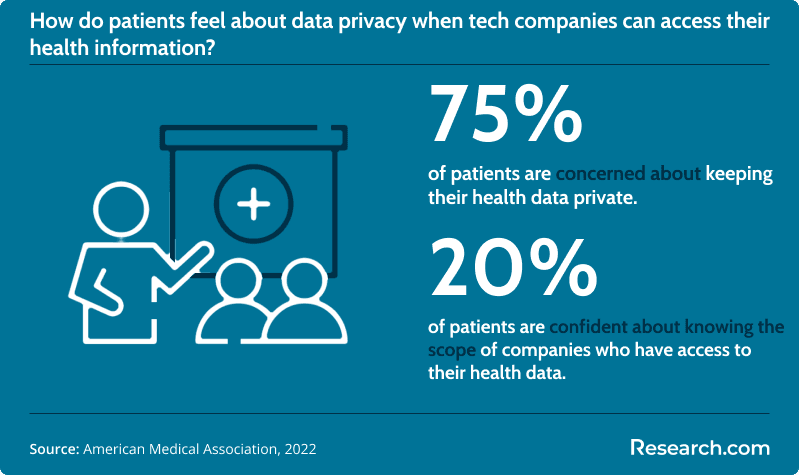
- Patient privacy and confidentiality: HITs help safeguard protected health information by following HIPAA requirements and internal privacy policies. This matters because patients are increasingly concerned about how health data is stored, accessed, and shared beyond the immediate care team.
Health Information Technician Responsibilities at a Glance
| Work Area | What the Technician Does | Why It Matters |
| Medical records | Reviews electronic charts for accuracy, completeness, and consistency. | Clinicians and administrators need reliable information to make decisions. |
| Coding | Applies standardized codes to diagnoses, procedures, and services. | Accurate coding supports billing, reporting, and reimbursement. |
| Compliance | Checks documentation and data practices against privacy and regulatory requirements. | Healthcare organizations must reduce legal, financial, and patient privacy risks. |
| Data systems | Uses EHR platforms, reporting tools, and record-management software. | Digital systems require trained users who understand healthcare data workflows. |
| Communication | Coordinates with clinicians, billing teams, administrators, insurers, and IT staff. | Health information work often depends on solving documentation or access issues across departments. |
What education do you need to become a health information technician for 2027?
The most common educational path is an Associate Degree in Health Information Technology or a related program. Students should pay close attention to accreditation because many employers and certification pathways depend on whether the program meets recognized health information management standards. Programs accredited by the Commission on Accreditation for Health Informatics and Information Management Education cover core topics such as medical terminology, coding systems, healthcare law, reimbursement, health data management, privacy, and electronic records.
The best-known credential for this career is the Registered Health Information Technician credential from the American Health Information Management Association. To qualify, candidates generally complete a CAHIIM-accredited program and pass the RHIT exam. Other credentials, including Certified Coding Specialist or Certified Health Data Analyst, may help technicians specialize in coding, auditing, analytics, or data quality.
Professionals who want to move into supervisory, administrative, or management roles may eventually need more than an associate degree. A bachelor’s degree or a related program such as an online healthcare administration degree can help build leadership, budgeting, operations, and policy knowledge that is useful beyond entry-level technical work.
Education and Credential Options
| Option | Best For | What to Check Before Enrolling |
| Associate degree in health information technology | Students seeking the standard entry route into HIT roles. | Confirm CAHIIM accreditation, coding coursework, EHR training, practicum options, and certification exam preparation. |
| Medical billing and coding certificate | Learners who want a shorter path into coding-focused administrative roles. | Check whether credits transfer into a degree and whether the curriculum prepares students for recognized coding exams. |
| Bachelor’s degree in HIM or healthcare administration | Technicians targeting management, compliance leadership, or broader healthcare operations roles. | Review transfer policies, internship opportunities, leadership courses, and employer recognition. |
| Specialized certification | Working professionals who want to move into coding, auditing, compliance, analytics, or EHR roles. | Verify eligibility requirements, exam costs, continuing education rules, and whether employers in your area value the credential. |
Where do health information technicians work?
Health information technicians are needed anywhere patient information must be recorded, coded, protected, exchanged, reviewed, or analyzed. Hospitals are a major employer, but the role is not limited to hospital records departments. As more care moves into outpatient, telehealth, specialty, and insurance settings, HIT skills are useful across many healthcare-related workplaces.
- Hospitals: Technicians may manage large volumes of inpatient and outpatient records, support coding teams, prepare data for reporting, and help maintain compliance across departments.
- Physicians’ offices: Smaller practices use HIT professionals to maintain patient charts, support coding and billing workflows, and keep documentation consistent.
- Outpatient care centers: These facilities depend on accurate documentation for procedures, referrals, billing, and quality reporting.
- Insurance companies: HIT knowledge is useful in claims review, utilization management, coding validation, and health data analysis.
- Government agencies: Organizations such as the Centers for Medicare and Medicaid Services rely on health data professionals to manage public health, payment, compliance, and reporting information.
Recent data shows that hospitals employ the largest share of health information technicians, while the remaining professionals work across other healthcare and data-focused industries.
Common Work Settings for HIT Professionals
| Work Setting | Typical Focus | Good Fit If You Want |
| Hospital | High-volume records, coding, audits, compliance, and data coordination. | A structured healthcare environment with multiple departments and advancement paths. |
| Private practice | Patient charts, claims support, coding accuracy, and office documentation workflows. | A smaller workplace with closer interaction among administrative and clinical staff. |
| Outpatient center | Procedure documentation, referrals, coding, and quality reporting. | Exposure to specialty care and ambulatory healthcare data. |
| Insurance organization | Claims review, coding validation, medical necessity documentation, and data analysis. | A payer-side role that uses clinical documentation knowledge without direct facility operations. |
| Remote or hybrid role | Coding, chart review, data quality, auditing, or documentation support. | More scheduling flexibility, strong self-management, and comfort with digital systems. |
How long does it take to become a health information technician?
For many students, the path takes about two years. An associate degree in health information technology commonly takes 18 to 24 months, depending on course load, transfer credits, program format, and whether the student attends full time or part time. Some accelerated online options may shorten the academic timeline, although compressed programs require strong time management and a willingness to move quickly through technical material.
Students comparing faster options can review accelerated pathways such as the best associate degree in 6 months online, but speed should not be the only deciding factor. For this career, accreditation, coding practice, EHR experience, and certification preparation are more important than simply finishing as quickly as possible.
After graduation, many candidates prepare for the RHIT exam. Some take the exam soon after completing their program, while others spend 1-3 months reviewing medical terminology, coding, reimbursement, data management, privacy, and compliance topics.
Typical Timeline to Enter the Field
| Step | Typical Time | Decision Point |
| Choose a program | Varies by student | Check accreditation, cost, transfer policies, online flexibility, and certification exam alignment. |
| Complete associate degree coursework | 18 to 24 months | Balance speed with program quality, practicum access, and coding practice. |
| Prepare for certification | 1-3 months | Use exam blueprints, practice questions, and weak-area review rather than passive reading only. |
| Apply for entry-level roles | Varies by market | Target medical records, coding assistant, release-of-information, data quality, and EHR support roles. |
What skills do you need to be a health information technician?
Health information technicians need both technical and judgment-based skills. The work rewards accuracy, organization, confidentiality, and the ability to understand how clinical documentation affects billing, compliance, reporting, and patient care.
- Attention to detail: Small errors in codes, dates, documentation, or patient identifiers can create billing problems, compliance issues, or confusion in the care record.
- Analytical thinking: HITs review records, spot inconsistencies, identify missing documentation, and help turn health data into usable information.
- Technology confidence: EHR systems, coding software, databases, spreadsheets, and reporting tools are part of daily work in many roles.
- Clear communication: Technicians often ask providers for documentation clarification, coordinate with billing teams, and explain record issues to nontechnical staff.
- Regulatory awareness: Understanding HIPAA, privacy standards, coding rules, documentation policies, and payer requirements is essential.
- Ethical judgment: HIT professionals handle sensitive information, so they must know when data access is appropriate and when it may violate policy or patient privacy.
What is the average salary of a health information technician?
As of June 2024, Glassdoor reported that the median annual salary for Health Information Technicians was approximately $47,000. Actual pay can vary by location, employer type, experience, credential, specialty, and whether the role focuses on coding, records management, compliance, auditing, data reporting, or EHR systems.
Certifications may improve a candidate’s competitiveness, especially in coding-heavy or compliance-oriented roles. Credentials connected to medical certifications that pay well, such as RHIT or CPC, can support stronger earning potential, and experienced professionals in the field can make over $70,000 annually. Still, salary outcomes are never guaranteed. Employers may weigh experience, productivity, accuracy, local demand, and the complexity of the role.
Factors That Can Affect HIT Pay
| Factor | How It Can Influence Salary |
| Certification | Credentials can help demonstrate job readiness and may qualify candidates for specialized coding, auditing, or data quality roles. |
| Experience | Technicians who can work independently, solve documentation issues, and maintain high accuracy may qualify for higher-responsibility positions. |
| Employer type | Hospitals, insurance companies, specialty practices, consulting firms, and government agencies may use different pay structures. |
| Location | Local labor demand and cost of living can influence compensation. |
| Specialization | Coding, compliance, EHR analysis, clinical documentation improvement, and health data analytics may offer different salary paths. |
What is the job outlook for health information technicians?
The outlook is positive because healthcare organizations continue to depend on accurate digital records, coding, privacy controls, and data reporting. According to the U.S. Bureau of Labor Statistics, employment in health information technology is projected to increase by 16% between 2023 and 2033, which is much faster than the average for other occupations.
For students comparing what majors make the most money, health information technology may not be the top-paying academic route. Its appeal is different: it offers a healthcare career path with meaningful growth potential, a relatively accessible education pathway, and opportunities to specialize over time. Data USA projects employment for medical records and health information technicians to grow by 10.7% by 2028, with an estimated 239,000 workers in the field by then.
Specialization can matter. Technicians who build expertise in medical coding, compliance, data analytics, EHR optimization, privacy, or clinical documentation improvement may be better positioned than generalists who stop learning after entry-level training.
How Can Online Education and Certification Enhance Career Growth?
Online education can help health information technicians update skills without leaving the workforce. This is especially useful for professionals who need training in coding updates, privacy compliance, EHR workflows, reimbursement rules, data analytics, or cybersecurity practices. Flexible programs can also help career changers prepare for entry-level roles while balancing work and family responsibilities.
Cost and quality still matter. Before enrolling, compare accreditation, course outcomes, student support, practicum requirements, certification exam alignment, and transfer credit options. Students focused on coding can explore cost-conscious pathways such as medical billing and coding online schools, but they should confirm whether the program prepares them for the specific credential or job they want.
Questions to Ask Before Choosing an Online HIT or Coding Program
- Is the program accredited or otherwise recognized by employers in health information management?
- Does the curriculum include medical terminology, anatomy, coding systems, reimbursement, healthcare law, EHR training, and privacy compliance?
- Are students prepared for RHIT, coding, or other relevant certification exams?
- Does the school publish clear tuition, fees, book costs, technology costs, and refund policies?
- Can credits transfer into a higher degree later?
- Are career services available for resume building, mock interviews, and internship or practicum placement?
Can Cross-Training in Allied Health Fields Enhance Your Expertise?
Cross-training can be useful when it directly improves your understanding of clinical workflows, documentation habits, patient intake, or care coordination. For example, a technician who understands how medical assistants collect patient histories, document vitals, handle referrals, and support providers may communicate more effectively with clinical staff.
Programs such as affordable medical assistant programs online may be relevant for people who want broader exposure to front-office and clinical-support operations. However, cross-training should support a clear goal. If your priority is coding, compliance, or EHR analysis, a targeted health information credential may be a better use of time and money than a broad allied health program.
How Can Hands-On Training Complement Certification for Health Information Technicians?
Certification proves knowledge, but hands-on experience helps students apply it. Practical training can expose learners to real documentation patterns, incomplete charts, coding ambiguities, EHR navigation, release-of-information procedures, privacy scenarios, and communication with clinical teams. These experiences help close the gap between classroom definitions and workplace expectations.
Some learners also benefit from short, structured programs that show how patient-facing workflows create the records HIT professionals later review. A medical assistant training program can provide that context for students who want to understand clinical operations, but it should not replace health information coursework if the goal is RHIT eligibility or HIM employment.
How can interdisciplinary education boost health information technician expertise?
Interdisciplinary learning can strengthen a health information technician’s ability to interpret documentation in context. Knowledge from clinical, wellness, public health, business, and technology fields may help professionals understand why certain data points matter and how departments use them.
For example, an online degree in kinesiology and exercise science may be useful for someone interested in rehabilitation data, sports medicine documentation, wellness program reporting, or movement-related outcomes. The key is alignment. Additional education should connect to a realistic job goal rather than simply adding another credential.
How can complementary healthcare expertise enhance a health information technician’s role?
Complementary healthcare knowledge can help HIT professionals recognize the broader factors behind patient data, especially in preventive care, chronic disease management, wellness programs, or population health reporting. Understanding nutrition, lifestyle, and patient education concepts may help a technician communicate more effectively with interdisciplinary teams or analyze documentation patterns more thoughtfully.
For instance, learning what does it take to become a nutritionist can provide useful context for professionals working with diet-related conditions, wellness data, or preventive care documentation. However, HIT professionals should avoid assuming that complementary expertise automatically qualifies them for clinical practice. Licensure and scope-of-practice rules vary by profession and location.
How do professional associations and networking resources enhance career progression?
Professional associations can help health information technicians stay current with coding updates, privacy rules, technology changes, certification requirements, and employer expectations. Networking through associations, webinars, local chapters, conferences, and mentorship opportunities can also help technicians learn which skills are most valued in their region or specialty.
Continuing education is especially important in health information work because outdated knowledge can lead to documentation errors, coding problems, or compliance risk. Some professionals also pursue broader science or healthcare education, including options such as the cheapest online biology degree accredited, when it supports a long-term plan in healthcare analytics, public health, research support, or further clinical education.
How can online healthcare certification programs enhance career growth?
Targeted online certifications can help working HIT professionals adapt to changing employer needs. They may be useful for strengthening knowledge in medical coding, healthcare compliance, data security, health administration, EHR systems, or analytics. The best certification choice depends on the role you want next, not simply on which program is fastest or cheapest.
Students comparing online healthcare certification options should review prerequisites, exam eligibility, continuing education rules, employer recognition, and whether the credential builds on their current degree. A certificate is most valuable when it fills a specific skill gap and is recognized by hiring managers in the target role.
How Do Legal and Ethical Standards Influence Daily HIT Practices?
Legal and ethical standards shape nearly every part of health information work. Technicians must protect patient confidentiality, limit access to authorized users, follow release-of-information rules, document accurately, and report concerns when data handling practices create risk. Ethical judgment matters because having access to health data does not mean every use of that data is appropriate.
Ongoing education can help HIT professionals understand how privacy, pharmacy records, medication documentation, and clinical data systems intersect. Advanced healthcare education, including options such as cheapest online doctorate in pharmacy programs, may be relevant for professionals pursuing specialized or interdisciplinary career goals, but it is not a required pathway for most health information technician roles.
What are the advancement opportunities for health information technicians?
Health information technicians can advance by combining experience, credentials, technical skill, and sometimes additional education. The strongest path depends on whether the professional wants to specialize in coding, move into compliance, manage teams, support EHR systems, or work with healthcare data.
- Health Information Management Manager: Technicians who continue into a bachelor’s or master’s program in Health Information Management may move into supervisory or management positions. These roles involve leading HIM teams, overseeing data accuracy, supporting compliance, managing workflows, and improving information systems. According to the U.S. Bureau of Labor Statistics, employment for medical and health services managers is projected to grow by 29% from 2023 to 2033.
- Compliance Officer: HIT professionals who understand HIPAA, ICD-10, payer rules, documentation standards, and audit processes may transition into compliance roles. Compliance officers help organizations follow legal and ethical requirements and reduce privacy, documentation, and reimbursement risks. The median annual salary for compliance officers is around $75,670, with experienced professionals earning significantly more.
- Medical Coding Auditor: Experienced coders can move into auditing, where they review records and claims for coding accuracy, documentation support, fraud risk, and reimbursement issues. Training from accredited medical billing and coding schools can help build the foundation for this specialty.
- EHR Analyst or Systems Administrator: Technicians with strong software, workflow, and troubleshooting skills may support EHR implementation, optimization, user training, reporting, and system maintenance. These roles often require collaboration with IT teams, clinicians, vendors, and administrators.
- Clinical Documentation Improvement Specialist: HIT professionals with coding and medical terminology expertise may move into CDI work. These specialists review documentation, identify gaps, query providers appropriately, and help ensure that records accurately reflect the services and conditions documented.
Advancement Path Comparison
| Path | Best For | Skills to Build |
| Coding auditor | Detail-oriented technicians who enjoy chart review and reimbursement accuracy. | Advanced coding, payer rules, audit methods, documentation review. |
| Compliance officer | Professionals interested in privacy, risk, policy, and regulatory standards. | HIPAA, audits, communication, policy writing, investigation procedures. |
| HIM manager | Technicians who want leadership and department oversight. | Team management, budgeting, workflow design, quality improvement. |
| EHR analyst | Technology-focused professionals who like systems, troubleshooting, and process improvement. | EHR functionality, reporting, user support, data exchange, project coordination. |
| CDI specialist | Technicians who want to work closely with documentation quality and provider communication. | Clinical terminology, coding logic, physician queries, quality metrics. |
What challenges do health information technicians face?
The field offers strong opportunities, but the work can be demanding. HIT professionals are expected to maintain accuracy, protect privacy, adapt to software changes, understand regulations, and communicate across departments that may have different priorities.
- Changing technology: EHR platforms, reporting tools, automation features, and data exchange systems continue to evolve. Working technicians often use flexible education options such as the best online colleges for working adults to keep skills current while remaining employed.
- Regulatory complexity: Privacy rules, documentation standards, payer policies, and healthcare regulations can change. HITs must understand how updates affect daily workflows.
- Accuracy under pressure: Coding, record review, auditing, and data entry require precision, even when workloads are heavy or deadlines are tight.
- New care models: Telehealth, value-based care, remote monitoring, and outpatient growth create more data sources and more documentation complexity.
- Cross-department communication: HITs may need information from physicians, nurses, billing staff, administrators, IT professionals, and insurers. Clear, respectful communication is essential.
- Data security risk: Healthcare information is a high-value target. Technicians must follow privacy rules, access controls, and cybersecurity practices to reduce breach risk.
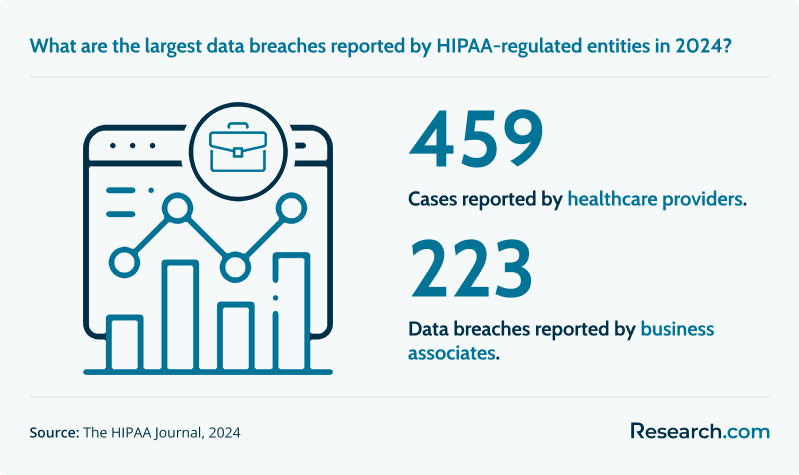
According to The HIPAA Journal, 734 data breaches were reported by HIPAA-regulated entities, with more than half coming from healthcare providers.
Common Mistakes to Avoid
| Mistake | Why It Can Hurt You | Better Approach |
| Choosing a program only because it is cheap or fast | A low-cost program may not prepare you for certification or employer expectations. | Compare accreditation, curriculum, practicum support, certification alignment, and total cost. |
| Ignoring accreditation | Some credentials and employers may require a recognized educational background. | Verify the program’s status before enrolling, especially if you plan to pursue RHIT. |
| Assuming certification guarantees a job | Credentials help, but employers also evaluate experience, accuracy, software skills, and professionalism. | Build a portfolio of coursework, coding practice, practicum experience, and references. |
| Focusing only on coding | Coding is important, but HIT roles may also require privacy, compliance, data quality, and EHR knowledge. | Develop a broader understanding of health information workflows. |
| Overlooking transfer credits | Poor transfer policies can make future bachelor’s degree completion more expensive. | Ask schools how credits apply to higher degrees before committing. |
| Underestimating privacy responsibilities | Improper data access or sharing can create serious compliance problems. | Treat confidentiality as a core professional skill, not just a policy requirement. |
What future trends are shaping the field of health information technology?
Health information technology is changing as healthcare becomes more digital, connected, and data-driven. Future-ready technicians will need to understand not only records management, but also automation, interoperability, privacy, analytics, and emerging data sources.
- Artificial intelligence and automation: AI tools may automate repetitive tasks such as data entry support, coding suggestions, and pattern recognition. HIT professionals will still be needed to review accuracy, resolve exceptions, and apply human judgment.
- Telehealth growth: Virtual care creates documentation, privacy, consent, and data transmission issues that HIT professionals help manage.
- Data analytics and predictive modeling: Healthcare organizations increasingly use data to track outcomes, identify risks, manage populations, and improve operations. HIT professionals with analytics skills may have stronger advancement options.
- Cybersecurity focus: As healthcare data threats become more serious, technicians must understand secure access, data handling, privacy policies, and breach prevention basics.
- Blockchain for data security: Blockchain is being explored as a potential tool for secure, tamper-resistant health records and data exchange. HIT professionals should monitor practical adoption without assuming it will replace current systems quickly.
- Internet of Medical Things integration: Wearables, connected devices, and remote monitoring tools generate more patient data. HIT professionals may help ensure this information is accurate, secure, and usable.
- Interoperability and health information exchange: Healthcare systems need records to move safely and accurately between providers. HITs help support data standards, record matching, and information exchange processes.
What Do Graduates Say About Becoming Health Information Technicians
- Health information technology gave me a way to work in healthcare while using my interest in data and software. I like knowing that accurate records can affect patient care, billing, and privacy. Remote work options have also made the career more flexible for me. Amanda
- I chose this field because healthcare data keeps growing and employers need people who understand records, coding, and compliance. After earning my RHIT certification, I qualified for better opportunities and kept building new skills. Jeremy
- The work feels meaningful because patient information has to be handled carefully. My job helps protect privacy, support compliance, and keep records accurate for the people who depend on them. Cohen
Is Becoming a Health Information Technician Worth It?
Becoming a health information technician can be worth it for people who want a healthcare career with a shorter education path than many clinical professions, steady demand for digital records expertise, and room to specialize. It is especially appealing if you enjoy detail-oriented work, technology, medical terminology, privacy rules, and structured problem-solving.
It may be a poor fit if you want highly social patient-facing work, dislike repetitive review tasks, or are unwilling to keep up with coding updates, software changes, and regulations. The role can be stable and meaningful, but it requires precision and continuous learning.
Who Should Consider This Career?
| Good Fit | May Not Be a Good Fit |
| You want to work in healthcare without direct clinical care. | You want a hands-on patient care role as your main responsibility. |
| You are comfortable using software and reviewing detailed information. | You dislike screen-based work, records, codes, or documentation rules. |
| You value privacy, accuracy, and compliance. | You prefer work with fewer regulations and less documentation oversight. |
| You are willing to earn credentials and update your skills. | You want a one-time training path with little continuing education. |
| You are interested in coding, EHR systems, audits, analytics, or healthcare administration. | You are mainly motivated by entering one of the highest-paying healthcare careers immediately. |
Key Insights
- Health information technicians manage the accuracy, security, coding, and usability of patient health data.
- An associate degree in health information technology is the typical entry pathway, and CAHIIM accreditation is important for students planning to pursue RHIT certification.
- RHIT, coding, compliance, and analytics credentials can improve competitiveness, but they do not guarantee a specific salary or job outcome.
- Glassdoor reported an approximate median annual salary of $47,000 as of June 2024, while experienced professionals can make over $70,000 annually.
- The U.S. Bureau of Labor Statistics projects 16% employment growth in health information technology between 2023 and 2033.
- Data USA projects medical records and health information technician employment to grow by 10.7% by 2028, with an estimated 239,000 workers employed in the field by then.
- Hospitals employ many HIT professionals, but opportunities also exist in outpatient care, physicians’ offices, insurance companies, government agencies, and remote data-focused roles.
- The best long-term opportunities often come from specialization in coding audits, compliance, EHR systems, clinical documentation improvement, privacy, or health data analytics.
- Before enrolling in a program, compare accreditation, certification alignment, total cost, transfer credits, practicum access, and employer recognition.
- This career is best for detail-oriented learners who want a healthcare role built around records, data, compliance, and technology rather than direct patient treatment.
References:
- Data USA. (2023). Medical records & health information technicians. DataUSA.io. Retrieved March 31, 2025.
- Glassdoor. (2024, June 6). How much does a health information technician make? Glassdoor.com. Retrieved March 31, 2025.
- U.S. BLS. (2024, August 29). Occupational outlook handbook: Compliance officers. U.S. Bureau of Labor Statistics. Retrieved April 1, 2025.
- U.S. BLS. (2024, August 29). Occupational outlook handbook: Health information technologists and medical registrars. U.S. Bureau of Labor Statistics. Retrieved March 31, 2025.
Other Things You Should Know About a Health Information Technician
The Certified Coding Associate (CCA) from AHIMA is a recognized credential for coding-related work. It tests ICD-10-CM, CPT, and HCPCS coding skills and is often pursued after a health information program to strengthen job prospects in clinics, hospitals, and billing departments.
Certifications like Registered Health Information Technician (RHIT) from AHIMA can boost a technician's career in 2027, showcasing expertise and potentially leading to higher salaries. Consider acquiring certification to demonstrate proficiency and commitment to the evolving field of health information management.
In 2027, the salary of a health information technician is influenced by factors such as level of education, certifications held, years of experience, geographic location, and the type of healthcare facility where they are employed. High-demand areas or prestigious healthcare institutions may offer higher pay.


