2027 From Animal Shelter Program Coordinator to Public Health: Planning a Bachelor's Pathway

Co-Founder and Chief Data Scientist
Coordinating animal shelter programs can put you close to public health work: preventing bites and zoonotic disease, communicating with residents, and connecting people with local services. Moving into a public health career, however, may require skills your current role has not given you a chance to demonstrate.
This guide helps shelter program coordinators decide whether a bachelor's degree is the right next step, which courses and experiences to prioritize, and how to compare programs without assuming a degree alone will secure a new job.
Key Things You Should Know
- Shelter coordination can provide relevant experience in outreach, partnerships, records, and prevention; public health employers may still expect evidence of data, evaluation, or health education skills.
- A typical bachelor's pathway totals about 120 semester credits, but only a school's degree audit can show how prior coursework applies and how long completion will take.
- Compare the full cost and required fieldwork before enrolling. For some shelter-to-public-health goals, targeted training or a supervised project may be more direct than another degree.
What Is a Public Health Bachelor's Degree?
A public health bachelor's degree studies health at the population level: who faces a health risk, what conditions contribute to it, and how organizations can prevent harm. A BA or BS commonly combines general education with introductory epidemiology, statistics, health behavior, policy, and program planning. Requirements vary by institution; a BS is not automatically more useful than a BA for shelter-related work.
For a shelter coordinator, the distinction is between managing an important community service and being prepared to assess a population-health problem. A relevant student project might examine how an approved, deidentified set of bite-incident records could inform prevention messaging. It would not, by itself, establish the cause of bites or authorize access to confidential records.
A bachelor's degree is most useful if you need the credential for jobs you have identified or want broad preparation beyond your current duties. If you already hold a bachelor's degree, first compare job requirements with your experience; a second bachelor's may be less efficient than selected courses, supervised work, or, where appropriate, graduate study. When reviewing degree options, comparing online undergraduate public health programs is a starting point, not a substitute for checking each school's curriculum and degree audit.
How Can Animal Shelter Experience Lead to a Public Health Career?
Shelter work connects to the One Health perspective: human, animal, and environmental health can affect one another. Your strongest bridge is not the setting alone but the work you can document. Coordinating bite-prevention outreach, maintaining incident records, arranging referrals, training volunteers, or working with local agencies can demonstrate skills relevant to community prevention.
The table separates transferable experience from preparation you may still need. Use it to identify a realistic first target role rather than describing all shelter duties as public health experience.
| Shelter coordination experience | Public health connection | Likely preparation gap |
| Resident outreach and volunteer training | Health communication and community engagement | Adapting messages using evidence and audience feedback |
| Incident tracking and reporting | Surveillance support and program monitoring | Data quality, denominators, privacy, and basic analysis |
| Partnerships with veterinarians or local agencies | Cross-sector prevention work | Understanding agency responsibilities and referral protocols |
| Program scheduling and resource coordination | Implementation and operations | Setting measurable objectives and evaluating results |
Ask a public health supervisor or hiring manager which of these tasks would count toward a specific opening. A supervised outreach or evaluation assignment may let you test the transition before enrolling. If your long-term target requires graduate preparation, compare that later decision separately; a public health master's degree investment guide should not be read as evidence that a master's is necessary for your first move.
What Public Health Jobs Can You Get With a Bachelor's Degree?
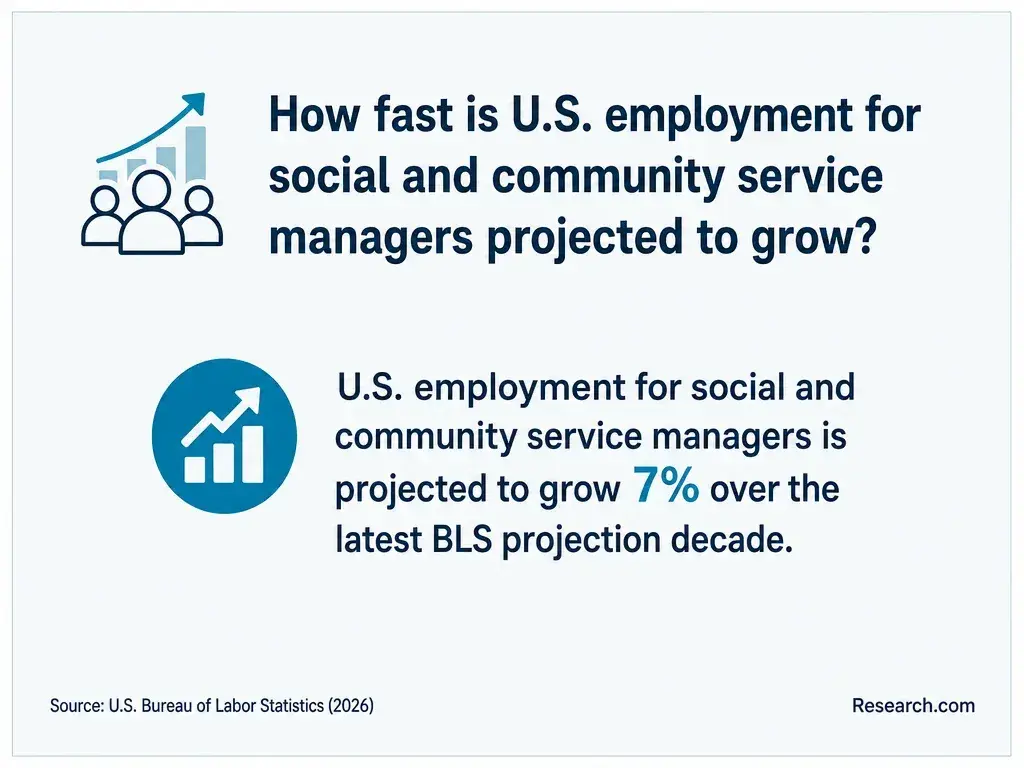
Potential starting points include public health program assistant, outreach coordinator, health education specialist, and community health worker. A shelter coordinator may be particularly competitive for openings involving community partnerships, prevention campaigns, or program logistics. Search by duties as well as titles: an "animal services" or "environmental health" opening may involve public health work, while a similarly named role elsewhere may require a different credential.
Responsibilities and entry requirements differ substantially. Program assistants often manage schedules, records, and reporting; community health workers connect residents with services; health education specialists develop and assess educational activities. The U.S. Bureau of Labor Statistics identifies a bachelor's degree as typical entry-level education for health education specialists, while community health worker requirements vary. Neither occupation is an automatic outcome of earning a public health degree.
Epidemiologist and senior analyst roles usually call for more advanced methods preparation, commonly a master's degree; management roles also depend on relevant experience. Doctoral study is not a routine next step for entering shelter-adjacent prevention work. If a much later leadership or research goal makes it relevant, reviewing selectivity in public health doctoral study addresses a different decision from qualifying for an entry-level role.
Look for courses that close the gap between coordinating a program and evaluating its effect. Introductory epidemiology can teach you to interpret patterns of illness or injury; statistics can help you summarize data without overstating what it proves. Health communication, environmental health, policy, and program evaluation can connect those methods to prevention work.
For shelter-related interests, compare course descriptions and electives for zoonotic disease, injury prevention, environmental health, community engagement, and geographic or other data tools. An elective does not make a student a disease investigator or establish an official concentration. Ask whether the program includes a supervised internship or capstone and whether your proposed site and tasks would require prior approval.
Choose the depth of quantitative coursework around your target job. Basic statistics and spreadsheet competence may support outreach evaluation; a future analyst role may demand substantially more mathematics and programming. If that is your goal, consider the added preparation and scheduling described in biostatistics master's study and work commitments rather than assuming an undergraduate statistics course provides specialist training.
Neither format is inherently better for a working shelter coordinator. Online study can reduce commuting, but live classes, group projects, exams, and field placements may still conflict with shifts or weekend events. Campus study may offer easier access to local faculty and partners, but travel and fixed class times can raise the cost of attendance.
Ask each program for a sample term schedule, the location and approval rules for fieldwork, any campus-visit requirements, and the availability of courses you must take in sequence. Also ask whether an existing shelter job can be used for an applied project; employment at a relevant site does not automatically satisfy academic fieldwork requirements.
Shorter courses can help some students finish requirements sooner, but they compress the same work into fewer weeks. Use accelerated course planning for a public health degree to examine pacing, then test that pace against your actual work schedule before choosing it.
Requirements depend on whether you apply as a first-year student, a transfer student, or a returning adult learner. Admission to the university may be separate from admission to the public health major. Schools may review prior transcripts and require particular general-education, mathematics, science, or introductory courses before students enter upper-level work.
If you have prior college credit, request an official evaluation and a written degree audit. Accepted credit is not necessarily credit applied to the major: a course may count only as an elective. Confirm statistics and laboratory equivalencies, minimum grades, course recency, residency credits, and whether an appeal or substitution is possible. The receiving institution has final authority over its requirements.
Do not use graduate application advice as an undergraduate checklist. For example, public health master's application document alternatives concern a later degree level; ask the bachelor's admissions office which documents your own applicant category requires.
A traditional full-time bachelor's pathway is commonly planned around four academic years and about 120 semester credits. A shelter coordinator's remaining time depends instead on credits that satisfy specific requirements, enrollment pace, course sequencing, and fieldwork availability. Part-time attendance can make continued employment feasible while extending the calendar time to graduation.
Ask an adviser to map every remaining requirement to the terms when it is actually offered. Check whether a prerequisite delays an upper-level course and whether fieldwork can occur during a busy shelter season. A tentative graduation date is less useful than a term-by-term plan based on an approved audit.
If graduate study may follow, finish the bachelor's plan on its own merits. Reviewing conditional public health graduate entry may help with a future application, but it does not replace undergraduate graduation requirements or establish that a particular master's program will admit you.
There is no reliable single price for this pathway. Compare each school's published tuition and mandatory fees using the number of credits you still need, not the advertised price of a full degree. Add books, technology charges, travel, and any costs associated with fieldwork. If reducing work hours would affect household income, include that opportunity cost in your decision.
Request a written estimate tied to your degree audit and intended pace. Then ask the financial aid office how enrollment intensity and satisfactory academic progress affect your aid, and ask your employer whether education assistance is available under its current policy. Do not assume a faster schedule costs less if it requires unpaid time away from work.
For an initial price comparison, affordable distance learning public health degrees can help identify options. Verify residency-based tuition, fees, transfer-credit application, and the current charges directly with each institution before deciding.
First confirm that the institution has recognized institutional accreditation. Separately, check the Council on Education for Public Health (CEPH) directory to determine whether the specific school, unit, or standalone bachelor's program - and the degree you would enter - falls within its accredited scope. An institution's general accreditation does not establish CEPH coverage for every public health degree it offers.
CEPH accreditation can be a useful quality indicator, but whether you need it depends on your target employer, future degree program, or credential pathway. Do not assume it is universally required for shelter-adjacent public health jobs or that it guarantees admission to graduate study. Accreditation and admissions strength answer different questions: if your longer-term plan includes a master's, strengthening a lower-GPA public health master's application addresses academic preparation, not the accreditation status of your bachelor's program.
What Are Public Health Salaries and Job Outlooks?
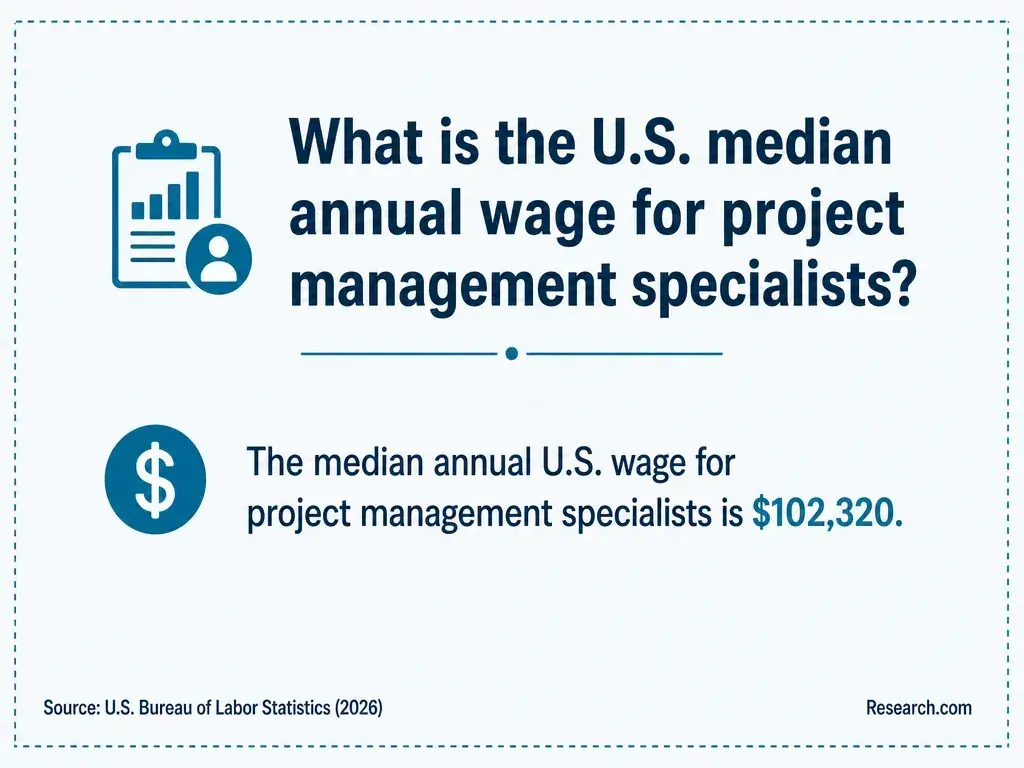
Use occupation-specific labor data, not a claimed "public health bachelor's salary." The U.S. Bureau of Labor Statistics Occupational Outlook Handbook publishes pay and employment projections for occupations such as health education specialist and community health worker. Those figures cover workers across employers, locations, and experience levels; an occupation-wide median is not an entry-level offer or a prediction of what a shelter coordinator will earn after graduation.
For a useful comparison, identify several local postings you could plausibly qualify for, note their stated pay ranges and required skills, and compare them with your current compensation and the net cost of school. Check whether a role requires travel, evening outreach, a driver's license, or an employer-specific credential. Local openings and their requirements are more actionable for a near-term switch than a national median alone.
Advanced public health leadership and research careers follow different education and experience paths, so their pay should not be used to justify the cost of a bachelor's degree. If you eventually consider that route, comparing doctoral public health costs and pay is a separate investment decision - not evidence of an expected return from this undergraduate pathway.
Other Things You Should Know About Public Health
Shelter experience may help you support communication or referrals, but public health response duties depend on agency protocols, supervision, and applicable state or local rules. Do not independently make medical or regulatory decisions outside your role.
Only with the organization's permission and any required school review or data-use approval. Remove identifying details where appropriate, follow access restrictions, and agree on what findings may be shared before starting.
It can, especially if the work has defined responsibilities and a supervisor who can describe your contributions. Seek tasks that demonstrate the skills required in your target postings rather than relying on volunteer hours alone.
Not for every coordination, outreach, or evaluation role. Veterinary and other regulated duties have separate qualification rules. Read each posting for the work you would actually perform before pursuing another credential.
- One health | who.int https://www.who.int/health-topics/one-health
- General Schedule Qualification Policies | U.S. Office of Personnel Management https://www.opm.gov/policy-data-oversight/classification-qualifications/general-schedule-qualification-policies/
- ANIMAL SHELTER PROGRAM COORDINATOR | nnva.gov https://www.nnva.gov/DocumentCenter/View/3030/Animal-Shelter-Program-Coordinator-PRT-Animal-Services
- Competencies for Public Health Professionals | cdc.gov https://www.cdc.gov/infrastructure/training-professional-development/competencies-for-public-health-professionals.html
- Types of Financial Aid: Grants, Work-Study, and Loans | studentaid.gov https://studentaid.gov/understand-aid/types
- Public Health - ECU Degree Explorer - East Carolina University https://degrees.ecu.edu/degree/public-health-bs/
- Bachelor of Science in Public and One Health (B.S. PAOH) | Auburn University College of Veterinary Medicine https://www.vetmed.auburn.edu/academics/public-and-one-health/
- How Do Transfer Credits Work When You Go Back to School? | Whitworth Online https://online.whitworth.edu/news-articles/how-do-transfer-credits-work-when-you-go-back-to-school/
- Veterinary Public Health Program | osu.edu https://vet.osu.edu/education/programs/vph
- Transfer Credits - Undergraduate - Policies - Campus Offices https://campus.collegeforcreativestudies.edu/policy/transfer-credits-undergraduate/