2027 From Science Communication to Public Health: Choosing a Graduate Pathway

Co-Founder and Chief Data Scientist
If you already explain scientific findings to the public, a graduate degree could deepen that work—or move you into designing and evaluating health programs. Those are different career moves, and the right program depends on the responsibilities you want next.
This guide is for communicators considering public health and for applicants choosing between the two fields. It compares degrees, coursework, practical experience, costs, and career requirements so you can decide whether to build on your communication expertise, add population-health skills, or pursue a more substantial transition.
Key Things You Should Know
- Choose a science communication degree to specialize in explaining evidence; choose an MPH when you need broader preparation to plan, implement, or evaluate population-health work.
- For research-intensive roles, compare an epidemiology or biostatistics MS with an MPH; neither degree alone establishes readiness for advanced analysis.
- Compare the total price and required fieldwork—not tuition alone—and confirm that any claimed CEPH accreditation covers the specific degree you intend to earn.
What Is the Difference Between Science Communication and Public Health?
Science communication focuses on making scientific evidence understandable and useful to an audience. Its work can include reporting, audience research, multimedia production, risk communication, and explaining uncertainty. Public health focuses on population-level prevention and health improvement through activities such as surveillance, community partnerships, policy, program delivery, and evaluation.
The fields overlap when people must act on health evidence. For example, explaining a vaccination study is communication; identifying barriers to vaccination, working with a community to design an outreach program, and evaluating its reach are public health practices. If you want both sets of responsibilities, examine the actual electives and supervised projects rather than relying on a program's title. The range of comparing public health master's career directions can help frame that choice, but a concentration is not a substitute for substantial experience in its specialty.
Which Graduate Degrees Lead to Careers in Public Health?
Start with the work you want to do, not the most advanced-sounding credential. This comparison shows where communication and public health degrees usually differ; individual programs may depart from these patterns:
| Pathway | Best-aligned goal | Important limitation |
| Science communication master's | Science writing, media, engagement, or communication strategy | May provide little training in epidemiology or program evaluation |
| Master of Public Health (MPH) | Applied population-health practice, including health communication or program work | Depth in writing, production, or advanced statistics varies |
| Specialized MS | Research or intensive methods training in a defined field | May offer less preparation for broad public health practice |
| DrPH or PhD | Experienced practice leadership or original research, respectively | Usually unnecessary for a first transition into public health |
A communicator seeking to manage a health campaign might benefit from an MPH plus an applied project with a health department or nonprofit. Someone seeking to conduct epidemiologic research should scrutinize MS methods training and research supervision instead. A DrPH is generally a later practice-leadership decision, while a PhD centers on research; compare online graduate advancement through public health doctorates only if your target work calls for doctoral preparation.
How Do You Choose Between Science Communication and Public Health Graduate Programs?
Write down the job tasks you want to perform, then compare each program against them. Existing communication skills are valuable, but they do not automatically demonstrate competence in population-level data analysis, community-engaged program design, or evaluation.
Use these questions to test whether a degree supplies the experience you lack:
- Target role: Will you primarily translate evidence, or will you also plan interventions, analyze health data, or assess outcomes?
- Skill gap: Does the curriculum teach the methods you need at a usable depth, with feedback on your work?
- Applied access: Can you complete an approved project with an appropriate partner and produce work you may ethically show employers?
- Opportunity cost: Could a short course, mentorship, or supervised project close a narrow gap without another degree?
If you already write for a health organization and only need stronger data visualization skills, targeted training may beat an MPH. If you want responsibility for program decisions and evaluation, broader public health preparation is more defensible. When time and price are decisive, use low-cost fast-track public health study as a starting point, then check whether the shorter schedule still permits meaningful practice and methods training.
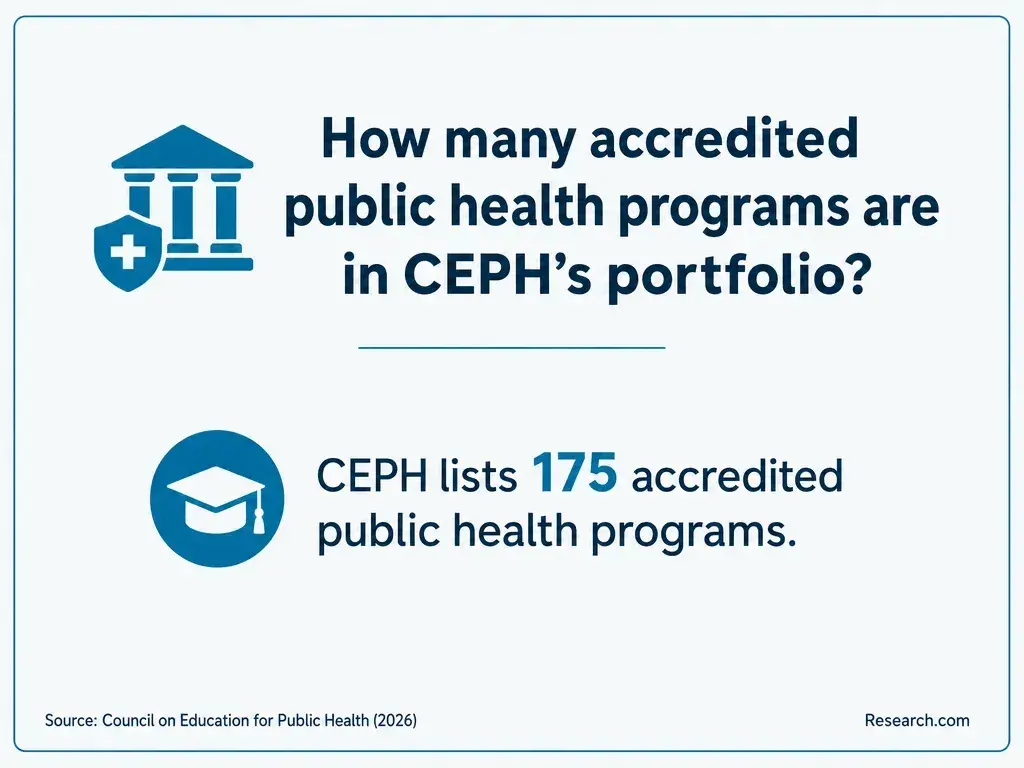
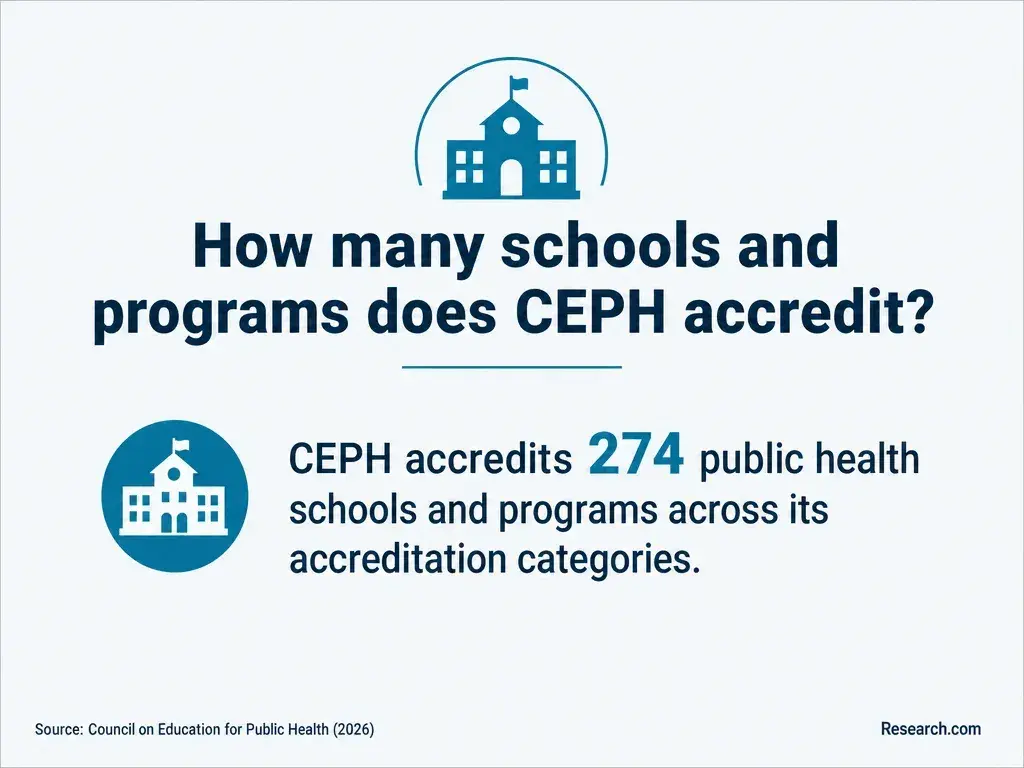
First, verify the institution's recognized institutional accreditation. For public health study, also check the Council on Education for Public Health (CEPH) directory: determine whether CEPH accredits the school, a public health program, or another unit, and whether your specific degree falls within that scope. Institutional accreditation and CEPH accreditation answer different questions.
CEPH status matters if an employer, fellowship, or certification pathway specifies it, but it does not prove that a program has the communication courses or placements you need. A science communication degree need not be a CEPH-accredited public health degree to be useful for communication jobs.
If considering doctoral study, confirm accreditation separately from eligibility and program fit; an online public health doctorate admissions guide cannot establish whether a particular degree is covered by an accreditor. Ask the school for written confirmation when its directory listing or program description is unclear.
Science communication programs commonly emphasize storytelling, interviewing, audience analysis, media production, and communicating scientific uncertainty. MPH programs typically combine population-health foundations with epidemiology, biostatistics, health systems, social and behavioral approaches, and applied learning. A health communication concentration may add campaign design or message testing, but the depth of those subjects depends on the course sequence.
Compare syllabi and project requirements, not just course names. A communicator moving toward program evaluation needs practice defining outcomes, assessing data quality, interpreting findings, and explaining limitations to partners. Someone aiming to become an epidemiologist may need more sustained quantitative and research training than a generalist MPH provides. Advanced research training also creates a different financing decision: applicants exploring it should assess supervision and funding alongside reducing epidemiology doctorate costs through assistance, rather than treating a doctoral program as a routine next step.
Yes. Online MPH and other graduate options exist, but "online" describes delivery, not how freely you can schedule the work. Check for live classes, group meetings, campus visits, examination windows, and deadlines. Ask whether an applied experience can be completed near home or with a current employer; either arrangement may require advance school approval, suitable supervision, and permission to use project data.
For a working communicator, the decisive question is whether the schedule and fieldwork fit around employment while providing access to a real public health partner. Compare the full price after confirmed assistance, not a prominently advertised award. Information on university awards for online public health graduate education is a useful prompt to ask each school about eligibility, renewal rules, and whether an award applies to online enrollment.
Requirements vary by degree and school. MPH applicants generally need a qualifying bachelor's degree and application materials that explain their goals; a public health undergraduate major is not universally required. Programs may request recommendations, a résumé, an essay, specific prerequisite courses, or evidence of quantitative preparation. A methods-heavy MS may expect stronger mathematics, statistics, or research preparation than a generalist MPH. Check each program's current test and prerequisite policies rather than assuming a common rule.
Communication applicants can make a stronger case by connecting past work to a public health problem: identify the audience, what evidence informed the work, and what you learned about its limitations. If your record includes weak grades, distinguish an official minimum from evidence that could demonstrate later readiness.
The guide to public health graduate admission after academic setbacks can help you plan that explanation, but only the program can confirm its policy. For doctoral applications, independently verify professional experience or research-fit expectations; master's admission does not establish doctoral eligibility.
Length depends on required credits, enrollment pace, course availability, and any applied experience or thesis. Full-time and part-time plans can therefore have very different completion dates, even within the same program. Ask for a term-by-term plan that includes the project or placement rather than estimating from advertised coursework alone.
Calculate the total cost to completion: tuition, mandatory fees, materials, travel or campus visits, fieldwork expenses, and any earnings you would give up. Confirm whether charges are per credit or term and whether taking fewer courses changes aid eligibility or adds fees. When weighing the cost of public health graduate study, compare that total with a targeted course or certificate if your goal is limited to one new skill. Neither a low sticker price nor an accelerated schedule establishes a positive financial return.
Potential work includes health communication specialist, health education specialist, program coordinator, evaluator, and—when methods preparation and experience match the job—epidemiologist or analyst. Responsibilities differ: communicators translate evidence for audiences; program staff coordinate delivery and partners; evaluators assess implementation and results. An MPH can support a move between these functions, but employers may still require a relevant portfolio, technical skills, or prior field experience.
For pay and outlook, use the latest US Bureau of Labor Statistics Occupational Outlook Handbook entry for the specific occupation you are pursuing, then check local postings. Its occupational median covers workers with different degrees and experience levels; it is not a starting salary or an outcome for graduates of one program. MPH career pay comparisons can help identify roles to investigate, but compare their actual duties and hiring requirements before using salary figures in a degree decision.
What Certifications or Licenses Are Required for Public Health Careers?
Many public health communication and program jobs do not require an individual professional license. Other positions may specify a credential, and regulated clinical roles require their own education and state authorization; an MPH does not confer clinical licensure. The Certified in Public Health (CPH) and Certified Health Education Specialist (CHES) credentials have separate eligibility and examination rules. Check the certifying organization's current requirements and the job posting rather than assuming a degree automatically qualifies you.
Match the credential to the work before paying for more education. If your goal is a licensed clinical role, public health graduate study may complement—but cannot replace—the required clinical pathway. Likewise, public health doctorate value and affordability should be judged against leadership or research responsibilities, not an expectation that a doctorate supplies a license or is required for a communication job.
Other Things You Should Know About Public Health
Yes, if you have permission to share it. Explain your contribution, audience, evidence, and any known limitations; remove confidential information and do not claim an impact you did not measure.
Possibly. Ask the program whether the work meets its learning objectives and supervision rules, and obtain employer approval for the project and any data use before starting.
Not necessarily. A health-focused assignment, supervised volunteer project, or part-time study may let you test the transition. Check required meeting and placement hours before committing.
Ask which tasks new hires perform, which skills they must demonstrate, and what experience mattered in hiring. Use those answers to test whether a proposed degree closes your specific gap.
- Community engagement education in academic health... - PMC https://pmc.ncbi.nlm.nih.gov/articles/PMC9549477/
- Collecting and Analyzing Qualitative Data | Field Epi Manual https://www.cdc.gov/field-epi-manual/php/chapters/qualitative-data.html
- Internship Opportunities at the San Francisco Department of Public Health | SF.gov https://www.sf.gov/internship-opportunities-sf-public-health
- Internships and Other Placements | Public Health Department https://health.alamedacountyca.gov/work-with-us-ph/internshipsandotherplacements/
- Health Communication and Digital Media - MPH https://publichealth.gwu.edu/health-communication-and-digital-media-mph
- How to reverse the alarming trend of health misinformation | apa.org https://www.apa.org/monitor/2024/07/ending-health-misinformation
- Master of Science in Public Health | osu.edu https://cph.osu.edu/doc/academic-miscellaneous/public-health-degree-recommended-preparation/view
- Science Communication Graduate Certificate | ASU https://degrees.asu.edu/masters-phd/major/ASU00/ASSCOMGRCT/science-communication-graduate-certificate
- Public Health Pathway (AS) | gsu.edu https://publichealth.gsu.edu/academics-admissions/public-health-pathway-as/
- Master of Science in Science Communication | Stony Brook University https://www.stonybrook.edu/socj/graduate/ms-science-communication.html