2027 From Substance Use Prevention Coordination to Public Health: Choosing a Graduate Pathway

Co-Founder and Chief Data Scientist
Substance use prevention coordinators already do public health work: they build partnerships, interpret community needs, and help put prevention strategies into practice. A graduate degree can deepen those skills, but the right choice depends on whether you want to lead programs, evaluate their results, analyze population data, or enter a regulated profession.
This guide compares the pathways and the evidence to look for before enrolling, so you can choose training that closes a real career gap rather than paying for a credential you may not need.
Key Things You Should Know
- An MPH is usually the strongest graduate fit for broader prevention program, evaluation, or public health leadership work. A methods-focused MS better fits a substantial move into research or analysis.
- Compare the degree's actual coursework, approved fieldwork, and career outcomes, not its concentration name alone. Prevention coordination experience is valuable, but it does not automatically meet a program's practicum rules or qualify you for an epidemiologist role.
- Before borrowing, compare the full program cost with your target job's requirements and pay. The U.S. Bureau of Labor Statistics reports occupation-wide wages, not earnings guaranteed to graduates of a particular degree.
What graduate degrees lead from substance use prevention coordination to public health careers?
Start with the work you want to do next. If you already coordinate coalitions, campaigns, training, or grants, your most useful graduate pathway is the one that adds a missing capability, such as evaluation design or quantitative analysis, rather than repeating introductory prevention content.
A comparison of types of public health master's degrees can help you identify options, but each school's curriculum determines what you will actually learn.
The distinctions below connect common graduate routes to specific changes in responsibility.
| Pathway | Best fit for a prevention coordinator | Potential limitation |
| MPH, particularly with community health, behavioral health, policy, or evaluation coursework | Leading population-level programs, managing partnerships, or evaluating prevention initiatives | May offer too little advanced statistical training for a dedicated analyst role |
| MS in epidemiology, biostatistics, or a related research field | Making a substantial move toward study design, surveillance, or technical analysis | May require stronger quantitative preparation and offer less practice-oriented program management |
| MPA, MHA, or MSW | Public administration, healthcare operations, or social work practice, respectively | Each serves a different professional purpose; an MSW alone does not establish clinical licensure |
If your goal is to improve the prevention program you already manage, ask whether employer-supported evaluation training or a graduate certificate would close the gap. A full master's degree is easier to justify when the jobs you want require broader competencies or explicitly prefer graduate preparation.
Why does CEPH accreditation matter when choosing a public health graduate program?
The Council on Education for Public Health (CEPH) accredits public health schools and programs against public health education standards. That is different from an institution's accreditation. When comparing CEPH-accredited MPH options, check the CEPH directory and the school's documentation for the exact accredited unit, degree, and status applicable to your intended enrollment.
CEPH accreditation can be relevant to an employer or professional credential pathway, but it is not proof that a particular program teaches advanced substance use prevention or has placements with the partners you need. Ask how its curriculum addresses implementation, community engagement, and evaluation, and whether the degree you are considering falls within the accredited scope.
What public health careers can you pursue with a graduate degree?
Your coordination experience can translate into public health program management, prevention planning, health education, and evaluation support. A move into epidemiology or research is possible, but employers may expect demonstrable methods, software, and study-design skills beyond an MPH core.
An epidemiologist analyzes patterns of health conditions in populations; a prevention program manager is more likely to oversee partners, budgets, implementation, and reporting.
If you are already competitive for a coordinator or program officer opening, applying now may be more direct than enrolling first. Some entry-level health education and community-facing positions can also provide a route into the field without a graduate degree.
Public health undergraduate degree options online are more relevant to someone who still needs a bachelor's degree than to an experienced coordinator deciding on graduate study.
Online study may let you keep working with a coalition or health department, preserving income and professional relationships. It does not necessarily mean self-paced study: live sessions, group work, fixed course sequences, campus visits, and approved fieldwork can still constrain your schedule. Advertised accelerated online coursework for public health undergraduates should not be taken as evidence that a graduate program offers the same pacing.
Campus study may make faculty contact and local placement networking easier, while online study may allow you to build an applied project around your existing community relationships. In either format, ask whether your current workplace can be proposed as a field site, who must supervise the work, and what approval is required before it begins. Existing employment does not automatically satisfy a practicum.
MPH programs commonly cover epidemiology, biostatistics, environmental health, health policy, and social and behavioral approaches, alongside applied learning.
For prevention coordination, the most consequential additions may be program evaluation, qualitative methods, implementation, budgeting, and ethical use of community data. Look for assignments that produce a defensible evaluation plan or decision brief, not just familiarity with terminology.
A research-oriented MS may go further into study design and statistical analysis, sometimes with a thesis. Doctoral coursework has a different purpose: the research training of a PhD and the advanced practice work of a DrPH should not be treated as interchangeable extensions of an MPH.
Compare required courses and project expectations before assuming a concentration supplies the depth you need. An online public health doctorate selection guide can be a later-stage resource, but browse through the courses in doctoral programs to see the course progression.
Graduate programs generally require a bachelor's degree, but they set their own policies for prerequisites, grades, recommendations, essays, tests, and experience. A prevention coordinator should document actual responsibilities: populations served, partnerships maintained, budgets or grants supported, and how evidence informed decisions. Describe your contribution without claiming that a campaign caused an outcome you did not evaluate.
For a methods-intensive MS, check whether statistics, calculus, programming, or prior research coursework is required rather than assuming field experience substitutes for it. If obtaining references is difficult, review public health graduate entry without reference letters, then confirm the current requirements for your specific degree and entry term. A waived application component does not remove the need to demonstrate readiness.
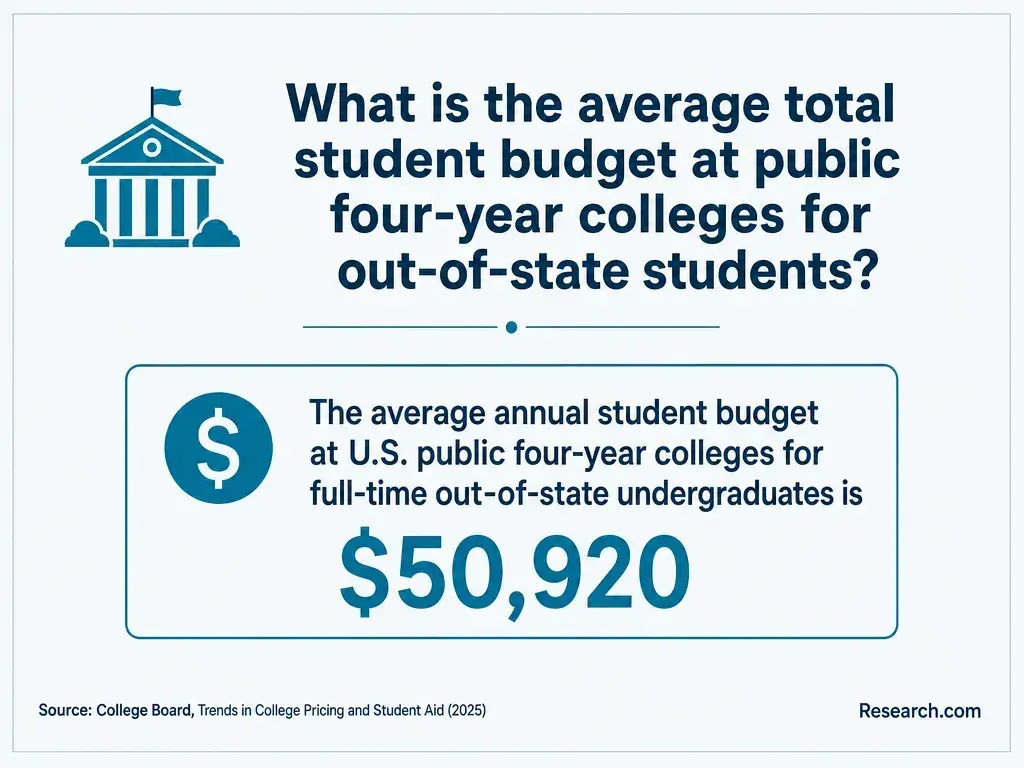
Time and price vary with required credits, full- or part-time enrollment, tuition rules, and the availability of courses and fieldwork. Compare a school's estimated total to completion, not its advertised per-credit price: include mandatory fees, travel or campus visits, supplies, and any income lost to unpaid fieldwork. Request a term-by-term plan before assuming part-time study will fit around prevention campaign cycles.
Scholarships and employer assistance can change the comparison, but eligibility and renewal conditions matter. Use a public health master's scholarship and net-price guide to organize the questions, then obtain written figures from each school's financial aid office. If a shorter program looks cheaper, check whether it still offers the methods training and approved applied experience your target role requires.
There is no single salary for public health graduate degree holders. Compensation depends on the occupation, location, employer, responsibility level, and prior experience. Government prevention positions may also follow published pay grades, so a degree may not change pay without a move into a different classified role.
For a useful benchmark, compare your target job title with the corresponding U.S. Bureau of Labor Statistics occupation and with local postings; do not treat an occupation-wide median as a new graduate's offer. Published career salary ranges for MPH degree holders can provide context, but your financial decision should rest on plausible openings you qualify for, the salary range those employers publish, and your net education cost.
Many prevention planning, evaluation, and program positions do not require a clinical license. Specific jobs may instead prefer or require a public health credential such as Certified in Public Health (CPH), a health education credential such as CHES, or a state-specific prevention certification. Eligibility rules differ; a degree does not automatically award any of them.
Providing clinical assessment or treatment is a different career decision. Counseling and social work licenses are governed by state requirements that an MPH does not replace. Nor would admission to less selective online public health doctoral options establish eligibility for regulated clinical work. Check the actual job posting and responsible certifying body or state board before choosing a degree to meet a credential requirement.
How can you evaluate a reputable public health graduate program?
Build a shortlist from your intended role, then request evidence about the degree that will appear on your transcript. A program's reputation is less useful than a clear match between its required learning and the work you hope to perform. Even when considering low-cost fast-track public health study, examine what the shorter schedule leaves time for.
Before committing, get answers to these decision-changing questions:
- Which required courses develop the evaluation, analysis, or leadership skills named in your target job postings?
- Who approves field sites, and could a project at your current organization meet the program's learning objectives under appropriate supervision?
- What is the written total-cost estimate and realistic course sequence for your enrollment plan?
- What career outcomes does the program report, for which graduates and time period, and what information is missing?
If answers remain vague, consider applying for the next-level job now or taking a focused methods course first. Either route can clarify whether a full graduate degree is necessary.
Other Things You Should Know About Public Health Programs
It often does, especially when the work involves population-level planning, partnerships, education, or evaluation. An employer or admissions committee still decides whether your specific responsibilities meet its criteria.
No. Effective prevention work calls for relevant skills, respectful community engagement, and evidence-informed practice; personal experience is neither a universal requirement nor a substitute for those responsibilities.
Separate what you delivered, such as training sessions or a referral process, from measured changes in participants or the community. State how outcomes were assessed and acknowledge limits on attributing change to your project.
Yes, particularly through experience with coalition advocacy, policy implementation, or public-sector planning. Build a writing sample that analyzes a defined policy decision and its likely implementation challenges; coordination experience alone may not demonstrate policy-analysis skills.
- Prevention of Substance Use | samhsa.gov https://www.samhsa.gov/substance-use/prevention/substance-use-disorders
- Cost of Attendance (Budget) | 2025-2026 Federal Student Aid Handbook https://fsapartners.ed.gov/knowledge-center/fsa-handbook/2025-2026/vol3/ch2-cost-attendance-budget
- Types of Financial Aid: Grants, Work-Study, and Loans | studentaid.gov https://studentaid.gov/understand-aid/types
- Competencies for Public Health Professionals | cdc.gov https://www.cdc.gov/infrastructure/training-professional-development/competencies-for-public-health-professionals.html
- Combined MPH/MSW - Program in Public Health https://publichealth.stonybrookmedicine.edu/academics/degreeoptions/grad/msw
- How to Choose a Graduate Program as a Working Adult | Harvard Extension School https://extension.harvard.edu/blog/how-to-choose-a-graduate-program/
- Master of Public Health Degree (M.P.H.) Behavioral, Social, and Community Health Major (in-person only): PHB Bulletin https://bulletins.iu.edu/iub/phb/2024-2025/graduate/masters/mph-behavioral.shtml
- Graduate Program Admission Requirements for Program Consideration | Monmouth University Academic Catalog https://catalog.monmouth.edu/graduate-catalog/graduate-admission/graduate-program-admission-requirements-program-consideration/