2027 A Community-Based Survey Consent Workflow: A Graduate Public Health Portfolio Project

Co-Founder and Chief Data Scientist
A community survey can be short, but obtaining meaningful consent takes more than placing a checkbox before the questions. A graduate portfolio project should show how a person learns what the survey involves, makes a voluntary choice, and remains protected after responding.
This guide is for public health students developing a proposed workflow or adapting one with a community partner. It explains what to include, which decisions require institutional or site review, and how to produce a useful portfolio artifact without presenting an unapproved template as a field-tested protocol.
Key Things You Should Know
- A strong portfolio artifact maps the full consent journey: invitation, explanation, questions, voluntary agreement or refusal, survey participation, and secure handling of responses.
- Community permission, academic approval, and an IRB or research-office determination are separate decisions; a student's own judgment cannot replace a required institutional determination.
- Keep the scope achievable: a proposed workflow, plain-language script, decision diagram, and revision log can demonstrate skill without recruiting anyone or collecting identifiable data.
What is a community-based survey consent workflow in public health?
A community-based survey consent workflow is the sequence of communications and decisions through which potential respondents are invited to a survey, receive understandable information, choose whether to participate, and learn how their responses will be handled. Unlike a consent form alone, the workflow accounts for who approaches people, where that happens, what happens if they decline, and what happens to information after collection.
Consider a proposed survey about access to local health services. A usable workflow would specify whether a community organization distributes invitations, whether its staff can see who responds, how a person asks questions, and whether names or contact details are collected. Those choices affect voluntariness and privacy as much as the wording of the consent statement.
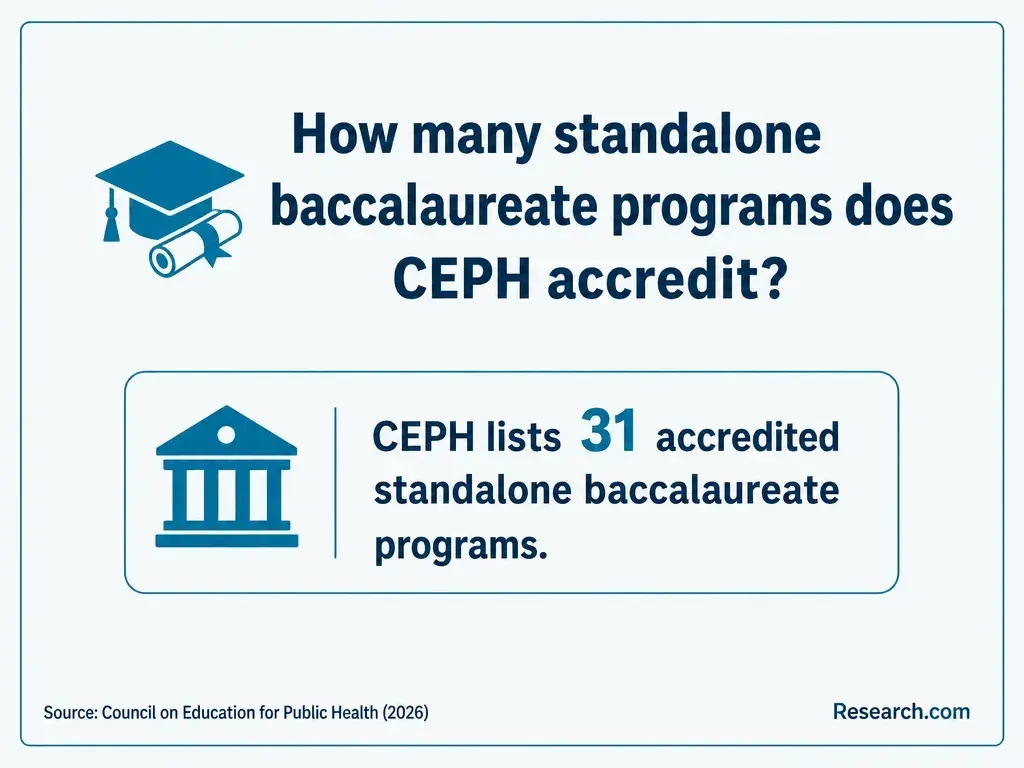
For a graduate student, the appropriate setting depends on the program's learning objectives and available supervision. When comparing online MPH programs with CEPH accreditation, check the accreditation scope and ask how students obtain approval and supervision for community-facing projects; accreditation alone does not approve a particular survey.
Why is informed consent essential for community health surveys?
Consent gives people a genuine opportunity to decide whether sharing information is right for them. A survey may ask about finances, health needs, discrimination, or service use. Even when questions seem routine to a researcher, answering them may feel risky if a respondent believes a landlord, employer, service provider, or community leader could learn what they said.
Meaningful consent depends on the setting, not merely on a signed document. An invitation delivered by someone who controls access to services, for example, may create pressure. The workflow should state plainly that declining will not affect services or benefits, keep participation choices away from anyone who could exert influence, and explain foreseeable privacy limits without promising absolute confidentiality.
A portfolio workflow is a practice deliverable, not evidence that a survey has received approval or that consent procedures worked in the field. That distinction also matters when considering advanced study: a practice-focused DrPH project and a research-focused PhD study can carry different aims and oversight expectations, as a public health doctoral degree comparison guide can help clarify.
What does a graduate public health portfolio project include?
The core deliverable is a version-controlled, adaptable workflow for a defined survey audience and setting. Name the intended decision-maker - such as a faculty supervisor or community organization's survey lead - and state whether the artifact is a classroom proposal, an approved field tool, or a revised tool based on authorized feedback. Do not imply that a partner reviewed it if that has not happened.
A compact portfolio package can contain the following components. Each should serve a decision the reviewer must make before any recruitment begins.
- Project brief: Survey purpose, intended respondents, recruitment setting, responsible organizations, and boundaries of the student's role.
- Workflow diagram or numbered protocol: Each handoff from invitation through refusal, consent, completion, withdrawal, and data storage.
- Participant materials: A draft invitation, plain-language consent script, question-and-answer route, and translated or accessible versions if needed and properly prepared.
- Data-handling plan: What is collected, who can access it, where it is stored, when it is deleted, and how quotations or small-group results will be protected.
- Decision and revision log: Open questions, required approvals, feedback sources, version dates, and changes made.
Include a short limitations note: a template has not been validated by community members simply because it follows classroom guidance. If the goal is to learn this skill rather than earn another degree, supervised work or shorter public health study formats and career prospects may be worth comparing with a full graduate program.
Design backward from the participant's experience: what must someone understand to choose freely, and what will happen after that choice? Start with a proposed survey purpose and recruitment setting, then document the decisions below before drafting polished language.
- Define responsibility. Identify the faculty supervisor, community contact, survey administrator, and person authorized to answer participant questions; confirm who may approve each step.
- Map recruitment. State who approaches whom, through which channel, and how to avoid implying that services or relationships depend on participation.
- Write the explanation. Cover purpose, activities, expected time, reasonably foreseeable risks, potential benefits, compensation if any, voluntary choice, privacy practices, and contacts, as applicable to the project and oversight decision.
- Choose a response route. Specify how agreement or refusal is recorded, whether questions can be skipped, and what a person can do if they stop midway; do not promise withdrawal of anonymous responses that cannot be identified.
- Plan data movement. Minimize identifiers, separate contact details from answers where feasible, restrict access, and specify retention and deletion under approved institutional and partner rules.
- Test and revise appropriately. Ask authorized reviewers to check readability, accessibility, translations, and whether the procedure works in the actual setting before using it with participants.
Online surveys need particular attention to the point at which a response is saved: a person may close a browser and still have submitted partial answers. Paper surveys need a private return method. Neither format is automatically more ethical. If survey analysis becomes a major part of the project, biostatistics graduate programs for busy professionals offer a different training focus; analytical skill does not replace consent and community review.
Look for a sequence that combines community engagement, research design, ethics, and practical data management. A community health course can help students frame questions with partners; qualitative or survey-methods coursework can address question wording and response bias; epidemiology and introductory biostatistics can clarify what the resulting data can - and cannot - support. Health communication training helps translate a protocol into language a participant can use.
Course titles alone are weak evidence of readiness. Ask whether students actually draft participant materials, receive feedback from an instructor or community partner, and learn the program's route for ethics review. A research-intensive MS may offer more methods depth, while an MPH may provide more opportunities to connect a tool to practice; either can be suitable if the particular curriculum and supervision fit the project.
Students still completing an undergraduate pathway can build foundations through writing, introductory statistics, and community-based experience before graduate study. Intensive online public health bachelor's classes may shorten individual course schedules, but compressed classes do not substitute for the time needed to establish a responsible community partnership.
Do not decide from the word "portfolio" alone that review is unnecessary. Under the US Common Rule, whether an activity is human-subjects research depends on its purpose and design, among other factors. A survey intended solely for a local organization's internal improvement may be treated differently from one designed to produce generalizable knowledge. An institution may also require review or registration for activities outside the Common Rule's definition. Send the actual protocol to the designated research or IRB office for a determination before recruiting, if the institution requires that step.
If research rules apply, the office - not the student - determines whether the project qualifies for an exemption or another review pathway. A waiver of consent and a waiver of documentation of consent are different decisions. Community-partner permission, school approval, data-use terms, and IRB decisions are also distinct; one does not replace another. HIPAA requirements depend on who holds the information and whether protected health information is involved, not simply on whether survey questions concern health.
For a portfolio-only proposal, mark pending determinations clearly and use invented process scenarios rather than invented participant responses. Doctoral applicants comparing research commitments and funding through lower-cost public health PhD degree pathways should likewise examine whether their proposed data collection is feasible under institutional and partner oversight before treating it as a dissertation plan.
Delivery format changes how a student reaches supervisors and partners; it does not remove field-site obligations. An online student might work with a local nonprofit while meeting faculty remotely. A campus-based student might have easier access to nearby organizations but still need separate site and academic approvals. In either case, confirm whether the workflow can count toward an applied practice experience, integrative learning experience, capstone, or portfolio requirement. Those requirements are not interchangeable.
Before enrolling, ask who helps identify sites, who approves the project, whether a qualified site supervisor is required, and how often meetings or on-site activities occur. Working students should check daytime recruitment commitments, live classes, travel, and the time a partner needs to review drafts - not just whether lectures are asynchronous. Compare these conditions alongside tuition when reviewing online public health degrees for budget-conscious students; a lower tuition quote may not reflect fieldwork time or travel.
For someone aiming to build this portfolio project, the useful admissions question is whether a program accepts their academic background and offers the supervision the project needs. Graduate public health programs commonly request evidence of a completed bachelor's degree and academic preparation, but prerequisites, tests, experience expectations, application materials, and deadlines vary by program. An unrelated undergraduate major does not automatically rule out admission.
Document relevant experience - such as community outreach, survey administration, accessible writing, or careful data handling - and identify genuine gaps in statistics or research methods. Ask admissions staff which requirements are mandatory, which preparation is recommended, and whether the intended portfolio format is supported. Lists of MPH programs with less restrictive admissions can help start a search, but admission flexibility does not establish project supervision quality or approval of a proposed field site.
There is no reliable single price or completion time for a community-survey portfolio project. The total depends on the specific program's tuition basis, required credits, fees, enrollment pace, and whether fieldwork or the final deliverable extends into another term. A student may also incur travel, translation, accessibility, software, or unpaid fieldwork costs; never assume a community partner will fund them.
Request a term-by-term estimate that includes the capstone or applied-experience term. Then ask whether part-time enrollment changes aid eligibility, whether required courses are offered when needed, and whether an employer will reimburse approved study. Compare any award against its eligibility and renewal rules rather than subtracting an advertised maximum from tuition. A guide to online MPH scholarships and eligibility can help identify questions to bring to each school's financial aid office.
If the primary goal is to create one consent tool for an existing job, a supervised methods course or employer-supported training may cost less time and money than a full master's degree. Choose the degree when its broader competencies, approved applied learning, and career relevance justify the full commitment.
What careers and salaries can community-based survey projects support?
A well-documented workflow can provide evidence of skills useful in community health outreach, program coordination, health education, research assistance, and evaluation support. Employers may value the ability to write participant-facing materials, coordinate with partners, recognize privacy risks, and document decisions. A proposed portfolio artifact demonstrates planning; supervised implementation and authorized feedback provide stronger evidence of field readiness.
Salary depends on the actual occupation, employer, location, and experience - not on possession of this project or an MPH. For example, a community health worker, health education specialist, research assistant, and epidemiologist have different duties and typical entry requirements. Use the US Bureau of Labor Statistics occupation that matches a target job description when assessing pay and outlook; an occupation-wide median is not a graduate earnings forecast. Comparisons of online public health master's tuition and job prospects are most useful when checked against those role-specific requirements.
For an early-career student, the next step is to show an approved, redacted workflow to a supervisor or prospective employer alongside a clear account of what was proposed, reviewed, and actually implemented. Leadership of research or evaluation generally requires additional experience, authority, and often more specialized training.
Other Things You Should Know About Public Health
Only with the organization's permission to use or display it. Remove names, internal procedures, and other restricted details as required; otherwise, present a clearly labeled generic template.
Plan a practical way for them to keep or access it, such as a paper copy or downloadable text, subject to the approved protocol. They should be able to find the relevant contact information later.
A draft translation needs review for accuracy, readability, and local meaning by appropriately qualified people before use. Do not present an unreviewed machine translation as participant-ready.
Not automatically. The amount, timing, recruitment context, and treatment of people who stop early should be reviewed under the applicable project rules so the offer does not obscure a person's freedom to decline.
- Recruitment - OHSRP https://irbo.nih.gov/protocol-development/recruitment/
- The Ethics of Withdrawal from Study Participation - PMC - NIH https://pmc.ncbi.nlm.nih.gov/articles/PMC9527709/
- Informed Consent FAQs | hhs.gov https://www.hhs.gov/ohrp/regulations-and-policy/guidance/faq/informed-consent/index.html
- Templates for informed consent forms | who.int https://www.who.int/groups/research-ethics-review-committee/guidelines-on-submitting-research-proposals-for-ethics-review/templates-for-informed-consent-forms
- TCPS 2 (2022) - Chapter 3: The Consent Process https://ethics.gc.ca/eng/tcps2-eptc2_2022_chapter3-chapitre3.html
- Informed Consent Guidelines & Templates | umich.edu https://hrpp.umich.edu/irb-health-sciences-and-behavioral-sciences-hsbs/informed-consent-guidelines-templates/
- Consent & Waiver of Consent | Northwestern University https://irb.northwestern.edu/resources-guidance/consent-templates-hipaa-requirements/consent-hipaa/consent-and-waiver.html
- Oral/Verbal Consent | virginia.edu https://hrpp.research.virginia.edu/teams/irb-sbs/researcher-guide-irb-sbs/consent/oralverbal-consent
- Consent - Research at the UW https://research.washington.edu/research/hsd/guidance/consent/
- 346. Consent and Early Withdrawal or Cessation of Participation | Research Integrity & Security https://www.unr.edu/research-integrity/program-areas/human-research/human-research-protection-policy-manual/346-consent-and-early-withdrawal-or-cessation-of-participation