2027 Public Health BS Degree Audits: Do Accepted Credits Actually Reduce Tuition?

Co-Founder and Chief Data Scientist
A public health BS program may accept your previous coursework without reducing what you pay to finish. The difference lies in the degree audit: accepted credits can satisfy required courses, fill elective space, or sit outside the credits you still need. For transfer and returning students comparing enrollment offers, that distinction affects tuition, time, and financial aid.
This guide shows you how to connect a written audit to a realistic remaining-cost estimate - and how to spot credits that look valuable on a transcript but do not shorten your path to graduation.
Key Things You Should Know
- Accepted credit lowers tuition only when it replaces credits you would otherwise pay to take, or shortens billable terms under the school's pricing structure; acceptance alone can save $0.
- Compare each school's remaining required courses, residency rules, course schedule, and written cost estimate - not its headline count of accepted credits.
- Ask for an evaluated degree audit before committing: it should show where each prior course applies and what remains for graduation.
How Do Accepted Transfer Credits Reduce Public Health BS Tuition?
A transfer-credit decision answers whether a school will recognize prior learning. A degree audit answers a different question: which graduation requirements that learning satisfies. Tuition falls only if the audit removes coursework or enrollment time you would otherwise have paid for. Admission to the university or public health major does not settle either question.
The distinctions below explain why two offers with the same accepted-credit total can have different financial value.
| Audit result | Likely effect on the remaining bill |
| Satisfies a required major course or prerequisite | Can remove a paid course, provided it does not need to be repeated under program rules. |
| Satisfies general education or needed electives | Can reduce remaining credits if those requirements were otherwise unfilled. |
| Accepted only as extra elective credit | May have no effect if required credits, residency minimums, or course sequences still determine graduation. |
| Accepted provisionally | Savings remain uncertain until the final equivalency and audit are approved. |
Even a useful equivalency may not eliminate a term. If the next epidemiology course is offered only after a prerequisite, the student could still pay term-based charges while waiting. Compressed-term online public health BS pathways may create more scheduling opportunities, but confirm that required courses actually run in the terms you need.
What Is a Public Health BS Degree and What Careers Does It Support?
A public health Bachelor of Science studies health at the population level rather than training students to diagnose or treat individual patients. Programs typically combine prevention, community health, epidemiology, data interpretation, and health systems, although the science and quantitative requirements differ by school. That variation matters to transfer students: a course accepted by a BA or health education program might not satisfy a BS science requirement.
The degree can support applications for entry-level community health, health education, program support, and public health operations work. Employers may also require relevant experience, a particular credential, or stronger data skills. If your longer-term target is a specialized graduate role, use choosing a public health master's specialization as a separate decision; do not pay to repeat undergraduate courses solely because they sound similar to graduate coursework.
How Much Does a Public Health BS Degree Cost Before and After Transfer Credits?
There is no reliable universal before-and-after price. Schools may charge by credit, by term, or through a combination of tuition and mandatory fees. First establish the remaining payable credits and terms under each audit; then apply that school's published charges and your individual aid offer.
This comparison shows which charges can change when transfer credit applies and which require a separate check.
| Cost component | What an approved credit may change | What to verify |
| Per-credit tuition | Fewer required billable credits can lower tuition. | Remaining credits, tuition rate, and differential major charges. |
| Flat-rate term tuition | Savings depend on finishing in fewer billed terms or moving to a different enrollment band. | Term schedule, minimum load, and pricing bands. |
| Mandatory fees | Some fall with fewer terms; others remain regardless of credit load. | Program, online, technology, and graduation charges. |
| Living and fieldwork costs | A shorter schedule may help, but an internship or travel requirement can remain. | Placement timing, work hours, and site-related expenses. |
For a per-credit comparison, multiply remaining billable credits by the applicable tuition rate, then add required fees. For flat-rate pricing, estimate the terms needed from the actual course schedule instead. Subtract grants and scholarships only after confirming eligibility for your planned enrollment load. When comparing affordable online public health colleges, request the same remaining-degree cost breakdown from each school rather than comparing advertised tuition rates alone.
The receiving institution decides whether prior work is acceptable and how it applies. General education, statistics, biology, and introductory public health courses may be particularly useful, but matching titles do not establish equivalency. Associate degrees - including applied degrees - military learning, competency-based work, and international credentials require evaluation under the school's specific policies.
Before treating an acceptance notice as a savings estimate, gather the evidence needed for a requirement-level review:
- Send official transcripts and, where relevant, military records or required international credential evaluations.
- Provide course descriptions or syllabi for disputed prerequisites, laboratories, statistics, and major courses.
- Ask the registrar or transfer-credit office for equivalencies and the public health department for major substitutions or prerequisite approval.
- Request an updated audit showing outstanding general education, major, elective, residency, and graduation requirements; appeal an omission through the school's stated process.
Check quarter-to-semester conversions, repeat-course rules, course recency, and the minimum credits that must be earned at the new institution. A generous elective award cannot override a required on-campus residency or missing lab. The same principle applies when comparing budget and pacing choices for public health students: the shorter-looking option is not necessarily the lower-cost one until required courses are mapped to actual terms.
Check the university's institutional accreditation and, separately, whether the Council on Education for Public Health (CEPH) accredits the relevant school, program, or unit - and whether the specific bachelor's degree falls within that scope. Accreditation of an institution, or of its MPH, does not by itself establish CEPH coverage for every undergraduate degree it offers.
Accreditation can matter for transfer, further study, and some credential pathways, but it does not guarantee that another school will accept a particular course. Ask the receiving registrar and major department for the controlling transfer policies. If graduate study is a future goal, choosing an MPH with CEPH accreditation is a separate check from determining the status and transfer value of your BS coursework.
Expect a mix of general education and public health coursework, commonly including introductory epidemiology, statistics, population health, social and behavioral health, health policy, and program planning. Some BS programs also require biology, chemistry, laboratories, research methods, an internship, or a capstone. Only the school's catalog and your entry-term audit establish your requirements.
Course sequence can matter more than raw credit count. An accepted introductory course may unlock upper-division study immediately; an unfulfilled statistics prerequisite may hold up several courses even if most electives transfer. Ask an advisor to mark prerequisites and course offering terms on a graduation plan. Students hoping to pursue flexible routes to a biostatistics master's degree should also inspect the quantitative preparation they will actually complete; elective credit alone does not replace needed math or methods skills.
An online format does not inherently make a degree less valid - or make transfer credits more valuable. Compare the awarding institution, degree requirements, accreditation scope, and how its courses appear on the official academic record. The same requirement-level audit is necessary in either format.
Online delivery can change the financial calculation through technology fees, travel, and the ability to keep working. It can also introduce scheduled live sessions, group work, or local field placements. When reviewing online public health bachelor's degrees and programs, ask whether the courses left on your audit are offered online at a workable pace; a program's general online availability is not a completion schedule.
Transfer admission to the university, entry to the public health major, and approval of transfer equivalencies can be separate decisions. Depending on the school, applicants may need prior college coursework, a minimum academic standing, particular prerequisites, or a separate major application. Meeting admission requirements does not mean every prior credit will count toward graduation.
Ask admissions which requirements apply to your applicant category, then ask the registrar and major advisor when a final audit becomes available. If you are considering graduate study after the BS, keep that later application distinct: online MPH admissions and recommendation exemptions concern master's applications, not entry to or transfer credit in a bachelor's program.
A BS may help a candidate compete for community health worker, health education, program assistant, or similar positions, depending on the employer and prior experience. These jobs differ: community health workers often connect people with services, while health education specialists may develop and assess educational activities. Some specialist roles call for a bachelor's degree; other employers emphasize community experience or specific skills.
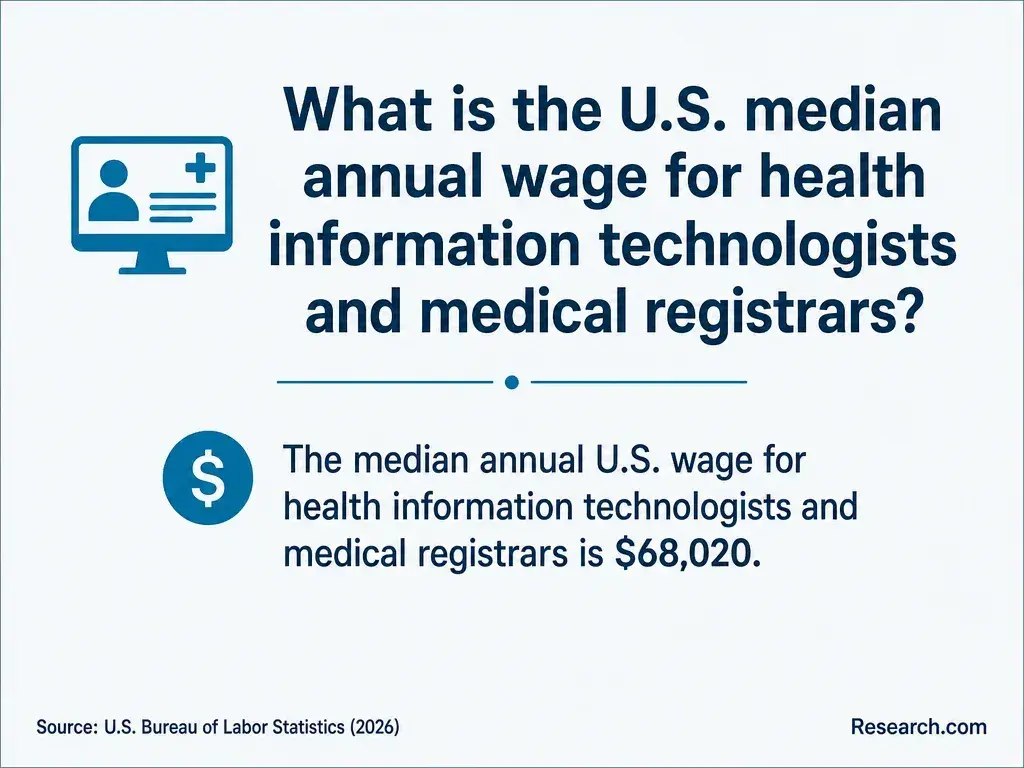
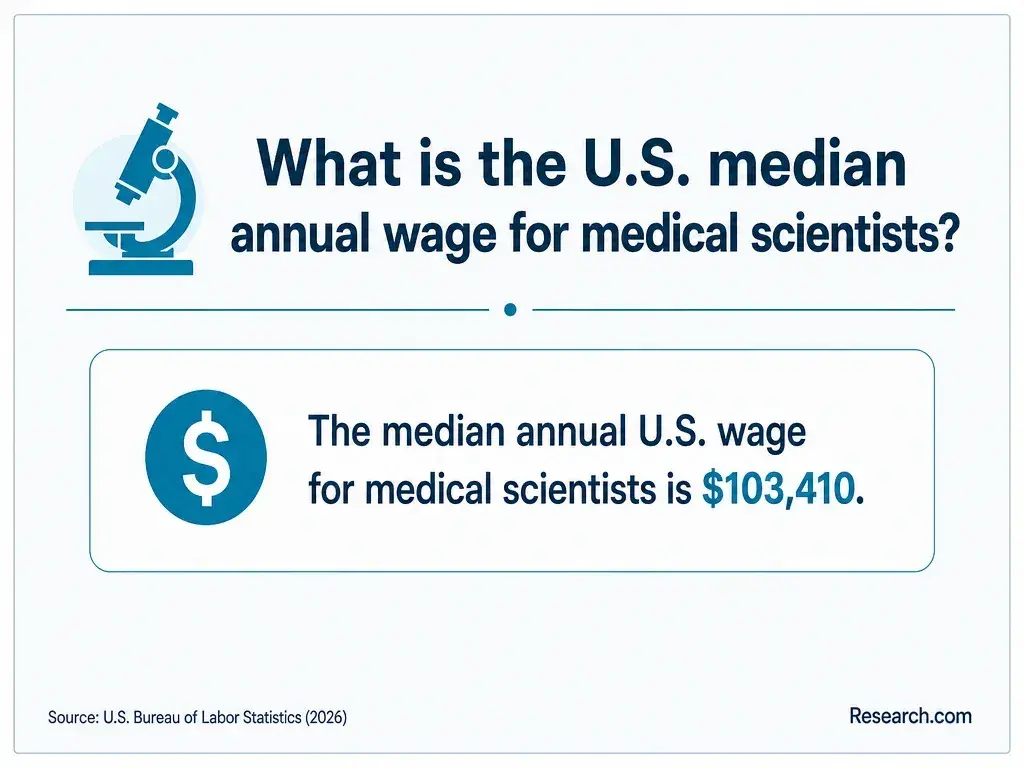
Published US Bureau of Labor Statistics wages describe occupations, not the expected pay of public health BS graduates. A prospective student should compare the current wage data and entry requirements for a specific target occupation with local job postings, then weigh that opportunity against the audited cost of finishing. The same caution applies to doctoral public health tuition versus career outcomes: an additional degree's price cannot be justified by treating an occupation-wide salary as a promised personal return.
Do Public Health BS Graduates Need Certifications or Licenses?
A public health BS does not itself award a clinical license or automatically confer professional certification. Whether another credential is useful depends on the job: an employer may prefer a health education credential, require role-specific training, or set no certification requirement. Check the current rules of the certifying body and the positions you intend to pursue before paying for exam preparation.
If you mainly need one skill - such as program evaluation or health communication - supervised experience or targeted training may be more direct than another degree. If the target job calls for graduate-level preparation, compare that requirement with conditional entry into public health master's programs; conditional admission, where offered, is not a substitute for completing the BS requirements or a job-specific license.
Other Things You Should Know About Public Health
Yes, for an initial conversation. Do not base an enrollment or borrowing decision on that estimate; request an official evaluation and updated degree audit.
Each receiving institution applies its own equivalency and degree rules. Compare the requirements each course satisfies and the remaining bill, not just the accepted-credit totals.
Many schools have a review process. Ask for the deadline and submit the syllabus, learning outcomes, lab details, or other evidence the reviewing office requests.
Yes. Enrollment load, remaining program requirements, and satisfactory academic progress can affect eligibility. Have the financial aid office review your completed audit and planned schedule.
- .14 Evaluation and Review Process for Transfer of Courses and Credits. | Library of Maryland Regulations https://regs.maryland.gov/us/md/exec/comar/13B.06.02.14
- Transfer Credit Guidelines | Undergraduate Admissions https://admissions.uconn.edu/apply/transfer/transfer-credit-guidelines/
- Policy on Awarding Academic Credit, Transfers and Substitutions | uthscsa.edu https://catalog.uthscsa.edu/generalinformation/generalacademicpolicies/policyonawardingacademiccredittransfersandsubstitutions/
- Prerequisites | University of Michigan School of Public Health https://sph.umich.edu/undergrad/apply/prerequisites.html
- Public Health Majors | | University of South Carolina https://cms.sc.edu/about/offices_and_divisions/undergraduate_admissions/apply/for_transfers/credits_from_sc_technical_colleges/course_equivalents_by_major/public_health.php
- 2.1.9 Baccalaureate Degree Programs | Illinois State https://policy.illinoisstate.edu/students/2-1-9/
- Credit for Prior Learning | HowardCC https://www.howardcc.edu/admissions-aid/apply-for-admission/advising/credit-for-prior-learning/
- Stony Brook University Transfer Credit Policies https://www.stonybrook.edu/credit-eval/policies.html
- Academic Policies & Practices - FGCU Catalog https://catalog.fgcu.edu/general-information/academic-policies-and-practices/
- Tuition & Fees | About the University of Cincinnati https://www.uc.edu/about/bursar/tuition-fees.html