2027 Choosing MPH Coursework for Tribal Public Health Partnership Work

Co-Founder and Chief Data Scientist
An MPH can teach population-health methods, but those methods alone do not prepare someone to work responsibly with a tribal nation. Coursework must also develop an understanding of tribal sovereignty, community-defined priorities, data governance, and the practical demands of sustained partnership.
This guide is for prospective students and early-career practitioners choosing courses, concentrations, and applied experiences. It shows what to look for in a curriculum and what to verify with a program and potential partners before committing time and money to a degree.
Key Things You Should Know
- Prioritize community-engaged program planning, evaluation, qualitative methods, and tribal governance alongside the MPH's epidemiology and biostatistics core.
- A concentration name is less important than access to relevant courses, knowledgeable supervision, and an approved applied experience shaped by a tribal partner's priorities.
- Compare the full cost and scheduling of the degree with the work you want to do. An MPH is not a substitute for community trust, permission to use data, or experience.
What is an MPH for tribal public health partnership work?
An MPH is a professional graduate degree in population health. For tribal public health partnership work, its value lies in helping a practitioner plan programs, interpret evidence, evaluate services, communicate findings, and navigate health systems in collaboration with a tribal nation, not on its behalf without authorization.
Tribal nations are governments with distinct histories, institutions, laws, and public health priorities; they are not a single population with interchangeable needs.
Relevant employers and partners can include tribal health departments, tribally operated clinics, intertribal organizations, urban Indian organizations, universities, and government agencies.
Their authority and responsibilities differ. Coursework should help you identify who makes decisions, whose approval a project requires, and whether an outside organization's goals align with those of the community.
An MPH generally requires a bachelor's degree for admission. If you are still completing undergraduate study, cost-conscious online public health undergraduate study may be a more immediate decision than graduate-school selection.
If you already work in a tribal or community organization, compare what a full MPH would add to your existing relationships and responsibilities before assuming another degree is necessary.
Which MPH concentrations best prepare students for tribal public health careers?
Community health or health promotion is often the closest general fit for partnership-centered program work. Epidemiology, health policy, and environmental health may be better choices when the intended role has a more specific technical focus.
Program labels vary, so compare required courses and electives rather than treating a concentration title as evidence of particular training. An overview of public health master's pathways by professional interest can help frame that choice.
The comparison below connects common concentrations to likely tasks. It does not imply that any concentration alone establishes competence to work with a particular tribal nation.
| Concentration | Most relevant partnership work | Curricular gap to check |
| Community health or health promotion | Program design, health communication, and community-engaged evaluation | Depth of data analysis and tribal governance instruction |
| Epidemiology | Surveillance, needs assessment, and interpretation of population-health patterns | Qualitative methods, data governance, and partner-led interpretation |
| Health policy or management | Funding, service coordination, and analysis of governmental relationships | Direct community engagement and applied evaluation |
| Environmental health | Population-level assessment of environmental concerns | Relevant technical prerequisites and community-defined risk communication |
Choose the route that closes your actual skill gap. A community organizer may need stronger analysis and budgeting; a data analyst may need more practice in facilitation and qualitative inquiry. Ask whether the courses that close those gaps are offered regularly and can fit into your degree plan.
What coursework builds effective tribal public health partnerships?
A useful course sequence moves from public health foundations to collaborative methods and then to supervised application. Start with epidemiology and biostatistics sufficient to assess evidence and explain uncertainty.
Add qualitative interviewing or other community-engaged methods, program planning, implementation, evaluation, and grant or budget management. These skills help turn a partner-defined priority into a feasible activity and an evaluation the partner can use.
Course assignments matter as much as catalog descriptions. Look for opportunities to draft a logic model, negotiate evaluation questions, assess whether indicators reflect community priorities, and communicate limitations without presenting small or incomplete datasets as definitive.
Training should address when data access, confidentiality agreements, institutional review, and tribal review or approval must be checked. A university's permission does not automatically replace a tribal nation's requirements.
If your undergraduate preparation lacks basic statistics or research methods, address that gap before taking advanced evaluation courses. Applicants rebuilding an academic record can also examine guidance on improving low-GPA MPH application prospects; relevant recent coursework may help demonstrate readiness, but each program decides how it assesses applications.
CEPH accreditation is a useful check on whether an MPH sits within an independently reviewed public health educational framework. It is not an endorsement by a tribal nation or proof that the curriculum teaches tribal sovereignty well. Institutional accreditation and CEPH accreditation are different; confirm the exact school, unit, or program covered and whether the MPH you would enter falls within that scope.
Use CEPH status as one screening criterion, then examine the actual courses, instructors, partner relationships, and applied-experience policies. A list of online MPH programs with CEPH accreditation can provide candidates to investigate, but verify each program's status directly before applying because accreditation and degree offerings can change.
Ask a program for recent course syllabi and examples of the kinds of approved applied projects students can undertake. Do not assume that a school's general statements about health equity establish access to tribal public health instruction or placement.
Look for courses that teach tribal sovereignty as a matter of governance, not merely as cultural background. Relevant instruction may appear in American Indian and Alaska Native health, Indigenous public health, public health law, federal Indian law, health policy, or community-engaged research. Examine the syllabus for attention to tribal jurisdiction, the distinct roles of tribal and federal health systems, and community authority over project decisions.
Health equity coursework should connect present-day conditions with policy, land, resources, and access to services without portraying all tribal communities as alike. Cultural humility is a continuing practice of reflection, listening, and accountability, not a claim that one course makes a graduate an expert in another community. Strong assignments examine whose priorities define a project, who interprets results, and who may share them.
If you aim eventually to lead complex organizational or policy change, an MPH may be an appropriate first step rather than the final qualification. Explore online public health doctorate pathways only in light of substantial practice goals and experience; a doctorate does not confer authority to speak for a tribal nation either.
Choose the format that gives you realistic access to the right coursework, supervision, and partner-approved practice. Online study can let a working practitioner remain employed and engaged locally.
Campus study may make particular faculty, courses, or nearby placements easier to access. Neither format guarantees a tribal public health partnership, and proximity to a tribal nation does not establish a school's relationship with it.
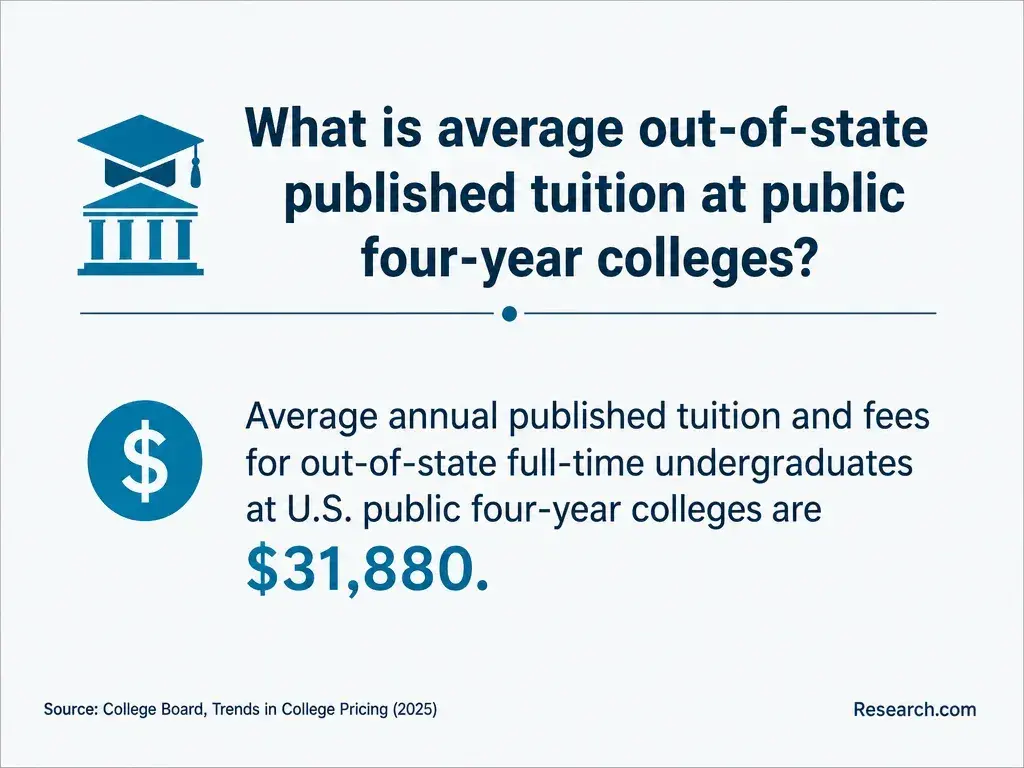
Check whether courses are asynchronous, when live sessions occur, whether group work requires fixed meeting times, and whether travel or campus visits are mandatory. Ask how the school approves placements outside its region and who supervises students when a partner's staff has limited capacity. Compare those obligations, not just advertised tuition, when reviewing affordable distance learning MPH degrees.
For someone already employed by a tribal organization, a local applied project may be possible, but the academic program and employer must both approve its scope and supervision. For someone seeking to enter this work, promised "flexibility" matters less than concrete support in finding an appropriate supervised opportunity.
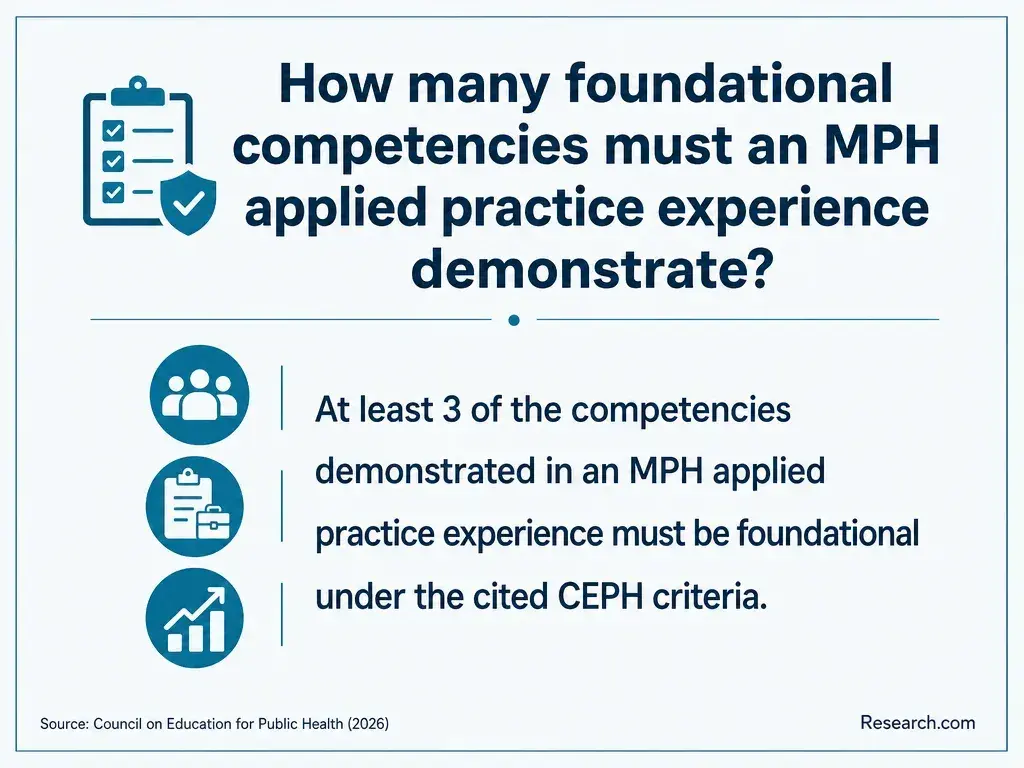
An MPH applied practice experience is most useful when it produces something a partner has requested: for example, an evaluation plan, an accessible communications product, or a documented service-workflow assessment.
A student should not arrive with a predetermined research question and assume a tribal organization will supply participants, data, or staff time. The school's approval, the host's agreement, supervision arrangements, and permission to use information are separate decisions.
Before accepting a placement, ask the academic coordinator and prospective host how the work will be defined. These questions help distinguish meaningful practice from a placement that is convenient only for the student:
- Which partner-defined decision will the work support, and who can approve its scope?
- Who will supervise day-to-day work and assess academic competencies?
- What data or materials may be used, stored, shared, or included in a portfolio?
- What travel, scheduling, compensation, and review requirements could affect completion?
A thesis or research-intensive placement is a different commitment from an MPH applied practice experience.
If your main goal is to conduct independent research rather than support a practice partner, compare the supervision, funding, and opportunity costs of that route, including public health PhD tuition comparisons, instead of treating a doctoral project as a larger version of an MPH placement.
MPH admission generally begins with a bachelor's degree, but prerequisites, GPA policies, experience expectations, tests, and application documents vary by program. Community service or tribal public health experience can strengthen an application without automatically replacing an academic requirement. If obtaining recommenders is a barrier, compare verified public health master's application document alternatives rather than assuming every school requires the same letters.
Program length depends on required credits, enrollment pace, course sequencing, and the time needed to arrange an approved applied experience. Request a term-by-term plan showing when relevant electives are offered.
For cost, calculate tuition and mandatory fees alongside travel, any required visits, fieldwork expenses, and earnings you might forgo. Ask whether employer education assistance applies and what conditions it imposes; do not count unconfirmed aid as a saving.
A lower-priced MPH is not necessarily the lower-cost choice if a required course is rarely offered or a placement demands substantial unpaid travel. Conversely, someone with established community relationships may find that a targeted evaluation course or employer-supported training meets an immediate need without the cost of a full degree.
An MPH can support applications for program coordinator, health education specialist, evaluation associate, policy analyst, or epidemiology-related positions, depending on the person's methods training and experience.
Responsibilities may include organizing services, preparing reports for funders, interpreting surveillance data, or supporting a partner-directed evaluation. Leadership roles generally require demonstrated judgment and organizational experience beyond degree completion.
There is no single defensible "tribal public health MPH salary." Pay depends on the actual job, employer, location, funding, and experience. For a comparison, consult the US Bureau of Labor Statistics wage data for the specific occupation closest to the position, such as epidemiologist or health education specialist, and then review the employer's posted range. An occupation-wide median is not an expected offer from a tribal organization or an outcome guaranteed to MPH graduates.
Advanced epidemiology research is a different destination from general partnership work. Someone considering that route should assess methods preparation and research supervision before weighing epidemiology doctorate scholarships and grants. For many program-facing roles, supervised experience and trustworthy collaboration will be more immediately useful than another degree.
Which certifications and competencies strengthen tribal public health careers?
Competencies should follow the job's tasks: evidence appraisal and basic data handling for evaluation; facilitation and clear writing for community engagement; budgeting and reporting for program operations; and knowledge of governance and data stewardship across all three. A portfolio can demonstrate those skills through work you are authorized to share, with confidential material removed and partner review obtained where required.
The CPH credential and health education credentials such as CHES or MCHES may be relevant to some roles, but they are separate from an MPH and have their own eligibility rules. Check the current certifying organization's requirements and actual job postings before paying for an exam. None of these credentials grants clinical licensure or substitutes for a tribal partner's permission and trust.
If tuition is still an issue, consider exploring budget-conscious accelerated public health education programs. Choose the least extensive route that develops the competencies your target role actually requires while saving on expenses.
Other Things You Should Know About Public Health Programs
Not for every position. Hiring eligibility and any applicable preference depend on the employer and role. Read the posting carefully, and do not confuse eligibility to apply with being an appropriate representative of a community.
No. Tribal nations and tribally operated organizations have their own governance and roles; the Indian Health Service is a federal agency. Identify the prospective employer and its decision-making authority before proposing work.
Not automatically. Academic approval, data access, partner permission, and any applicable tribal or institutional review requirements must be addressed. Agree on review and sharing expectations before starting the project.
Requirements vary by role and community. Language skills can matter greatly, but students should not assume one language or cultural practice applies across tribal nations. Follow the employer's requirements and the partner's guidance.
- Basis for Health Services | Fact Sheets https://www.ihs.gov/newsroom/factsheets/basisforhealthservices/
- Frequently Asked Questions | Indian Affairs https://www.bia.gov/frequently-asked-questions
- American Indian and Alaska Native Health | hhs.gov https://minorityhealth.hhs.gov/american-indian-and-alaska-native-health
- Tribal Sovereignty | Kansas Native American Affairs https://www.knaa.ks.gov/tribal-sovereignty
- OPRE Research and Evaluation with Tribal Communities | The Administration for Children and Families https://acf.gov/opre/page/opre-research-and-evaluation-tribal-communities
- The Indian Health Service (IHS): An Overview | congress.gov https://www.congress.gov/crs-product/R43330
- Working Collaboratively Through the Tribal Behavioral Health Agenda | SAMHSA https://www.samhsa.gov/communities/tribal-affairs/national-tribal-behavioral-health-agenda/working-collaboratively
- Community-Based Participatory Research Syllabus | Global Health E-Learning Program https://edgh.washington.edu/courses/community-based-participatory-research/syllabus/
- How Libraries and Archives Can Support It | buffalo.edu https://digitalcommons.law.buffalo.edu/cgi/viewcontent.cgi