2027 Assessing the Feasibility of a Cross-Sector Health Initiative for DrPH Students

Co-Founder and Chief Data Scientist
A cross-sector health initiative can make a strong DrPH project, but a promising partnership is not yet a workable one. Health departments, schools, housing agencies, health systems, and community organizations may agree on a goal while differing on budgets, data rules, and decision-making authority. For experienced practitioners considering an applied doctoral project, feasibility means testing those constraints before promising an intervention or outcome. This guide shows how to assess partner commitment, evidence, implementation capacity, and academic requirements so you can proceed, narrow the scope, or choose a different project.
Key Things You Should Know
- A feasible DrPH initiative needs three separate commitments: a defined practice problem, partners with authority to act, and an approved path to the data and deliverables the project requires.
- Do not mistake agreement on a health goal for agreement on staffing, budgets, information-sharing, or who makes the final decision.
- Set a decision point before implementation: proceed if essential permissions and resources are secured, redesign if the scope exceeds them, or stop if a critical partner cannot participate.
What Is a Cross-Sector Health Initiative in a DrPH Program?
A cross-sector health initiative coordinates organizations with different responsibilities around a population-health problem. For example, a local health department and housing organization might work with residents to improve referral processes for households reporting asthma-related housing concerns.
The DrPH student's contribution could be a jointly developed implementation plan or an evaluation of the referral process - not a claim that the partnership has already improved health.
In a practice-focused DrPH, the initiative should present a leadership decision the student can investigate and influence. A broad ambition such as "reduce asthma" is too large to assess on its own; a bounded question such as "can these partners establish and monitor a workable referral pathway?" identifies decisions, participants, and evidence.
A DrPH is generally intended for experienced practitioners, not as an entry point into public health. Someone still building foundational preparation may be better served by supervised work or accelerated online coursework for public health undergraduates than by taking on doctoral-level partnership leadership.
Why Should DrPH Students Evaluate Cross-Sector Health Initiatives?
Cross-sector projects can fail for reasons unrelated to the merits of their health goal. A school district may control access to students, a housing provider may control repairs, and a health department may have neither authority. An early assessment reveals whether the proposed work can produce a useful decision within the student's academic timeline without shifting uncompensated work onto community partners.
Feasibility also protects the doctoral investment. A student who must wait for multiple agreements before collecting baseline information may face delays and additional enrollment costs.
If the immediate goal is to learn program planning rather than lead organizational change, public health bachelor's cost comparisons can help illustrate how different an entry-level education decision is from committing to a DrPH; an MPH, focused certificate, or employer-supported project may also fit better, depending on prior education.
The useful result of an assessment may be a narrower initiative. Improving an existing referral workflow can be defensible even when launching a new service across several agencies is not.
What Skills Do DrPH Students Need to Lead Cross-Sector Initiatives?
The central skill is aligning people who do not report to one another. Students need to negotiate roles, make room for community priorities, resolve disagreements about measures, and explain what each partner can realistically deliver.
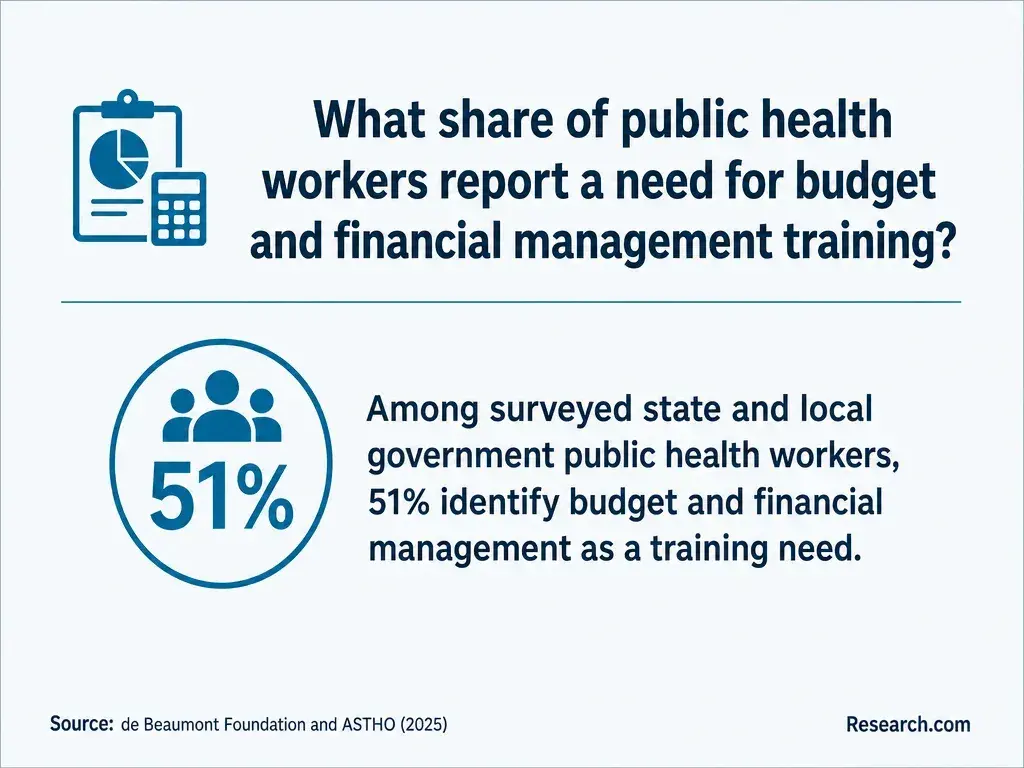
They also need budget literacy, implementation planning, qualitative inquiry, and enough quantitative fluency to judge whether available indicators answer the practice question.
Technical depth should match the project. A student assessing referral completion needs a clear denominator, consistent definitions, and a plan for missing records; they may not need advanced statistical modeling.
If the intended role is intensive analysis rather than partnership leadership, balancing employment with a biostatistics master's may be a more relevant training question than pursuing a DrPH.
Prior responsibility matters more than a managerial title alone. An applicant who has coordinated agencies, managed a grant, or changed a service process should document the decisions they owned, whose input they sought, and how they handled constraints.
DrPH preparation commonly combines leadership and management study with applied methods, policy, and a supervised practice-focused doctoral project. The valuable test is whether a particular program helps students negotiate real partner responsibilities, work through data-governance barriers, and revise a project when implementation conditions change. Course titles alone cannot establish that support.
Before enrolling, ask who approves the project, what the final deliverable must be, whether an existing employer can serve as a site, and how faculty and practice supervisors divide responsibility. Check the degree's actual requirements and the scope of any claimed Council on Education for Public Health accreditation rather than assuming institution-level accreditation covers the same thing.
Compare these arrangements with the cost of alternatives. For a narrower goal, online public health master's tuition and job prospects may be more decision-relevant than another doctorate. The DrPH makes more sense when the student needs sustained, supervised preparation for advanced practice leadership and can identify a credible project setting.
Start with a specific practice decision: whether to launch, adapt, or decline a proposed initiative. The following sequence turns broad partner enthusiasm into evidence that a DrPH student and project committee can evaluate.
- Define the population, setting, current process, and improvement purpose without assuming the process has failed or the intervention will work.
- Map decision rights: identify who sets priorities, commits staff or funds, controls referrals or services, and represents affected community members.
- Check baseline evidence: identify usable records or interviews, define practical indicators, and document missing or inconsistent data.
- Test implementation capacity: estimate staff time, training, procurement, scheduling, accessibility, and partner handoffs against the academic timeline.
- Confirm approvals: obtain project-site and school approval as required, and determine whether data-use, privacy, consent, or research review requirements apply.
- Agree on an achievable output and decision rule, such as a revised workflow and monitoring plan that partners can accept or reject.
A small comparison of design choices helps prevent an oversized proposal. These are project types, not interchangeable claims about health impact.
| Possible scope | Evidence and authority needed | Likely feasibility concern |
| Assess an existing referral process | Workflow access, staff input, and usable process records | Records may not track completed handoffs |
| Pilot a shared referral process | Partner agreement, staff capacity, training, and monitoring access | Partners may lack authority or time to change procedures |
| Claim an effect on population health | Appropriate outcomes, comparison, follow-up, and analytic design | A short practice project may not support a causal conclusion |
If the student lacks the foundational preparation to assess these choices, admission flexibility is not a substitute for readiness. Entry flexibility in public health master's programs may offer a different starting point, but the student should still establish the skills needed before leading a multi-agency project.

Prioritize coursework by the decision the project must support. Implementation and program evaluation help distinguish whether partners carried out a process from whether that process improved outcomes. Health policy and governance clarify legal authority and accountability. Leadership, budgeting, and community-engaged methods support negotiation, resource planning, and respectful interpretation of partner and resident perspectives.
Methods courses should provide enough depth to define indicators, assess data quality, conduct suitable interviews or document review, and report uncertainty. A student using routinely collected administrative data should not assume those records capture every eligible person or establish causation.
Students concerned that earlier grades do not represent their present abilities can use public health graduate admission after academic setbacks as a starting point for thinking about recent evidence of preparation. For a DrPH application, the stronger case also shows current practice responsibility and readiness for the proposed applied work; each program decides how it weighs academic history.
Yes, if the program permits the proposed arrangement and the student can meet the same partner, supervision, approval, and deliverable requirements as other students. Online coursework does not make community meetings, site visits, live seminars, or confidential data access automatically remote or flexible.
Before choosing an online program, confirm residency or campus-visit requirements, required meeting times, project-site rules, and how faculty supervise a project outside the university's region. Choosing an online public health doctorate should therefore include a project-access test, not just a comparison of course delivery.
A workable remote arrangement might use scheduled partner meetings and approved, limited-access process data. If the initiative requires observing services on site or handling records that cannot leave a partner's systems, the student needs an authorized local plan; online enrollment alone does not provide access.
Requirements vary by institution. Programs may review a prior degree, academic record, relevant professional experience, leadership evidence, recommendations, a statement of purpose, and evidence that the applicant can undertake advanced applied work. Some specify experience thresholds or particular prior degrees; none should be treated as universal without checking the program's current policy.
For this kind of project, distinguish eligibility from readiness. An applicant might meet published entry requirements but lack access to a partner willing to approve the work. Conversely, substantial cross-sector responsibility can strengthen an application even if a job title does not contain "director." Ask admissions staff how they assess practice experience and when a project site must be identified.
Applicants comparing application burdens should note that finding MPH programs without recommendation letters addresses a different degree pathway. It does not establish that a DrPH waives letters or that references can replace proof of project access.
There is no reliable single timeline or price for a DrPH project. Total commitment depends on credits, enrollment pace, required visits, project milestones, and how long partner approvals and revisions take. Compare published tuition and mandatory fees with travel, possible reduced work hours, and any charges that continue while a project is unfinished.
For an employed practitioner, the most expensive delay may be a project that cannot begin on schedule. Build a budget and calendar around the school's actual rules, then ask what happens if a partner withdraws, data access takes longer than expected, or a leave becomes necessary. Online public health doctorate investment planning is most useful when paired with those program-specific answers rather than an advertised tuition figure alone.
What Careers Can DrPH Graduates Pursue After Leading Health Initiatives?
A well-executed project can demonstrate readiness for responsibilities such as directing a public health program, coordinating government and community partnerships, leading health-system population-health initiatives, or managing evaluation and implementation in a nonprofit.
The evidence is the student's documented contribution: the decision addressed, partners engaged, constraints managed, and usable output produced - not a degree title by itself.
Hiring and advancement still depend on prior experience, employer requirements, budgets, and sometimes public-sector classification rules. A DrPH does not confer clinical licensure or guarantee promotion.
When comparing the value of further study, public health degree timelines and salary considerations should be weighed against a specific target role and the experience the student already has; broad occupational wages are not predictions of DrPH earnings.
The clearest next step is to draft a one-page project concept for a prospective partner and faculty contact. State the practice decision, proposed output, needed permissions, and a smaller fallback scope. Their responses will reveal more about feasibility than the initiative's ambition alone.
Other Things You Should Know About Public Health
Agree early on how community members, partner staff, and the student will be acknowledged. Discuss authorship separately if a publication is contemplated; a class project does not give the student sole ownership of partners' work.
Only within the permissions granted by the school and partners. Remove confidential information and confirm whether agreements restrict publication, even when the student created the report.
Document each organization's decision authority and concerns, then seek a narrower objective they can jointly authorize. Do not present unresolved disagreement as community endorsement.
Identify a partner owner for the workflow, measures, and any recurring costs before handoff. If no organization can sustain it, a decision-ready assessment may be more useful than launching a short-lived pilot.
- Responsible Practices for Data Sharing - PMC - NIH https://pmc.ncbi.nlm.nih.gov/articles/PMC5967383/
- Privacy and Data Sharing | Protecting Student Privacy https://studentprivacy.ed.gov/privacy-and-data-sharing
- Chapter 4: Governance and management | projectdelivery.gov.uk https://projectdelivery.gov.uk/teal-book/home/part-a-project-delivery-in-government/chapter-4-governance-and-management/
- Collaborative Governance - Strategic Growth Council https://sgc.ca.gov/tools/catalyst-models/collaborative-governance/
- Social Determinants of Health - Healthy People 2030 - odphp https://odphp.health.gov/healthypeople/priority-areas/social-determinants-health
- Competencies for Public Health Professionals | cdc.gov https://www.cdc.gov/infrastructure/training-professional-development/competencies-for-public-health-professionals.html
- Multi-Sector, Community-Driven Partnerships | NAM https://nam.edu/perspectives/multi-sector-community-driven-partnerships-an-intentional-strategy-to-advance-health-equity/
- Competencies | UC Berkeley Public Health https://publichealth.berkeley.edu/academics/accreditation/competencies
- The Key Role of Cross-Sector Partnerships in Navigating Barriers | ASTHO https://www.astho.org/communications/blog/2025/key-role-of-cross-sector-partnerships-navigating-barriers/