2027 From Community Health Work to Public Health: Choosing a Graduate Pathway

Co-Founder and Chief Data Scientist
Community health workers bring firsthand knowledge of outreach, trust-building, and barriers to care. Moving into public health planning, evaluation, research, or leadership may require different skills, and not every goal requires an MPH.
For community health workers considering graduate study, this guide compares the available pathways, the preparation each demands, and the career moves each can support. It also shows how to test a program's cost, schedule, accreditation, and applied-learning opportunities against the work you actually want to do.
Key Things You Should Know
- Choose the destination before the degree: an MPH usually fits program and population-health practice, while a research-oriented MS fits deeper methods training; a certificate or supervised project may be enough for a narrower move.
- Community health experience is valuable admissions and career evidence, but it does not replace a program's bachelor's-degree requirement or automatically qualify you for an analyst, epidemiologist, or management job.
- Before enrolling, make 2 separate checks: confirm the exact degree's accreditation coverage and obtain a written account of total charges, scheduling, and fieldwork requirements.
What public health graduate pathways are available to community health workers?
The best pathway depends on the work you want to do next, not just whether you want to remain in public health. Outreach and navigation experience can inform program design, but designing a program, analyzing its outcomes, and directing an organization call for different preparation.
This comparison shows where common routes fit a community health worker's next role. Degree names and curricula vary by school:
| Pathway | Strongest fit | Important limitation |
| MPH | Program planning, evaluation, health education, policy, and population-health practice | A generalist MPH alone may not provide advanced statistical or research training. |
| Research-oriented MS | A defined interest in epidemiology, biostatistics, or another technical field | Methods prerequisites and research expectations may be greater; community practice may be less central. |
| Graduate certificate or targeted coursework | A specific gap, such as evaluation, data analysis, or grant management | May not meet employers' master's-degree requirements or transfer into a later degree. |
| DrPH or PhD, usually after further preparation | Experienced practice leadership or sustained independent research, respectively | Neither is a routine first step out of frontline community health work. |
A bachelor's degree is normally the starting credential for master's admission. If you have not completed one, compare degree-completion requirements before comparing MPH programs; undergraduate public health programs with faster course cycles may help with scheduling, but only an individual school can determine your remaining credits and completion time.
Is an MPH degree worth it for advancing a public health career?
An MPH is most likely to be worthwhile when your target jobs regularly ask for a master's degree and you can use its training to move from delivering services to planning, evaluating, or coordinating them.
For example, a community health worker who already recruits participants and documents referrals may benefit from learning to set program measures, interpret results, and explain findings to community partners and funders.
It is less compelling if your immediate goal is a senior outreach position that primarily rewards local relationships and supervisory experience. Compare postings from employers you would actually join: record which qualifications are required, which are preferred, and which tasks you cannot yet demonstrate.
Then compare the degree's net cost and forgone work time with a certificate, employer training, or a supervised evaluation project. A guide to affordable public health graduate study and earnings can frame that comparison, but an occupation's earnings are not a promised return on an MPH.
What are the requirements for entering a public health graduate program?
MPH and MS applicants generally need an acceptable bachelor's degree, but schools set their own policies for grades, prerequisite courses, recommendations, statements, and relevant experience.
An unrelated undergraduate major does not automatically rule out admission. A quantitative MS may expect more statistics or mathematics preparation than a practice-oriented MPH.
Translate your community health work into evidence: describe populations served without disclosing private information, your responsibilities, partnerships, documentation methods, and any role you played in improving a process. If your academic record is uneven, ask whether recent coursework can demonstrate readiness.
Confirm the particular program's prerequisites and application route rather than assuming that all schools require the same materials; online MPH admissions and recommendation exemptions are one policy difference worth checking directly with admissions.
Online study can preserve a community health worker's employment and local partnerships, while campus study may make in-person collaboration and nearby placements easier.
Neither format is inherently more rigorous or flexible. An online program can still require live classes, group meetings, campus visits, or fieldwork during business hours.
Request a sample term schedule and ask where students complete applied work, who secures a site, and whether your current employer could qualify after approval. Check the availability of methods courses, advising, and career support in the format you would use - not merely on the institution's campus.
Resources on finding online MPH programs that fit your profile can help build a shortlist; verify every scheduling and placement condition with the program before committing.
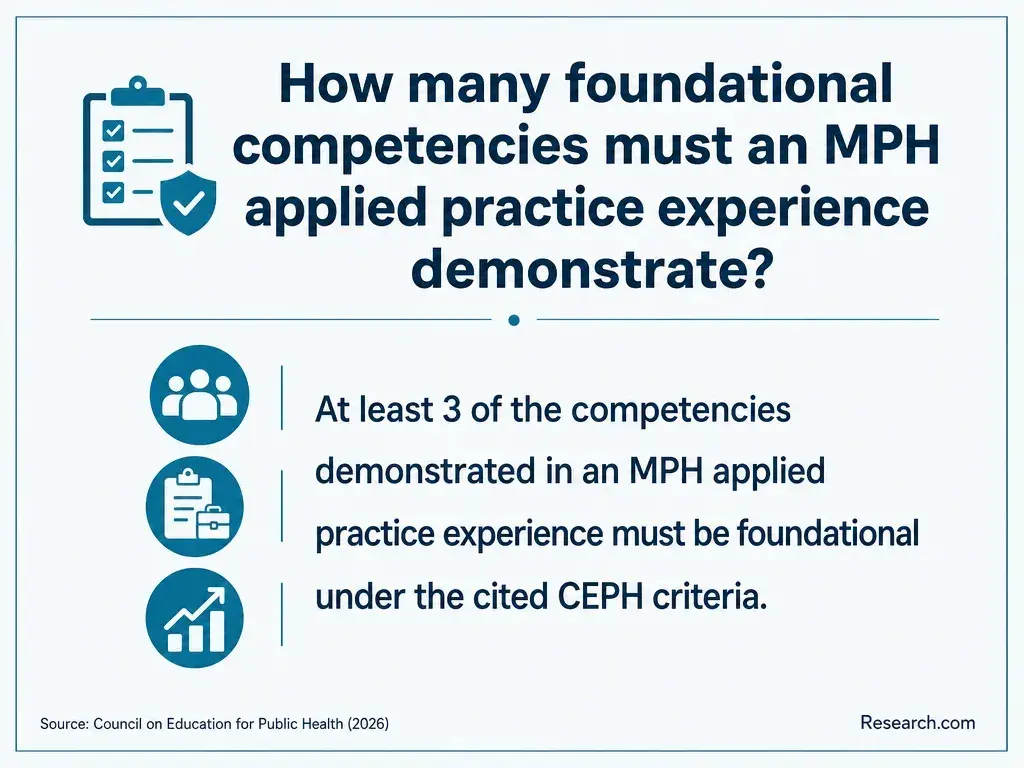
An MPH typically combines population-health foundations with practice: interpreting epidemiologic patterns, using data responsibly, examining social and structural determinants of health, communicating with communities, and planning or evaluating interventions.
An applied experience and culminating work may let students demonstrate those skills, subject to the program's requirements.
For a community health worker, the crucial question is whether coursework adds capabilities beyond outreach. Look for opportunities to build an evaluation plan, analyze appropriately governed data, prepare a usable report, and receive feedback from a qualified supervisor.
If the goal is a technical analyst role, inspect the sequence and prerequisites for statistics and programming rather than assuming an MPH survey course is sufficient. Compare that depth with biostatistics graduate study while working.
Duration depends on required credits, course availability, enrollment pace, and the timing of applied work. A part-time route may preserve income but extend fees and delay completion; a faster route can increase weekly demands or reduce paid work hours.
Graduate certificates are often shorter than degrees, but their credits do not necessarily apply to a future MPH.
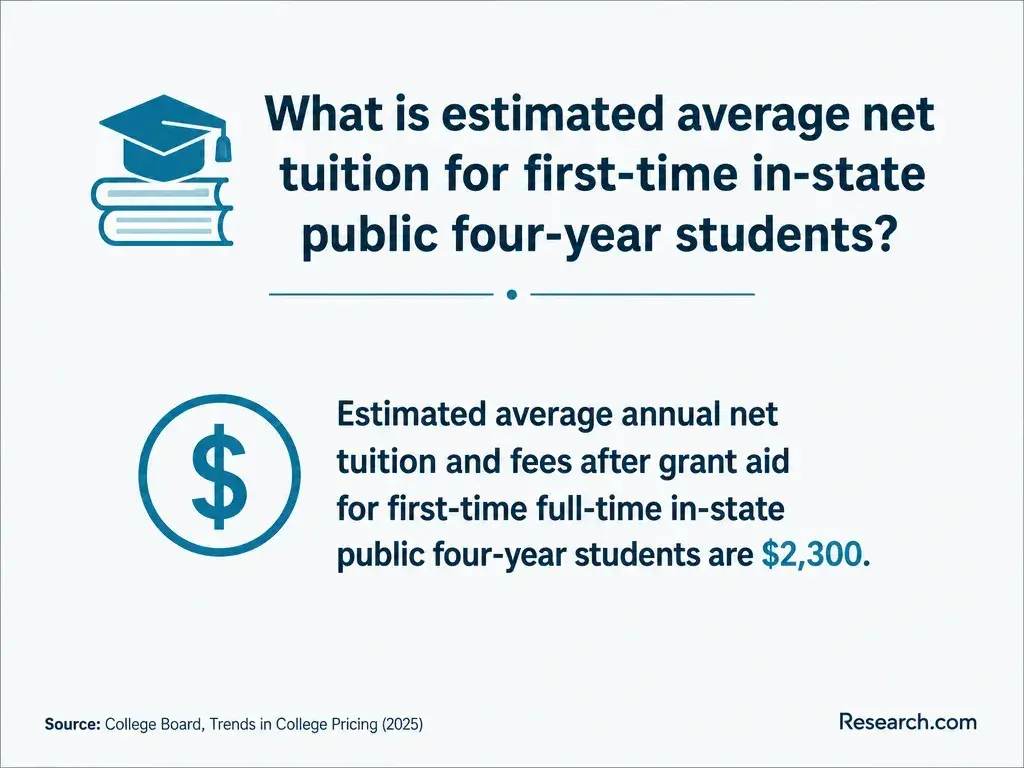
Ask each school for a term-by-term plan and an estimate covering tuition, mandatory fees, materials, travel or residency, and any placement-related costs. Subtract only aid or employer support for which you have confirmed eligibility, and check renewal conditions.
Institutional scholarships for public health graduate students may change the comparison, but an advertised award is not your net price. Include income you may lose if required fieldwork conflicts with your job.
Check two distinct things: the institution's recognized institutional accreditation and whether the Council on Education for Public Health (CEPH) accredits the specific public health school, unit, or program that covers the degree you would earn.
An accredited university can offer a public health degree that is not within CEPH's accredited scope.
Search CEPH's official directory for the institution and accredited entity, then ask the program to identify your degree's coverage and the status applicable to your entry term. If a job or credential names CEPH accreditation, confirm how its rules apply to your exact degree.
A list of CEPH-accredited online MPH programs can provide candidates to investigate, but the accreditor and program should resolve any uncertainty before you enroll.
The most direct transitions build on community relationships: health education specialist, outreach or program coordinator, and community-based program evaluator.
Responsibilities may include adapting educational materials, managing partnerships, tracking implementation, or reporting results. Job titles are inconsistent, so compare duties and required experience across postings.
A move into epidemiology or research analysis is a larger transition. It usually calls for stronger study-design, statistical, and data-management evidence than frontline experience alone provides. Program management likewise requires proof of budgeting, supervision, and accountability; an MPH does not confer those responsibilities automatically.
Doctoral study generally makes more sense after you can identify a substantial leadership or research goal. Use a public health doctoral admissions comparison only as an initial orientation, then assess practice-versus-research fit and each program's actual requirements.
There is no single "public health graduate salary." The US Bureau of Labor Statistics reports wages and employment projections for occupations, not MPH graduates as a group.
Community health workers, health education specialists, and epidemiologists have different duties and typical entry requirements, so one occupation's median cannot stand in for another's, or for your likely starting offer.
Use the latest Bureau of Labor Statistics Occupational Outlook Handbook entry for each target occupation, noting its wage reference year and projection period.
Then compare local postings by employer type, required experience, and whether you meet the technical requirements. An MPH salary and career earnings outlook can help identify roles to research, but weigh those figures against the specific positions accessible from your current experience.
Which public health certifications and licenses do graduates need?
Most nonclinical public health roles do not come with a universal license. The Certified in Public Health (CPH) credential and health education credentials such as CHES and MCHES are separate from an MPH; each has its own eligibility and examination rules.
State or employer requirements may also apply to community health worker certification. An MPH does not grant clinical authority or automatically qualify its holder for any of these credentials.
Start with a target job posting, then check the responsible certifying body or state authority for the exact education and experience route.
If you lack a bachelor's degree and are considering health education credentials, compare the curriculum and credential implications of online public health undergraduate education options; a degree's title alone does not establish certification eligibility. Pay for a credential only after confirming that it serves a role you want and that you meet its current rules.
Other Things You Should Know About Public Health
Possibly, if a school offers a formal prior-learning assessment or another applicable policy. Employment experience by itself does not reduce degree requirements; request a written evaluation.
Sometimes. The program must approve the site, supervision, learning objectives, and work performed; ordinary job duties may not be enough.
Explain your responsibilities and what you learned without claiming credit for a community's work or disclosing client information. Obtain permission before naming partners in sensitive examples.
Check employer and partner permissions first. Remove identifying or restricted information, and distinguish your own contribution from the team's work.
- What Predicts Graduate Public Health Student Success... - PMC https://pmc.ncbi.nlm.nih.gov/articles/PMC11344981/
- Competencies for Public Health Professionals | cdc.gov https://www.cdc.gov/infrastructure/training-professional-development/competencies-for-public-health-professionals.html
- Core Competencies for Community Health Workers | mass.gov https://www.mass.gov/info-details/core-competencies-for-community-health-workers
- Master of Public Health Admissions Requirements | Public Health Education https://phe.uncg.edu/graduate/master-of-public-health/admissions-requirements/
- UMass Global MyPath: Self-Paced Programs https://www.umassglobal.edu/why-umassglobal/flexible-ways-to-learn/self-paced
- MPH Application Requirements - Program in Public Health https://publichealth.stonybrookmedicine.edu/mph/admissions/MPH
- Admissions: Community-Oriented Public Health Practice MPH | Health Systems and Population Health https://hspop.uw.edu/cophpmph/admissions/
- the-importance-of-ceph-accreditation-for-public-health-degrees | Walden University https://www.waldenu.edu/online-masters-programs/master-of-public-health/resource/the-importance-of-ceph-accreditation-for-public-health-degrees
- Community Health Worker Job Guide | MSU Denver https://www.msudenver.edu/innovative-lifelong-learning/blog/community-health-worker-jobs/
- Community Health Worker: Role, Salary & How to Become One | CU Online https://online.campbellsville.edu/public-health/community-worker-salary/