2027 Computer Engineer Careers: Guide to Career Paths, Options & Salary

Co-Founder and Chief Data Scientist
Computer engineering is the career path for people who want to work where hardware, software, networks, embedded systems, and intelligent devices meet. It is not the same as learning to code for apps only. Computer engineers may design processors, write firmware, optimize operating systems, build secure connected devices, test hardware-software performance, or help create systems used in AI, cybersecurity, aerospace, healthcare, automotive technology, and telecommunications.
This guide is for students comparing engineering majors, career changers looking for a technical path, and working professionals deciding whether to specialize, earn another credential, or move into a higher-paying role. You will learn what computer engineers do, how the field differs from software engineering and programming, what skills employers look for, which jobs a computer engineering degree can lead to, what salary data suggests, and how to choose the right path without relying only on hype or rankings.
Quick answer: Is computer engineering a good career path?
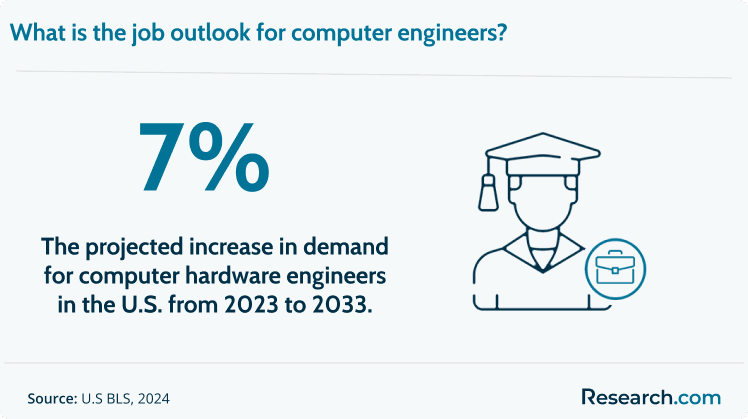
Computer engineering can be a strong career choice for people who enjoy both physical computing systems and software. The U.S. Bureau of Labor Statistics projects employment of computer hardware engineers to grow by 7% from 2023 to 2033, while employment for software developers, quality assurance analysts, and testers is projected to grow by 17% over the same period. Earnings can also be competitive: according to our research, the average annual salary for a computer engineer in the United States is approximately $121,515. However, outcomes depend heavily on your specialization, location, experience, degree level, portfolio, and ability to keep up with changing technologies.
Key things you should know about computer engineer careers
- Computer engineering is broader than programming because it connects hardware design, embedded systems, firmware, operating systems, networks, and software performance.
- Common career directions include computer hardware engineering, embedded systems, software development, network architecture, quality assurance, cybersecurity, AI systems, and technical leadership.
- The demand for computer hardware engineers is expected to grow by 7% over the next decade, with additional opportunities for graduates who also qualify for software, security, and systems roles.
- What computer engineers do day to day
- Computer engineering vs. software engineering
- Industries that hire computer engineers
- Is computer engineering worth pursuing for 2027?
- Skills needed for computer engineering jobs
- Computer engineer salary expectations
- Steps to become a computer engineer
- Why continuous learning matters
- Jobs you can get with a computer engineering degree
- Computer engineer vs. programmer
- Whether an advanced degree can help
- How data science connects to computer engineering
- Highest-paying cities for computer engineers
- Computer engineering and biotechnology career paths
- Computer engineering skills in game development
- Interdisciplinary fields creating new opportunities
- Computer engineering in healthcare innovation
- Computer engineering and cybersecurity innovation
What does a computer engineer do on a daily basis?
A computer engineer’s workday depends on the employer and specialization. Someone in semiconductor design may spend the day reviewing circuit behavior, while an embedded systems engineer may debug firmware on a device. A systems-focused engineer may test how hardware, operating systems, applications, and networks perform together. The common thread is integration: computer engineers make computing systems work reliably, efficiently, and securely.
- Designing and building systems — Computer engineers may write low-level code, develop firmware, create circuit board designs, work with microprocessors, or contribute to embedded systems. Common tools and languages may include C++, Python, Verilog, hardware simulation tools, and Linux-based development environments.
- Finding and fixing technical problems — Much of the role involves diagnosing why a system is slow, unstable, insecure, or incompatible. Engineers review logs, test system behavior, examine hardware constraints, and identify the root cause of failures.
- Testing and improving performance — Engineers run simulations, stress tests, benchmarks, and validation checks to confirm that systems perform correctly under real-world conditions. The goal is not only to make a system work, but to make it faster, safer, more efficient, and more dependable.
- Working across teams — Computer engineers rarely work in isolation. They often collaborate with software developers, electrical engineers, network specialists, product managers, cybersecurity teams, and quality assurance professionals to bring a product or system from concept to deployment.
| Daily task | What it may involve | Why it matters |
| Firmware or software development | Writing, reviewing, and debugging code that controls hardware or supports system functions | Reliable code is essential for devices, processors, networks, and embedded systems to function correctly. |
| Hardware-system analysis | Reviewing circuit behavior, processor performance, memory use, or device communication | Computer systems must be designed around real physical limits, not just software requirements. |
| Testing and validation | Running simulations, benchmarks, device tests, and compatibility checks | Testing reduces failures after products are released or deployed in critical environments. |
| Security and reliability review | Checking system vulnerabilities, encryption approaches, network exposure, or failure points | Connected systems need protection at both the hardware and software levels. |
| Team coordination | Explaining technical trade-offs, documenting progress, and integrating components | Most engineering products require multiple specialists to make hardware and software work together. |
How is computer engineering different from software engineering?
Computer engineering combines concepts from electrical engineering and computer science. It focuses on how computing systems are designed, built, connected, and optimized across both hardware and software. Software engineering, by contrast, centers on designing, developing, testing, and maintaining software systems and applications.
The difference is easiest to understand through the type of problem each professional is likely to solve. A computer engineer might design an embedded system for a vehicle, optimize firmware for a medical device, improve processor performance, or evaluate how hardware constraints affect software behavior. A software engineer is more likely to build a cloud application, design a database-backed platform, create APIs, improve user-facing software, or manage large software architectures.
| Category | Computer engineering | Software engineering |
| Main focus | Hardware-software systems, embedded devices, processors, networks, firmware, and architecture | Applications, platforms, databases, APIs, software architecture, testing, and maintainability |
| Typical work | Designing components, debugging firmware, testing systems, optimizing performance across hardware and software | Writing application code, building software features, maintaining systems, improving user or business workflows |
| Common technical foundation | Circuits, digital logic, computer architecture, operating systems, programming, systems design | Programming, algorithms, software design, data structures, databases, cloud systems, testing |
| Best fit for | People who want to understand how computing devices work from the physical level up | People who primarily want to design, build, and maintain software products and services |
What industries hire computer engineers?
Computer engineers work in many sectors because most modern organizations depend on connected devices, secure networks, high-performance computing, automation, and reliable software-driven systems. The strongest fit is often found in industries where hardware and software must work together under performance, safety, cost, or security constraints.
- Technology and software development — Companies such as Apple, Microsoft, and Google use computer engineering talent for processors, operating systems, cloud systems, devices, infrastructure, and performance optimization. Professionals aiming for senior technical or management roles may also compare options such as executive master’s degrees.
- Semiconductor and hardware manufacturing — Employers such as Intel, AMD, and NVIDIA rely on engineers who understand microprocessors, GPUs, embedded systems, and hardware design.
- Automotive and aerospace — Companies such as Tesla, Boeing, and SpaceX need engineers for autonomous systems, embedded controls, avionics software, sensors, and safety-critical computing platforms.
- Telecommunications and networking — Organizations such as Cisco, Qualcomm, and Verizon hire computer engineers to support wireless systems, 5G infrastructure, communication protocols, and network hardware.
- Cybersecurity and defense — Government agencies, defense contractors, and security firms need professionals who can strengthen systems through secure architecture, encryption, embedded protection, and threat-resistant design.
Computer engineering can also overlap with AI-focused careers. If you want to move toward intelligent systems, robotics, autonomous platforms, or AI-enabled devices, learning how to become a machine learning engineer can help you identify the math, programming, modeling, and deployment skills that complement an engineering background.
Is computer engineering a good career choice for 2027?
Computer engineering remains a practical option for students and professionals who want technical depth and flexibility. According to the U.S. Bureau of Labor Statistics, employment of computer hardware engineers is projected to grow 7% from 2023 to 2033, faster than the average for all occupations. The outlook reflects continued need for advanced hardware, connected systems, and computing infrastructure across industries.
The field is also supported by demand in adjacent software roles. The BLS projects a 17% increase in employment for software developers, quality assurance analysts, and testers from 2023 to 2033. This matters because many computer engineering graduates can compete for roles that combine coding, systems knowledge, testing, security, and performance engineering.
Still, “good career choice” does not mean automatic job security or guaranteed salary. Employers often expect evidence of practical ability: internships, labs, projects, GitHub repositories, hardware prototypes, research work, certifications, or experience with systems used in industry. A degree can open doors, but skill development and specialization often determine how far those doors open.
| Computer engineering may be a strong fit if you... | You may want another path if you... |
| Enjoy both coding and the physical design of computing systems | Want to focus only on user-facing software or web applications |
| Like math, circuits, operating systems, hardware, and debugging complex problems | Prefer a less technical major with fewer engineering and laboratory requirements |
| Want access to roles in hardware, software, networks, embedded systems, AI, or cybersecurity | Need the fastest possible route into entry-level tech work and do not want a long degree path |
| Are willing to keep learning as tools, chips, security practices, and platforms change | Assume one credential will be enough for an entire career without continued training |
What skills are required to become a computer engineer?
Computer engineering requires a mix of programming ability, hardware knowledge, mathematical reasoning, testing discipline, and communication skills. Students looking for a lower-cost route into the field may want to compare accredited programs carefully, including options listed among the cheapest online colleges, while remembering that affordability should not be the only selection factor.
- Programming and software development — C++, Python, Java, and Verilog are commonly useful because computer engineers often work close to the hardware, build firmware, or optimize systems.
- Hardware design and troubleshooting — Knowledge of circuits, microprocessors, digital logic, and embedded systems helps engineers build and diagnose computing components.
- Computer architecture and operating systems — Understanding memory, processors, system calls, drivers, Linux, Windows, and low-level performance helps engineers make better design decisions.
- Analytical problem-solving — Computer engineers must isolate technical problems, test assumptions, compare design trade-offs, and improve systems based on evidence.
- Networking and security — Connected systems require knowledge of protocols, secure design, cloud environments, and cyber risk. Students interested in interactive systems may also find that a game design degree can complement engineering knowledge in networking, graphics, and performance-sensitive systems.
- Mathematics and algorithms — Algorithms, data structures, discrete math, calculus, probability, and optimization concepts support efficient system design and technical analysis.
Because job titles in technology can overlap, it is useful to understand the differences between a software developer and software engineer. Computer engineering graduates who can explain whether they want to work on hardware, firmware, software architecture, testing, security, or full product systems can position themselves more clearly with employers.
| Skill area | Why employers value it | How to demonstrate it |
| Embedded systems | Many products depend on small, reliable computing systems inside devices | Build microcontroller projects, write firmware, test sensors, document device behavior |
| Systems programming | Performance and reliability often depend on low-level software decisions | Complete C/C++ projects, work with Linux, study operating systems, debug memory issues |
| Hardware fundamentals | Engineers must understand how physical components constrain design | Complete digital logic labs, circuit projects, FPGA work, or hardware testing assignments |
| Security mindset | Devices, networks, and infrastructure need protection by design | Study secure coding, encryption basics, network defense, and vulnerability analysis |
| Communication | Engineering decisions must be explained to technical and nontechnical teams | Write clear documentation, present projects, and describe trade-offs in interviews |
How much can I earn as a computer engineer?
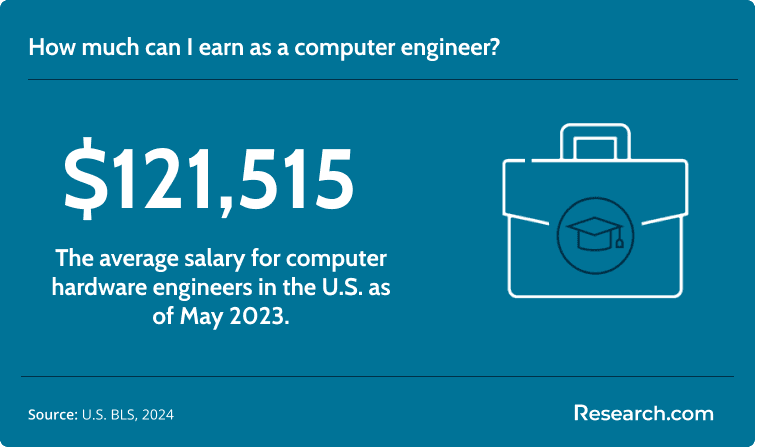
According to our research, the average annual salary for a computer engineer in the United States is approximately $121,515. This figure should be treated as a reference point rather than a promise. Pay varies by location, employer, specialization, seniority, degree level, security clearance requirements, and the type of systems being designed or maintained.
Specialized knowledge can affect earning potential. Engineers who combine computer engineering with AI, cybersecurity, embedded systems, cloud infrastructure, or advanced hardware design may qualify for roles with stronger compensation than more general technical positions. If cybersecurity is your target, reviewing information security analyst career requirements can help you understand which security skills and credentials may be useful.
| Factor | How it can affect salary |
| Experience level | Entry-level engineers usually earn less than professionals with several years of specialized project experience. |
| Location | High-cost tech markets may offer higher pay, though living costs can reduce the real advantage. |
| Specialization | AI, cybersecurity, embedded systems, networking, and advanced hardware skills may improve competitiveness. |
| Employer type | Large technology companies, defense contractors, and financial firms may pay differently from small firms or startups. |
| Education and credentials | A bachelor’s degree is common, while graduate study or certifications may help for specialized or leadership roles. |
What is the process of becoming a computer engineer?
Most computer engineers enter the field through a bachelor’s degree, hands-on technical experience, and a portfolio of engineering projects. Some roles may also value certifications, graduate education, or licensure, especially in regulated industries or government-related work.
- Earn a relevant bachelor’s degree. A Bachelor of Science in Computer Engineering, Electrical Engineering, or Computer Science is commonly expected. Students balancing education with military service can compare flexible options such as online colleges for military students.
- Build practical experience early. Internships, co-op programs, labs, research work, capstone projects, and open-source contributions help translate coursework into employable skills.
- Develop core technical strengths. Prioritize programming, hardware design, operating systems, networking, embedded systems, testing, and documentation.
- Consider certifications strategically. Certifications are not always required, but options such as Certified Computer Engineer (CCE), Cisco Certified Network Associate (CCNA), or CompTIA Security+ may support networking or security-oriented goals.
- Decide whether graduate school makes sense. A master’s degree may help if you want to move into advanced design, research, AI, cybersecurity, technical leadership, or specialized engineering roles.
- Review licensure expectations. A Professional Engineer (PE) license may be useful or required in some settings, particularly for certain government, defense, or public-facing engineering projects. The path can include the Fundamentals of Engineering (FE) exam, work experience, and the Principles and Practice of Engineering (PE) exam.
- Move from entry-level work to specialization. Early roles may include hardware engineer, software developer, embedded systems engineer, test engineer, or network-related positions. Over time, professionals may advance into senior engineering, architecture, management, AI, cybersecurity, or research roles.
| Stage | Typical focus | Decision to make |
| High school or early college | Math, physics, programming, electronics, robotics, and project-building | Do you prefer hardware-software systems, software-only work, or another engineering field? |
| Bachelor’s degree | Computer architecture, circuits, data structures, operating systems, embedded systems, and labs | Should you major in computer engineering, computer science, or electrical engineering? |
| Internship or co-op | Real engineering tools, teamwork, testing, documentation, and applied problem-solving | Which specialization feels most aligned with your strengths? |
| Entry-level role | Debugging, development, validation, systems support, and technical learning | Do you want to deepen technical expertise or move toward management? |
| Mid-career advancement | Architecture, specialization, leadership, security, AI, or advanced systems design | Would a certification, master’s degree, or employer-sponsored training improve your options? |
How can continuous learning accelerate your computer engineering career?
Computer engineering changes quickly because chips, devices, networks, operating systems, AI tools, and security threats evolve. Continuous learning helps engineers avoid skill stagnation and move into better-defined specialties. Short courses, certifications, employer training, graduate certificates, and degree programs can all be useful if they align with a specific career goal.
For professionals who want a structured academic path with a faster timeline, an accelerated computer science degree may help strengthen software, systems, and theory knowledge that complements computer engineering experience. The best choice depends on your background: a working engineer may need targeted upskilling, while a career changer may need a broader credential.
What jobs can you get with a computer engineering degree?
A computer engineering degree can lead to several technical roles because the training bridges hardware, software, systems, and problem-solving. The best job match depends on your coursework, projects, internships, and specialization.
- Computer Hardware Engineer — Computer hardware engineers design, develop, and test components such as processors, circuit boards, and memory devices. The BLS reports that the median annual salary for computer hardware engineers is $138,080.
- Software Developer — Software developers build and maintain applications and systems for computers, mobile devices, cloud platforms, and embedded environments. The median annual salary for software developers is $130,160.
- Computer Programmer — Computer programmers write, test, and debug code that allows software applications to operate. The median annual salary for computer programmers is $99,700 as of May 2023.
- Computer Network Architect — Computer network architects design data communication networks, including LANs, WANs, and cloud-based systems. The BLS states that the median annual salary for computer network architects is $129,840.
- Quality Assurance Analyst and Tester — Quality assurance analysts and testers evaluate software to identify defects, confirm performance, and improve reliability. Students asking, what can you do with a master’s in cybersecurity, may find related opportunities in penetration testing, auditing, risk assessment, and secure software review. The median annual salary for software quality assurance analysts and testers is $130,160.
- Web Developer and Digital Designer — Web developers and digital designers create and maintain websites with attention to functionality, usability, and visual design. According to the BLS, the median annual salary for web developers and digital designers is $92,750.
Graduates who enjoy both front-end and back-end systems may also explore full stack developer career requirements. This path is more software-centered than many traditional computer engineering roles, but the systems knowledge from a computer engineering background can be useful when building scalable and reliable web applications.
| Role | Best fit for students who like... | Salary detail stated in this guide |
| Computer Hardware Engineer | Processors, circuit boards, memory, device testing, and hardware design | $138,080 median annual salary |
| Software Developer | Applications, systems, programming, and software design | $130,160 median annual salary |
| Computer Programmer | Writing, testing, and debugging code | $99,700 median annual salary as of May 2023 |
| Computer Network Architect | Networks, cloud systems, communication infrastructure, and system design | $129,840 median annual salary |
| Quality Assurance Analyst and Tester | Testing, reliability, defect detection, performance, and secure software review | $130,160 median annual salary |
| Web Developer and Digital Designer | Websites, usability, front-end systems, and digital experiences | $92,750 median annual salary |
The chart below shows the average salaries for different career paths you can take with a computer engineering degree:
What’s the difference between a computer engineer and a programmer?
A programmer primarily writes, tests, and maintains code. A computer engineer may also code, but their responsibility is often broader: they work on how hardware, firmware, software, networks, and system architecture interact.
For example, a programmer might build features for an application, debug a software module, or maintain code used by a business platform. A computer engineer might design a device’s computing architecture, write firmware for a sensor, improve communication between hardware components, or test how a system performs under thermal, electrical, memory, or security constraints.
| Question | Computer engineer | Programmer |
| Do they code? | Yes, often for systems, firmware, embedded devices, or performance-sensitive applications | Yes, coding is usually the central function of the job |
| Do they work with hardware? | Often, especially in hardware, embedded, semiconductor, networking, or device roles | Usually not as a primary responsibility |
| What is the scope? | System design and integration across hardware and software | Software implementation, testing, debugging, and maintenance |
| Which path is better? | Better for people who want engineering depth and hardware-software interaction | Better for people who want to focus mainly on writing and maintaining software |
Can an advanced degree boost your computer engineering career?
An advanced degree can help when it supports a clear goal, such as moving into AI systems, computer architecture, research and development, cybersecurity, technical management, or specialized hardware design. It is less useful if you pursue it only because you assume a graduate credential automatically leads to higher pay.
Professionals interested in AI-heavy roles may compare options such as an affordable masters in AI. The value of a master’s program depends on curriculum quality, faculty expertise, project opportunities, employer recognition, cost, and whether the program builds skills that match your target roles.
Can computer engineering benefit from data science integration?
Data science can strengthen computer engineering work when systems generate large amounts of operational, sensor, performance, security, or user data. Engineers who understand both computing systems and analytics can help design smarter devices, predict failures, optimize resource use, and improve automated decision-making.
If you want to move toward analytics-driven engineering, intelligent infrastructure, AI-enabled hardware, or performance optimization, an affordable data science masters online may be worth comparing. Look for programs that include applied machine learning, statistics, data engineering, and projects that connect to systems or engineering problems.
What are the cities with the highest-paying computer engineers?
Location can have a major effect on salary, but it should be evaluated alongside cost of living, remote work options, employer concentration, industry specialization, and career growth. Based on our research, the following cities offer some of the highest average salaries for computer engineers.
- San Francisco, CA — Computer engineers in San Francisco earn an average annual salary of $137,594. The area includes major technology employers such as Google, Apple, and Meta, along with a large startup ecosystem.
- Fremont, CA — Computer engineers in Fremont earn an average annual salary of $136,816. Its proximity to Silicon Valley and employers such as Tesla, Lam Research, and Western Digital support opportunities in hardware, semiconductor, and related technical roles.
- San Jose, CA — Computer engineers in San Jose earn an average annual salary of $136,500. The city is central to Silicon Valley and includes access to companies such as Intel, Cisco, and NVIDIA.
- San Antonio, TX — Computer engineers in San Antonio earn an average annual salary of $86,675. The city’s cybersecurity and defense technology presence includes organizations such as the National Security Agency (NSA) and Air Force Cyber Command.
- Pittsburgh, PA — Computer engineers in Pittsburgh earn an average annual salary of $83,908. The city has activity in robotics, artificial intelligence, autonomous vehicle technology, and research connected to institutions such as Carnegie Mellon University and companies such as Uber's Advanced Technologies Group.
If you are planning around salary, do not look only at the headline number. A high-paying market may also have higher housing costs and stronger competition. Students seeking flexible preparation for technical careers can also compare online degrees that pay well, but should verify accreditation, technical depth, transfer policies, and employer relevance before enrolling. The chart below shows the top cities in the U.S. that offer the highest average salary for computer engineers:
How can interdisciplinary studies with biotechnology enhance career prospects in computer engineering?
Biotechnology creates opportunities for computer engineers who want to work on bioinformatics systems, smart medical devices, imaging tools, lab automation, wearable health technology, or data-heavy life sciences platforms. These roles often require engineers who can connect computing hardware, software, sensors, data processing, and domain-specific requirements.
Before adding biotechnology training, compare the role you want with the credential you are considering. For example, reviewing the average salary for masters in biotechnology can help you think through whether biotechnology education supports your long-term engineering goals.
What graduates say about computer engineering degrees
"Choosing a career in computer engineering has been one of the best decisions of my life. The ability to design and optimize cutting-edge hardware and software systems keeps me challenged and engaged every day. Plus, with the high demand and excellent salary prospects, I’ve been able to grow my career while working on innovative projects that shape the future." – Jason
"I love that computer engineering blends problem-solving, creativity, and technical expertise in a way that never gets boring. Whether working on AI-driven applications or designing efficient microprocessors, I feel like I’m making a real impact in the world of technology. The career flexibility and job security have been a huge plus!" – Kim
"From working on embedded systems to leading a team in cybersecurity, my career in computer engineering has been dynamic and full of opportunities. The constant innovation in the field means I’m always learning, and the global demand for skilled engineers has allowed me to work in different industries and even travel internationally." – Alex
Can computer engineering skills boost a career in game development?
Computer engineering can be useful in game development when performance, graphics rendering, hardware optimization, networking, simulation, or real-time systems matter. Engineers who understand processors, memory, GPUs, and systems-level programming may be well suited for game engine development, tools engineering, console optimization, and immersive interactive systems.
Students who want a game-focused path can compare specialized training through the best online game design schools. The strongest option will depend on whether you want to become a gameplay programmer, engine developer, technical artist, systems engineer, or interactive media designer.
How are emerging interdisciplinary fields expanding opportunities for computer engineers?
Computer engineering is increasingly relevant in fields that rely on connected systems, secure data exchange, automation, sensors, and intelligent infrastructure. Examples include health informatics, renewable energy systems, robotics, smart transportation, industrial automation, and cyber-physical systems.
Health informatics is one example of this crossover. A growing health informatics job outlook highlights how technical professionals can apply systems, security, and data skills to healthcare operations. For computer engineers, interdisciplinary work can be a way to move beyond traditional hardware or software roles and into mission-specific technology problems.
How does computer engineering contribute to healthcare innovation?
Computer engineering supports healthcare innovation through medical devices, diagnostic systems, patient monitoring technology, imaging equipment, secure health data systems, and real-time processing tools. Engineers help make these systems reliable, accurate, usable, and secure.
Healthcare technology also places strong emphasis on privacy, system uptime, integration, and safety. Computer engineers who understand both technical architecture and healthcare workflows may contribute to better device performance, stronger data protection, and improved clinical decision support. If you want a program that blends health data, informatics, and clinical technology, an affordable nursing informatics online program may be worth exploring.
How can computer engineering drive cybersecurity innovation?
Cybersecurity is not only a software problem. Hardware design, embedded systems, firmware, chip-level protections, secure boot processes, encryption, network architecture, and system reliability all shape how secure a technology environment can be. Computer engineers can help build security into systems before vulnerabilities become operational risks.
This is especially important in connected devices, defense systems, industrial controls, healthcare technology, vehicles, and infrastructure. Professionals who want to combine engineering depth with security strategy can compare options such as the cheapest online master's in cyber security, while checking whether the curriculum includes systems security, network defense, secure architecture, and applied projects.
How to choose the right computer engineering program
The best computer engineering program is not simply the one with the lowest tuition or the most recognizable name. It should match your career goal, provide rigorous technical training, offer meaningful lab or project work, and be credible to employers or graduate schools.
- Check accreditation first. Make sure the institution is properly accredited and, when relevant, review whether the engineering program has specialized accreditation expectations that matter for your goals.
- Compare the curriculum against your target role. Hardware engineering, embedded systems, software development, AI, cybersecurity, and networking require different course depth.
- Look for hands-on learning. Labs, capstones, internships, co-ops, research projects, and design portfolios are especially important in engineering fields.
- Ask about tools and facilities. Students should know whether they will work with current hardware, simulation tools, operating systems, embedded platforms, and industry-standard development environments.
- Review career outcomes carefully. Look beyond broad job claims. Ask which employers recruit graduates, what roles alumni enter, and whether the program supports internships.
- Calculate total cost. Include tuition, fees, equipment, software, books, commuting, housing, and lost work time if applicable.
- Evaluate flexibility honestly. Online and hybrid formats can work well for some students, but hardware-heavy coursework may require labs, kits, campus visits, or proctored technical assessments.
| Question to ask | Why it matters |
| Is the school properly accredited? | Accreditation can affect transfer credits, financial aid, graduate admission, and employer confidence. |
| How much lab work is included? | Computer engineering employers often value practical hardware, software, and systems experience. |
| Can I specialize? | Tracks in embedded systems, cybersecurity, AI, networks, or hardware design can improve career alignment. |
| Are internships or co-ops supported? | Work experience can make a major difference when applying for entry-level engineering roles. |
| What is the total program cost? | Tuition alone does not show the full financial commitment. |
| Will online coursework meet my goals? | Some engineering skills are easier to build when programs provide strong labs, kits, or in-person support. |
Common mistakes to avoid
- Choosing a program without checking accreditation. This can create problems with transfer credits, financial aid, graduate school, or employer recognition.
- Looking only at tuition. Fees, equipment, software, transportation, housing, and time away from work can change the real cost.
- Assuming all computer engineering jobs are the same. Hardware, firmware, embedded systems, software, networking, QA, and cybersecurity roles require different preparation.
- Ignoring hands-on experience. A transcript alone may not show that you can build, test, debug, and document engineering systems.
- Relying only on rankings. Rankings can be useful, but curriculum fit, project quality, accreditation, cost, and employer connections may matter more.
- Assuming salary outcomes are guaranteed. Published averages and medians do not account for every student’s location, experience, portfolio, employer, or specialization.
- Waiting too long to specialize. Students who explore internships, electives, and projects early often make clearer career decisions before graduation.
Key Insights
- Computer engineering is best understood as the bridge between hardware and software. It is a strong fit for people who want to design and optimize full computing systems, not just write application code.
- The career outlook is supported by demand in both hardware and software-adjacent roles. BLS projections show 7% growth for computer hardware engineers and 17% growth for software developers, quality assurance analysts, and testers from 2023 to 2033.
- Salary potential is competitive but variable. Our research shows an average annual salary of approximately $121,515 for computer engineers in the United States, while city-level averages include $137,594 in San Francisco, CA; $136,816 in Fremont, CA; and $136,500 in San Jose, CA.
- A bachelor’s degree in computer engineering, electrical engineering, or computer science is the most common entry route, but internships, labs, certifications, projects, and specialization often determine job competitiveness.
- Students should choose programs based on accreditation, curriculum depth, hands-on learning, specialization options, total cost, and career support—not tuition or rankings alone.
- Continuous learning matters. AI, cybersecurity, embedded systems, data science, healthcare technology, biotechnology, and game development are expanding the ways computer engineers can apply their skills.
Resources:
- U.S. Bureau of Labor Statistics. (2024). Occupational Outlook Handbook: Computer Hardware Engineers. https://www.bls.gov
- Zippia. (2025). Best cities for a Computer Engineer. https://www.zippia.com
- ZipRecruiter. (2025). Salary: Computer Engineer (March, 2025) United States. https://www.ziprecruiter.com
Other Things You Should Know About Computer Engineer Careers
In 2027, promising fields for computer engineers include artificial intelligence, cybersecurity, and cloud computing. Each offers diverse opportunities for growth and specialization, driven by technological advancements and increasing demand for secure, efficient, and intelligent systems.
Employers in 2027 highly value advanced skills in artificial intelligence, machine learning, cybersecurity, and cloud computing. Proficiency in programming languages like Python and C++, along with strong problem-solving abilities and effective communication skills, are also crucial for success in computer engineering careers.
Computer engineers who sign and seal public infrastructure work in the United States usually need a Professional Engineer license. That requires an ABET-accredited engineering degree, passing the FE exam, about four years of supervised experience, and passing the PE exam in the relevant state board.