2027 Is Demand for Mobile App Development Degree Graduates Growing or Declining?
Audited and Verified:
Our Editorial and Data Verification Process
Research.com uses government datasets, official education statistics and primary institutional information to support its career and degree guides. Our review process checks factual accuracy, occupational definitions, source dates and the requirements associated with the credentials discussed.
How This Article Was Fact-Checked
Our editorial team verifies salary estimates, employment projections, education requirements and program information against original data providers and official organizations. Salary figures are checked against the relevant occupational definitions and reporting periods. Information about licensure, accreditation and required in-person training is reviewed separately.
Fact-checked and verified on:

Co-Founder and Chief Data Scientist

Reviewed by Karolina Broda
Fact-Checker and Data Verification
When job prospects feel uncertain after obtaining a mobile app development degree, many graduates find it hard to defend the path they selected. Technology changes quickly and calls for ongoing adaptation, which fuels worries about industry stability. Yet employment for mobile app development professionals is expected to increase 28% between 2020 and 2030, much faster than the average across all occupations. Such growth mirrors a rising dependence on mobile platforms in many sectors. This article will review present demand patterns and employment outlooks for holders of mobile app development degrees, providing insights that assist prospective students and professionals in making well-informed career choices amid changing market conditions.
Key Things to Know About the Demand for Mobile App Development Degree Graduates
- Employment for mobile app development degree graduates is increasing, with a 15% growth in related tech jobs projected through 2030, driven by expanding mobile device usage worldwide.
- Job growth is particularly strong in sectors like healthcare, finance, and entertainment, where demand for specialized apps continues to rise, reflecting industry-specific needs.
- Graduates who focus on emerging fields such as AI integration and cross-platform development often experience better long-term career prospects compared to generalist mobile app developers.
What Factors Are Driving Demand for Mobile App Development Degree Professionals?
For prospective students weighing the long-term value and stability of a mobile app development degree, understanding the main forces behind workforce demand is helpful. These forces show what employers value most and how the job market changes over time. Core drivers are:
- Industry Growth: Swift expansion of mobile technology plus broad use of smartphones and tablets sustains demand for apps in sectors such as healthcare, finance, entertainment, and education. Employers look for graduates capable of innovating within these digital ecosystems.
- Technological Advancement: New tools like 5G, artificial intelligence (AI), augmented reality (AR), and Internet of Things (IoT) add complexity and opportunity to app development, calling for current skills in advanced methodologies.
- Evolving Employer Skill Requirements: In addition to coding, companies prize know-how in user experience (UX) design, cybersecurity, and cross-platform development, encouraging graduates to build broad and flexible skills. Accredited mobile app development degree programs stress this well-rounded training to satisfy employer expectations.
- Demographic Shifts: Younger generations' embrace of varied mobile platforms drives demand for apps suited to different preferences and accessibility needs, widening the range of developer expertise needed.
- Regulatory and Policy Changes: Data privacy laws such as GDPR and CCPA force companies to hire developers who know compliance standards, making sure apps satisfy legal requirements and user security demands.
Professionals selecting a degree should also weigh affordability and program quality; for instance, resources such as the cheapest online MBA listings can inform related financial choices.
Which Mobile App Development Occupations Are Seeing the Highest Growth Rates?
Growth rates serve as a key gauge for students considering mobile app development careers, since they point to strong hiring demand and possible job security. Per the U.S. Bureau of Labor Statistics, total employment is projected to rise about 5% between 2032, which makes technology-related jobs considerably faster-growing than average. This background helps clarify which mobile app development occupations are seeing the highest growth rates in the US job market.
- Mobile Software Developers: Expected to expand by roughly 22% over the coming decade, pushed by growing smartphone use and demand for enterprise mobile solutions. Such roles usually call for bachelor's degrees in computer science or related fields.
- Mobile App Testers and QA Analysts: Growth is expected to be near 16% as thorough testing becomes vital for meeting user expectations and regulatory compliance. Many professionals in this area have associate degrees or relevant certifications.
- Mobile UX Designers: Growth is anticipated to be around 18%, driven by the need for smooth and intuitive user interfaces. Degrees in design or computer science are common among these specialists.
- Mobile Security Specialists: This occupation is expanding quickly at a rate near 20%, mirroring growing concerns about data privacy and cyber threats. Cybersecurity or IT credentials are generally required.
The fastest-growing mobile app development roles and skills in North America highlight the value of relevant education and training. Prospective students may consider options like a business degree online to supplement their technical expertise and broaden career flexibility.
Which Industries Hire the Most Mobile App Development Degree Graduates?
Understanding which industries hire mobile app development graduates most actively can help students aim their skills and education at sectors that offer stability and growth. A number of key fields regularly seek professionals with mobile app development know-how.
- Technology: This sector is the biggest employer of mobile app development graduates, providing roles such as app developers, software engineers, and UX/UI designers. Ongoing platform evolution and software innovation drive demand for fresh and better mobile applications.
- Financial Services: Banks and fintech companies depend heavily on mobile apps for secure transactions, online banking, and investment tools. Graduates with skills in security measures and streamlined user experiences are highly prized in this industry.
- Healthcare: As telemedicine and health-monitoring apps grow, healthcare providers need developers who grasp mobile technology and can handle regulatory compliance to build effective patient care solutions.
- Retail and E-commerce: Firms in this sector hire mobile app developers to improve shopping apps via personalization, mobile payments, and customer engagement tools. Creativity and insight into consumer trends are key strengths.
- Entertainment and Media: This industry employs mobile app developers to create apps for streaming, gaming, and interactive content. Rising digital media consumption fuels demand for engaging mobile experiences.
Location strongly affects how available and competitive job openings are for mobile app development graduates. A range of geographic factors shape demand, affecting where candidates might discover the best prospects for employment and growth.
- High-Demand States: California, Washington, and Massachusetts lead in providing many roles because of their established tech sectors. These states draw both startups and large corporations, creating a strong job market for mobile app developers.
- Industry Concentration: Urban tech hubs such as the San Francisco Bay Area and Seattle bring companies and talent together, which heightens competition but also creates higher salary and career advancement opportunities than many other locations.
- Urban vs. Rural: Although metropolitan areas offer plentiful jobs and networking possibilities, rural regions usually have fewer openings. Still, less competition in these areas can benefit some candidates.
- Cost of Living: Expensive locales may provide more positions yet come with higher living expenses that can reduce overall job appeal. In contrast, states such as Texas and North Carolina offer growing tech markets paired with more affordable living costs, attracting many graduates.
- Remote and Hybrid Work: Growing flexibility in work arrangements widens access beyond traditional tech clusters. This trend lets graduates across the country seek opportunities without moving, diversifying employment options nationwide.
As reported by the U.S. Bureau of Labor Statistics, the software development field, including mobile app development, is expected to grow considerably over the next decade. Understanding regional differences helps job seekers better match their search to areas with the strongest prospects and favorable conditions.
Education level is central to shaping career opportunities, advancement potential, and competitiveness in mobile app development fields. Different degrees provide distinct pathways and access to job roles, so it matters to grasp how employability changes by education level. Below is a comparison of four common degree tiers affecting mobile app development employment opportunities by education level in the US.
- Associate Degree: Often intended for entry-level roles such as junior developers or app testers, this degree develops basic programming skills. Although it provides frequent employment chances, particularly in smaller firms or support roles, advancement opportunities may be limited.
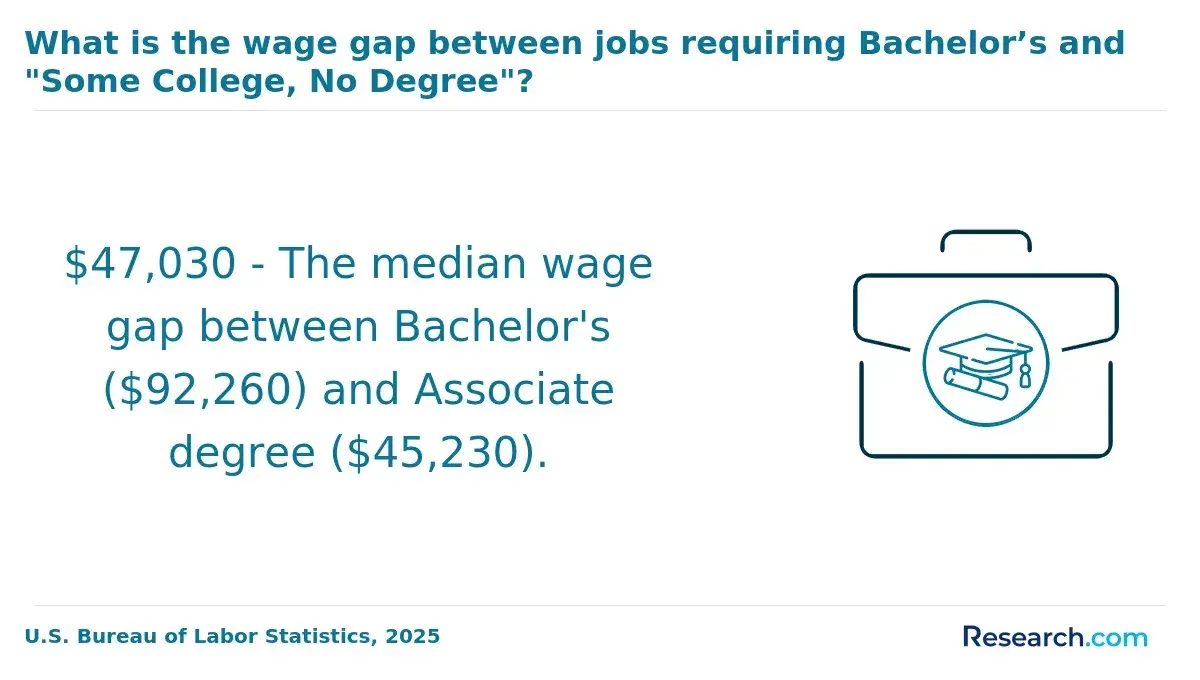
- Bachelor's Degree: The most common qualification, bachelor's holders usually qualify for roles like software developers, UX/UI designers, or project coordinators. They generally have a 17% higher employment rate in computer-related jobs than those with only an associate degree.
- Master's Degree: Holders of advanced degrees pursue specialized technical roles, leadership positions, or focus areas such as cybersecurity and AI integration. This degree improves employability for senior roles and managerial tracks, reflecting greater professional competitiveness.
- Doctorate Degree: Rare but influential, a doctorate fits careers in research, innovation, and academia. People with this level of education add to cutting-edge technologies and advanced development strategies.
For professionals thinking about further education, exploring options like an executive online MBA can offer strategic career benefits within the tech and development sectors.
Identifying the skills employers value most is vital for anyone hoping to succeed in mobile app development careers. These abilities help graduates stand out and add value effectively to fast-paced, innovative teams. The core skills below often appear as top requirements in this field:
- Programming Language Expertise: Command of languages such as Swift, Kotlin, Java, and JavaScript is key for building native or hybrid apps across various platforms, letting developers adjust to diverse project demands.
- User Interface and Experience Design: Developers need a feel for clean, accessible design to make apps that users find intuitive and engaging, increasing overall satisfaction and repeat usage.
- Cross-Platform Development: Familiarity with frameworks like React Native and Flutter lets developers create applications that run smoothly on multiple operating systems, boosting efficiency and shortening time to market.
- Debugging and Problem-Solving: The capacity to quickly identify and repair code issues ensures app stability and reliability, qualities employers value highly as they aim for seamless user experiences.
- Version Control Proficiency: Knowledge of tools like Git supports collaborative coding work and simplifies project management, making teamwork both effective and organized.
When asked which skills employers seek, a mobile app development graduate shared that moving from academics to professional roles was intense and demanded adjusting to unforeseen challenges. He recalled, "Initially, juggling multiple coding languages and design requirements felt overwhelming." He stressed how important quick problem-solving was during tight deadlines, explaining that "being able to debug efficiently was often what separated success from failure on projects." Collaboration was another key element, as he discovered that clear communication with teammates using version control systems streamlined processes and cut down on errors. This hands-on experience gave him a deep appreciation for the practical skills that matter most once outside the classroom environment.
Shifts in job demand are crucial to shaping starting salaries, wage growth, and long-term earning potential for mobile app development graduates. For example, the U.S. Bureau of Labor Statistics projects a 22% growth in median annual wages for software developers, a close proxy for mobile app developers, between 2020 and 2030. These dynamics directly affect compensation trends in this field. Several key ways demand influences salaries are below:
- Higher Starting Salaries: When demand for skilled graduates is high, employers compete to draw talent by offering more attractive starting pay, which can give career earnings an early boost.
- Quicker Wage Growth: Strong demand often brings faster raises and promotions as companies try to keep talent in a competitive labor market.
- Expanded Job Opportunities: A high demand environment gives graduates more employment choices, allowing them to negotiate better compensation packages and benefits.
- Labor Shortages Driving Benefits: In tight markets, companies may improve not only base pay but also benefits and bonuses, further raising overall compensation.
The relationship between supply and demand greatly influences career trajectories and salary potential for mobile app development graduates, with high demand offering a financial advantage and oversupply possibly restricting wage growth over time.
Progress in artificial intelligence is changing workforce demands in mobile app development, with AI projected to affect almost 40% of software development tasks by 2025. This change is altering the types of roles and skills that employers seek in this quickly evolving field.
Major effects of AI on the mobile app development profession include:
- Automation of Routine Tasks: AI simplifies basic coding and debugging processes, letting developers spend more time on complex and innovative app features, thereby raising productivity and job value.
- Specialized Roles Emergence: The growth of AI-powered apps creates demand for professionals skilled in machine learning, data analytics, and AI integration, broadening career opportunities beyond traditional coding positions.
- Evolving Skill Sets: Developers now need to master AI frameworks, natural language processing, and computer vision technologies alongside conventional programming languages to remain relevant and competitive.
- Shifting Hiring Preferences: Employers increasingly prefer candidates who blend mobile app development expertise with proficiency in AI tools and cloud platforms, placing a premium on multidisciplinary knowledge.
When asked how AI affects demand, a graduate of a mobile app development degree program shared her experience adapting to these changes. She described early difficulties grappling with AI concepts but stressed that embracing these technologies opened doors to innovative projects and collaborations. "Learning AI wasn't easy at first," she explained, "but it's made my work more engaging and future-proof. I feel more confident knowing my skills align with what employers want." Her story shows how integrating AI knowledge strengthens career resilience and widens professional horizons in today's mobile app landscape.
Long-term career stability matters for students and professionals who choose a mobile app development path, since it supports steady income and chances for growth. Several key factors affect how sustainable and secure a career in this field can be over time.
- Employment Trends: Steady growth in demand for mobile applications, driven by widespread smartphone use and digital transformation across sectors, creates positive long-term career prospects for mobile app development graduates. This sustained demand supports continued job stability.
- Industry Dependence: Many industries such as healthcare, finance, and retail depend heavily on mobile app development roles for customer engagement and operational efficiency. This broad industry reliance protects developers from downturns in any single market.
- Adaptability: Keeping up with evolving technologies, new platforms, and programming languages is essential. Developers who adapt stay relevant in a rapidly shifting tech environment, while failure to reskill can limit job stability over time.
- Career Growth and Reskilling: Chances to move into related roles like UX design, project management, or software architecture, as well as to upskill in AI or cloud computing, strengthen long-term security. These pathways add flexibility that helps endure economic fluctuations.
The evolving U.S. job market keeps rewarding those who pair technical skills with adaptability, making mobile app development a resilient career choice. For students weighing educational options, exploring the easiest college majors with high pay can also offer valuable insight when considering the costs and benefits of a mobile app development degree or alternative areas of study.
Demand for graduates holding a mobile app development degree is rising in the United States, mirroring strong growth in the tech industry. Employment for software developers, including mobile app developers, is expected to grow far faster than average over the next decade because of expanding smartphone adoption and the growing integration of mobile applications across sectors. This favorable employment outlook indicates that the degree has tangible value for those entering the workforce. Still, the amount of hiring activity can differ by region and specific technology focus within mobile app development.
Long-term career prospects for mobile app development graduates in North America rely heavily on factors beyond the degree itself. Success calls for aligning technical skills with employer demands, including expertise in programming, user experience, security, and cross-platform solutions. A degree supplies essential knowledge, but practical experience through internships and projects is just as important for standing out in a competitive market. Prospective students should also weigh cost-efficiency, exploring options such as an easiest associate degree programs that can provide quicker entry points into the field while building foundational skills.
What Graduates Say About the Demand for Their Mobile App Development Degree
- Timothy: "Earning a mobile app development degree changed everything for me. The knowledge I acquired led directly to better job opportunities and a substantial salary increase, making the investment completely worthwhile. Now I can lead projects that have a genuine impact, which I find deeply rewarding."
- Joselito: "Deciding to study mobile app development was not easy at first, but in hindsight, it was one of my best choices. The return on investment has been obvious through the steady career growth and skill diversification I've experienced. It opened doors I had not even thought about before entering this field."
- Xavier: "The mobile app development degree gave me a strong technical foundation and practical skills that employers really value. It built my confidence in my craft and helped me reach leadership roles faster than I expected. Looking back on this journey, I value how essential that education was for my professional advancement."
Other Things You Should Know About Mobile App Development Degrees
Google Associate Android Developer and Apple's App Development with Swift certification both indicate platform-specific competence. Recruiters also prize cloud credentials, such as AWS Certified Cloud Practitioner, since mobile teams increasingly create apps with backend services, authentication, and analytics.
In 2027, the skills most in demand for mobile app development graduates include proficiency in programming languages such as Swift and Kotlin, experience with cloud-based solutions, and expertise in UX/UI design. Employers prize candidates who keep up with the latest technological advancements.
Entry-level mobile app developers in the United States usually earn roughly $70,000 to $95,000 a year in 2027, based on current labor-market postings and salary surveys. Pay increases with iOS, Android, Kotlin, Swift, and cross-platform experience, along with internships or a computer science degree.
- Salary Trends: Mobile App Developers, Programmers/Analysts and Project Managers - The THOR Group https://thorgroup.com/blog/salary-trends-mobile-app-developers-programmers-analysts-and-project-managers/
- 5 Essential Skills Every App Developer Should Have | Bilue https://bilue.com.au/article/5-essential-skills-every-app-developer-should-have
- AI in Mobile App Development: Transforming User Experience - Silver Touch Technologies CA https://www.silvertouch.ca/blog/ai-in-mobile-app-development/
- The Growing Demand for Skills in Mobile App Development https://ait.edu.au/blog/demand-for-mobile-app-developers
- Software & systems https://www.careerpilot.org.uk/job-sectors/software-systems/job-profile/app-developer
- Master's degree in mobile application development: objectives and career opportunities https://www.ece.fr/en/faq-all-the-answers-to-your-questions/master-in-mobile-application-development-objectives-fees-job-opportunities/
- The Future of Mobile App Development: Answering the Why’s and How’s | Computek College https://computek.edu/the-future-of-mobile-app-development-answering-the-whys-and-hows/
- A Guide to Mobile App Development Skills & Career Success https://sundancecollege.com/blog/a-guide-to-mobile-app-development-skills-career-success/
- Mobile App Developer Job Titles in 2025 - Most Popular Titles by Career Level https://www.tealhq.com/job-titles/mobile-app-developer
- Is App Development Worth It in 2025? | Career Scope & Opportunities https://stellarcode.io/blog/is-app-development-worth-it-in-2025