2027 Online Mobile App Development Degree Programs With No Personal Statement or Admissions Essay Required
Audited and Verified:
Our Editorial and Data Verification Process
Research.com uses government datasets, official education statistics and primary institutional information to support its career and degree guides. Our review process checks factual accuracy, occupational definitions, source dates and the requirements associated with the credentials discussed.
How This Article Was Fact-Checked
Our editorial team verifies salary estimates, employment projections, education requirements and program information against original data providers and official organizations. Salary figures are checked against the relevant occupational definitions and reporting periods. Information about licensure, accreditation and required in-person training is reviewed separately.
Fact-checked and verified on:

Co-Founder and Chief Data Scientist
Applying for an online mobile app development degree should not require writing an admissions essay when a school does not use one - yet transcripts, GPA, prerequisites, and identity records may still count. This guide serves students who want an application with less writing while not ignoring program quality.
Data from the National Center for Education Statistics released in 2024 showed that 53.5% of U.S. postsecondary students enrolled in at least one distance education course, which makes careful comparison of online programs more important. Find out how to verify a genuine no-essay policy, weigh admissions trade-offs, and select a credible route into app development.
Key Things You Should Know
- A true no-essay mobile app development program does not require a personal statement for standard admission, but it may still review official transcripts, GPA, placement results, prerequisite coursework, residency, or a portfolio.
- Essay-optional means an essay can strengthen an application, while essay-waived usually means a requirement is removed only for a defined applicant group, term, or condition; honors, scholarship, and selective-track applications may still require writing.
- The U.S. Bureau of Labor Statistics projects 17% employment growth for software developers, quality assurance analysts, and testers through 2033, but admission simplicity should be secondary to accreditation, curriculum depth, total cost, and career support.
What Does No Personal Statement or Admissions Essay Required Mean for Online Mobile App Development Degree Programs?
A no-personal-statement or no-admissions-essay policy means the standard application does not require an applicant to provide a written narrative describing goals, experiences, or reasons for enrolling. In a mobile app development program, this may cover an online associate degree, bachelor's degree, completion program, or a broader computer science, software development, or information technology degree that includes mobile-development coursework.
The exact wording matters. A school may promote an "easy application" yet still require a short written response for applicants below a GPA threshold, those seeking conditional admission, international applicants, or students applying to a selective college within the university. The policy may also vary by academic term.
Mobile app development is often taught as a concentration instead of a standalone degree. Coursework may include programming fundamentals, user-interface design, databases, software testing, APIs, Android or iOS development, cross-platform frameworks, cybersecurity, and team-based project work. Before you apply, verify whether the credential teaches current development practices and requires a capstone worth including in a portfolio.
No essay is a feature of the admissions process, not a gauge of academic rigor. A program can drop the essay while keeping minimum academic standards and requiring students to finish demanding programming courses after enrollment.
What Admissions Requirements Do Online Mobile App Development Degree Programs Use Instead of an Essay?
Schools that do not ask for an essay usually base admissions decisions on verifiable academic and administrative records. Requirements vary by institution and applicant type, so consult the program's current undergraduate or graduate admissions page instead of trusting a general "no essay" claim.
The comparison below shows the requirements that often replace or supplement an essay and what each one signals to an admissions office.
| Admission requirement | What the school assesses | What applicants should verify |
| Official or unofficial transcript records | Finished coursework, grades, and degree history | Whether official transcripts are required before admission or only before enrollment |
| Minimum GPA requirement | Academic readiness based on earlier study | The minimum for admission, the GPA used in transfer review, and any probationary-admission rules |
| Prerequisites in math or programming | Preparation for technical courses | Whether algebra, statistics, computer science, or programming experience is needed |
| Test scores or placement results | Readiness in math, reading, or writing when relevant | Whether tests are optional, waived, or replaced by a placement assessment |
| Letters of recommendation | Preparation in academic or professional settings | Whether they are required only for competitive, graduate, or honors tracks |
| Portfolio or résumé | Technical background and related experience | Whether it is mandatory, recommended, or used only for prior-learning credit |
Admissions offices may also consider an applicant's intended major, transfer-credit profile, and capacity in required courses. A student with limited programming experience can still be admitted to a beginner-friendly degree yet need foundational coursework before advanced mobile-development classes.
A practical warning sign is vague wording such as "no application barriers" without a published catalog, a clear transcript policy, or a named accreditor. Request the exact checklist for your entry term and keep the response in writing.
Who Is a Good Fit for Online Mobile App Development Degree Programs With No Admissions Essay?
No-essay admissions can fit applicants whose academic record and application documents already demonstrate readiness for college-level technical work. They are particularly helpful for working adults, students applying to multiple institutions, transfer students with clear credit histories, and applicants who would rather spend time on coding practice than on an admissions narrative.
This pathway is typically a good match when the program's standard requirements align with your profile:
- You satisfy the published GPA and prerequisite standards without needing extensive context for weaker grades or gaps in enrollment.
- You can supply complete transcripts quickly and know which previous courses may transfer.
- You want a structured online degree with scheduled support, not just a short coding course or self-paced credential.
- You can show readiness through coursework, work history, placement, or a portfolio if the program asks for it.
An essay-based or essay-optional choice may be better for someone whose transcript does not reflect current ability, such as a student returning after a long absence, switching careers after strong professional technical experience, or recovering from a documented academic disruption. In those situations, a well-written optional statement can provide useful context - if the school confirms it will be reviewed.
Students seeking a faster route should still compare credit rules and instructional support. Some 2-year accelerated bachelor degrees may shorten time to completion through transfer credit or intensive terms, but acceleration does not automatically include mobile-app specialization or remove technical prerequisites.
These labels describe distinct policies and should not be treated as interchangeable. The difference affects whether writing can influence an admission decision and whether you need to prepare extra materials before a deadline.
This table distinguishes the most common policies so applicants can ask a precise question before submitting an application.
| Policy type | What it means for standard admission | Key limitation |
| No essay required | No personal statement or admissions essay is included in the standard application. | Other written materials may be required for scholarships, honors programs, or special reviews. |
| Essay-optional | You can submit an essay, usually to add context or strengthen the application. | Optional does not mean irrelevant; the school may review it if submitted. |
| Essay-waived | An essay requirement is dropped for a stated group, program, term, or condition. | The waiver may expire or not apply to every applicant category. |
| Essay required | A written response is needed for a complete application. | Prompts, length, and evaluation criteria differ by school. |
"No essay" is not the same as test-optional. Test-optional concerns whether standardized test scores are required; it says nothing about personal statements. Likewise, open admission is an institutional access policy and should not be inferred just because an essay is absent.
Before you decide not to write anything, check whether your program application, university application, scholarship portal, and financial aid appeal process are separate. A school can legitimately have no essay for admission yet require a statement for an honors cohort or competitive institutional award.
Not necessarily. Removing an essay can make an application quicker to complete, but admission can remain selective if a program has GPA thresholds, limited course capacity, transfer-credit requirements, or prerequisite expectations. It also does not imply automatic acceptance, open admission, or lower graduation standards.
For technical degrees, the more useful question is whether your prior preparation matches the curriculum. An applicant with strong grades in math or introductory programming may be a competitive fit without an essay. An applicant who lacks the required background may be asked to complete foundational courses, begin conditionally, or select a different entry pathway.
Career outcomes also depend more on skills and proof of work than on essay policy. The Bureau of Labor Statistics reported a $133,080 median annual wage for U.S. software developers in May 2024. This broad occupation covers work beyond mobile development, so it should serve as labor-market context rather than an expected salary for every graduate. Employers commonly assess coding ability, problem solving, collaboration, and a demonstrable portfolio.
Students interested in app marketing or product-facing work may also compare a social media marketing degree. That path emphasizes audience strategy and campaigns rather than the programming, testing, and software architecture expected in app development roles.
Accreditation and curriculum quality matter more than whether an application includes an essay. For a U.S. degree, first confirm institutional accreditation through the school's published accreditation information and the U.S. Department of Education or Council for Higher Education Accreditation directories. Institutional accreditation supports the legitimacy of the college and is often important for federal financial aid and transfer-credit evaluation.
Programmatic accreditation may matter but is not universal for mobile app development. Computing programs may hold ABET accreditation, especially when they are computer science or information technology degrees, but a credible program is not automatically weak because a specialized mobile-development pathway lacks programmatic accreditation. Evaluate what applies to the exact degree, not another department.
Use these quality checks before paying an application fee or enrolling:
- Verify the institution, degree level, delivery format, and major name in the official catalog.
- Examine the course sequence for programming, data structures or software design, testing, security, and a substantial project or capstone.
- Ask whether students build Android, iOS, or cross-platform applications and what languages, frameworks, and development tools are currently taught.
- Confirm whether online learners receive instructor access, tutoring, career services, library resources, disability support, and technical help.
- Ask for the total estimated cost, including technology, course-material, proctoring, and graduation fees.
- Ask how the school reports retention, completion, transfer-credit acceptance, and career-outcome data for online students.
Be wary when a provider promises a degree unusually quickly, does not clearly identify faculty or curriculum, pressures applicants to enroll immediately, or will not explain accreditation. A reputable admissions team should be able to answer direct questions about the no-essay policy and academic expectations.
A no-essay application is generally shorter, but applicants should still budget time for documents and transcript processing. Schools may accept an online form quickly while taking longer to review prior coursework, residency, financial aid eligibility, or prerequisite completion.
This sequence helps confirm that the policy applies to you and reduces avoidable delays:
- Select the exact online degree, concentration, and intended start term instead of relying on a general university admissions page.
- Review the current admissions checklist for your applicant type: first-time, transfer, returning, adult, military-affiliated, or international.
- Contact admissions to ask whether any personal statement, short answer, placement writing sample, or supplemental form is needed for your profile.
- Submit the application and arrange transcripts from every required prior institution or high school, following the school's official delivery instructions.
- Finish placement, prerequisite, identity, residency, or immunization steps if the institution requires them.
- File the FAFSA and review aid tasks separately from admission, then accept enrollment only after comparing official cost and aid information.
- Keep copies of confirmations and check the applicant portal for requests that appear after initial submission.
Do not assume that silence means your file is complete. A missing transcript, an unprocessed transfer evaluation, or a required math placement step can block registration even after a preliminary admission decision.
Indeed, lots of transfer and adult candidates may take advantage of admissions routes without essays, yet their criteria frequently vary from those applied to first-time students. For transfer review, the emphasis can fall strongly on how many completed credits exist, their level, grades, and whether they apply toward requirements. Adult learners might qualify for prior-learning evaluation, tuition support from an employer, or readmission policies, though none of these should be presumed absent written verification.
Inquire if a personal statement is required when you seek an exception, for example admission under the standard GPA, academic credit for work experience, return after academic dismissal, or placement in a selective specialization. Under such circumstances, a college might request an explanation even if its normal admission process requires no essay.
Transfer applicants ought to get an assessment indicating which credits meet general education, programming, math, and major requirements. The title of a course by itself does not ensure equivalence. How many credits remain, the sequence of required courses, and whether upper-level online classes are offered shape the practical timeline for finishing.
Adult learners who may pursue a leadership credential later can review best online EdD programs to learn how admissions and costs differ by field. An EdD is a distinct advanced education degree, and it does not substitute for the technical training required for software or mobile app development.
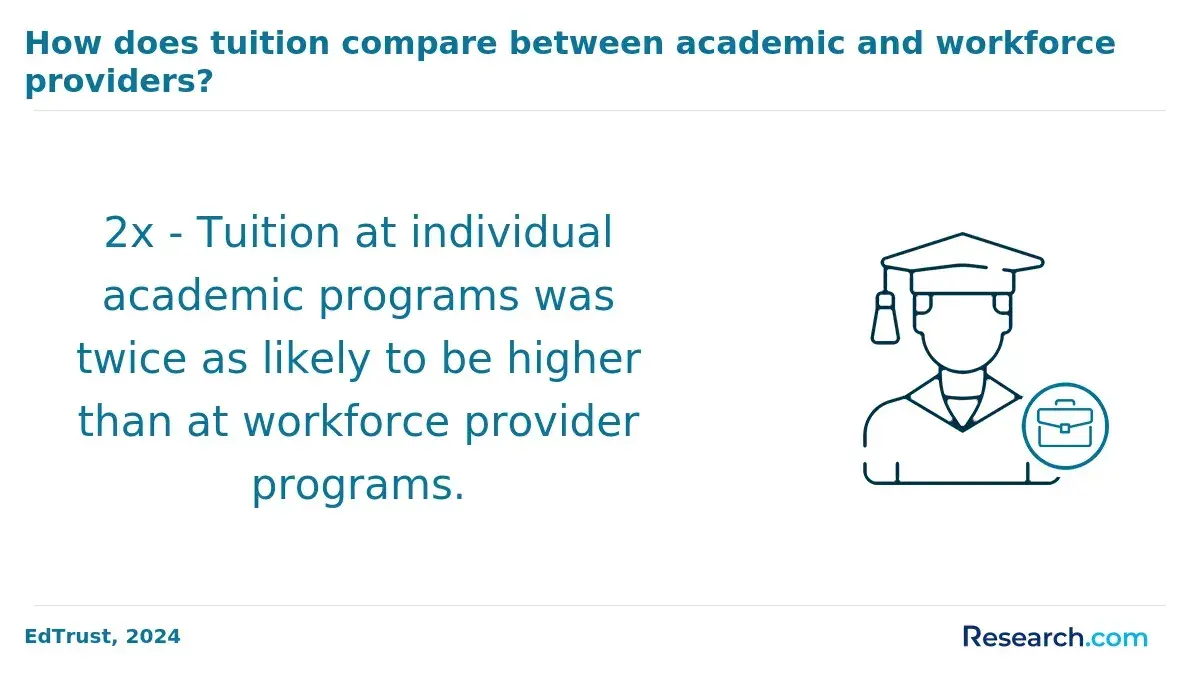
Admission without an essay does not by itself decide tuition costs or eligibility for federal aid. Each institution sets its own tuition, which can differ based on residency, number of credits, program level, and online fees. For in-state students at U.S. public four-year institutions in 2024-25, the College Board reported average published tuition and fees of $11,610. That figure leaves out housing, books, transportation, and numerous charges specific to an institution, so it should not be treated as a price quote for any online program.
Federal student aid is usually decided by eligibility rules and FAFSA details, rather than by whether an admissions essay was needed. Still, applicants need to enroll at an eligible school and program, satisfy enrollment and satisfactory academic progress requirements, and finish any verification steps. Check with the financial aid office about how online enrollment, repeated courses, and transfer credits influence eligibility.
Scholarships represent the main exception to a straightforward no-essay assumption. Even if admission does not, institutional merit awards, private scholarships, honors programs, and departmental awards might ask for essays, recommendation letters, portfolios, or interviews.
Weigh the complete financial situation instead of selecting the application with the fewest steps. Learners who later explore management education can also compare cheapest MBA programs online, though MBA costs and admissions rules differ from those for undergraduate or technical app-development degrees.
Ask for a written cost estimate that distinguishes tuition from required fees, and inquire whether the listed per-credit rate covers every course. Technology fees, mandatory devices, third-party course materials, or a longer completion period due to limited course offerings can cancel out a lower advertised tuition rate.
How Should You Compare Online Mobile App Development Degree Programs With No Admissions Essay?
Treat no-essay status as a filter, not the deciding factor. The best choice is a program that combines a transparent admission policy with an affordable completion plan, credible institutional oversight, relevant technical training, and learner support that fits your schedule.
This comparison framework focuses on the evidence most likely to influence value after admission.
| Area of comparison | What to compare | Why it matters |
| Admission policy | Whether the no-essay policy applies to your applicant type and term | Helps avoid late requests for written supplements or exception statements |
| Curriculum | Languages, mobile platforms, testing, security, capstone, and elective choices | Shows whether training aligns with your intended technical role |
| Academic quality | Institutional accreditation, faculty credentials, catalog clarity, and learner support | Helps separate a recognized degree from a poorly documented offering |
| Transfer pathway | Written credit evaluation, residency requirement, and remaining course sequence | Determines the actual time and cost to completion |
| Total cost | Tuition, required fees, materials, devices, and aid after grants | Offers a more useful affordability picture than a per-credit price alone |
| Career preparation | Portfolio projects, internships, career coaching, and employer connections | Supports the move from coursework to job-ready evidence of skills |
Build a shortlist of two to four programs and ask each admissions office the same questions. Confirm the essay rule, deadline, prerequisites, transfer evaluation process, total estimated cost, and whether online students can access career services. Compare the answers in writing; unclear or inconsistent replies are useful evidence in themselves.
Do not overgeneralize career information across fields. For instance, readers researching behavioral-science careers can review how much do forensic psychologists make, but those earnings and educational requirements do not apply to mobile app development roles. Match your degree choice to the work you intend to pursue.
Other Things You Should Know About Mobile App Development
Not in every case. A policy might be limited to first-time undergraduates, domestic applicants, one specific online program, or a single term. Applicants in transfer, readmission, international, honors, and conditional-admission categories could face different requirements.
Yes. A school may ask for clarification about academic history, a disciplinary or enrollment issue, an admission exception, or missing documentation. This does not necessarily conflict with a standard no-essay policy.
Many entry-level degree programs do not require one, especially if they teach programming from the start. A portfolio can still help with demonstrating prior experience, seeking internships, earning prior-learning credit, or preparing for jobs after graduation.
Most programs require college algebra and may also include discrete mathematics, statistics, or programming logic. A typical associate degree takes 60 to 64 credit hours, and transfer-ready bachelor's tracks often require calculus I or a math competency course for admission or graduation.
- The Writer's Toolbox - Faculty Articles - Gotham Writers Workshop https://www.writingclasses.com/toolbox/articles/how-to-write-the-personal-statement-for-college-applications
- Do You Still Need Essay Writing Programs in an AI Era? https://www.c2educate.com/is-an-essay-writing-program-right-for-you/
- 12 Personal Statement Examples + Analysis 2026/2027 | College Essay Guy https://www.collegeessayguy.com/blog/personal-statement-examples
- How To Be a Mobile App Developer Without Years of School • Anything https://www.anything.com/blog/how-to-be-a-mobile-app-developer
- How to Use the Common App to Apply for Colleges https://www.citizensbank.com/student/articles/pros-and-cons-of-using-the-common-app-to-apply-for-colleges.aspx
- Application Development Program | DeVry University https://www.devry.edu/online-programs/bachelors-degrees/software-development/web-and-mobile-application-development-specialization.html
- Why Do We Need to Write Multiple College Essays? https://socratespost.com/feature/multiple-college-essays/
- College Applications Without Essays: Do They Exist? https://collegewise.com/blog/college-application-without-essay
- Should You Include Extra Materials With Your College Applications? https://www.saraharberson.com/blog/extra-materials-college-applications
- Personal Statement vs. Supplemental Essay: What's the Difference? - Solution Prep https://solutionprep.com/personal-statement-vs-supplemental-essay-whats-the-difference/