2027 Best Online Mobile App Development Degree Programs at Nonprofit Universities
Audited and Verified:
Our Editorial and Data Verification Process
Research.com uses government datasets, official education statistics and primary institutional information to support its career and degree guides. Our review process checks factual accuracy, occupational definitions, source dates and the requirements associated with the credentials discussed.
How This Article Was Fact-Checked
Our editorial team verifies salary estimates, employment projections, education requirements and program information against original data providers and official organizations. Salary figures are checked against the relevant occupational definitions and reporting periods. Information about licensure, accreditation and required in-person training is reviewed separately.
Fact-checked and verified on:

Co-Founder and Chief Data Scientist
Picking an online mobile app development degree involves weighing more than convenience: curriculum, accreditation, overall price, and portfolio opportunities all shape its value. The U.S. Bureau of Labor Statistics reports a $133,080 median annual wage for software developers and projects 17% employment growth from 2023 to 2033. This guide assists prospective students in comparing nonprofit programs, choosing a suitable degree level, confirming quality, and finding a program that suits their budget, schedule, and software career goals.
Key Things You Should Know
- The strongest online options are usually institutionally accredited computer science, software development, information technology, or web/mobile development degrees with mobile coursework, portfolio projects, and clear transfer policies - not necessarily programs labeled "mobile app development."
- Software developers had a $133,080 median annual wage in 2024, while the occupation is projected to grow 17% from 2023 to 2033; a degree can support entry, but internships, coding ability, and a public project portfolio remain important.
- Compare the net cost and required credits, not nonprofit status or per-credit tuition alone; public nonprofit universities may offer lower resident tuition, while private nonprofit institutions may offer simpler online pricing or stronger adult-student services.
What Makes an Online Mobile App Development Degree Program at a Nonprofit University Different?
A mobile app development degree delivered online is typically offered within a broader major such as computer science, software development, information technology, or interactive media. It trains students to plan, build, test, secure, and maintain applications for phones and tablets. Courses may address programming languages, user-interface design, databases, cloud services, software testing, and platform-specific work for Android or iOS.
A nonprofit university puts revenue back into its educational mission instead of distributing profits to owners or shareholders. Public universities and private nonprofit universities alike can be nonprofit institutions. That status may be a helpful starting point, yet it does not on its own establish program quality, affordability, transferability, or job outcomes.
The right fit depends on the credential and the role you intend to pursue. The comparison below clarifies the common paths.
| Credential | Usual purpose | Typical timeline | Ideal for |
| Associate degree | Basic coding and development skills | Roughly 2 years full time | Career changers who want entry-level preparation or students who plan to transfer |
| Bachelor's degree | A broad foundation in software engineering and computing | Roughly 4 years full time; shorter with transfer credit | Students aiming for developer roles and a base for graduate school |
| Master's degree | Advanced computing, software engineering, or a change of career | Usually 1-2 years | Applicants holding a bachelor's degree who need deeper specialization |
| Doctoral degree | Research, senior technical leadership, or teaching | Several years | Students pursuing research-intensive goals rather than typical entry roles in app development |
Students who already have general-education credits should ask whether a bachelor's program accepts coursework from accredited colleges. A transfer-friendly route can be more practical than starting from scratch, while learners who want a faster bachelor's structure can also compare 2 year accelerated bachelor degrees if they can handle a compressed pace.
Generalist computer science programs usually offer the broadest long-term mobility, since they include algorithms, data structures, systems, and mathematics. Specialized mobile or web-development programs may be more portfolio-focused right away, but students should confirm that they also build lasting software engineering fundamentals instead of relying only on tools that change quickly.
How Can Students Verify Accreditation for an Online Mobile App Development Degree at a Nonprofit University?
Institutional accreditation is the first step in verification. It shows that a recognized accrediting agency has reviewed the institution as a whole and affects credit transfer, federal aid eligibility, and graduate-school recognition. Students should confirm accreditation in the U.S. Department of Education database and check that the university awards the degree, not merely an online partner or platform.
Programmatic accreditation is a separate matter. Computing programs may hold accreditation from ABET, though not every credible mobile development, software development, or information technology program is ABET-accredited. ABET can matter especially for students who want a computer science or software engineering curriculum with externally reviewed academic standards; it is less essential for every app-development career path.
Take these steps before you submit an application:
- Verify the university's institutional accreditor and its current recognition status in the federal database.
- Check that the exact online degree, major, and credential appear in the university catalog and diploma policy.
- Determine whether the specific program holds ABET accreditation, where applicable, and read which degree level and delivery location it covers.
- Ask the registrar how credits transfer into and out of the program, including any limits on technical, prior-learning, and community-college credit.
- Request the current curriculum map and find out whether university faculty teach the required courses.
A frequent mistake is treating institutional accreditation as proof that a particular major holds specialized accreditation, or assuming specialized accreditation is required when it is not. Verify both separately, then prioritize curriculum, faculty access, and career alignment.
How Rigorous Are Online Mobile App Development Degree Programs at Nonprofit Universities?
Well-designed online programs can be academically rigorous, since their learning outcomes should match those of comparable campus programs. Rigor stems from the scope of the curriculum, assessed coding work, the quality of feedback, technical projects, and academic expectations - not from whether lectures happen online.
A bachelor's curriculum should normally go beyond app interfaces. Look for programming, object-oriented design, algorithms and data structures, databases, operating systems or networking concepts, security, software testing, version control, and a capstone. Mobile-focused electives might include cross-platform frameworks, native development, accessibility, mobile security, API integration, and user experience.
Before you enroll, review whether the program offers the following signs of meaningful assessment:
- Individual and team coding projects graded with clear technical rubrics.
- Requirements around version-control workflows, code reviews, testing, debugging, and documentation.
- A capstone, internship, practicum, or client-based project that can serve as portfolio evidence.
- Mathematics and theory requirements suited to the degree level and career target.
- Faculty office hours and prompt feedback rather than automated quizzes alone.
Accelerated terms can be rigorous, yet they demand dependable weekly study time. Students juggling full-time employment may be better served by taking one or two courses at a time, even if that extends completion. Do not assume the "asynchronous" label means self-paced: weekly deadlines, group work, proctored exams, and live presentations may still apply.
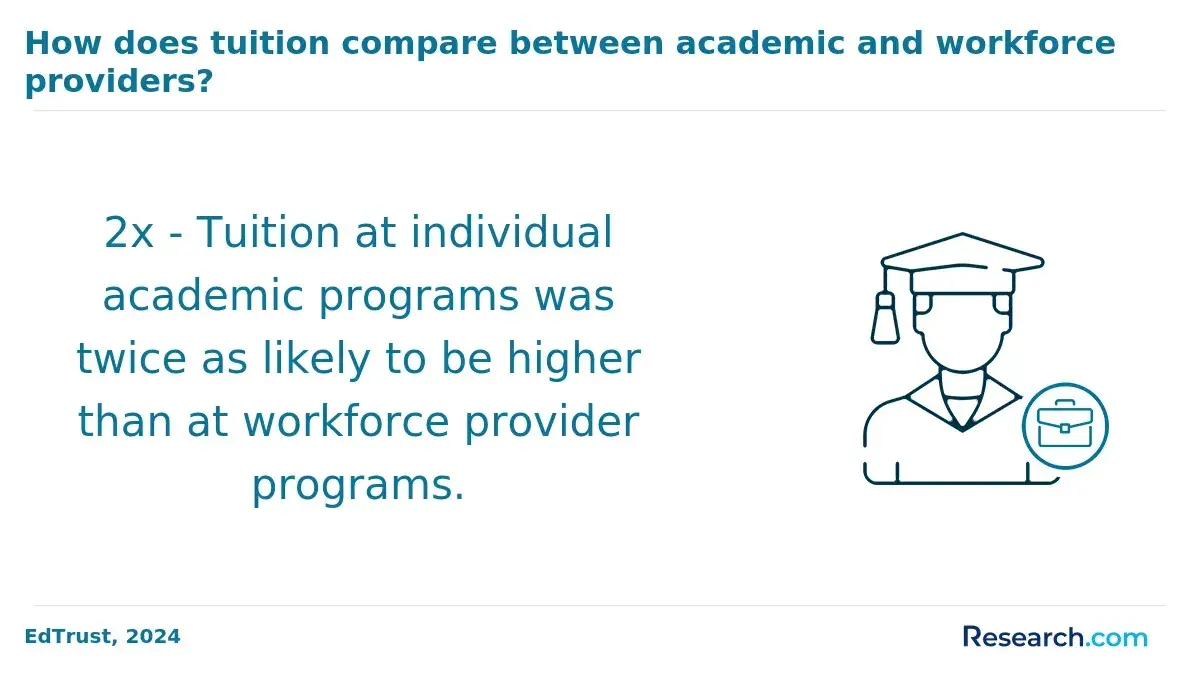
Total cost varies widely by residency, transfer credit, degree level, fees, and course load. The College Board's 2024-25 published tuition and fees averages were $11,610 for in-state students at public four-year institutions, $30,780 for out-of-state public students, and $43,350 at private nonprofit four-year institutions. These are broad published-price benchmarks, not estimates for a particular online technology degree or a student's net price.
Public nonprofit universities can be particularly affordable for eligible in-state students, though some charge a separate online rate. Private nonprofit universities may charge a single rate regardless of residence, which can narrow the gap for out-of-state learners. A higher price may be justified only if transferable credit policies, needed support, a relevant curriculum, and a realistic completion plan match it.
This cost framework helps applicants compare offers on equal footing.
| Cost item | What to verify | Why it matters |
| Tuition | The rate per credit and the number of credits required after transfer evaluation | Advertised rates do not show the full price of the degree |
| Mandatory fees | Fees for technology, distance learning, graduation, testing, and courses | Recurring fees can change the total cost substantially |
| Learning materials | Textbooks, software, cloud accounts, device specifications, and exam proctoring | Technical programs may carry costs beyond tuition |
| Transfer credit | The maximum accepted credits and the course-equivalency rules | Accepted credit can cut both time and price |
| Completion pace | Options for full-time, part-time, and accelerated scheduling | A slower pace may ease cash flow but can delay completion |
Ask the financial aid office for a written estimate based on your expected transfer credits and enrollment intensity. Compare net price after grants and scholarships, yet keep gift aid separate from loans. Borrowed funds lower immediate costs but create repayment obligations after school.
Students enrolled in eligible online programs at accredited nonprofit institutions may qualify for federal, state, institutional, employer, and private aid. Eligibility depends on the student, the program, enrollment level, and applicable rules; online study by itself does not automatically disqualify a student.
File the Free Application for Federal Student Aid every year as early as you can. The results help determine eligibility for federal grants, work-study where available, and Direct Loans. Undergraduates should look into need-based grants before relying on loans, while graduate students should carefully weigh loan terms against employer benefits and institutional scholarships.
These potential funding sources are worth reviewing in this order, since their long-term cost differs:
- Federal and state grants for eligible students, which generally need no repayment.
- University scholarships aimed at online, transfer, adult, STEM, or high-achieving students.
- Employer tuition assistance or reimbursement, along with any work-commitment or grade requirements.
- Education benefits for veterans, available to eligible service members, veterans, and dependents.
- Federal loans once you have reviewed borrowing limits, interest, and projected repayment.
- Private loans only after you compare their protections and total borrowing costs with federal options.
Students who pursue technical leadership, product management, or entrepreneurship after development work may eventually consider business study. When that becomes relevant, compare aid and program costs separately from undergraduate borrowing using the resources on cheapest MBA programs online.
One red flag is an aid estimate that fails to distinguish grants from loans or assumes full-time enrollment when you plan to study part time. Ask whether scholarships renew automatically, what GPA is required, and whether online students receive the same institutional awards as campus students.
Online delivery can cut commuting and open up wider course access, but formats differ. Asynchronous courses usually let students view instructional material on their own schedule while still meeting weekly deadlines. Synchronous courses require attendance at scheduled live sessions. Hybrid programs may blend online coursework with labs, orientations, examinations, or capstone presentations.
Working adults often benefit from predictable asynchronous weekly modules and several term start dates. Students who need structure, immediate instructor interaction, or collaborative coding may prefer scheduled meetings. Neither format is universally better; the practical question is whether the required activities fit your work, caregiving, and time-zone constraints.
Ask each program for a sample weekly schedule and written answers to the following questions:
- Are live classes, group meetings, proctored exams, orientations, or residencies required?
- Can part-time students take a single course per term without losing aid access or required course sequencing?
- How frequently are upper-level mobile, software engineering, and capstone courses offered?
- What happens if a student must pause enrollment or retake a prerequisite?
- Can students finish internships remotely, and who approves the placement?
Online learning is especially useful for students who live far from campus, though on-campus study may be stronger for those who want daily lab access, local recruiting events, or face-to-face peer networks. A fully online program should still offer structured opportunities to collaborate, present work, and receive technical feedback.
Online students should get more than access to a learning platform. Strong nonprofit universities typically offer academic advising, tutoring, library services, accessibility accommodations, technical support, career coaching, and faculty office hours. Availability can differ by program and time zone, so applicants should verify the service model instead of relying on a general university webpage.
For a technical degree, the most helpful supports are often coding tutoring, peer communities, project feedback, internship guidance, résumé review, mock interviews, and access to development software or cloud-learning resources. Career support matters because hiring teams commonly weigh practical work samples alongside a degree.
These services are particularly valuable when coursework is fully remote:
| Support service | What a student should ask | Decision value |
| Academic advising | Is there an online adviser dedicated to students who understands prerequisite sequencing? | Helps avoid delays caused by missed course rotations |
| Technical tutoring | Are live coding tutors available, and at which hours? | Can help with difficult programming and mathematics courses |
| Career services | Do online students get portfolio, internship, and interview support? | Links coursework to a job search strategy |
| Library and research help | Can students reach databases, librarians, and citation help remotely? | Aids research, documentation, and graduate-school preparation |
| Accessibility and technology support | How fast are accommodations and technical problems addressed? | Cuts avoidable barriers to participation |
Students interested in building consumer-facing apps should also learn how products reach audiences. A complementary social media marketing degree may be relevant for learners whose long-term plan combines development with digital promotion, though it is not a substitute for a computing curriculum.
They can prepare graduates for roles such as software developer, mobile developer, junior software engineer, QA analyst, web developer, systems analyst, and related positions when the curriculum builds broadly transferable computing skills. Mobile app development is seldom an isolated occupation in federal labor data, so software developer data offer a useful - but broad - labor-market reference rather than a guarantee of mobile-only jobs.
The Bureau of Labor Statistics projects 17% growth in software developer employment from 2023 to 2033, faster than the average across all occupations. That outlook reflects demand for software in many industries, including mobile services, cloud products, cybersecurity, health technology, and business systems. It does not mean every graduate will get an offer, especially in competitive entry-level markets.
Employers commonly look for proof that applicants can turn requirements into reliable software. Students should graduate with a portfolio containing documented applications, readable code, testing evidence, and a concise explanation of design choices. Internship experience, open-source contributions, hackathons, and team capstones can all strengthen that evidence.
Artificial intelligence is reshaping development workflows, including code generation, testing assistance, and documentation. It raises the importance of core skills: validating output, debugging, security review, requirements analysis, accessibility, and responsible use of tools. Choose a program that teaches students to understand and evaluate code, not simply to prompt a tool into producing it.
When comparing career claims, ask for program-specific information on internships, employer relationships, graduation rates, and the methodology behind any placement reporting. Avoid reading a salary figure as the expected outcome for every graduate; pay varies by location, role, experience, industry, and technical specialty.
Yes, an institutionally accredited bachelor's degree can prepare students for graduate study if it covers the prerequisites the target program requires. For a computer science or software engineering master's degree, those prerequisites often include programming, discrete mathematics, calculus or statistics, data structures, algorithms, and sometimes computer organization. Requirements differ by university.
A specialized applied degree can support graduate study, but students should examine the transcript-level curriculum before assuming it meets admissions expectations. A generalist computer science bachelor's degree is often the safest option for students considering technical graduate programs. Students seeking a more applied professional master's may find greater flexibility, especially if they can demonstrate relevant work experience and programming proficiency.
Use this preparation checklist before choosing an undergraduate program:
- Name two or three potential graduate programs and list their published prerequisites.
- Compare those prerequisites with the online bachelor's degree plan, including electives.
- Pick courses that build mathematical, algorithmic, research, and writing skills.
- Keep strong academic performance and save substantial project work for a portfolio.
- Build relationships with faculty who can speak to your academic ability if recommendations are required.
Doctoral study is generally suited to research, university teaching, or advanced research-and-development goals, not a routine requirement for mobile development. Professionals pursuing education leadership rather than computing research should consider a different pathway, such as best online EdD programs, based on their career objective.
How Should Students Compare the Best Online Mobile App Development Degree Programs at Nonprofit Universities?
The best program is the one that meets your particular educational and career requirements at a manageable total cost. Begin with a shortlist of institutionally accredited nonprofit universities, then compare exact degree plans rather than marketing labels. A program called computer science may offer stronger mobile-development preparation than a narrowly titled one if it includes software engineering fundamentals and mobile electives.
Use the comparison criteria below to narrow your choices before applying.
| Comparison factor | Strong evidence | Possible concern |
| Accreditation | Recognized institutional accreditation plus clear disclosure of any programmatic accreditation | An unclear accreditor, vague claims, or an outside provider awarding unclear credit |
| Curriculum | Coursework in programming, algorithms, databases, testing, security, mobile development, and a capstone | Tool-only courses with scant software engineering foundation |
| Total cost | A written estimate covering credits, fees, transfer evaluation, and materials | Nothing but a per-credit price or unclear online fees |
| Flexibility | A published term calendar, course rotation, and synchronous requirements | "Flexible" marketing with no scheduling details |
| Transfer policy | Credit maximums and equivalencies provided before enrollment | A transfer decision deferred until after a deposit or enrollment |
| Career preparation | A portfolio-based capstone, internship support, career coaching, and employer-relevant projects | Unverified placement promises or a lack of project-based work |
Once you have compared the basics, take these practical final steps:
- Ask for a degree audit showing accepted transfer credit and remaining courses.
- Calculate a realistic completion date from the actual course sequence, not just the advertised timeline.
- Attend an information session or talk with a faculty member about mobile coursework, project review, and technical tools.
- Ask whether online students can use tutoring, internships, career services, and alumni networks.
- Apply to more than one suitable program and compare final aid offers, net cost, and conditions before you commit.
Do not choose based only on rankings, nonprofit status, or the lowest tuition figure. The best overall value is usually an accredited program that accepts appropriate prior credit, teaches lasting software skills, fits your schedule, offers usable student support, and lets you graduate with limited avoidable debt and a credible portfolio.
Career research can also prevent mismatched expectations. For instance, salary information in unrelated fields, such as how much do forensic psychologists make, shows why applicants should use occupation-specific data rather than assuming all degree paths produce similar financial outcomes.
Other Things You Should Know About Mobile App Development
Not always. Some employers hire candidates who hold certificates, boot camps, or self-taught portfolios. A degree can be valuable for building broad computer science knowledge, qualifying for roles that prefer a bachelor's degree, gaining access to internships, and keeping graduate-school options open.
Frequent choices include Kotlin for Android, Swift for iOS, and JavaScript or TypeScript for some cross-platform frameworks. The best program teaches transferable programming concepts, testing, APIs, databases, and software design alongside any single language.
The university should hold institutional accreditation from an agency recognized by the U.S. Department of Education, such as regional accreditation. For a technology degree, the program should also be reviewed by the school's academic department, and any federal aid eligibility rests on that recognized institutional accreditation.
Feature a handful of completed projects along with source code, setup instructions, screenshots or a demo, a plainly stated problem, and a rationale for your technical choices. Solid portfolios likewise demonstrate testing, accessibility considerations, API or database work, and proof of teamwork where it applies.
- Intro to Mobile App Development: A Course for Beginners https://www.codepath.org/news/mobile-product-development-codepath-announces-a-free-online-course-to-give-freshmen-and-sophomores-a-taste-for-the-tech-industry
- Mobile/Web Application Development AAS Degree https://www.lonestar.edu/programs-of-study/mobile-webapplicationdevelopmentaas.htm
- IT Mobile App Development Certificate Program in Erie, PA https://www.ec3pa.org/pathways-to-careers-at-ec3pa/appdevelopment
- Application Development Program | DeVry University https://www.devry.edu/online-programs/bachelors-degrees/software-development/web-and-mobile-application-development-specialization.html
- Stanbridge College - Orange County https://www4.stanbridge.edu/s9/area/landing/dmad/index.php
- Industry Insights - Legacy Education https://legacyed.com/industry-insights/
- 2025 Most Affordable Online Colleges & Degrees https://www.onlineu.com/most-affordable-colleges
- How to Learn App Development | ComputerScience.org https://www.computerscience.org/bootcamps/guides/how-to-learn-app-development/
- Paying for college https://www.commonapp.org/plan/paying-for-college/
- Why Employment Outcome Rates Matter | ACI Learning https://www.acitechacademy.com/blog/why-employment-outcome-rates-matter-a-guide-for-students-and-employers/