
2027 Is an Online Criminal Justice Administration Bachelor's Degree Worth It?

Co-Founder and Chief Data Scientist
Choosing an online criminal justice administration bachelor’s degree is usually a practical decision, not just an academic one. Many prospective students are working adults, transfer students, military veterans, public safety employees, or career changers who need a credential that can fit around work, family, and location constraints.
An online program can make that possible, but the format alone does not guarantee value. The important questions are whether the school is accredited, whether employers will respect the degree, how much the program will actually cost after aid, how long completion may take, and whether the curriculum supports the career path you want.
According to the National Center for Education Statistics, enrollment in fully online bachelor’s programs has increased by 35% over the past five years, reflecting rising demand for flexible education paths in this sector. This guide explains the costs, return on investment, salary expectations, career options, student support, accreditation standards, admissions requirements, and program-selection criteria students should review before enrolling.
Key Things to Know About the Value of an Online Criminal Justice Administration Bachelor's Degree
- An online criminal justice administration bachelor's degree offers flexibility for working parents and veterans, enabling education advancement while balancing life responsibilities and credit transfers.
- Programs with regional accreditation ensure quality education and better employer recognition, supporting credible career growth and potential graduate studies.
- Graduates often see a return on investment through increased earning potential-Bureau of Labor Statistics data shows related roles grow 9% through 2032, faster than average.
What Are the Real Costs of Earning an Online Criminal Justice Administration Bachelor's Degree, and How Do They Compare to On-Campus Programs?
The real cost of an online criminal justice administration bachelor’s degree is more than tuition. Students should compare tuition, required fees, technology expenses, textbooks, transfer-credit policies, and the amount of aid they are likely to receive. The most useful number is not the published price but the estimated net price after grants, scholarships, and other aid.
Online criminal justice administration bachelor’s degree programs typically charge between $300 and $500 per credit hour, according to IPEDS data and the College Board’s Trends in College Pricing report. Many traditional on-campus programs charge $350 to $600 per credit hour. That gives many online programs a potential price advantage, although the final cost depends on residency status, school type, transfer credits, institutional fees, and financial aid eligibility.
| Cost Category | Online Program Considerations | On-Campus Program Considerations |
| Tuition | Often between $300 and $500 per credit hour, depending on the institution and student status. | Often between $350 and $600 per credit hour, with residency rules sometimes affecting public university pricing. |
| Fees | Online students may pay technology fees of $50 to $150 per semester for learning platforms and remote services. | Campus students may pay facility, library, parking, student activity, or campus-service fees. |
| Technology | Students usually need a reliable computer, webcam, software access, and high-speed internet. | Students may still need a computer, but campus labs and in-person resources can reduce some technology pressure. |
| Indirect Costs | Online learners often avoid commuting, relocation, parking, and housing costs. | Students may face commuting, transportation, meal, housing, and parking expenses. |
| Books and Materials | Costs are often similar to campus programs, although some courses use digital materials. | Costs are often similar, depending on whether courses require printed or digital texts. |
Several accredited online criminal justice administration bachelor’s degrees, including programs at Fort Hays State University, Southern New Hampshire University, Purdue University Global, and Columbia Southern University, charge tuition below the approximate $15,000 national average per year. Students should still compare total program cost rather than relying only on advertised tuition.
Net price matters more than sticker price
The sticker price is the published cost before financial aid. The net price is the estimated amount a student pays after grants, scholarships, and other aid are applied. Two schools with similar tuition can produce very different net costs if one offers stronger grant aid, accepts more transfer credits, or charges fewer required fees.
Students should complete the FAFSA early, use each school’s net price calculator, and ask for a written breakdown of tuition, fees, textbook costs, proctored exam charges, and technology requirements. For broader cost comparisons, Research.com’s guide to best online degrees can help students think through affordability, career value, and program fit.
What Is the Return on Investment (ROI) of an Online Criminal Justice Administration Bachelor's Degree Over a Career Lifetime?
The ROI of an online criminal justice administration bachelor’s degree depends on three main factors: what the student pays, how much debt they take on, and whether the degree helps them qualify for better-paying or more stable roles. A lower-cost online program can improve ROI, especially for students who continue working while enrolled and avoid relocation or campus housing costs.
Return on investment in higher education compares the financial benefits of a degree with the total cost of earning it. For this field, that means weighing tuition, fees, required technology, books, loan interest, and opportunity costs against long-term earnings in law enforcement, corrections, public administration, security management, legal support, and related fields. Data from the Georgetown University Center on Education and the Workforce and the PayScale College ROI Report provide benchmarks for evaluating these outcomes.
- Ten-Year ROI: Graduates may recoup a significant portion of their educational investment earlier when they choose lower-cost programs, limit borrowing, and move into roles with advancement potential.
- Twenty-Year ROI: Long-term value tends to improve when graduates progress into supervisory, specialized, federal, or administrative roles in law enforcement, corrections, or legal administration.
- Cost Advantage: Online programs may improve net returns when they reduce tuition, commuting, relocation, and housing expenses while allowing students to keep working.
- National Bachelor’s Degree Average: Low-cost online programs can compare favorably with the national average ROI for all bachelor’s degrees over 10 and 20 years because students can often reduce debt and maintain income while studying.
How to judge ROI before enrolling
Prospective students should not assume that every online program has the same value. The best ROI usually comes from a program that is accredited, affordable after aid, transfer-friendly, and aligned with the student’s target career path. Students should ask schools for graduation rates, job-placement information, average debt levels, and examples of employers that hire graduates.
Non-financial returns also matter. A criminal justice administration degree can support career mobility, professional credibility, eligibility for graduate study, and movement into roles with greater responsibility. For people already working in public safety, corrections, military service, or legal support, the ability to apply coursework immediately on the job can increase the practical value of the degree.
Students comparing the affordability of different online credentials may also review the online executive MBA cost landscape as a reference point for how tuition, aid, and career outcomes affect ROI across degree types.
How Do the Salary Outcomes for Online Criminal Justice Administration Bachelor's Graduates Compare to Those With Traditional Degrees?
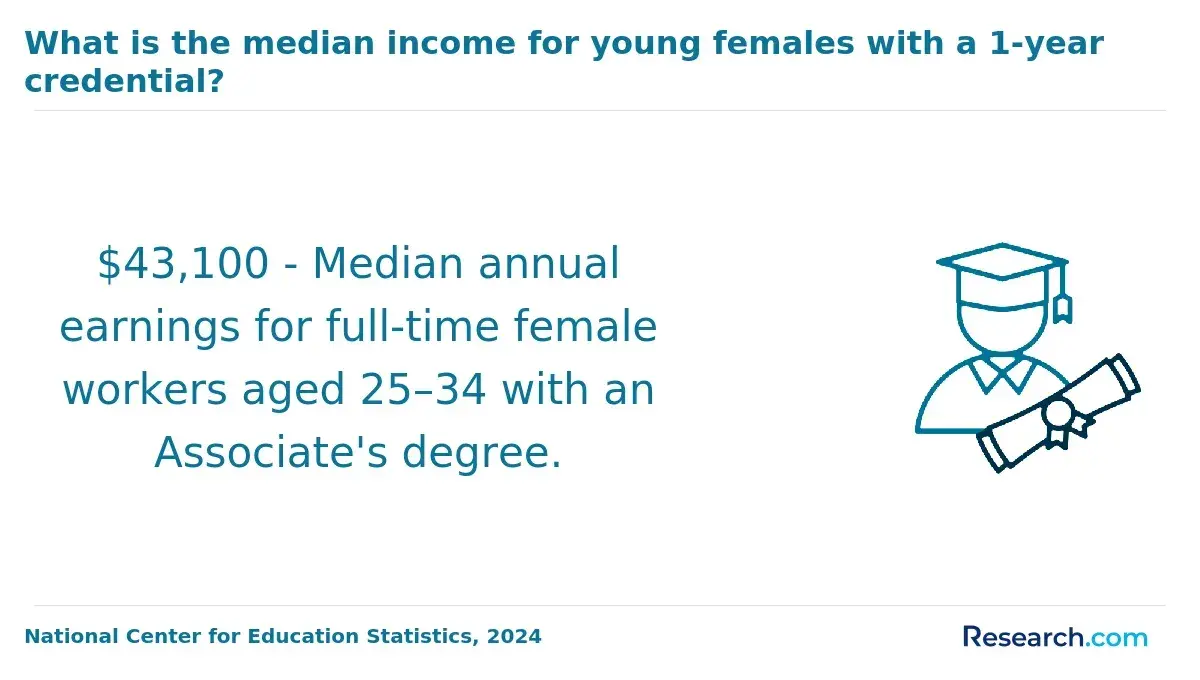
Salary outcomes for online criminal justice administration bachelor’s graduates are generally comparable to those of traditional degree graduates when the school is accredited and the candidate has relevant experience, skills, and professional qualifications. Employers typically care more about accreditation, work history, certifications, location, specialization, and interview performance than whether the coursework was completed online or on campus.
Data from the Bureau of Labor Statistics, PayScale, and LinkedIn Salary Insights show that graduates with online bachelor’s degrees in criminal justice administration generally earn salaries on par with graduates from traditional campus programs once experience and role type are considered.
- Median Starting Salary: Entry-level annual pay for recent graduates typically falls between $40,000 and $50,000. Common roles include law enforcement support, probation officer, and legal assistant positions.
- Mid-Career Earnings: After five to ten years of experience, median salaries tend to range from $60,000 to $75,000. Advancement into management or federal-sector roles can increase compensation, particularly in specialized areas.
- Institution-Specific Data: Some universities report that online alumni achieve employment in related fields within six to twelve months of graduation. These outcomes may reflect career services, employer networks, student experience, and local labor-market demand.
What has the strongest effect on salary?
The delivery format is usually not the biggest salary driver. Students should pay closer attention to the program’s reputation, internship access, field experience options, faculty expertise, career services, and alignment with the roles they want. A student pursuing law enforcement leadership, for example, may need a different set of electives and professional experiences than a student interested in cybercrime, corrections administration, or private security management.
One graduate described the online format as challenging but useful because asynchronous classes made it possible to balance work, family, and coursework. When asked about salary expectations after graduation, he said, “The degree opened doors I hadn’t expected, and employers valued my practical skills combined with the credential. It wasn’t just about the degree being online—it was how I applied what I learned.”
That experience reflects a key point: salary growth usually comes from pairing the degree with relevant experience, professional discipline, networking, and a clear career plan.
What Career Paths and Job Opportunities Are Available to Online Criminal Justice Administration Bachelor's Degree Graduates?
An online criminal justice administration bachelor’s degree can prepare graduates for roles in law enforcement, corrections, probation and parole, legal support, forensic support, public administration, and private security. The degree is often most useful for students who want administrative, supervisory, policy, compliance, or operations-focused roles rather than only entry-level field positions.
Career options vary by employer, state requirements, physical standards, background checks, academy training, and certification rules. Students should confirm requirements for their target state or agency before choosing a concentration or assuming that a bachelor’s degree alone is enough.
- Law Enforcement Officer: Entry-level roles such as police officers or sheriffs may not always require a bachelor’s degree, but the credential can make applicants more competitive and may support promotion. These professionals uphold laws, conduct investigations, respond to incidents, and support community safety. According to the Bureau of Labor Statistics (BLS), job growth in this field is projected at approximately 3% over the next decade.
- Corrections Officer: Corrections officers supervise individuals in prisons, jails, and community corrections settings. Some roles accept an associate degree or less, but a bachelor’s degree may help with advancement into supervisory or administrative positions. The BLS expects minimal growth near 0%, while openings continue due to retirements and turnover.
- Probation and Parole Officer: These officers supervise people in the community, monitor compliance with court or release conditions, and connect clients with rehabilitation resources. The role typically requires a bachelor’s degree and often state certification. Employment growth for this category is estimated at about 3% through 2032.
- Forensic Science Technician: Some bachelor’s graduates may qualify for forensic-related roles, especially if they complete science-focused coursework or additional training. Many positions require specialized technical preparation. Growth is robust at roughly 11%, driven by increased use of forensic investigations.
- Private Security Manager: Security managers oversee risk, safety protocols, personnel, investigations, emergency response, and asset protection for organizations. This role generally requires a bachelor’s degree and shows faster growth near 8%.
How concentrations can shape career options
A concentration can make the degree more targeted. Forensic investigation or cybercrime coursework may support technical or investigative pathways. Public administration, policy, or organizational leadership coursework can support supervisory and agency-management roles. Corrections-focused coursework may fit students aiming for rehabilitation, facility management, or community corrections.
Students should choose programs based on the jobs they actually want, not only on the degree title. They should review internship options, faculty backgrounds, local agency partnerships, and whether the school’s online programs are properly recognized. Research.com’s guide to online degrees accredited by trusted organizations can help students evaluate legitimacy and career alignment.
What Student Support Services Do Online Criminal Justice Administration Bachelor's Programs Provide to Promote Success and Retention?
Strong student support can determine whether an online student completes the degree on time or stops out. The best online criminal justice administration programs do not simply post courses online; they provide advising, tutoring, writing help, career guidance, counseling access, and clear communication for remote learners.
- Academic Advising: Advisors help students understand degree requirements, choose course loads, plan around work schedules, and evaluate transfer credits. This is especially important for working adults, military veterans, and students returning after time away from college.
- Tutoring and Writing Labs: Virtual tutoring and writing support help students improve research, citation, policy analysis, case-study writing, and professional communication skills used in criminal justice careers.
- Mental Health Counseling: Telehealth counseling can support students managing stress, family obligations, work pressure, or academic anxiety. Access to counseling can reduce the risk of academic interruption.
- Career Services: Effective programs help with resumes, interview preparation, internship searches, employer connections, graduate school planning, and job-search strategy for criminal justice-related roles.
- Alumni Mentorship Networks: Alumni mentors can give practical insight into hiring processes, promotions, agency culture, and how to translate coursework into workplace value.
Research from the National Survey of Student Engagement (NSSE) shows programs with comprehensive support see significantly higher graduation and retention rates. Institutional data also indicates that students who use advising, counseling, and career resources tend to complete their degrees more efficiently.
What to ask before enrolling
Students should ask whether support services are available during evenings or weekends, how quickly advisors respond, whether tutoring is included in tuition, and whether career services work with online students as actively as campus students. It is also worth asking whether the program has dedicated support for transfer students, veterans, first-generation students, or adult learners.
One graduate who advanced after completing an online criminal justice administration degree said academic advising helped resolve concerns about transferring previous military credits. She worked with advisors to build a course load around her job and family responsibilities. She also used mental health counseling during a stressful period and credited alumni mentors with helping her understand job prospects. The combination of services made her feel “supported every step of the way.”
Is an Online Criminal Justice Administration Bachelor's Degree Respected by Employers and Recognized Across Industries?
An online criminal justice administration bachelor’s degree can be respected by employers when it comes from an accredited institution and the graduate can demonstrate relevant knowledge, experience, professionalism, and communication skills. The phrase “online degree” is much less important than the school’s accreditation status, academic quality, and employer familiarity with the program.
A 2022 survey by the Society for Human Resource Management (SHRM) found that over three-quarters of employers consider online degrees from accredited institutions to be on par with traditional campus degrees, especially when candidates demonstrate relevant experience or academic achievement.
In law enforcement, corrections, security, and public administration, online criminal justice administration degrees are generally valued similarly to campus-based degrees when the institution is reputable and accredited. Organizations such as the Federal Bureau of Investigation (FBI), state police departments, and major municipal agencies may consider applicants with online credentials if they meet all education, experience, background, fitness, training, and hiring requirements.
- Employer Acceptance: Many employers recognize online criminal justice administration degrees from accredited schools as comparable to traditional degrees, particularly when candidates have relevant work experience.
- Field Equivalence: Law enforcement and public administration employers commonly focus on accreditation and qualifications, while some specialized government roles may give additional weight to specific training, experience, or credentials.
- Key Recruiters: Agencies such as the FBI and large city governments focus on whether applicants meet the role’s requirements rather than only on delivery format.
- Accreditation Value: Graduates from regionally accredited institutions typically have stronger recognition for employment, credit transfer, and graduate school admission.
- Context Matters: Employer perception can vary by agency, region, role, and candidate background, so students should review alumni outcomes and employer partnerships before enrolling.
Programs that reference standards set by oversight bodies such as the Council on Accreditation for Law Enforcement Education (CALEA) may gain additional credibility, but students should verify exactly what is accredited or recognized. Criminal justice program quality is best judged through institutional accreditation, curriculum rigor, faculty qualifications, career outcomes, and employer connections.
What Accreditation Standards Should an Online Criminal Justice Administration Bachelor's Program Meet to Be Considered Legitimate?
A legitimate online criminal justice administration bachelor’s program should be offered by an institution recognized by an accreditor approved by the U.S. Department of Education or the Council for Higher Education Accreditation (CHEA). Accreditation affects whether students can receive federal financial aid, transfer credits, apply to graduate school, and present the degree confidently to employers.
Regional accreditation is generally the most widely accepted form of institutional accreditation for bachelor’s degree programs. National accreditation can be legitimate, but it may have more limited transfer and graduate-school recognition depending on the receiving institution or employer.
The U.S. Department of Education recognizes six primary regional accrediting bodies:
- HLC: Higher Learning Commission (Midwestern states)
- SACSCOC: Southern Association of Colleges and Schools Commission on Colleges
- NECHE: New England Commission of Higher Education
- MSCHE: Middle States Commission on Higher Education
- NWCCU: Northwest Commission on Colleges and Universities
- WSCUC: WASC Senior College and University Commission (Western states)
How to verify accreditation
Students should verify accreditation directly through official databases, not only through a school’s marketing pages. Check the Council for Higher Education Accreditation (CHEA) database and the U.S. Department of Education (ED) database to confirm that the institution’s accreditation is current and recognized.
Criminal justice administration does not have a single widely required specialized programmatic accreditation equivalent to some licensed professions. Some schools may hold endorsements, memberships, or recognition from organizations such as the Academy of Criminal Justice Sciences, which can support reputation and networking but should not replace institutional accreditation.
Students should avoid unaccredited schools or programs with lapsed accreditation. Risks include ineligibility for federal financial aid, difficulty transferring credits, limited graduate-school recognition, and weaker employer confidence. A recent study found nearly 70% of employers prefer candidates with degrees from regionally accredited institutions when hiring for criminal justice roles.
How Long Does It Take to Complete an Online Criminal Justice Administration Bachelor's Degree, and What Factors Affect the Timeline?
Most online criminal justice administration bachelor’s degree programs require about 120 credits and are designed for completion in about four years. That timeline assumes a traditional full-time pace, but online students often move faster or slower depending on transfer credits, course format, employment demands, and family responsibilities.
Accelerated formats can shorten the timeline. Programs that offer eight-week classes instead of 16-week terms, year-round enrollment, and flexible start dates may allow motivated students to finish in two to three years. Institutions like Southern New Hampshire University and Purdue Global report average completion times near this range. Competency-based education (CBE) programs, such as those at Western Governors University, may also shorten completion time by allowing students to advance after demonstrating mastery rather than spending a fixed amount of time in a course.
- Standard Credit Load: Most programs require about 120 credits and are normally structured for four years of study.
- Accelerated Courses: Eight-week terms and year-round course availability can help students compress the timeline into two or three years.
- Competency-Based Education: CBE can benefit students who already have relevant work, military, or academic experience because they may move more quickly through familiar material.
- Transfer Credits: Transfer credit is one of the biggest time savers. Prior college coursework, military training, professional certifications, or prior-learning assessments may reduce the number of credits required.
- Part-Time Enrollment: Students balancing full-time work or caregiving may need a lighter course load, which can extend the timeline.
- Financial Impact: Finishing faster may reduce tuition exposure and help graduates move into higher-level roles sooner, but taking too many courses at once can increase the risk of burnout or poor performance.
How to build a realistic completion plan
Before enrolling, students should request a transfer-credit evaluation, review course rotation schedules, ask whether required classes are offered every term, and confirm whether there are any in-person or internship requirements. A program may advertise flexibility, but delayed course availability can still slow graduation.
Students comparing degree timelines may find similar planning issues when evaluating graduate options, such as an online master’s in organizational leadership.
What Financial Aid, Scholarships, and Tuition Assistance Are Available for Online Criminal Justice Administration Bachelor's Students?
Online criminal justice administration bachelor’s students may qualify for the same major categories of aid as campus students if they attend an eligible accredited institution. The main options include federal grants, federal loans, state grants, institutional scholarships, private scholarships, employer tuition assistance, military education benefits, and Federal Work-Study where available.
- Federal Pell Grants: These need-based grants do not require repayment. Award amounts vary annually and are determined through FAFSA data, with priority given to undergraduate students who demonstrate financial need.
- Direct Subsidized and Unsubsidized Loans: These federal loans have fixed interest rates. Subsidized loans cover interest while the student is in school, while unsubsidized loans begin accruing interest immediately.
- Institution-Specific Scholarships: Colleges may offer scholarships for online criminal justice administration students. For example, the Public Safety Scholarship awards up to $2,500 annually to students with community service or law enforcement backgrounds.
- State Grant Programs: Depending on residency, programs like the California College Promise Grant and New York Tuition Assistance Program may help reduce in-state tuition expenses.
- Field-Specific Scholarships: The Justice Education Foundation Scholarship offers up to $1,500 for full-time students maintaining a 3.0 GPA. The National Organization of Black Law Enforcement Executives provides awards ranging from $1,000 to $5,000, emphasizing leadership in law enforcement.
- Military and Veteran Support: Military veterans entering criminal justice fields may access tuition assistance from the Military Officers Association of America, along with other military-related education benefits for which they qualify.
How to reduce out-of-pocket costs
Students should complete the Free Application for Federal Student Aid (FAFSA) as early as possible because many forms of aid are limited and may be awarded on a first-come, first-served basis. FAFSA information is used to determine eligibility for federal, state, and institutional aid.
The best strategy is often to layer aid sources. Grants, scholarships, employer tuition reimbursement, military benefits, and Federal Work-Study can reduce reliance on loans. Students should also ask schools whether transfer credits, prior-learning assessment, or military credit can lower the total number of credits they need to pay for.
Students planning for career advancement after the bachelor’s degree may also compare graduate pathways such as quick masters degrees online when building a long-term education and financing plan.
What Are the Admission Requirements for Online Criminal Justice Administration Bachelor's Degree Programs?
Admission requirements for online criminal justice administration bachelor’s programs vary by school. Some programs are selective and expect stronger academic records, while others are designed for adult learners, transfer students, and applicants returning to college after time away.
Most programs require a high school diploma or GED. Competitive programs often require applicants to maintain at least a 3.0 GPA on a 4.0 scale. Some schools still request SAT or ACT scores, but many have adopted test-optional policies, which can benefit adult learners, transfer students, and applicants with relevant work experience.
- High School Diploma or GED: This is mandatory for all applicants and confirms foundational academic preparation.
- GPA Requirements: Selective programs typically expect a minimum 3.0 GPA, while open-access or transfer-friendly programs may be more flexible or have no formal minimum.
- Standardized Tests: Some institutions require SAT or ACT scores, but many online programs now make testing optional.
- Prerequisite Coursework: Certain programs ask applicants to complete foundational classes in English, mathematics, or social sciences.
- Transfer Transcripts: Students with prior college experience usually need to submit official transcripts for credit evaluation.
- Rolling Admissions: Some online programs offer continuous or frequent start dates, which can help working adults avoid long waits between application and enrollment.
- Application Strengthening: Applicants with weaker academic records can improve their profiles by completing community college courses, earning relevant certifications, submitting strong recommendations, or writing a clear personal statement.
What applicants should confirm before applying
Students should ask whether the program admits first-year students, transfer students, degree-completion students, or all three. They should also confirm minimum transfer-credit requirements, maximum allowable transfer credits, background-check expectations for internships, and whether prior criminal history could affect field placements or future employment in certain justice-related roles.
How Should Prospective Students Evaluate and Choose the Right Online Criminal Justice Administration Bachelor's Degree Program for Their Goals?
The right online criminal justice administration bachelor’s program is the one that is legitimate, affordable, flexible enough to complete, and directly connected to the student’s target career path. A program with a low tuition rate is not automatically the best choice if it lacks strong advising, poor transfer policies, weak employer connections, or unclear outcomes.
- Accreditation: Verify institutional accreditation through official sources. Regional accreditation generally offers the strongest recognition for credit transfer, graduate school, and employer acceptance.
- Cost and ROI: Use net price calculators, financial aid estimates, and transfer-credit evaluations to estimate the true cost. Consider graduation rates, debt levels, and available career-outcomes data.
- Program Format and Flexibility: Decide whether you need asynchronous courses, evening deadlines, accelerated terms, part-time pacing, or year-round enrollment. Flexibility should match your actual schedule, not just sound convenient.
- Curriculum Fit: Review required courses and electives. Make sure the program supports your goal, whether that is law enforcement leadership, corrections, probation, cybercrime, forensic support, public administration, or private security.
- Career Outcomes Data: Look for transparent information on employment sectors, graduate school placement, internship access, employer partnerships, and typical roles graduates pursue.
- Student Support Services: Prioritize schools with accessible online advising, tutoring, writing support, technical help, counseling, and career services.
- Transfer Credit Policy: Understand credit acceptance limits and special evaluations for military veterans, prior college students, and professionals with training or certifications.
Students should use authoritative resources such as the U.S. Department of Education’s College Scorecard, IPEDS Data Center, and institutional net price calculators to compare programs directly. They should also ask about technology fees, proctored exam costs, textbooks, internship expenses, and any in-person residency requirements that could increase the total cost.
Practical next steps
- Request a Transfer Credit Audit: Submit transcripts early so you know how many credits remain and how much the degree may cost.
- Get a Net Price Estimate: Ask for a personalized tuition and fee breakdown after estimated aid.
- Interview Admissions and Advising Staff: Ask specific questions about pacing, course availability, support services, and career alignment.
- Check Financial Aid Deadlines: Track FAFSA, scholarship, state grant, and institutional aid deadlines.
- Review Career Services: Confirm whether online students receive internship help, resume support, and employer networking opportunities.
- Set a Target Enrollment Date: Choose a realistic start term that gives you time to gather documents, apply for aid, and plan your schedule.
What Graduates Say About the Value of Their Online Criminal Justice Administration Bachelor's Degree
- Aries: "I chose the online criminal justice administration bachelor's degree program because it perfectly fit my busy schedule as a working parent. The flexibility allowed me to balance work, family, and school without compromising any of my commitments. This program not only deepened my understanding of the justice system but also gave me the confidence to pursue leadership roles in my department."
- Massimo: "Reflecting on my experience, the most impressive aspect of the online criminal justice administration degree was its affordability combined with the high value of education offered. The cost was reasonable, especially compared to traditional colleges, and the return on investment became clear when I secured a well-paying position shortly after graduation. This program truly provided a gateway to career advancement that I hadn't anticipated."
- Angel: "Professionally, this degree completely transformed my career trajectory. By earning my online criminal justice administration bachelor's degree, I gained critical skills and a broader perspective that employers highly appreciate. The coursework challenged me intellectually and the online format enabled me to apply what I learned in real time, making the program an indispensable step toward my goals in the justice field."
Other Things You Should Know About Criminal Justice Administration Degrees
Admission requirements typically include a high school diploma or equivalent, a minimum GPA of 2.5, and possibly standardized test scores like the SAT. Some programs may also require a personal statement or letters of recommendation to assess the applicant's qualifications.
Graduates with an online Criminal Justice Administration bachelor's degree in 2027 can pursue roles such as parole officer, compliance manager, and law enforcement officer. This degree equips students with skills needed for roles in public safety, law enforcement, and legal services sectors.
References
- What Are the Entry Requirements for a Criminal Justice Program? | University of Bridgeport https://www.bridgeport.edu/news/entry-requirements-for-a-criminal-justice-program/
- How Long Does it Take to Complete a Degree in Criminal Justice? - Top Criminal Justice Degrees https://www.topcriminaljusticedegrees.org/faq/how-long-does-it-take-to-complete-a-degree-in-criminal-justice/
- How Long Does It Take https://www.stonehill.edu/programs/criminology-major/how-long-does-it-take/
- Online Bachelor’s Degree in Criminal Justice | Warner Pacific https://www.warnerpacific.edu/programs/criminal-justice/
- Is a Criminal Justice Degree Worth It? ROI Analysis for 2026 https://policeofficer.org/is-a-criminal-justice-degree-worth-it/
- How Long Does it Take to Get a Bachelor's Degree in Criminal Justice? https://www.fastonlinemasters.com/faq/how-long-does-it-take-to-complete-a-degree-in-criminal-justice/
- Return on Investment for a College Degree in Criminal Justice ROI or a College Degree in Criminal Justice https://www.criminaljusticeprograms.com/articles/return-on-investment-for-a-college-degree-in-criminal-justice/


