2027 Graduate Public Health Preparation for Public Health Partnership Development Roles

Co-Founder and Chief Data Scientist
Public health partnerships depend on people who can turn shared priorities into workable agreements, funded programs, and accountable relationships. If you work in a community organization, health department, or health system - or hope to enter one - the useful question is not simply whether to earn an MPH. It is which preparation will help you build trust, coordinate organizations, and show results.
This guide connects graduate coursework and supervised experience to those responsibilities, then explains how to compare programs, costs, credentials, and career prospects without assuming a degree alone will secure a partnership role.
Key Things You Should Know
- An MPH with community engagement, program evaluation, policy, and management coursework is usually the most direct graduate route; a partnership-focused project or placement is stronger evidence than a concentration name alone.
- Experience matters alongside education: employers may expect evidence of stakeholder coordination, grant or contract work, and follow-through with community partners before assigning someone lead responsibility.
- Compare programs on access to supervised partner work, scheduling, total cost, and the exact scope of accreditation; neither an online format nor an MPH automatically supplies a placement, certification, or job.
What does graduate public health preparation involve for partnership development roles?
Partnership development means identifying organizations with compatible population-health goals, establishing a fair way to work together, and maintaining the relationship through implementation and evaluation. Partners might include residents and community-led groups, health departments, schools, clinics, and funders. The work is more than networking: it involves listening, negotiating responsibilities, managing resources, and reporting what the collaboration actually accomplishes.
The strongest preparation pairs public health methods with supervised practice. Learn to assess community priorities without treating organizations as interchangeable representatives of a population; build a program plan and budget; select feasible process and outcome measures; and communicate findings without overstating impact. A useful applied project might produce a stakeholder map, jointly reviewed work plan, or evaluation framework. Obtain school and site approval before using workplace activities for credit or sharing partner documents in a portfolio.
Graduate study can help fill a defined gap, but it need not be the first move. Someone already coordinating partners may gain more immediately from supervised grant-management work or an evaluation course. If missing prerequisites are the obstacle to an otherwise suitable master's program, investigate entry flexibility in public health master's programs while confirming the specific school's conditions and deadlines.
Which graduate public health degree best prepares you for partnership development?
For most people targeting population-health partnerships, an MPH is the first graduate degree to evaluate. Its practice orientation can connect community engagement with planning, evaluation, and health systems. Choose its coursework and applied experience by the partnerships you want to build, not by degree initials alone. A concentration in community health, health behavior, policy, or management may fit, but its required courses and field opportunities matter more than its label. Compare specialization choices in public health graduate study against actual job duties.
An MPA can be a better fit for government contracting, interagency administration, or public budgeting; an MSW may fit a career centered on social-service coordination. A research-oriented public health MS makes more sense when producing evidence is the main job. Experienced leaders considering a practice-focused DrPH should identify responsibilities that genuinely require advanced organizational leadership before taking on doctoral costs. None of these degrees substitutes for relationships, institutional authority, or a partner's consent to collaborate.
What education and experience do public health partnership development roles require?
Requirements follow the role's scope, not a universal job-title rule. A partnership assistant may schedule meetings, maintain contact records, and support events with a bachelor's degree or relevant experience. A coordinator may manage deliverables, partner communications, and reporting; an MPH may be preferred, but demonstrated community or program experience can be decisive. Managers commonly need a record of budgets, staff supervision, agreements, and sustained partner relationships in addition to education.
Translate existing work into evidence. A nonprofit employee might document a convening they organized and how partner feedback changed a plan. A career changer from business development should show what they have learned about population health, equitable representation, and public-sector accountability rather than assuming sales experience transfers unchanged.
If a bachelor's-level role would provide the needed entry point, compare that route with graduate study; cost-conscious online public health undergraduate study is relevant for readers who have not yet completed a bachelor's degree, not a substitute for checking a particular employer's requirements.
Start with MPH programs in community or population health, health behavior, health policy, or management. For example, UNC Gillings School of Global Public Health's MPH in Health Behavior and Columbia Mailman School of Public Health's MPH in Population and Family Health are programs whose current curricula are worth examining for this goal. Their names alone do not establish that a particular partnership course, placement, or schedule is available to your cohort.
Ask each program for its current course sequence and recent examples of approved applied experiences. Look for substantive work in community-engaged planning, qualitative inquiry, facilitation, budgeting, grant administration, and evaluation. Then ask whether students can work with a community organization they help identify, who secures the site, and how community partners participate in defining deliverables. That answer may distinguish two otherwise similar MPHs.
A doctorate is not an upgraded version of partnership coursework. Readers considering later executive practice responsibilities can explore planning doctoral study in public health, but should first establish whether an MPH and additional leadership experience would meet their immediate goal.
Online study may let an employed coordinator remain with their organization and develop an approved local project. Campus study may make in-person collaboration with faculty and nearby partners easier. Neither format guarantees a strong placement or useful connections; the comparison turns on the student's actual schedule, location, and access to supervised work.
Check live-class times, group-project meetings, any campus visits, placement geography, and whether fieldwork can occur at your current employer. Online students should also ask who helps resolve a placement that falls through. A campus-based student should calculate travel and time away from work as well as tuition. If online delivery is essential, use choosing a budget-friendly online MPH as a starting point, then verify current charges and partnership opportunities directly with each school.
MPH applicants generally need a qualifying bachelor's degree and a program-specific application. Schools may request transcripts, recommendations, a statement of purpose, and a résumé; test policies, GPA thresholds, prerequisites, deadlines, and application systems vary. A non-public-health major does not automatically rule out admission. Statistics or introductory public health preparation may be required by one program and merely recommended by another.
Use the statement to connect prior work to a specific preparation gap: perhaps you can convene organizations but need stronger evaluation skills, or understand program delivery but need budgeting experience. Document your own responsibilities rather than claiming credit for an entire coalition's outcomes. If you are weighing a later DrPH, finding public health doctorates that fit your background is a separate decision; doctoral practice-experience rules should not be mistaken for MPH admission rules.
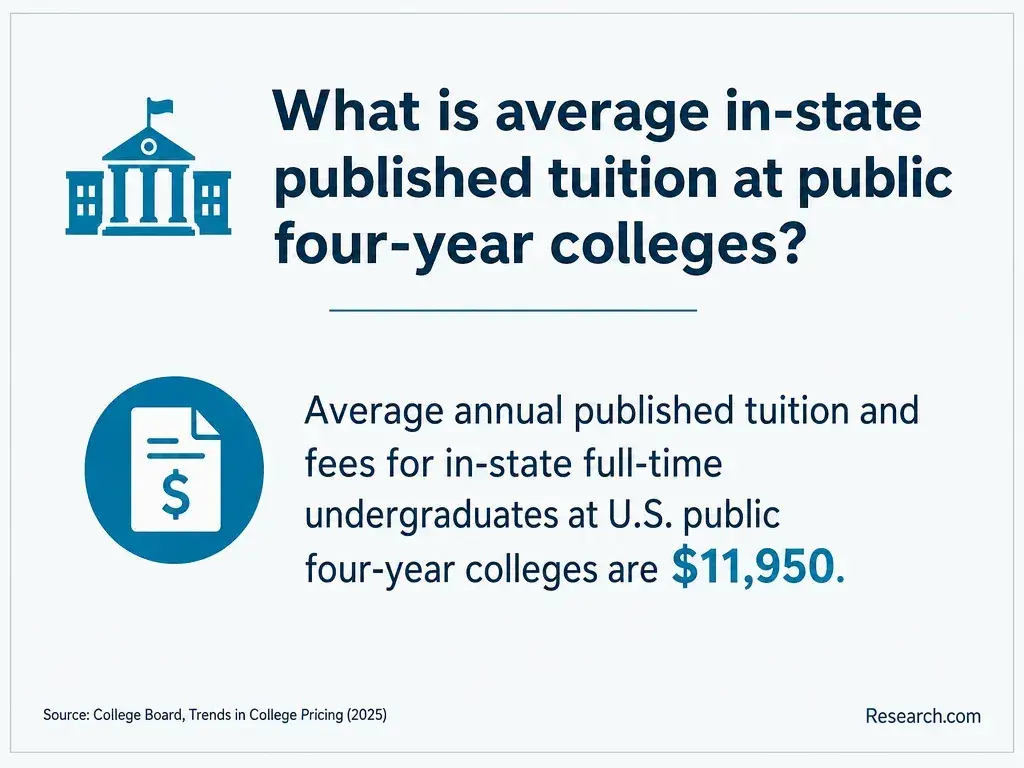
Length and cost depend on required credits, enrollment pace, tuition classification, fees, and applied-experience arrangements. Full-time and part-time MPH paths can differ substantially, and a placement may require time away from paid work even when courses are online. Request a term-by-term plan and a written estimate that includes tuition, mandatory fees, travel or campus visits, and any expected fieldwork expenses. Ask whether employer assistance applies to the program and what happens if a required course is unavailable when planned.
Compare that total with the narrower preparation you actually need. A nonprofit professional who already leads collaborations may be better served by an employer-supported evaluation course than another degree. An experienced practitioner considering doctoral study should compare its time commitment and funding terms separately; affordable public health doctorates by study duration concerns a different investment from an entry or midcareer MPH.
Check two distinct things: the institution's recognized accreditation and whether the Council on Education for Public Health (CEPH) accredits the specific public health school, unit, or program covering the degree you intend to earn. A university's institutional accreditation does not establish that every public health degree falls within CEPH's scope. Confirm the status and covered degree with the accreditor and program before enrolling, particularly if credential eligibility matters to you.
Quality for this career goal also means usable practice opportunities. Ask how placements are approved, what supervision students receive, whether partner organizations help shape projects, and what happens when a site cannot continue. When comparing CEPH-accredited online MPH programs, check those operational details alongside accreditation rather than treating either as proof of career outcomes.
Certification can signal knowledge, but there is no universal certification that authorizes someone to develop public health partnerships. The Certified in Public Health (CPH) credential may be relevant to broad public health practice; Certified Health Education Specialist (CHES) or Master Certified Health Education Specialist (MCHES) may fit positions centered on health education. Eligibility and renewal rules belong to the certifying organizations, so check them before planning coursework around an exam. Neither credential replaces a partner's trust or documented coordination experience.
For a grant-heavy role, targeted training in contracts, facilitation, or project management may address a more immediate gap. Conversely, low-cost epidemiology doctorates and financial aid are relevant to research-intensive goals, not a substitute for partnership training or certification.
What salaries and job outlook can partnership development professionals expect?
Salaries for partnership development professionals vary widely by title, industry, and seniority. Some data sources put the U.S. median for partnership development managers around $105,000, with pay ranging from roughly $63,000 at the low end to nearly $193,000 at the high end. Another estimates partner development managers average about $131,000, rising well above that at senior levels. Entry-level and broader “partnership development” roles often pay less, with some job-board data showing an average near $69,000.
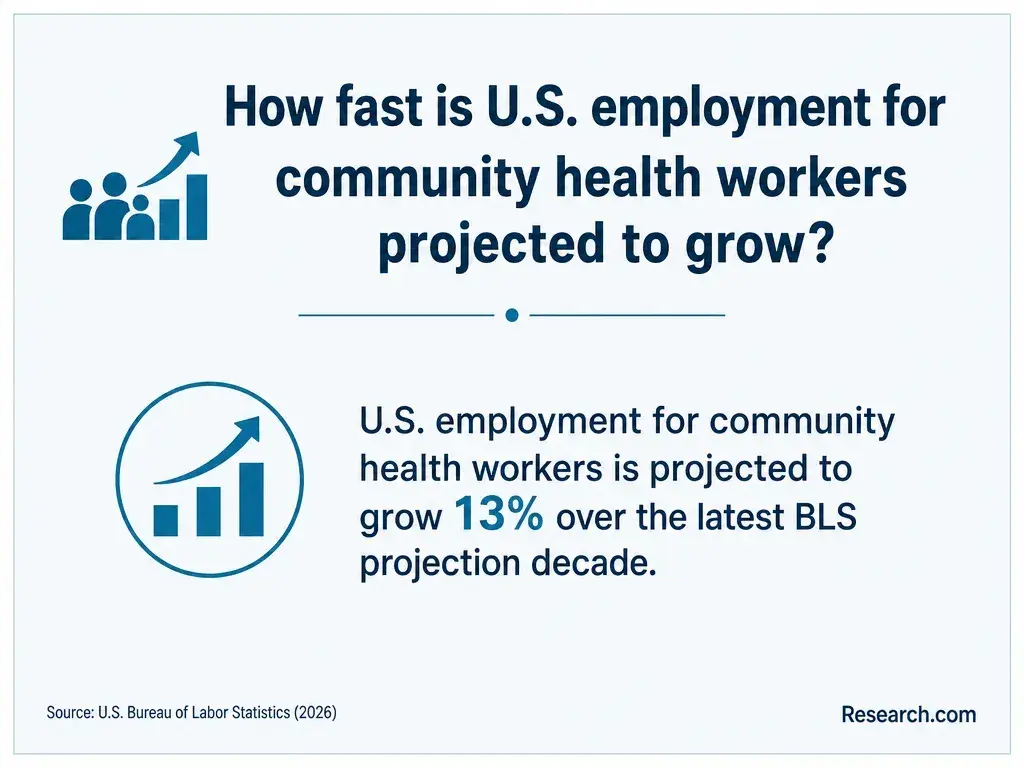
Use the most recent Bureau of Labor Statistics Occupational Outlook Handbook wage and employment projections for the occupation that matches the job description you want, then compare local postings by employer type and responsibility level. Government pay bands, nonprofit budgets, grant-funded terms, and supervisory duties can matter more than the title alone. For broader degree-level context, public health master's compensation outlook should be read alongside occupation-specific evidence, not as a promised return on tuition.
Other Things You Should Know About Public Health
No single organization necessarily speaks for everyone affected. Identify whose perspectives are missing, ask how representatives were selected, and build opportunities for affected people to influence decisions rather than merely endorse a finished plan.
Clarify the shared purpose, each party's responsibilities, decision-making process, resources, data-use boundaries, communication expectations, and a process for changing or ending the arrangement. Obtain appropriate organizational review before anyone signs.
Usually only with the necessary site permissions. Remove confidential information, respect data-use agreements, and describe your own contribution accurately. When approval is unavailable, create a clearly labeled sample tool instead of publishing a partner's document.
Notify the academic supervisor promptly. Confirm what work, if any, may still be used, then agree on a revised deliverable or site under program rules. Do not assume earlier permission extends to new uses of partner information.
- Graduate Programs in Public Health | ny.gov https://www.health.ny.gov/prevention/public_health_works/education/graduate_programs.htm
- Public Health Agencies: Their Roles in Educating... - NCBI - NIH https://www.ncbi.nlm.nih.gov/books/NBK221185/
- Mitigating Ethical Risks in Public-Private Partnerships... - PMC https://pmc.ncbi.nlm.nih.gov/articles/PMC8142864/
- Competencies for Public Health Professionals | cdc.gov https://www.cdc.gov/infrastructure/training-professional-development/competencies-for-public-health-professionals.html
- Master of Public Health Curriculum - Tufts Medical School https://medicine.tufts.edu/academics/public-health/mph-program-overview/mph-curriculum
- How to Choose the Right Master of Public Health Program for You | Fairfield University https://www.fairfield.edu/news/insights/nursing-health-studies/how-to-choose-the-right-public-health-mph-program-for-you.html
- Public Health Program Manager Career Guide | News & Updates from the Antioch University Community https://commonthread.antioch.edu/public-health-program-manager-career-guide/
- Master of Public Health (MPH) - Yale School of Public Health https://ysph.yale.edu/school-of-public-health/graduate-programs/master-of-public-health-mph-degree/
- 1. Creating and Maintaining Coalitions and Partnerships | ku.edu https://ctb.ku.edu/en/creating-and-maintaining-coalitions-and-partnerships
- Public Health Career Fields Overview | Career Services https://sph.umich.edu/careers/explore-public-health-careers/public-health-career-fields-overview.html