2027 A Maternal Health Transportation Barrier Interview Guide: A Graduate Public Health Portfolio Project

Co-Founder and Chief Data Scientist
A useful interview guide does more than ask whether someone missed an appointment because they lacked a ride. It helps a graduate student examine how transportation, scheduling, cost, safety, and care systems interact across pregnancy and postpartum care - without treating participants as the problem. This article shows students completing a capstone or portfolio project how to scope the guide, draft respectful questions, choose a defensible method, and protect participants' information. It also explains when graduate training supports the project and when a smaller, supervised learning opportunity may be enough.
Key Things You Should Know
- Build the portfolio deliverable as a proposed interview guide, recruitment and consent plan, analysis outline, and limitations statement - not as evidence that interviews or community consultation occurred.
- Cover at least 3 care periods - pregnancy, birth-related care, and postpartum care - while allowing participants to describe barriers the student did not anticipate.
- Before recruiting anyone, confirm faculty or site approval, applicable human-subjects review, partner permission, and rules for recording, storing, and sharing interview material.
What is a maternal health transportation barrier interview guide project?
It is a structured but flexible set of prompts for learning how people reach - or struggle to reach - maternal health services. A graduate portfolio version should specify its intended user, such as a community health team considering service changes, and its intended decision, such as which transportation problems warrant further investigation. The guide is a proposed research or evaluation tool, not a completed study or a validated measure.
A strong submission pairs interview questions with a brief purpose statement, eligibility and recruitment proposal, consent language for review, interviewer instructions, an analysis plan, and a note explaining what may be shown publicly. A student should label drafts as drafts and leave out identifiable accounts, unapproved partner materials, and invented findings.
A graduate degree is not required simply to draft questions. An undergraduate student exploring public health BS distance learning pathways could develop a supervised template; a graduate project typically calls for a more explicit methodological and ethical rationale. Neither credential substitutes for permission to approach patients or use a health system's data.
Why do maternal health transportation barriers matter in public health?
Transportation can affect whether someone can reach prenatal visits, urgent assessment, childbirth-related care, and postpartum services. The barrier is not limited to owning a car: travel time, transit schedules, fares, childcare, mobility access, weather, work schedules, and uncertainty about where to go can interact.
Interviewing about those conditions can help a public health team distinguish a ride problem from an appointment-design or service-location problem. The project should not assume that a missed visit proves a transportation barrier or that any one transport service would solve it.
Instead, ask how people arranged trips, what happened when plans changed, and which options felt usable and safe. Interpret accounts alongside the service context, without presenting a small set of interviews as a population-wide estimate or evidence of a program's effect.
Students do not need to purchase another degree to establish why the topic matters. For someone still planning undergraduate study, budget planning for a public health bachelor's may be more relevant than committing to graduate tuition solely to pursue one interview-guide idea.
How do graduate students design maternal health transportation interviews?
Start with one decision the eventual user could make from the interviews. For example, a clinic team might need to learn whether existing transportation information reaches patients early enough to be useful.
Identify whose perspectives are needed - patients, support people, schedulers, or transport coordinators - and create separate prompts where their knowledge differs. Obtain community-partner input on wording and recruitment before treating the guide as ready to use.
The following sequence keeps questions open-ended and avoids implying that the participant made a poor choice:
- Open with context: "Thinking about a recent pregnancy-related appointment, how did you plan your trip?" Invite a different example if the participant prefers.
- Trace the journey: Ask about booking, payment, travel, arrival, returning home, and what changed when an appointment was rescheduled.
- Explore options and constraints: "What other ways of getting there, if any, were available?" Probe transit, rides, childcare, accessibility, timing, and costs only when relevant.
- Ask about care periods: Invite examples from pregnancy, birth-related care, and postpartum care without assuming the participant used every service.
- Close with priorities: "What, if anything, would have made that trip easier?" Ask whether there is anything the guide missed.
Add optional probes rather than reading every question mechanically. Pilot the wording with appropriate supervision; check whether it is understandable, permits "prefer not to answer," and avoids requesting unnecessary identifying details.
A student whose principal gap is quantitative analysis rather than interviewing can compare online graduate biostatistics options for professionals, but those programs do not replace qualitative interviewing practice.
Semistructured interviewing fits an exploratory question about how trips unfold because the interviewer can follow up on unexpected obstacles while covering shared topics. A small, purposively recruited group may reveal useful mechanisms and contrasting experiences; it cannot establish how common each barrier is among all pregnant or postpartum people.
An anonymous survey may better estimate reported frequency when there is an appropriate sampling frame, but it offers less room to understand why an option did or did not work.
For an interview-based proposal, define who could participate, how recruitment would avoid pressure from care providers, and what variation matters to the question. Plan to document interviewer reflections, use a provisional coding framework, revise it when accounts challenge assumptions, and distinguish participant descriptions from the student's interpretation.
If combining interviews with appointment or geographic data, explain how the sources would answer different questions; do not assume access to records or link individuals across datasets without authorization.
Oversight depends on the activity and institution. Ask the faculty supervisor and relevant site or review office whether the proposed work is coursework, program evaluation, quality improvement, or human-subjects research, and follow their determination before recruitment.
Specify consent, language access, recording choices, secure storage, retention, and how to respond if a participant raises an urgent care need. For students considering a substantially different, doctoral-level research goal, online epidemiology doctorate financial assistance is a separate planning issue; it is not needed to produce this interview guide.
Qualitative methods coursework is the closest match: it should address question design, sampling, interviewing, coding, reflexivity, and the limits of interpretation. Maternal and child health or health-equity coursework can help students frame care pathways and structural constraints without attributing every difficulty to individual behavior.
Research ethics and program evaluation add the practical skills needed to distinguish a learning exercise from an authorized study or service assessment.
Look for supervised opportunities to revise a guide with feedback from people who understand the setting. A statistics course can help with complementary descriptive data, but advanced modeling is not a prerequisite for a qualitative portfolio tool.
If the long-term goal is to lead independent research or advanced practice work, compare actual doctoral supervision and project requirements rather than assuming a longer credential improves this particular deliverable. Accessible online public health doctoral pathways are an option to investigate for that later goal, not a necessary next step for most students drafting an interview protocol.
Requirements differ by school and degree. Applicants generally need an eligible prior degree, but programs set their own policies for prerequisites, academic records, recommendations, statements, tests, experience, and application systems.
An MPH may suit someone seeking practice-oriented population-health training; a research-oriented MS may be a better fit when intensive methods training is the primary goal. Neither program's admission automatically grants access to interview participants or clinical records.
For this project, applicants can present relevant experience in community work, patient navigation, research assistance, or service evaluation and explain what they still need to learn.
Ask admissions staff whether qualitative methods and maternal health electives are available, and ask the program - not an intermediary - to confirm current application rules. Applicants concerned about references can examine online public health master's programs without recommendation letters, then verify each program's requirements for their entry term.
There is no defensible single price or completion time for a project like this. Compare each program's required credits, per-credit or term charges, fees, enrollment pace, and rules for fieldwork or a capstone.
Add costs that can change the decision: travel to a partner site, transcription or interpretation arrangements, unpaid project hours, and any requirement to remain enrolled while completing work. Request a program-specific estimate rather than multiplying a headline tuition figure without checking its assumptions.
If the interview guide is the only skill gap, a supervised methods course or workplace project may cost less time and money than an additional degree. Doctoral study is a different commitment: students considering it should examine comparing public health doctorate tuition and length only in light of a defined leadership or research objective, not as a default extension of this portfolio project.
Choose the format that permits supervised, ethically approved project work in a feasible setting. Online coursework can reduce travel to class, but live meetings, group work, partner interviews, and a required field experience may still occur at fixed times. Campus programs may offer easier access to local faculty and partners, but proximity does not guarantee a suitable maternal health placement.
Ask who helps identify a site, whether a student may use a workplace project, what happens if a partner withdraws, and whether interviews can be conducted remotely under the site's rules. Compare scheduling and total cost together; institutional aid pathways for public health master's students may affect affordability, but eligibility and awards require confirmation with each institution.
Check both the institution's accreditation and the exact scope of public health-specific accreditation. The Council on Education for Public Health (CEPH) accredits eligible public health schools and programs; a university's institutional accreditation alone does not establish that a particular MPH or other degree is covered by CEPH accreditation. Confirm the current listing, the unit and degree named, and the status applicable to your intended enrollment period.
Accreditation is a program-selection check, not approval of an individual interview project. Faculty, the school, a partner site, and any applicable review office have distinct roles in approving coursework, site access, and participant contact. Students comparing CEPH-accredited MPH degree options online should still ask whether each program can support qualitative maternal health work and an approved portfolio deliverable.
What careers and salaries follow a maternal health public health project?
A well-documented guide can demonstrate interviewing judgment, community-aware question design, and ethical project planning. Those skills may support applications for research assistant, program coordinator, patient-navigation program, or evaluation roles.
Entry-level responsibilities usually involve work under supervision; a portfolio artifact alone does not qualify someone to direct research, practice clinically, or claim that an intervention works.
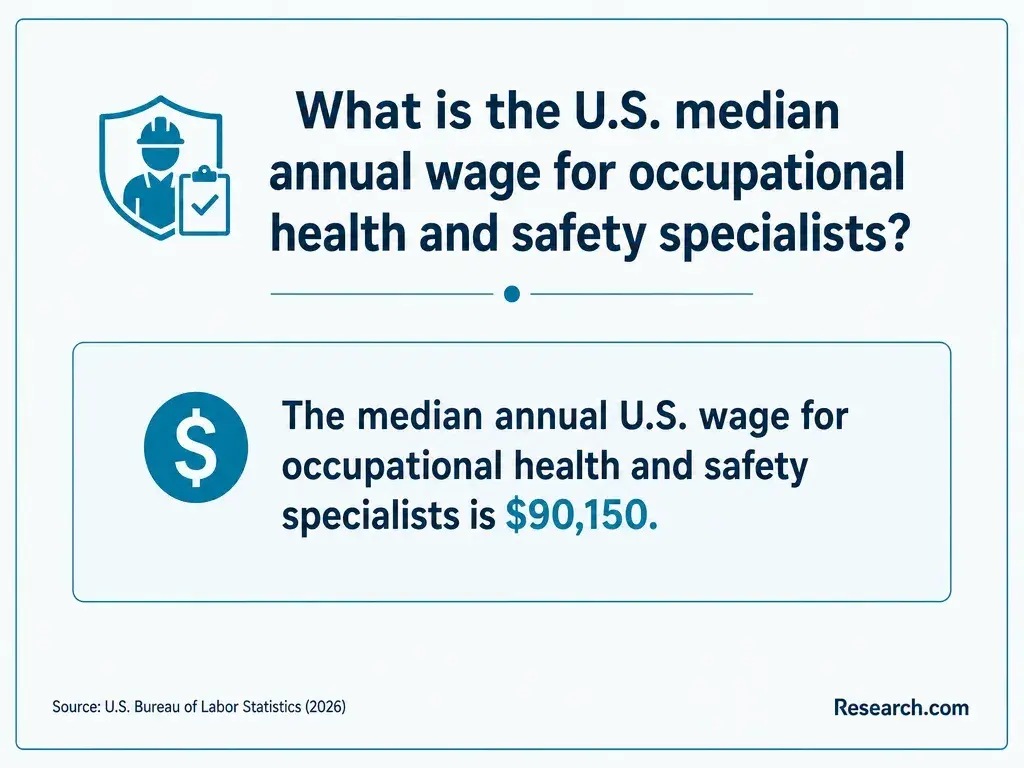
Salary depends on the actual occupation, employer, location, and experience - not on having completed a maternal health project. Compare job postings for the tasks you want with occupation-specific US Bureau of Labor Statistics wage information, and treat broad occupational medians as context rather than a graduate salary prediction.
A public health master's graduate pay guide can help frame further questions, but the strongest next career step is to pair the guide with approved, supervised experience and a clear account of what the student personally did.
Other Things You Should Know About Public Health
Only if the institution and site permit that specific tool and data use. Do not upload recordings or transcripts containing sensitive information to an unapproved service; check consent language, vendor terms, storage, and review requirements first.
Not necessarily. Arrange qualified language support through the approved project process, then check that translated questions preserve their meaning and remain understandable in context. Avoid asking an untrained family member to interpret sensitive responses.
Possibly, if the approved protocol and site permit it. Set the amount and payment process before recruitment, and consider whether collecting information for payment creates an additional privacy obligation.
Usually a student-authored, nonconfidential draft is the safest choice. Confirm school and partner ownership rules, remove identifying or proprietary content, and describe the document accurately as a proposal unless it was approved and used.
- Maternal health | who.int https://www.who.int/health-topics/maternal-health
- Trauma-Informed Approaches and Programs | samhsa.gov https://www.samhsa.gov/mental-health/trauma-violence/trauma-informed-approaches-programs
- Informed Consent - StatPearls - NCBI Bookshelf - NIH https://www.ncbi.nlm.nih.gov/books/NBK430827/
- Improving Health Through Transportation Policy | cdc.gov https://www.cdc.gov/transportation/php/about/index.html
- Developing topic guides - JSNA Hub - Camden Council https://jsna.camden.gov.uk/guidance/qualitative-methods/talk-based-methods/topic-guides/
- Overcoming Transportation Barriers for Low-Income... - PMC https://pmc.ncbi.nlm.nih.gov/articles/PMC12652909/
- Pregnancy and Childbirth - Healthy People 2030 - odphp https://odphp.health.gov/healthypeople/objectives-and-data/browse-objectives/pregnancy-and-childbirth
- Informed Consent FAQs | hhs.gov https://www.hhs.gov/ohrp/regulations-and-policy/guidance/faq/informed-consent/index.html
- Determining the Scope of Your Project | mit.edu https://tll.mit.edu/about/research-evaluation/determining-the-scope-of-your-project/
- How To Develop a Project Scope Statement in 8 Steps | Northeastern University Graduate Programs https://graduate.northeastern.edu/knowledge-hub/develop-project-scope-statement/