2027 Graduate Public Health Preparation for Public Health Data Analyst Roles

Co-Founder and Chief Data Scientist
A graduate public health degree can help you move into data analysis, but the degree title alone will not show employers that you can clean data, choose sound methods, and explain findings responsibly.
This guide is for prospective students and early-career professionals deciding whether an MPH, an MS, or targeted training fits their starting skills and intended role. It explains what to study, what work to produce, and what to verify before paying for a program - so you can choose preparation that leads to credible evidence of analyst readiness.
Key Things You Should Know
- An MPH with substantial quantitative coursework or a methods-focused MS can prepare you for analyst roles; neither substitutes for a portfolio showing reproducible work with public health data.
- A bachelor's degree plus relevant technical experience can qualify candidates for some analyst jobs. Check actual postings before assuming a graduate degree is required.
- The US Bureau of Labor Statistics projects 16% employment growth for epidemiologists from 2024 to 2034, but that occupation is not interchangeable with every job titled "public health data analyst."
What education is required to become a public health data analyst?
There is no single US educational requirement for a job titled public health data analyst. The title may describe someone preparing surveillance reports for a health department, evaluating a nonprofit program, or analyzing health-system data. Employers set their own degree, software, and experience requirements.
Some entry-level analyst or research-assistant positions accept a bachelor's degree in public health, statistics, computer science, a social science, or another relevant field when the applicant can demonstrate quantitative skills. A master's degree may be preferred for work involving study design, advanced modeling, or independent interpretation. Epidemiologist positions are a distinct occupation and typically require at least a master's degree, according to the US Bureau of Labor Statistics (BLS).
Start with a sample of postings from employers you would actually consider. Separate required qualifications from preferred ones, then note whether your gap is a credential, a technical skill, or applied experience. If you do not yet have a bachelor's degree, a public health BS program selection guide may be more relevant than graduate admissions advice; compare its quantitative requirements with those of statistics or computing majors as well.
Which graduate public health degrees prepare students for data analyst roles?
Choose a degree by the analytical work you want to perform, not by its label alone. The comparison below describes common orientations; the course catalog and project requirements determine whether a particular program delivers the depth you need.
| Pathway | Best fit for | Check before enrolling |
| MPH with epidemiology or biostatistics coursework | Analysts who need population-health context alongside methods and practice experience | Depth of statistics, programming, and the analytical responsibilities available in applied projects |
| MS in biostatistics, epidemiology, or a related field | Students seeking deeper quantitative or research training | Mathematics prerequisites, computing sequence, and thesis or research expectations |
| MS in data science or statistics | Students targeting technical analytics across sectors | Whether public health datasets, epidemiologic reasoning, and health-data governance are taught or must be learned elsewhere |
An MPH may be the better choice if you want to interpret data for health departments or community programs and communicate implications for prevention. A methods-intensive MS may fit better if your target postings emphasize statistical modeling or research. The distinction varies by institution: an MPH elective in regression does not necessarily provide the depth of an MS sequence. For a broader comparison of MPH and related public health graduate pathways, keep the specific analyst tasks in your target postings as the deciding standard.
What skills do public health data analysts need?
Analysts turn imperfect population-level data into findings that others can use without overstating what the evidence shows. That requires more than proficiency in a software package. A strong candidate can document data cleaning, define a population and denominator, describe missingness, select an appropriate analysis, and explain its limitations.
Employers may request SQL for extracting and joining data; R, Python, SAS, or another package for analysis; and spreadsheet or visualization tools for reporting. The specific stack varies. More transferable skills include reproducible scripts, quality checks, descriptive statistics, regression appropriate to the question, clear charts, and writing for nontechnical decision-makers. Analysts also need to distinguish association from causation and recognize when small counts, inconsistent coding, or nonrepresentative data make a conclusion unreliable.
Health data adds responsibilities around privacy, access, and interpretation. Publicly available aggregate data, deidentified records, and restricted identifiable records do not carry the same permissions. An analyst must follow the relevant data-use agreement, employer policy, and review process rather than assuming that educational access permits public release.
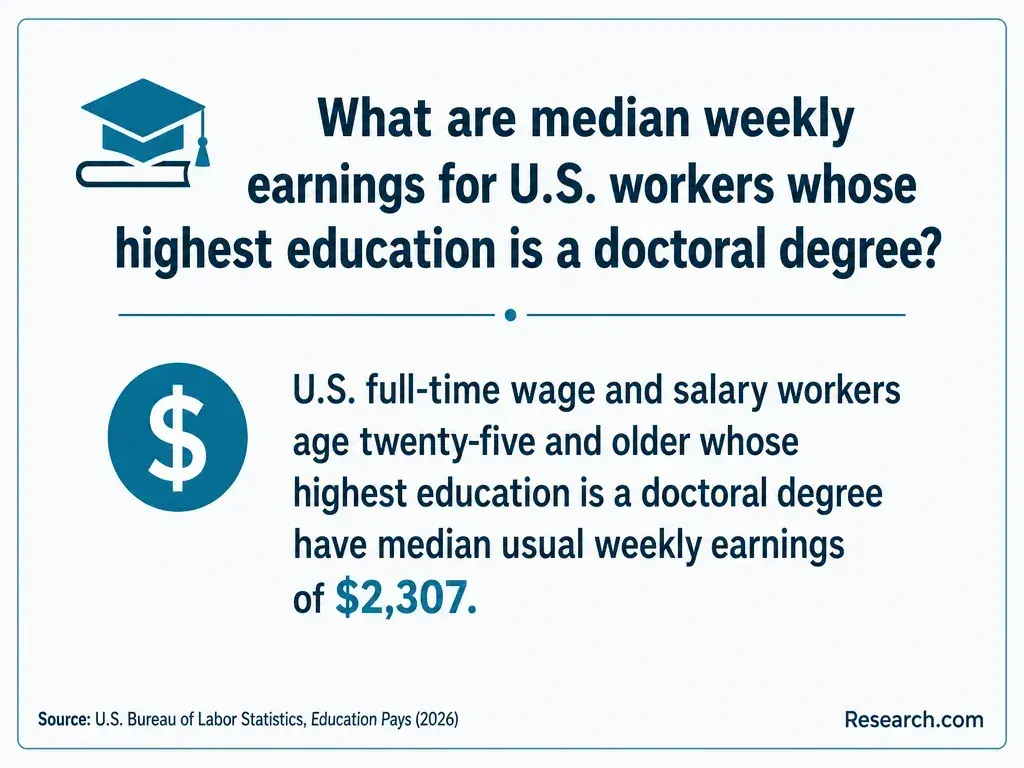
A PhD is generally unnecessary for an applied analyst position. If your goal instead involves leading original methodological research, investigate supervision and funding alongside public health PhD costs and program choices; do not pursue a doctorate solely to fill a programming gap.
Look for a sequence that builds from statistical foundations to defensible applied analysis. Course titles differ, so inspect syllabi, prerequisites, assignments, and the level of independence expected in the final project.
A useful sequence begins with introductory statistics and data management, then moves into epidemiologic study design and measures, statistical inference and regression, and programming for reproducible analysis. Depending on your target work, electives in survey methods, geographic information systems, program evaluation, longitudinal analysis, or data visualization may be more valuable than a second broad public health survey course.
Prioritize a course or supervised project in which you must pose a public health question, check data quality, explain your analytical choices, and revise a report after feedback. A polished dashboard without a documented denominator or limitations section is weaker evidence of readiness than a modest, well-explained analysis.
If your undergraduate record does not show quantitative readiness, completing a statistics or programming course can provide recent evidence of preparation; it does not automatically waive an MS program's mathematics prerequisites. Applicants weighing how to document improvement can also consult guidance on strengthening a lower-GPA public health master's application.
Yes - if the program offers rigorous quantitative instruction, timely technical support, and a feasible way to complete substantial analytical work. Online delivery can make coursework accessible to employed students, but it does not guarantee flexible deadlines, asynchronous classes, or a remote practicum.
Ask to see how students receive feedback on code and statistical reasoning, which software and computing resources are supplied, and whether advanced methods courses run often enough for your intended graduation schedule. If an MPH requires applied practice, confirm whether a proposed workplace project could qualify and who must approve the site, supervisor, and deliverables. A remote project still needs appropriate data permissions and supervision.
When comparing accessible online public health master's options, treat admissions accessibility as separate from analyst preparation. A convenient format is worthwhile only if you can complete the methods sequence and build work that employers can evaluate.
Requirements vary by degree and institution. MPH programs commonly review a completed bachelor's degree, transcripts, a statement of purpose, and other application materials specified by the school. Quantitative MS programs may additionally require particular coursework in calculus, linear algebra, statistics, or programming. Relevant work or research can strengthen an application without replacing a formal prerequisite unless the program permits that substitution.
Before applying, compare your transcript with each program's published requirements. Ask whether an outstanding course can be completed before enrollment, whether recent coursework can demonstrate readiness, and how the program evaluates applicants from your academic background. Check the current policy for tests and references rather than assuming all schools use the same rules. Applicants for whom references are an obstacle can review public health graduate applications without references, then confirm the exact requirement for each intended entry term.
In your statement, connect a specific public health question to evidence of analytical work you have already done. A clearly documented class, workplace, or independent project is more informative than an unsupported claim of being "good with data."
Completion time depends on required credits, prerequisite courses, course availability, and full-time or part-time enrollment. An MPH may also require approved applied practice, while an MS may require a thesis or research project. Those obligations can extend the calendar even when the advertised coursework appears manageable.
Compare total cost to completion, not tuition alone: required credits multiplied by the applicable rate, mandatory fees, software or equipment, travel, and any costs associated with fieldwork or an extra term. Ask whether the quoted rate applies to online students and whether required courses are offered on a schedule that supports your plan. No single national price reliably represents all public health graduate programs.
If you already hold a relevant degree, a smaller investment in methods coursework plus supervised analytical experience may offer a more direct route than another full degree. Use comparisons of affordable distance learning public health degrees as a starting point, then request a program-specific cost and course plan.
Verify that the university holds recognized institutional accreditation. If CEPH accreditation matters to your intended MPH pathway or employer, separately confirm the Council on Education for Public Health's listing for the exact school, public health program, and degree you plan to enter. Institutional accreditation does not establish CEPH coverage, and a university's CEPH-accredited MPH does not necessarily mean its separate MS is covered.
Review the accreditor's directory and the program's current disclosures, then ask the school to clarify any mismatch before paying a deposit. Accreditation is an important quality and eligibility check, not proof that a curriculum teaches the programming or applied analysis your target job requires. A guide to checking CEPH accreditation before MPH enrollment can help frame that verification.
Potential job titles include public health data analyst, surveillance analyst, program evaluation analyst, research assistant, and health data specialist. Responsibilities differ substantially: one role may focus on routine reporting and data quality, while another expects independent study design or advanced modeling. Read the duties, not just the title.
A graduate with limited work experience may be most competitive for analyst positions with defined projects and supervision. Experience preparing reports, maintaining datasets, or supporting evaluation can provide a path toward more independent work. Epidemiologist and biostatistician roles may call for different graduate preparation and methods depth; a generalist MPH does not automatically qualify someone for either.
If you are still completing your first degree, examine the quantitative courses and project opportunities available through comparing fast-paced online public health bachelor's courses. Faster completion helps only if you retain time to develop the skills and experience sought in entry-level postings.
What salaries and job outlook can public health data analysts expect?
There is no single BLS occupation covering every position titled "public health data analyst," so an occupation-wide median should not be presented as the expected pay for graduates. As one related benchmark, BLS reports a $83,980 median annual wage for epidemiologists in May 2024 and projects 16% employment growth from 2024 to 2034. These figures describe epidemiologists across employers and experience levels - not starting analyst salaries or outcomes for an MPH program.
For a useful personal comparison, collect posted pay ranges for jobs matching your intended location, employer type, and responsibilities. Public-sector pay bands, research funding, technical requirements, and experience can all affect compensation. Weigh any likely benefit against tuition, time away from work, and whether the target job actually requires graduate education. Comparisons of public health degrees by price and completion time can inform that calculation, but a program's advertised duration or an occupational median cannot establish your individual return.
Other Things You Should Know About Public Health
Include a concise question, a data dictionary or source description, reproducible code where sharing is permitted, quality checks, a clear visual or report, and limitations. Use public data or obtain permission before sharing workplace work; remove confidential information.
Public availability does not answer every oversight question. Check the dataset's terms and your institution's rules, particularly if the project involves combining records, contacting people, or publishing research. Seek a formal determination when required rather than making one yourself.
It can help fill a specific technical gap, especially if you already understand public health work. Compare certificate projects with job requirements and look for supervised experience; the certificate alone may not satisfy degree or experience requirements.
Ask what question you will analyze, which data you may access, who will review your methods, and what you can show future employers. Confirm any academic approval separately from the host organization's offer.
- Health Insurance Portability and Accountability Act (HIPAA) Compliance - StatPearls - NCBI Bookshelf https://www.ncbi.nlm.nih.gov/books/NBK500019/
- Essential Skill and Knowledge Required for Health Data Professionals: A Content Analysis of Job Advertisements | nih.gov https://pmc.ncbi.nlm.nih.gov/articles/PMC11605378/
- Summary of the HIPAA Security Rule | hhs.gov https://www.hhs.gov/hipaa/for-professionals/security/laws-regulations/index.html
- What Software Do Healthcare Data Analysts Actually Use? A Guide for Prospective MSDA Students https://www.mgbu.edu/news-and-more/opinions/data-analytics/what-software-do-healthcare-data-analysts-actually-use-guide-prospective-msda-students
- How To Become a Health Care Data Analyst | University of Miami https://news.miami.edu/uonline/stories/2024/08/how-to-become-a-healthcare-data-analyst.html
- Practicum and Capstone: COPHP MPH | Health Systems and Population Health https://hspop.uw.edu/cophpmph/program-experience/practicum-capstone/
- What Does a Public Health Data Analyst Do? - Campus Insider https://insider.augusta.edu/what-does-a-public-health-data-analyst-do/
- MPH vs MS vs MHA: Which Public Health Master's Degree Is Right for You? | Tulane WSPH https://sph.tulane.edu/mph-vs-ms-vs-mha
- Public Health Data Analyst | Careers in Public Health.net https://www.careersinpublichealth.net/careers/public-health-data-analyst/
- 12 Must-Have Data Analysis Tools for 2026 | Python, SQL & AI | Splunk https://www.splunk.com/en_us/blog/learn/data-analysis-tools.html