2027 MPH vs MS in Sustainability for Climate and Health Policy

Co-Founder and Chief Data Scientist
Climate and health policy sits between public health, environmental planning, and government decision-making. An MPH and an MS in Sustainability can both lead toward this work, but they prepare students to answer different questions. That distinction matters when choosing courses, projects, and a first policy role.
This comparison is for US applicants deciding which degree will build on their existing skills. It explains where each pathway is strongest, what either may leave out, and how to evaluate programs against a specific career goal.
Key Things You Should Know
- Choose an MPH when your target work centers on population-health impacts, health equity, surveillance, or implementing public health policy; choose an MS in Sustainability when it centers on climate mitigation, adaptation planning, or environmental systems.
- Neither degree title proves climate-health expertise. Compare methods courses, policy projects, field partners, and the work graduates actually perform.
- Budget for the entire pathway, not tuition alone: required fieldwork, travel, reduced earnings, and the time needed to gain relevant experience can change which degree is the better investment.
What is the difference between an MPH and an MS in Sustainability for climate and health policy?
An MPH is a professional public health degree focused on preventing harm across populations. In climate policy, that can mean identifying who faces the greatest heat risk, evaluating a smoke-response program, or assessing whether an adaptation plan protects health equitably. An MS in Sustainability generally studies environmental, social, and economic systems. Its climate-policy work may focus on emissions, infrastructure, resource use, or adaptation strategy. Actual curricula vary considerably.
The distinction is the decision each degree prepares you to inform. Public health asks what a climate hazard means for people and which interventions improve health. Sustainability asks how communities and organizations can change systems that produce environmental harm or vulnerability. Both perspectives are useful in a climate-health office; neither automatically supplies the other's methods.
Both are graduate degrees. If you have not yet completed a bachelor's degree, distance learning options for public health undergraduates address an earlier educational decision rather than an alternative master's credential.
Which degree is better for a career in climate and health policy?
For a health department or health-focused policy role, the MPH is usually the more direct fit. For work on decarbonization, resilience planning, or environmental strategy where health is one consideration among several, an MS in Sustainability may fit better. Start with job descriptions for the organizations you hope to join, not a program's concentration label.
The comparison below ties each degree to the work you would need to demonstrate in an application. It also shows where a strong elective or supervised project could narrow a gap.
| Target responsibility | More direct starting point | Gap to check |
| Assess heat, smoke, or flooding impacts on population health | MPH | Environmental exposure, climate data, and spatial analysis |
| Design emissions or infrastructure policy | MS in Sustainability | Health impact assessment and public health equity methods |
| Evaluate whether an adaptation program reaches vulnerable residents | MPH | Planning processes and environmental systems |
| Coordinate a cross-agency climate and health plan | Either, with relevant experience | Government operations, partnerships, and policy implementation |
If you already have public health experience, a sustainability degree may add a missing environmental-policy perspective. If you come from planning or environmental science, an MPH may add epidemiology and community-health practice. A degree is less compelling when a few targeted courses, a supervised project, or a move into an adjacent role would close the actual gap. For readers considering eventual practice leadership or research, reviewing public health doctoral degree choices is a separate decision; a doctorate is not a default requirement for climate-health policy work.
What careers can you pursue with an MPH or MS in Sustainability?
Possible roles include climate and health program coordinator, environmental health analyst, resilience planner, sustainability specialist, policy analyst, and research assistant. Employers may be health departments, planning agencies, nonprofits, universities, health systems, or consulting organizations. Titles overlap, so examine duties: a policy analyst might write legislative briefs, analyze data, convene residents, or manage grants.
Early-career applicants should expect to demonstrate a concrete skill through a supervised project, internship, or prior job. An MPH student might produce an ethically reviewed, appropriately sourced heat-health needs assessment; an MS student might evaluate a municipal adaptation proposal and explain its likely health implications. These are examples of potential work, not projects every program offers or evidence of independent professional authority.
Research leadership and senior policy management usually require substantial experience beyond a master's. If doctoral training becomes relevant later, admissions-focused public health doctorate rankings should not be mistaken for evidence that a program leads to a particular climate-policy job.
MPH study commonly includes epidemiology, biostatistics, environmental health, health policy, and program planning. A sustainability MS may emphasize climate science, energy or land-use systems, environmental economics, governance, and analytical methods. Neither course list is universal, and a course mentioning climate does not establish an official climate-health concentration.
For policy work, look beyond course titles. A useful MPH pathway connects exposure and health data to policy evaluation; a useful sustainability pathway connects climate interventions to distributional health effects. Ask to see syllabi and recent student project descriptions, then check whether you can take courses across schools without scheduling or enrollment barriers. Students seeking deeper quantitative training alongside employment can examine biostatistics graduate education for employed adults, though a separate degree may be unnecessary for a policy role.
Also distinguish the culminating work. An MPH may require an approved applied practice experience and an integrative project, while an MS may offer a thesis, research project, internship, or capstone. Confirm the specific program's supervision, site-approval, data-access, and assessment rules before treating any opportunity as guaranteed.
Both normally require a completed bachelor's degree and an application, but prerequisites depend on the institution and program. An MPH may welcome applicants from many majors while expecting evidence of quantitative readiness and interest in population health. A sustainability MS may look more closely at preparation in environmental science, economics, policy, design, or quantitative analysis, depending on its focus.
Applicants changing fields should separate required prerequisites from skills that merely strengthen an application. Check each program's current rules for statistics, other math or science coursework, work experience, tests, references, and any accepted alternatives. If references are a barrier, public health graduate programs with no recommendation letters may be worth investigating; verify the requirement for the exact degree and entry term.
A practical preparation step is to match your transcript and experience against the methods used in your target jobs. If you lack both statistics and evidence of policy work, address those gaps before assuming an application essay can substitute for them.
Neither format is inherently better. An online program can let an employed student build a climate-health project with a local agency. Campus study may make faculty research, in-person partnerships, and unfamiliar methods easier to access. The deciding factor is whether you can obtain relevant supervision and produce credible work, not where you watch lectures.
Before enrolling, ask whether courses meet live, whether field placements can be completed near home, who finds the site, and whether any campus visits or evening meetings are required. Check access to climate data, GIS instruction, cross-disciplinary electives, and local employers. Advertised flexibility can disappear when a required project depends on daytime agency meetings. When comparing affordable distance learning public health degrees, confirm that the listing covers the graduate credential and fieldwork arrangement you actually need.
Time to completion depends on credit requirements, full- or part-time enrollment, course sequencing, and whether a thesis or placement requires another term. Do not assume an online option is shorter: a required methods course offered infrequently or a delayed field-site agreement can extend either format.
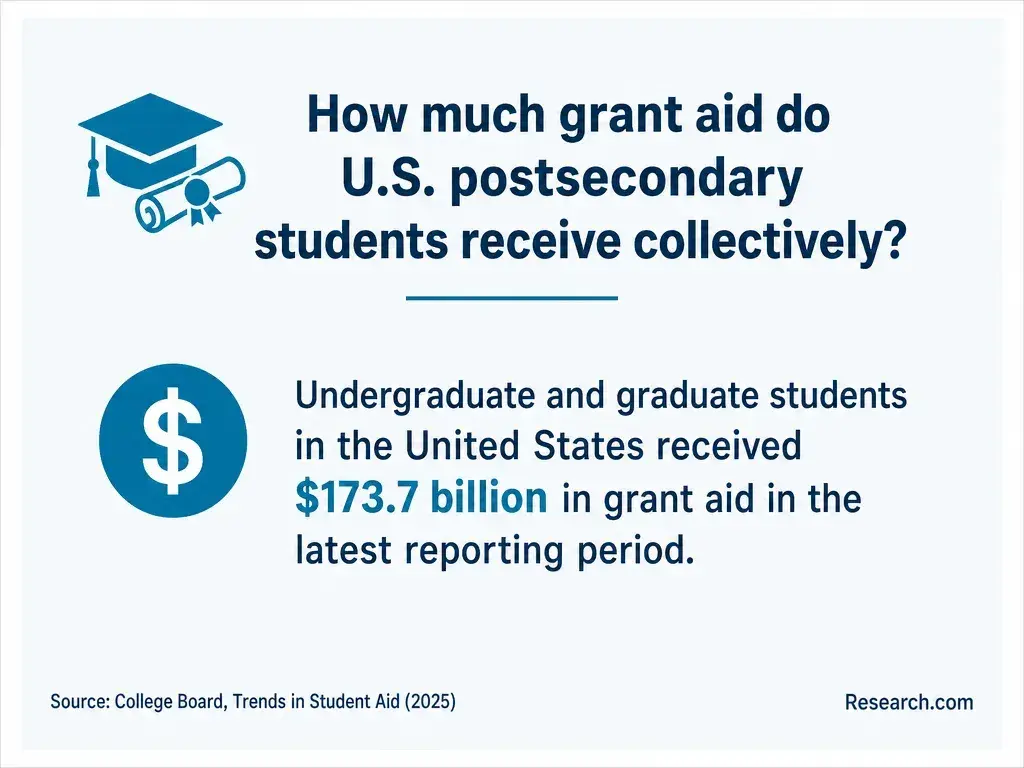
Published tuition is only the starting point. Compare the total credits charged, mandatory fees, travel, software, placement expenses, and earnings you might give up. Ask whether employer assistance or university aid applies to your specific program and enrollment load. A useful first pass is comparing tuition with public health graduate outcomes, followed by a program-specific cost estimate; broad earnings figures cannot establish your personal return on investment.
The lower-cost choice may be the one that lets you keep a relevant job or complete an approved project with your employer. Confirm that the school permits that arrangement before including it in your financial plan.
First, verify that the university has recognized institutional accreditation. For an MPH, check the Council on Education for Public Health's accreditation record and confirm that the specific school, unit, or program and degree are within its scope. A university's accredited status does not by itself mean its MPH is CEPH-accredited.
An MS in Sustainability is not automatically deficient because it lacks CEPH accreditation: CEPH evaluates public health education, not every sustainability degree. Judge the MS by institutional accreditation, curriculum, faculty expertise, project supervision, and employer fit. If you later compare a different credential, such as lower-tuition online PhD programs in public health, repeat the scope check rather than carrying an MPH's accreditation assumptions over to a doctoral degree.
There is no reliable single salary for "climate and health policy graduate." Occupation, employer, location, experience, and technical duties matter more than the degree label. As one relevant benchmark, the US Bureau of Labor Statistics reports a May 2024 median annual wage of $83,980 for epidemiologists. That is an occupation-wide figure, not an expected starting salary for an MPH graduate or a wage estimate for sustainability specialists.
Use the occupation whose duties match your target job when reviewing BLS outlook figures; a health policy coordinator and an epidemiologist should not be treated as the same labor market. Compare local postings for required methods and experience, then assess whether a program helps you meet those requirements. Broader discussions of average earnings after an MPH can provide context but cannot predict an offer in climate policy.
Do climate and health policy careers require licenses or certifications?
Most policy analyst, program coordination, and nonclinical research roles do not have one universal professional license. Requirements belong to the job and jurisdiction, however: work involving regulated environmental assessments, engineering, clinical care, or another licensed profession can require a separate credential. Neither an MPH nor an MS in Sustainability grants clinical or technical licensure.
Optional public health or specialty certifications may help demonstrate defined competencies, but eligibility and employer value vary. Check the certifying body's current rules and actual job postings before paying for one. If a full master's is still under consideration, compare the credential's limited purpose with public health master's tuition after university aid; a certificate and a degree solve different preparation problems, and neither replaces relevant work.
Other Things You Should Know About Public Health
Possibly. Obtain the program's approval for the learning objectives, supervisor, and deliverable before relying on your job as a project site. Employer permission to work there does not automatically permit use of its data.
Not for every role. GIS can be valuable when work involves mapping hazards, services, or population vulnerability. Policy writing and partnership roles may place more weight on evidence interpretation and communication.
Yes, if their skills match the opening. Demonstrated public health methods, community engagement, or a health-focused project may help bridge the gap; check whether a particular posting specifies an MPH or other qualification.
State the policy decision, identify the population and evidence used, explain uncertainty, and give feasible recommendations. Use public or authorized data, and remove confidential information before sharing work produced for an employer or community partner.
- Master's Degree Student Short-Term Opportunities | cdc.gov https://www.cdc.gov/fellowships/php/opportunities/applying-for-masters-degree-students-opportunities.html
- Climate Impacts on Human Health | US EPA https://19january2017snapshot.epa.gov/climate-impacts/climate-impacts-human-health_.html
- Climate change and health equity: A public health perspective on climate justice - PMC https://pmc.ncbi.nlm.nih.gov/articles/PMC10722520/
- Climate change | who.int https://www.who.int/news-room/fact-sheets/detail/climate-change-and-health
- MPH vs MS vs MHA: Which Public Health Master's Degree Is Right for You? | Tulane WSPH https://sph.tulane.edu/mph-vs-ms-vs-mha
- Master of Science Degree in Environmental Health Sciences | umich.edu https://sph.umich.edu/ehs/programs/ms.html
- Is an MPH Worth It? Career, Salary + ROI Guide | Marshall University https://www.marshall.edu/blog/is-an-mph-worth-it/
- Green Jobs: What Can You Do with a Master in Sustainability? | Bard College https://leadthechange.bard.edu/blog/green-jobs-what-to-do-with-a-master-of-science-in-sustainability
- Why We Need Climate, Health, and Equity in All Policies | NAM https://nam.edu/perspectives/why-we-need-climate-health-and-equity-in-all-policies/
- Master of Public Health - Occupational and Environmental Health | Harvard T.H. Chan School of Public Health https://hsph.harvard.edu/program/mph-occupational-environmental-health/