2027 From Software Project Management to Public Health: Choosing a Graduate Pathway

Co-Founder and Chief Data Scientist
Software project managers already know how to coordinate teams, budgets, deadlines, and complex systems. Moving into public health means applying those strengths to population-level problems - and learning where software delivery differs from evidence-based health practice. This guide is for US professionals deciding whether an MPH, a research-focused degree, or a smaller training investment fits their target role. It compares the preparation, experience, costs, and career evidence you need to evaluate before enrolling.
Key Things You Should Know
- For health department or nonprofit program leadership, an MPH plus relevant field experience is usually a closer fit than a research-focused MS; health-data specialists should compare the quantitative depth of specific MS programs.
- A degree is not always the first move: a supervised public health project or targeted methods training may be enough to test a transition into health-tech implementation or program operations.
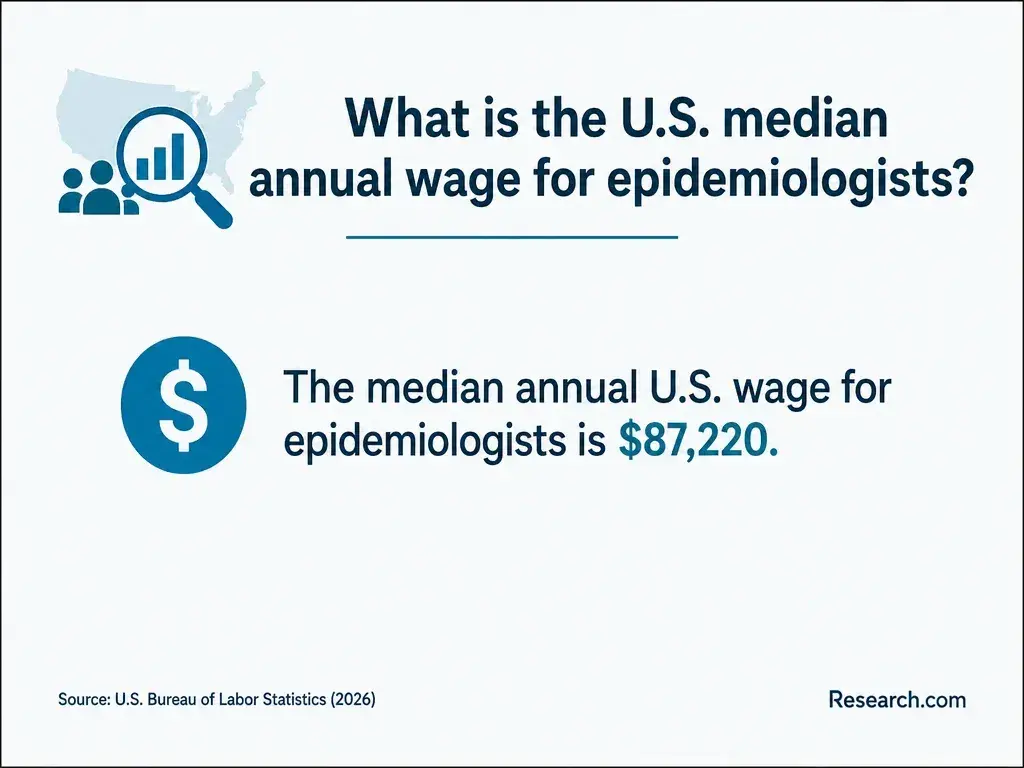
- For labor-market context, the US Bureau of Labor Statistics reports a May 2024 median annual wage of $83,980 for epidemiologists - not for all public health graduates. Match any salary or growth figure to the occupation you actually want.
What graduate public health degrees can software project managers pursue?
Start with the work you want to do, not the degree title. A manager who wants to implement community health programs needs different training from one who wants to design epidemiologic studies. Project delivery experience is valuable in both settings, but it does not replace population-health knowledge or research methods.
The principal pathways differ in purpose:
| Pathway | Best fit for a software project manager | Important limitation |
| Master of Public Health (MPH) | Program implementation, evaluation, health policy, preparedness, or population-health operations | A generalist MPH may not provide enough advanced statistics for specialist analyst roles. |
| Research-oriented MS | Epidemiology, biostatistics, or another defined research and methods goal | May offer less practice-based management training; prerequisites and thesis expectations vary. |
| DrPH or PhD | Later-stage practice leadership or an established research agenda, respectively | Usually a poor first step solely to explore a career change. |
If quantitative health-data work is the goal, examine required mathematics, statistical computing, research opportunities, and employer expectations when comparing online biostatistics graduate programs. A health informatics or data science degree may be more direct if the desired work is building clinical data systems rather than studying population health. If you do not yet hold a bachelor's degree, graduate admission must wait; public health undergraduate degree options online are a separate decision.
Why does CEPH accreditation matter for public health graduate programs?
The Council on Education for Public Health (CEPH) accredits eligible schools and programs of public health against public health education standards. For an MPH applicant, it is evidence that the covered program has undergone specialized review. It is distinct from the university's institutional accreditation, which addresses the institution more broadly.
Check the scope, not just the logo. Confirm the exact school or program in CEPH's directory, whether your intended degree is included, and the status applicable to your enrollment period. An institution may offer degrees with different accreditation coverage. CEPH accreditation also does not establish that a program's electives, field placement support, or employer connections fit your transition.
Accreditation and admission are different questions, particularly for applicants considering advanced study later. A public health doctoral admissions comparison can help identify programs to investigate, but confirm each doctorate's current requirements and accreditation scope with the school and CEPH before relying on a comparison.
What careers can a public health graduate degree prepare you for?
The most accessible transition may be an adjacent role: managing implementation for a health department, nonprofit, research organization, or health technology team. You can demonstrate vendor coordination, risk management, and delivery experience while building knowledge of public health stakeholders, budgets, reporting, and community priorities.
Other targets require a more substantial change. A program evaluator needs evidence of study design, appropriate measures, data interpretation, and communication of limitations. An epidemiologist typically needs relevant graduate-level methods preparation and experience with surveillance or research tasks. A public health program manager may need demonstrated community partnerships and grant or government operations experience, not merely a management title. Job postings - not degree marketing - show which experience an employer will accept.
Before choosing a degree, collect several postings for one target role and mark requirements you already meet, those a curriculum could address, and those requiring supervised work. Use MPH-related occupations and earnings as occupation-level context, not evidence that a particular program leads to a particular job. If you mainly want to manage software implementation in a health setting, employer training and a documented health-sector project may be more direct than an MPH.
Online study can preserve employment and widen your choice of programs. Campus study can make scheduled collaboration, local networking, and access to some research teams easier. Neither format automatically supplies a relevant practicum site or makes a career change easier.
For a working project manager, the deciding issue is often control over the weekly schedule. Ask whether courses have live meetings, fixed-time group work, exams, campus visits, or a field placement during business hours. Also ask who identifies and approves placement sites and whether your current employer could host an eligible project. An asynchronous lecture does not make partner meetings asynchronous.
Do not infer graduate pacing from descriptions of public health undergraduate study with intensive terms. Compare the actual graduate course calendar, assessment load, and fieldwork requirements for the term in which you would enroll.
An MPH generally introduces epidemiology, biostatistics, social and structural influences on health, policy, environmental health, and program planning and evaluation. Practice-oriented programs commonly require applied work; research-oriented MS programs may place more emphasis on advanced methods and a thesis or research project. Verify the curriculum rather than assuming every degree with the same name has the same depth.
Your existing skills in scheduling, requirements gathering, and stakeholder communication transfer most readily to implementation. The important gaps are often defining a population-health problem, selecting defensible measures, interpreting uncertain evidence, and working with communities rather than treating them as product users. For example, delivering a vaccination dashboard on time is different from establishing whether its measures are valid, its data use is permitted, and its outputs help a health department act fairly.
Seek coursework and supervised work that produce evidence of your target skill: an evaluation plan for program work, or appropriately governed analysis for a data role. A single introductory statistics course is not advanced biostatistical preparation. If your goal ultimately requires doctoral epidemiology research, investigate methods readiness and epidemiology doctorate aid and affordability comparisons separately rather than assuming an MPH automatically leads to funded doctoral study.
Many graduate programs consider applicants with bachelor's degrees outside public health, including computing and business backgrounds. Requirements differ by school and concentration. A quantitative MS may specify mathematics, statistics, or programming preparation that a generalist MPH does not. Programs also set their own policies for grades, recommendations, essays, tests, and application systems.
Present project-management experience as evidence of specific responsibilities, then explain the public health work you intend to pursue and what you still need to learn. Avoid describing delivery of a health software product as epidemiologic research unless you actually performed that work.
Before applying, complete a short evidence check:
- Choose a target role and identify the degree and technical skills commonly requested in its job postings.
- Compare your transcript with each program's stated prerequisites; ask admissions whether an alternative course or recent work can satisfy any requirement.
- Confirm the current application materials and deadlines, then select recommenders who can describe your analytical judgment, leadership, or community-facing work.
If recommendations are a barrier, review online public health master's programs without recommendation letters, then verify the policy for your exact degree and entry term. A simplified application is not by itself evidence of career fit.
Completion time depends on required credits, course sequencing, enrollment pace, and fieldwork or thesis requirements. Part-time study may let you keep earning, but it can extend the period in which tuition rates change or career benefits are delayed. A faster program may be impractical if its placement or live-session schedule conflicts with work.
Compare an itemized estimate from each school: tuition for the full required credit load, mandatory fees, travel or residency costs, placement expenses, and any continuation charges. Then account separately for time away from paid work. Published per-credit tuition is not a total program price, and neither a scholarship nor employer reimbursement should be counted until its conditions are confirmed.
Use scholarship-supported online public health master's options to identify aid questions worth asking. Request a written estimate based on your enrollment pace and ask whether awards renew, require a minimum course load, or apply to summer and fieldwork terms.
There is no reliable single salary for "public health graduate degree holders." Pay follows the occupation, employer, location, responsibilities, and experience. A software project manager moving into public health operations may encounter a different pay structure from one entering an analyst or epidemiologist role; public-sector salary bands can also limit what an employer offers.
As one occupation-specific benchmark, the US Bureau of Labor Statistics reports a May 2024 median annual wage of $83,980 for epidemiologists. That is the midpoint across employed epidemiologists, not an entry-level offer, an MPH graduate outcome, or a forecast for a career changer. Use the BLS occupation definition and local job postings together before comparing a potential offer with your current compensation.
For a return-on-investment decision, compare plausible roles you could qualify for after gaining relevant experience, rather than subtracting tuition from an occupation-wide median. Lists of inexpensive online public health master's options can help you start a cost comparison, but verify total charges and do not treat advertised earnings as a program-specific payoff.
Outlook depends on the occupation, not on holding a public health degree. The US Bureau of Labor Statistics projects 16% employment growth for epidemiologists from 2024 to 2034. That national projection indicates demand for the occupation overall; it does not measure openings for new graduates in your city or guarantee a path from software management into epidemiology.
For an adjacent transition, examine local health departments, nonprofit organizations, health systems, research employers, and their contractors. Look at the tasks behind titles such as implementation manager or program evaluator: the mix of funding, public-sector hiring rules, data skills, and field experience may matter more than the title. Compare openings over time rather than using one posting as a labor-market forecast.
Doctoral study should not be a default response to a competitive market. If you are considering research as a long-term destination, examine assistantship duties, funding duration, and career outcomes alongside comparing doctoral public health costs and pay. A doctorate's time commitment needs justification by the specific work you want to do.
Which public health certifications and professional standards matter?
Certifications can signal defined knowledge, but they do not substitute for a degree requirement, supervised experience, or an occupational license. The Certified in Public Health (CPH) credential and the Certified Health Education Specialist (CHES) or Master Certified Health Education Specialist (MCHES) credentials serve different professional purposes. Check the administering organizations' current eligibility rules, exams, and renewal requirements before planning around any of them.
For software project managers, the better initial question is whether target employers request a public health credential at all. A role centered on implementation may value documented delivery work and familiarity with public health data governance; a health education role may have different preparation expectations. No MPH automatically confers certification or clinical licensure.
Professional standards also shape daily work. Before using agency or partner data in a class project or portfolio, confirm permissions, privacy obligations, and any required institutional review or data-use agreement. Paying for another credential - or a doctorate - will not resolve an evidence or experience gap that the target role requires you to demonstrate. That distinction is worth retaining when reviewing doctoral public health costs and pay.
Other Things You Should Know About Public Health
Possibly, if the project meets your program's competencies and supervision rules and the company approves the work. Obtain the academic program's approval before relying on your job as a placement.
No confidential code, client data, or internal documents should be shared without permission. Describe your responsibilities and results at an authorized level of detail, or create a clearly labeled, nonconfidential example.
Yes. A health-sector assignment, volunteer work with a defined scope, or a methods course can test your interest before you commit to a degree. Choose work that exposes you to public health decisions, not just another software delivery cycle.
It can support applications for implementation and operations roles, especially when paired with relevant health-sector work. It does not demonstrate epidemiology, community engagement, or program evaluation skills on its own.
- Competencies for Public Health Professionals | cdc.gov https://www.cdc.gov/infrastructure/training-professional-development/competencies-for-public-health-professionals.html
- MPH Fieldwork | Public Health | Binghamton University https://www.binghamton.edu/decker/public-health/academics/fieldwork.html
- What Is the Difference Between an MPH and MSPH Degree? | Emory University https://sph.emory.edu/degrees-programs/faq/mph-msph
- Graduate Admissions - UNC Catalog https://catalog.unc.edu/admissions/graduate/
- Graduate Admission Requirements | University of Cincinnati https://www.admissions.uc.edu/apply/graduate/requirements.html
- MHA vs. MPH Degrees: An Overview | American College of Education https://ace.edu/blog/mha-vs-mph-degrees-an-overview/
- MSPH vs. MPH: Which Public Health Degree Is Right for You? | Kent State Online https://onlinedegrees.kent.edu/college-of-public-health/community/msph-vs-mph
- MPH vs. MHA: Differences and Outcomes | 5 Public Administration Careers for MPA Graduates https://www.augusta.edu/online/blog/mph-vs-mha
- Public Health Employment Outcomes | Columbia University Mailman School of Public Health https://www.publichealth.columbia.edu/become-student/career-services/public-health-employment-outcomes
- Which MPH Program is Right For Me? | Health Systems and Population Health https://hspop.uw.edu/cophpmph/which-mph-program-is-right-for-me/