2027 Public Health PhD Admissions After a Generalist MPH

Co-Founder and Chief Data Scientist
A generalist MPH can prepare you to identify important public health problems, but PhD admissions committees also need evidence that you can investigate one independently. If your MPH offered broad practice training rather than a thesis or advanced methods sequence, that distinction matters when choosing programs and preparing an application.
This guide explains how to assess your eligibility, strengthen research readiness, compare doctoral concentrations and funding, and decide whether a research doctorate fits the work you want to do.
Key Things You Should Know
- A generalist MPH does not bar PhD admission; research experience, methods preparation, and faculty fit usually matter more than the concentration name.
- Build an application around a feasible research question, evidence that you can use appropriate methods, and a clear match with potential supervisors.
- Compare written funding terms and dissertation support, not tuition alone, because doctoral study can extend beyond funded coursework.
What is a public health PhD after a generalist MPH?
A public health PhD is a research doctorate. Students develop a specialized question, learn methods suited to it, complete required examinations or proposals, and produce a dissertation under faculty supervision. A generalist MPH is typically a professional degree built around population-health practice across several fields. It provides valuable context, but broad exposure does not necessarily include the advanced analysis or sustained research expected in a PhD.
The transition makes sense if you want to produce original evidence - for example, studying how a policy affects access to preventive services - rather than primarily manage a program that delivers those services. If your goal is senior practice leadership, a DrPH or additional responsibility at work may fit better. If the gap is one technical skill, a methods course or supervised research position may be more direct than another degree.
Earlier public health study establishes context, not a guaranteed doctoral pathway. An online bachelor's public health education guide can help distinguish foundational population-health coursework from the more specialized research preparation that PhD applicants must demonstrate, whether their MPH was generalist or specialized.
Can you get into a public health PhD program with a generalist MPH?
Yes, if the program accepts your prior degree and your application demonstrates research readiness. Admission eligibility and competitiveness are different. A school may accept an MPH from any concentration yet expect applicants to have substantial preparation in statistics, study design, or a field-specific method. Some programs also admit applicants without an MPH; none of those policies establishes what a different program will require.
A useful self-assessment separates the name of your degree from evidence of what you can do. The comparison below shows how to present common generalist-MPH experiences without overstating them.
| Experience | What it can show | What to check or strengthen |
| Applied practice project | Problem definition, stakeholder work, or evaluation planning | Whether you personally designed an analysis and can explain its limitations |
| Methods coursework | Preparation in epidemiology, statistics, or qualitative inquiry | Whether the depth meets the intended PhD track's expectations |
| Research assistantship or independent study | Experience with protocols, data, analysis, or scholarly writing | Your specific contribution and the supervision you received |
| Practice employment | Knowledge of a consequential public health problem | How you would turn that problem into a feasible research question |
If your record is mostly practice-based, a supervised project, focused methods course, or research staff role can provide stronger evidence than another general overview course. Read each program's eligibility rules first; public health doctorate eligibility comparisons can orient a search, but the admitting department's current requirements control your application.
What are the admission requirements for a public health PhD?
Requirements vary by university, department, and concentration. Programs commonly review transcripts, a statement of research interests, recommendations, a résumé or CV, and evidence of preparation for doctoral work. They may set specific degree, GPA, prerequisite, writing-sample, test, or English-language requirements; do not assume any one item is universal. Check the current admissions page for the entry term and ask whether outstanding prerequisites can be completed before enrollment.
For a generalist MPH applicant, the strongest application connects a research problem to preparation and supervision. A statement should identify the population or system of interest, the question you want to study, methods you are ready to use or learn, and why the department has appropriate expertise. Name potential faculty only after examining their recent work; a research match does not imply that an advisor has space or funding.
Ask recommenders to describe your analytical reasoning, independence, response to feedback, and actual role in projects. If your grades do not reflect later research work, explain the record briefly and supply stronger recent evidence. Advice about public health master's admission workarounds for GPA gaps may suggest ways to document improvement, but a PhD committee applies its own standards and may weigh research preparation differently.
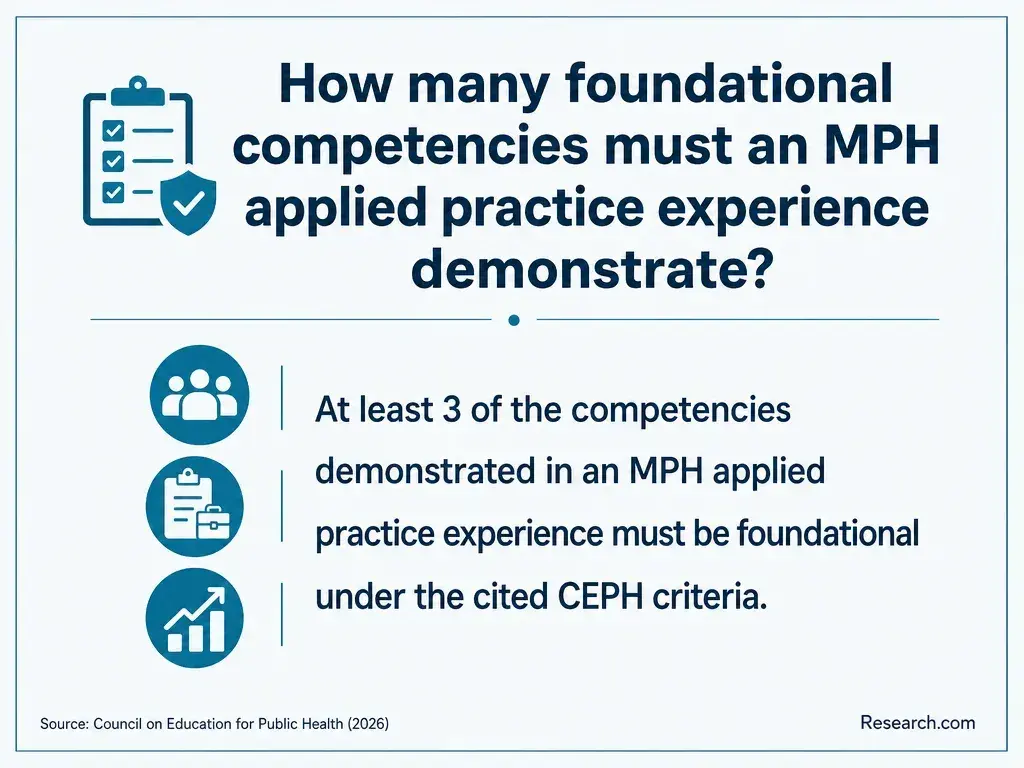
Not necessarily. CEPH accredits specified schools and public health programs; it does not set one universal PhD admissions rule requiring every applicant's MPH to be CEPH-accredited. A department may explicitly require or prefer a degree from a CEPH-accredited program, while another may evaluate relevant graduate study more broadly. Institutional accreditation and CEPH accreditation are distinct.
Check the accreditor's listing for the school or program and the period covering your study, then check the PhD department's admissions language. If the policy is unclear, ask whether your exact MPH credential qualifies and whether particular core or methods courses must be documented. An online public health master's accreditation guide provides context for comparing MPH credentials, but the doctorate's admissions office must interpret its own eligibility rule.
Choose the concentration that supports your research question and methods, not the one that sounds most like your MPH. A generalist background can be an advantage when a question crosses policy, epidemiology, and community implementation, but doctoral training still requires a defensible specialty.
For example, an applicant studying whether an exposure predicts disease risk may need advanced epidemiology and causal inference. One studying how organizations adopt a prevention program may need implementation research and mixed methods. A question about unequal access under different coverage rules may fit health policy or health services research. In each case, compare faculty expertise, required methods, available data, and recent dissertations, not just concentration labels.
Biostatistics warrants particular care, interest in analyzing health data is not the same as preparation for a mathematically intensive doctorate. If that is your direction, comparing online biostatistics graduate programs may help you identify methods training to investigate before applying. Confirm any calculus, linear algebra, programming, or statistical prerequisites with the PhD department itself.
Doctoral curricula typically move beyond MPH foundations into advanced research design, concentration-specific theory, analysis, and research ethics. Requirements may include seminars, teaching or research responsibilities, qualifying examinations, and dissertation milestones. The exact sequence matters: a missing prerequisite can delay access to advanced methods courses even when the applicant meets the minimum admission criteria.
Compare your transcript with each proposed track's required courses. Note the level and content of prior statistics and epidemiology classes, not just their titles. If you completed foundational work in a compressed format, public health bachelor's accelerated study schedules illustrate why course pacing alone says little about readiness for doctoral analysis; ask whether the department considers the actual syllabus sufficient.
Before enrolling, request a sample course sequence and ask which classes are offered annually, whether coursework must be taken on campus, and how students progress when a needed course is unavailable. An MPH course may provide useful preparation without earning doctoral credit or waiving a requirement.
Delivery format alone does not establish credibility. Evaluate the institution's accreditation, the exact degree awarded, faculty supervision, research training, dissertation standards, and graduates' scholarly opportunities. Also distinguish a predominantly online program from one requiring campus residencies, live seminars, or in-person research work.
For a research doctorate, the critical test is whether you can obtain sustained mentorship and carry out an ethical, feasible dissertation. Ask how often advisors meet with remote students, how committees are formed, what data access is available, and whether students can participate in research groups. Data-use agreements, community permissions, and institutional review requirements still apply to remote work.
Published comparisons of affordable public health doctorates by study duration can help identify programs for closer review, but verify the degree type, delivery requirements, and funding terms directly. An inexpensive online doctorate is not a good match if it cannot support your research question or career goal.
Time to completion depends on prior preparation, required coursework, examinations, dissertation progress, advisor availability, and whether you study full time. A program's advertised duration may describe coursework rather than the time needed to finish a dissertation. Ask for completion outcomes for the relevant cohort and how the school defines its reporting period.
Compare a written funding offer with the full path to graduation. Important terms include tuition remission, stipend amount, health coverage, required teaching or research work, summer support, funding duration, renewal conditions, and charges after the funded period. Also budget for living expenses, travel, and any period when dissertation work limits paid employment. Do not treat an assistantship as guaranteed unless the offer says so.
For someone who already has an MPH, another master's degree can sometimes fill a specific methods gap, but its price should be compared with targeted coursework or a paid research role. An online MPH tuition comparison guide is useful for understanding that alternative's tuition, not for estimating a PhD's net cost. Request an individualized doctoral funding statement before making a financial decision.
A PhD can support careers in academic research, government research, health systems, nonprofits, and organizations that conduct population-health studies. Responsibilities may include designing studies, securing funding, analyzing evidence, publishing findings, and mentoring researchers. Faculty appointments and research leadership positions are competitive and usually depend on publications, methods expertise, funding, and experience beyond the degree itself.
Salary comparisons should follow the job, not the credential. The US Bureau of Labor Statistics reports wages for occupations such as epidemiologist or statistician, not for "public health PhD graduates"; those occupation-wide figures include workers with different degrees and experience levels. Likewise, an MPH graduate compensation guide may provide context for existing master's-level options, but it cannot predict the financial return from a doctorate.
Before applying, inspect postings for the work you actually want. If they require independent research and publication, doctoral training may be relevant. If they emphasize program delivery, management, or routine analysis and accept an MPH plus experience, years spent in a PhD may not be the most direct route.
Do public health PhD graduates need licenses or certifications?
A public health PhD does not itself confer clinical licensure or a universal license to conduct public health research. Licenses depend on the profession and jurisdiction; a role involving clinical practice, for example, has requirements separate from doctoral study. Employers may value credentials such as Certified in Public Health, but certification eligibility and renewal rules belong to the issuing organization, not the PhD program.
Check postings for your intended role before pursuing an optional credential. Research positions may place greater weight on study design, publications, and responsible data practices, while another role may specify a professional certification. If the job does not require a doctorate, public health graduate degrees and salary pathways can help you compare narrower qualifications with the PhD route.
Other Things You Should Know About Public Health
Not universally. If you did not write one, show equivalent evidence through a supervised research project, analysis, writing sample, or research job. Check whether your target program explicitly requires a thesis.
Check the department's instructions. Where contact is welcomed, send a brief, specific note about your research interests and ask whether the faculty member expects to supervise new students. A positive reply is not an admission or funding offer.
Often, but application rules differ. Apply only where you can explain a credible match between your question, preparation, and available supervision; changing the concentration name without changing that explanation weakens the case.
It can be especially useful if your MPH provided little sustained research experience. A role involving study design, analysis, or manuscript preparation can test whether you enjoy research while giving recommenders concrete work to assess.
- Master of Public Health Education in the United States Today | nih.gov https://pmc.ncbi.nlm.nih.gov/articles/PMC10467497/
- What is the Difference Between a DrPH and a PhD? | Fairfield University https://www.fairfield.edu/news/insights/nursing-health-studies/difference-between-drph-and-phd.html
- Requirements for Applicants | ucdavis.edu https://www.epi.ucdavis.edu/programs/requirements-applicants
- Funding for the Ph.D. Degree | Rackham Graduate School https://rackham.umich.edu/funding/funding-for-the-phd-degree/
- PhD in Public Health Admissions | Baylor University https://publichealth.robbins.baylor.edu/graduate-programs/phd-public-health/admissions-requirements
- Cost and Aid: Health Services PhD | Health Systems and Population Health https://hspop.uw.edu/healthservicesphd/cost-aid/
- What Admissions Committees Are Really Looking for in a PhD Application | Graduate School of Biomedical Sciences https://gsbs.tufts.edu/news-events/news/what-admissions-committees-are-really-looking-phd-application