2027 Public Health BS Fieldwork Planning Without a Car

Co-Founder and Chief Data Scientist
A public health BS placement can look convenient on a map and still be impossible to reach before an early shift or after an evening event. For students without a car, fieldwork planning starts with the actual trip, not just the site's address.
This guide explains how to identify feasible placements, confirm that their work meets degree requirements, and compare transportation and program costs before committing. It is for current students and prospective applicants who want supervised public health experience without making car ownership a condition of graduation.
Key Things You Should Know
- A car is not inherently required for public health BS fieldwork; the placement must be academically approved and reachable for its actual work schedule.
- Confirm three separate commitments before accepting a site: program approval, a willing and qualified site supervisor, and permission to perform the proposed tasks or use the necessary data.
- Budget for the full round trip, including schedule gaps, last-mile travel, and backup transportation - not just the advertised transit fare.
How can you plan public health BS fieldwork without a car?
Start with your BS program's fieldwork handbook or coordinator. Identify whether fieldwork is required, how the school defines an eligible site, which activities count, who may supervise, what deliverable is assessed, and when approval must occur. Do not assume that an internship you find independently will earn credit.
Then plan around the required activities, not an idealized commute. A community survey project may involve daytime office work plus outreach at locations the supervisor has not yet identified. A site that is easy to reach once a week may be unworkable if your tasks require frequent travel between neighborhoods.
Use this sequence before accepting an offer:
- Map your available days and the maximum round-trip time you can reliably sustain alongside classes, work, or caregiving.
- Ask the coordinator which activities must occur on-site and whether remote work, a single-site project, or consolidated shifts can count.
- Test the outbound and return journeys at the times you would actually travel, including transfers, walking conditions, and service changes.
- Share a proposed task list, schedule, supervisor information, and transportation plan with the academic coordinator before making a commitment.
If you are still choosing a degree, compare fieldwork policies alongside course delivery. An online public health bachelor's degrees and programs comparison can help you identify schools to investigate, but only the individual program can confirm what its BS fieldwork requires.
What public health BS fieldwork options are accessible by public transportation?
Transit-accessible opportunities often include organizations with fixed offices near established routes: local health departments, community-based nonprofits, health-system outreach teams, food-access organizations, and university research or evaluation teams. Accessibility depends on the assignment, not the organization's name. A health department office may be near a station while its outreach visits require travel across a county.
The comparison below shows how the work itself can change the transportation decision. These are possible projects, not assurances that a site has openings or that a program will approve them.
| Possible setting or project | Potential advantage without a car | Issue to verify |
| Community nonprofit with one office | Predictable destination for health communication or program-support work | Whether outreach events occur elsewhere or outside transit hours |
| Health department administrative team | Office-based data, communication, or program tasks may fit a regular route | Whether the assigned unit requires off-site visits |
| University evaluation team | Campus access and some computer-based work may reduce travel | Whether tasks constitute approved supervised fieldwork rather than observation |
| Neighborhood-based outreach partner | Work may be close to home and directly community-facing | Whether multiple event locations create an impractical itinerary |
For an interest in data work, ask whether an approved local project can combine on-site supervision with remote analysis of data the site is authorized to share. That undergraduate arrangement is distinct from later specialist study, such as flexible online biostatistics master's options; a graduate program is not needed simply to avoid travel for a BS assignment.
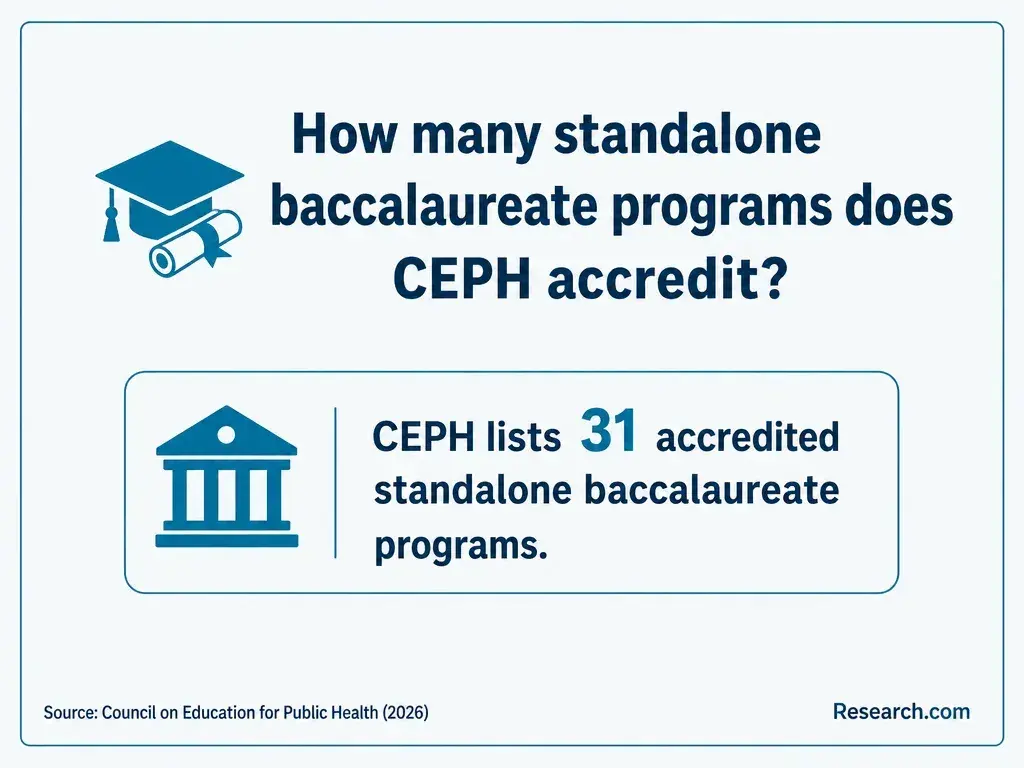
Do online public health BS programs offer local fieldwork placements?
Some online BS programs permit locally arranged fieldwork, but online classes do not establish that placements are remote, locally available, or supplied by the school. A program might offer partner referrals, review student-proposed sites, require specified on-site activities, or use an alternative applied project. Its written requirements - not its delivery label - control.
Ask where students in your area have completed approved work, whether the school has active local partners, and who contacts and approves a new host. Also ask how supervision works across distance: who observes your work, meets with you, evaluates the deliverable, and resolves problems if the placement ends. A program's willingness to consider a site is not a promise that the site will accept you.
Keep degree levels separate when researching online education. Information about scholarship-supported online public health master's options cannot establish either placement availability or aid eligibility for an online BS. Get the undergraduate policy and any financial-aid answer directly from the school.
An internship is an experience offered by an employer or organization; it may be paid, unpaid, credit-bearing, or entirely separate from a degree. A practicum is a school-defined supervised learning requirement with specified approval, learning objectives, assessment, and often a final product. Schools may use the terms differently, so the course rules matter more than the label on a posting.
Before accepting an internship as BS fieldwork, ask the coordinator whether its tasks demonstrate the required competencies. For example, helping design an outreach tool, documenting its intended audience, and receiving supervisor feedback may provide stronger evidence of applied learning than merely attending outreach events. Confirm who evaluates your work and what you may include in a portfolio; site permission to perform a task is not permission to publish client information or internal data.
Do not substitute graduate fieldwork descriptions for undergraduate rules. The types of public health master's degrees have different academic aims, and an MPH applied practice experience should not be assumed to define a BS practicum.
Public transit is often the first option, but a workable plan may combine modes. Consider a bike or scooter for a safe last-mile connection, a campus or employer shuttle, an approved carpool, paratransit if eligible, or an occasional taxi or rideshare for a schedule gap. For each option, check reliability, accessibility, weather exposure, after-dark safety, and the cost of getting home - not just getting there.
Ask the host whether shifts can be grouped into longer visits, whether meetings can occur remotely, and whether the organization reimburses work-related travel. Reimbursement rules may differ for commuting to a regular site and traveling on assigned business. Do not volunteer to use a personal vehicle or transport clients without first clarifying site policy, insurance, and supervision.
Transportation assistance and education benefits solve different problems. For example, employer tuition support for epidemiology doctorates concerns a later education expense, not whether an undergraduate host will cover transit. Ask specifically about placement-related travel rather than assuming any employer benefit applies.
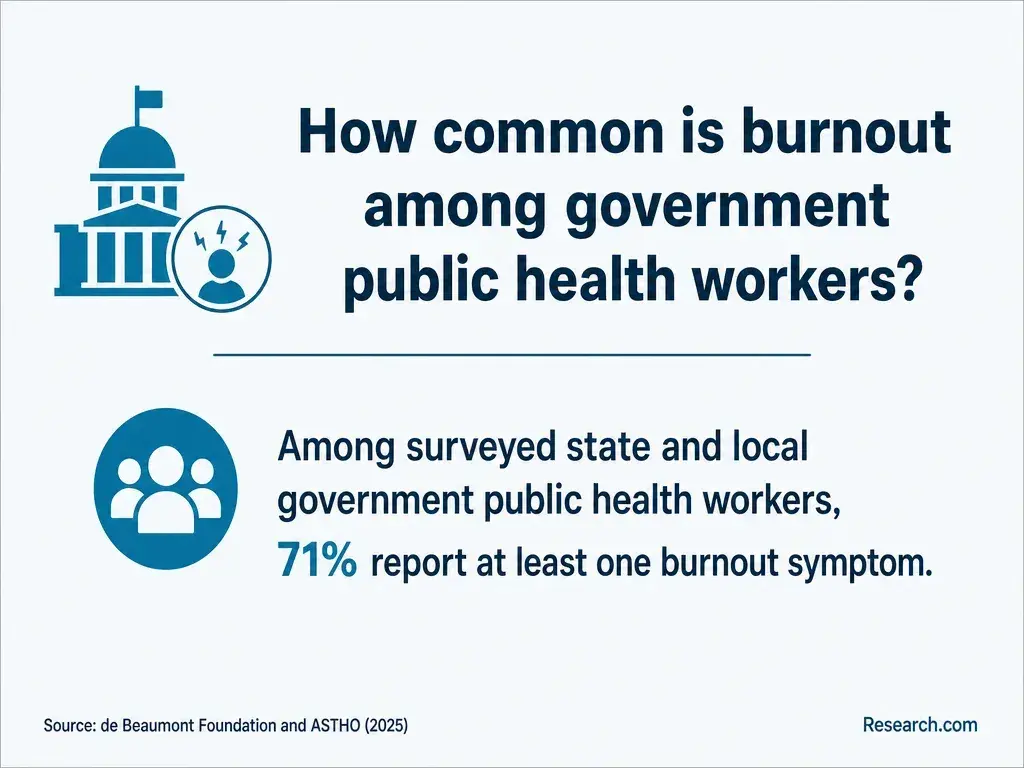
Judge support by what happens when a student cannot drive, not by a broad claim that placements are "flexible." A useful program can explain its approval process, identify realistic site-finding assistance, and describe alternatives if a placement's schedule or location changes. Request the policy that applies to your entry term.
Ask the fieldwork coordinator for concrete answers to these questions:
- Must I find my own site, and can you identify previously approved partners near my transit routes?
- Can an approved project combine remote tasks with scheduled on-site supervision?
- May a placement use one fixed location, or are off-site events and home visits expected?
- Who approves accommodations or a replacement site if travel becomes infeasible?
- What are the deadlines for approval, agreements, background checks, and course registration?
If a school responds with general admissions information rather than fieldwork documentation, keep asking. Lists of MPH programs with less restrictive admissions, for instance, address a different degree and do not demonstrate that a BS program supports car-free placements.
Compare the total cost of completing the assignment, not just the fare on a typical day. Include transit passes or individual fares, last-mile trips, occasional backup rides, required site visits beyond ordinary shifts, and time away from paid work. Ask whether fieldwork carries tuition or course fees and whether the host requires screening, training, or materials that the student must pay for. Verify any reimbursement before relying on it.
Two placements with similar learning value can have very different costs. A nearby unpaid project with predictable hours may be more feasible than a paid placement whose changing locations consume the earnings in travel and missed shifts. Conversely, a more distant site may be worthwhile if it offers relevant supervised work, dependable scheduling, and covered work-related travel. Calculate each option using your actual timetable and published fares; there is no reliable national "fieldwork transportation cost" that substitutes for that comparison.
If graduate study is part of a longer-term budget, keep it separate from this BS decision. Master of Public Health affordability comparisons cannot tell you what an undergraduate placement will cost or whether its expenses are covered by aid.
Search from your transit network outward. Identify organizations near routes you can use at the required times, then look for teams whose work matches a BS-level learning objective: health communication, community outreach, program coordination, basic evaluation support, or data organization under supervision. Your coordinator, faculty, campus community-engagement office, and existing partner list are better starting points than an unfiltered internship search.
When contacting a potential host, state your available schedule, the school's approval deadline, the supervision and deliverable requirements, and the kind of work you can perform. Ask where the work actually takes place and whether visits to other locations are expected. A proposed site is not secured until the host agrees, the school approves it, and any required agreement is completed.
Keep a record of responsive supervisors even if a particular opening does not work out. They may later provide professional references. If you eventually consider online public health master's programs without recommendation letters, that admissions feature is separate from the value of a supervisor who can describe your actual work.
BS fieldwork can provide evidence for entry-level applications, particularly when a supervisor can verify a completed task and the student can explain its purpose and limitations. Possible roles include program assistant, outreach coordinator, research assistant, or community health worker, depending on the employer and location. Titles vary: a community health worker may spend substantial time meeting people where they live, while a program assistant may work mainly from one office.
Use the placement to test career fit as well as build a résumé. Record the tools you used, how you communicated with community partners, what supervision you received, and a nonconfidential example of your contribution. Do not present restricted data or imply that you independently led a program you supported. More specialized analyst, epidemiologist, management, and clinical roles may require additional education, experience, or regulated credentials.
Graduate earnings are not a valid proxy for a new BS graduate's job offer. Guidance on understanding salary variation after an MPH concerns a different credential; compare actual entry-level postings for the role and commuting area you want.
Does public health fieldwork require certification or professional credentials?
Public health BS fieldwork does not have one universal professional-certification requirement. The program and host determine whether a particular assignment calls for training, clearance, or other documentation. Some roles may require privacy or safety training, and specific employers or states may set requirements for particular jobs. A BS placement does not itself award clinical licensure or a professional credential.
Ask the coordinator and host what must be completed before starting, who pays, and whether the requirement applies to the proposed tasks. If a posting requests a credential you do not hold, ask whether supervised student tasks are available rather than assuming the requirement will be waived. Likewise, permission to access records must come through the host's rules; academic approval alone does not grant data access.
Future graduate admission is another distinct decision. Advice on applying to an MPH with a lower GPA does not change a site's clearance rules or a BS program's fieldwork requirements. Resolve the placement requirements with the authorities responsible for them.
Other Things You Should Know About Public Health
Tell your supervisor promptly and follow the site's absence policy. Ask the academic coordinator how missed activities can be made up; remote work or a different shift counts only if approved under the course rules.
Yes. Contact the school's accessibility or disability-services office early to discuss the approval process and workable arrangements. Coordinate with the fieldwork office so an accommodation is reflected in the placement plan.
Possibly, but obtain program approval before contacting a host as though the arrangement were settled. The school may need to review supervision, agreements, and any rules affecting placements where you live.
Notify the fieldwork coordinator immediately. Ask how completed work will be documented, whether an alternative site or project is permitted, and how a change would affect course deadlines. Keep copies of approved agreements and work records that you are authorized to retain.
- What does college actually cost? | About the University of Cincinnati https://www.uc.edu/blog/hidden-costs-of-college.html
- Bachelor of Science in Public Health | sfsu.edu https://publichealth.sfsu.edu/bs-public-health
- Bachelor's in Public Health | Departments of Kinesiology and Public Health https://phes.appstate.edu/academic-programs/public-health/public-health-academics/major-public-health
- MPH Fieldwork | Public Health | Binghamton University https://www.binghamton.edu/decker/public-health/academics/fieldwork.html
- What to expect during your public health internship | Oregon State University https://health.oregonstate.edu/news-and-stories/2022-09/what-expect-during-your-public-health-internship
- Creative Solutions for College Student Transportation Insecurity | The Hope Center for Student Basic Needs https://hope.temple.edu/newsroom/hope-blog/creative-solutions-college-student-transportation-insecurity
- Bachelor of Science in Public Health | osu.edu https://cph.osu.edu/bsph
- Traversing the City: Examining the Impacts of Extended Commute on Student Wellbeing & High School Experience in Chicago https://knowledge.uchicago.edu/records/zqg9n-aj929