
2027 Daycare Assistant Teacher Careers: Skills, Education, Salary & Job Outlook

Co-Founder and Chief Data Scientist
Choosing a daycare assistant teacher career means deciding whether hands-on work with young children is worth the training, responsibility, and emotional energy the job requires. The role can be accessible for entry-level candidates, but it still demands real preparation: safe supervision, child development knowledge, classroom support, family communication, and the ability to respond calmly when children need structure or comfort.
This guide explains what daycare assistant teachers do, what employers typically require, how salaries and job outlook look, and where the role can lead. It also clarifies the trade-offs: pay can vary, advancement often depends on credentials and experience, and the work is physically and emotionally demanding. At the same time, reported pay benchmarks include median salaries around $43,201 annually, and many people use this role as a practical entry point into early childhood education.
If you are comparing childcare careers, planning a first job in education, or considering a credential such as the Child Development Associate credential, use this guide to understand the path before you commit.
Key Things You Should Know About Daycare Assistant Teacher Careers
- The typical earning potential for a daycare assistant teacher in the United States is about $32,572 annually, with most salaries falling between $28,000 and $35,500.
- This field is stable and growing, offering varied job opportunities nationwide with room for salary advancement linked to experience, education, and location.
- A high school diploma or GED is usually required to start, and some roles may prefer additional certifications like a Child Development Associate credential or CPR/First Aid training.
- Success depends on strong communication, patience, teamwork, and basic child development knowledge, along with safety awareness and the ability to support teachers and parents effectively.
- Career advancement typically moves from assistant daycare teacher to lead teacher, then onto site supervisor or director roles, achieved through gaining experience, education, and leadership skills.
What do daycare assistant teachers do?
Daycare assistant teachers help lead teachers care for and educate young children in daycare centers, preschools, early learning programs, and school-based childcare settings. Their work combines supervision, basic care, classroom organization, and support for age-appropriate learning activities.
The role is not simply “watching children.” Assistant teachers help create routines, model positive behavior, support early language and social development, and make sure children are safe during meals, play, rest periods, and transitions. They are often the adults who notice when a child is struggling, ready for a new challenge, or needs extra reassurance.
A typical day in the role
A daycare assistant teacher’s day usually moves quickly. Mornings may involve greeting families, helping children separate from caregivers, and preparing materials. During classroom time, assistants may help with songs, stories, art, sensory activities, outdoor play, or early math and language activities planned by the lead teacher.
They also support daily care tasks such as handwashing, toileting, diaper changes, snacks, meals, and nap routines. Throughout the day, they supervise closely, redirect behavior, clean and organize materials, and share observations with the lead teacher. In many programs, they also help document attendance, incidents, developmental progress, or parent updates.
Who this career fits best
This career is best suited for people who enjoy active, people-centered work and can stay patient under pressure. The strongest candidates are dependable, observant, calm, and comfortable switching between nurturing care and firm boundaries. It is a good fit for someone who wants direct experience in early childhood education before pursuing higher credentials or classroom leadership roles.
What are the key responsibilities of daycare assistant teacher?
Daycare assistant teachers are responsible for helping children stay safe, cared for, and engaged throughout the day. Their duties vary by age group, state rules, employer policies, and whether they work in a private daycare, preschool, school-based program, or religious organization.
- Supervise children during indoor play, outdoor play, meals, naps, bathroom routines, and transitions.
- Assist lead teachers with lessons, circle time, creative activities, reading, music, movement, and hands-on learning.
- Support children’s basic needs, including meals, toileting, diapering, handwashing, and rest routines.
- Prepare classroom materials, clean learning areas, sanitize toys, organize supplies, and maintain a safe environment.
- Observe children’s behavior and development, then share relevant information with lead teachers or program staff.
- Help document attendance, incidents, progress notes, and parent communications when required.
- Encourage positive behavior by modeling sharing, turn-taking, respectful words, and safe choices.
- Follow health, safety, emergency, confidentiality, and mandated reporting procedures.
The most challenging parts of the job
The hardest moments often happen when several children need attention at once. An assistant may need to comfort one child, redirect another, prevent unsafe behavior, and keep the rest of the group on schedule. Transitions, separation anxiety, toileting accidents, conflicts over toys, and emotional outbursts can all require quick judgment.
The work can also be physically demanding. Assistant teachers may spend much of the day standing, kneeling, lifting, cleaning, and moving between activities. Emotional fatigue is common when staffing is tight or children have complex needs.
The most rewarding parts of the job
The reward is direct and visible. Assistant teachers see children learn new words, make friends, follow routines, solve small problems, and gain confidence. These moments matter because early childhood experiences shape school readiness, emotional regulation, and social development.
If you want a structured education path into this work, an associate degree in 6 months accredited may help you compare programs that build relevant early childhood education knowledge.
What are the key skills for daycare assistant teachers?
Successful daycare assistant teachers need a practical mix of child development knowledge, safety awareness, communication skills, and emotional control. Employers usually look for people who can follow classroom plans, protect children, work well with staff, and build trust with families.
Technical skills
- Early childhood education knowledge: Understanding how young children develop socially, emotionally, physically, and cognitively helps assistants choose appropriate language, activities, and expectations.
- Curriculum support: Assistant teachers must be able to help carry out lesson plans, prepare materials, guide small groups, and adapt activities for different developmental levels.
- Observation and documentation: Many programs expect assistants to notice developmental progress, behavior patterns, injuries, incidents, or changes in mood and report them accurately.
- Health and safety procedures: Knowledge of sanitation, safe sleep practices, allergy awareness, emergency procedures, CPR, and first aid supports children’s physical well-being.
- Classroom and behavior management: Assistants need strategies for transitions, routines, redirection, conflict resolution, and positive reinforcement.
Soft skills
- Patience: Young children repeat behaviors, test limits, and need frequent reminders. Patience keeps responses calm and consistent.
- Active listening: Children may communicate through words, behavior, gestures, or emotion. Listening carefully helps adults respond appropriately.
- Social perceptiveness: Strong assistants notice when a child is tired, overstimulated, anxious, excited, or ready for more independence.
- Teamwork: The role depends on coordination with lead teachers, directors, other assistants, and families.
- Reliability: Childcare programs depend on staffing ratios and routines, so attendance, punctuality, and follow-through matter.
The overlooked skill that separates good assistants from great ones
Cultural competency and support for dual language learners can make a major difference in early childhood classrooms. Children come from different family structures, languages, cultures, abilities, and routines. A strong assistant teacher avoids assumptions, learns from families, and helps children feel seen and understood.
This skill is especially important in programs aligned with standards such as Head Start Performance Standards. For example, an assistant working with a dual language learner may use visual cues, repeated routines, songs, gestures, and respectful family communication to reduce frustration and support participation. That approach can prevent disengagement and help children build confidence.
If your long-term goal is to move beyond assistant roles, exploring options such as the easiest bachelors degree to get can help you evaluate degree paths that support broader early childhood education careers.
Daycare Assistant Teacher Careers: A Step-by-Step Guide to Getting Started
Becoming a daycare assistant teacher is usually a step-by-step process rather than a single credential decision. Requirements vary by state and employer, so the best approach is to confirm local rules first, then build education, experience, and clearances in the right order.
- Meet the baseline education requirement. Most entry-level roles begin with a high school diploma or equivalent. Some employers may accept candidates still completing additional childcare training, while others prefer postsecondary coursework.
- Learn your state and employer requirements. Childcare licensing rules may require specific early childhood education units, background checks, health forms, mandated reporter training, CPR, first aid, or state credentials.
- Take early childhood education coursework. Courses in child development, safety, curriculum, guidance, and family engagement can make you more competitive and better prepared for classroom work.
- Gain hands-on experience. Volunteering, job shadowing, substitute childcare work, practicum placements, or assistant roles can help you learn routines, age-group differences, and classroom expectations.
- Complete required clearances and certifications. Programs commonly require background checks, child abuse prevention training, health and safety training, and state-issued credentials where applicable.
- Apply for entry-level positions strategically. Look for programs with mentoring, paid training, predictable staffing, and opportunities to move into lead teacher roles.
- Continue professional development. Ongoing training can help you specialize, meet renewal requirements, and qualify for higher responsibility over time.
Common mistakes to avoid
- Assuming requirements are the same in every state or childcare setting.
- Applying without checking background check, health, and training timelines.
- Choosing a program or credential without confirming whether local employers value it.
- Underestimating the physical demands of full-day childcare work.
- Taking a job without asking about ratios, planning time, breaks, and staff support.
A simple checklist can help: verify local requirements, gather education records, complete safety training, prepare references, document childcare experience, and ask employers what credentials they prefer for advancement.
What education, training, or certifications are required?
The core qualification for many daycare assistant teacher roles is a high school diploma or equivalent. However, requirements can rise depending on the state, age group, funding source, and employer. Many employers prefer candidates with an Associate of Arts or Science in Early Childhood Education or an Early Childhood Care & Development Diploma.
In California, specific coursework totaling six semester units in early childhood education is often required to qualify for the Child Development Assistant Permit. In California, the Child Development Assistant Permit from the Commission on Teacher Credentialing is mandatory.
Common education and training requirements
- High school diploma or equivalent: Often the minimum entry point for assistant teacher roles.
- Early childhood education coursework: Useful for understanding child development, classroom guidance, curriculum, and safety.
- Supervised fieldwork or early childhood practice: Frequently required or preferred because employers need candidates who can apply training in real classrooms.
- Background checks: Standard in childcare settings because employees work with minors.
- Child abuse prevention training: Often required to support mandated reporting and child protection responsibilities.
- Health and safety certifications: May include CPR, first aid, sanitation, safe supervision, and emergency procedures.
Important credentials
The Child Development Associate (CDA) Credential, issued by the Council for Professional Recognition, is a nationally recognized credential for early childhood professionals. Some states also award certificates that meet or exceed CDA standards. These credentials can help candidates show employers that they understand child development, safety, learning environments, and family engagement.
Are advanced degrees or niche certifications worth the investment?
Advanced credentials such as a Bachelor's or Master's degree in Early Childhood Education can support higher salaries and leadership roles such as lead teacher or site supervisor. They may also help with specialized permits, curriculum development, administration, or long-term roles outside the assistant teacher track.
That said, advanced degrees are not always necessary for an entry-level assistant teacher job. If your immediate goal is to get hired quickly, a high school diploma or equivalent, required clearances, safety training, and early childhood coursework may be enough. If your goal is leadership, public preschool, program administration, or specialized work, more education may be worth planning for.
Before enrolling, compare cost, completion time, accreditation, transfer options, and employer recognition. If you are researching advanced education broadly, you can also review the cheapest PhD programs to understand how affordability varies at higher degree levels.
What is the earning potential for daycare assistant teachers?
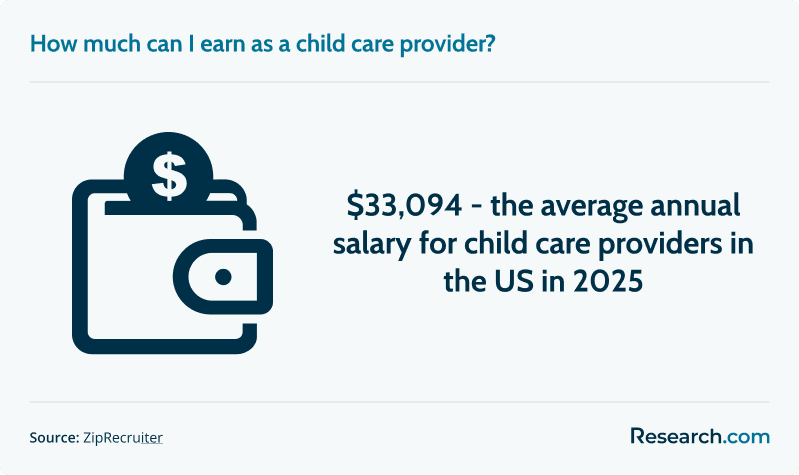
Daycare assistant teacher pay depends heavily on location, employer type, education, credentials, experience, and whether the role is full-time or part-time. Entry-level positions start around $26,900 per year, while more experienced or senior workers can earn about $44,100 annually.
The daycare assistant teacher salary 2025 median stands at $33,600 per year across the United States. That figure is a useful benchmark, but it should not be treated as a guarantee. Local wages may differ substantially, especially between rural and urban areas or between private daycare centers and school-based programs.
What can increase earning potential?
- More education: Early childhood coursework, an associate degree, or a bachelor's degree may help candidates qualify for better-paying roles.
- Credentials: The CDA Credential, state certificates, CPR, first aid, and specialized training can improve competitiveness.
- Experience: Employers often pay more for assistants who can manage routines, support behavior, and work independently with minimal supervision.
- Work setting: Pay may differ across childcare centers, preschools, elementary schools, and programs operated by religious organizations.
- Advancement: Moving into lead teacher, senior teacher, coordinator, or director roles is usually the clearest path to higher earnings.
How to evaluate a job offer
Do not look only at the hourly wage or annual salary. Ask about paid training, benefits, predictable scheduling, planning time, paid holidays, tuition support, staff-child ratios, and promotion pathways. A slightly lower wage in a well-supported program may be more sustainable than a higher wage in a setting with chronic understaffing or high turnover.
What is the job outlook for daycare assistant teachers?
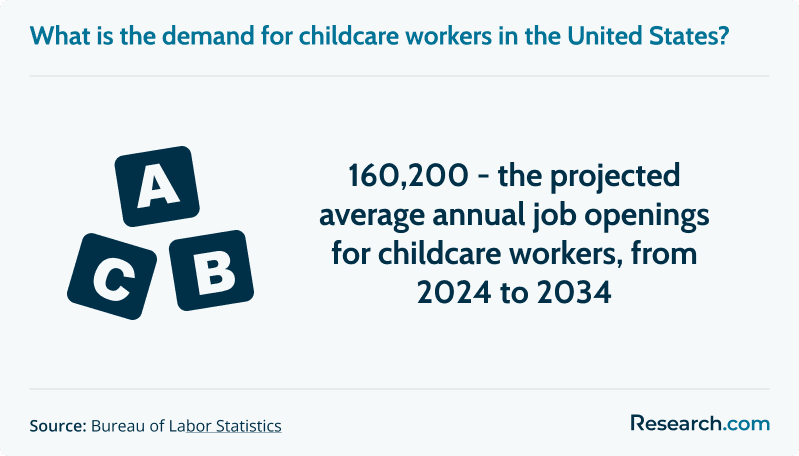
Employment for daycare assistant teachers is projected to decline by 1 percent from 2024 to 2034, which is slower than the average growth expected for all occupations. That projection suggests the field may not expand overall, but it does not mean there will be no opportunities.
Childcare work often has steady openings because of turnover, retirements, career changes, and movement into lead teacher or administrative roles. Candidates with required clearances, classroom experience, early childhood coursework, and reliable availability may still find opportunities, especially in programs that need dependable staff.
The key factors shaping the outlook
- Funding and budgets: Daycare assistant teacher positions can be affected by school budgets, public funding, tuition revenue, and program enrollment.
- Enrollment trends: Demand changes when family childcare needs, local demographics, and preschool participation shift.
- Staff turnover: Even when total employment declines, turnover can create recurring openings for qualified applicants.
- Credential expectations: Programs may prefer candidates with formal early childhood education coursework or credentials, especially in regulated or publicly funded settings.
- Policy changes: Public investment in early childhood education can affect hiring, but current trends do not offset the projected decline.
How to protect your career options
The best way to improve stability is to build portable qualifications. CPR and first aid, the CDA Credential, state permits, early childhood coursework, special needs training, and experience with dual language learners can make you more adaptable across settings.
If your long-term plan is to move into advanced education, administration, policy, or higher-level specialist roles, a one year online doctorate is one example of a degree format some professionals research when comparing efficient advanced study options.
What is the typical work environment for daycare assistant teacher?
The daycare assistant teacher work environment is active, social, and highly hands-on. Assistant teachers commonly work in childcare centers, preschools, elementary schools, and facilities operated by religious organizations. About 79% work in local elementary and secondary schools, 10% in child daycare services, and 4% in religious organizations.
Because the role requires direct supervision and care, remote work is not feasible. Assistant teachers spend the day in classrooms, playgrounds, nap areas, cafeterias, bathrooms, and shared activity spaces. The setting can be joyful and energetic, but it can also be noisy, messy, and physically demanding.
Schedule and workload
The typical daycare assistant teacher schedule often includes full-time daytime hours. Part-time and irregular shifts are also common, especially in programs that serve families before or after standard school hours. Early mornings or late afternoons may be required, depending on the facility. Evenings and weekends are rare but possible in some daycare settings.
Team structure
Assistant teachers usually work under the direction of a lead teacher, senior teacher, or program director. Good communication matters because staff must coordinate supervision, classroom routines, behavior support, parent updates, and emergency procedures. A well-run program provides clear expectations, adequate staffing, and consistent routines; a poorly supported environment can make the same job far more stressful.
What are the pros and cons of daycare assistant teacher careers?
Daycare assistant teaching can be meaningful, but it is not an easy job. The best decision comes from weighing the emotional rewards against the pay, workload, physical demands, and advancement requirements.
Pros
- Meaningful daily impact: You help children build early social, emotional, language, and independence skills.
- Strong relationships: Many assistants form trusted bonds with children, families, and teaching teams.
- Variety: Days include play, reading, art, music, movement, routines, and problem-solving rather than desk work.
- Accessible entry point: Many roles begin with a high school diploma or equivalent plus required training and clearances.
- Career foundation: Experience as an assistant can lead to lead teacher, director, family support, or curriculum-related roles.
Cons
- Emotional intensity: Children may cry, resist transitions, struggle with sharing, or need repeated redirection.
- Physical demands: The job often involves standing, lifting, bending, cleaning, and constant movement.
- Pay limitations: Entry-level salaries can be modest, and higher earnings often require credentials, experience, or promotion.
- High responsibility: Staff must maintain safety, follow regulations, and respond appropriately to health or behavior concerns.
- Stress from staffing or resources: Limited support, tight ratios, or high turnover can make the job harder.
Who should think twice?
This may not be the right fit if you need quiet work, predictable low-stress days, remote flexibility, or fast salary growth without additional credentials. It may be a strong fit if you are patient, energetic, consistent, and motivated by direct work with children.
If you want to expand your long-term options beyond one role, related undergraduate dual degree programs may help you compare broader education pathways.
What are the opportunities for advancement for daycare assistant teachers?
Daycare assistant teacher roles can lead to stronger career options, especially for workers who combine experience with additional education and credentials. Advancement is usually not automatic; it depends on meeting state requirements, gaining classroom competence, and showing leadership potential.
Common advancement path
- Daycare Assistant Teacher: Start by supporting lead teachers, learning classroom routines, and building direct experience with young children.
- Lead Teacher / Senior Teacher: Take responsibility for lesson planning, classroom leadership, family communication, and sometimes mentoring assistants. Additional education is often required.
- Program Director / Center Director: Manage staff, budgets, licensing compliance, curriculum implementation, enrollment, and parent relationships. These roles frequently require a bachelor's degree and significant experience.
Specialization areas
- Curriculum Specialist or Instructional Coordinator: Develop, review, or improve educational materials and classroom practices for young children.
- Special Needs or Inclusion Specialist: Support children with disabilities and help classrooms use inclusive practices in collaboration with families and other professionals.
- Parent Educator or Family Support Specialist: Help families understand child development, routines, behavior strategies, and community resources.
- Early Childhood Policy or Advocacy Specialist: Work on program quality, policy analysis, advocacy, or evaluation at different government or organizational levels.
How to make advancement more likely
- Ask employers what credentials are required for lead teacher and director roles.
- Keep records of training hours, certifications, coursework, and classroom experience.
- Seek feedback from lead teachers and supervisors.
- Volunteer for responsibilities such as activity preparation, parent communication support, or mentoring new staff.
- Build expertise in high-need areas such as inclusion, behavior guidance, infant-toddler care, or dual language learner support.
There are clear daycare assistant teacher promotion opportunities, but the strongest long-term path usually requires intentional training, documented experience, and a willingness to take on more responsibility.
What other careers should you consider?
If you like working with children but are unsure whether daycare assistant teaching is the right long-term fit, compare related careers by setting, responsibility level, schedule, education requirements, and earning potential. Adjacent roles may offer more independence, different age groups, or a clearer path into education, recreation, literacy, or curriculum work.
- Preschool Teacher: Focuses more directly on early childhood instruction, lesson planning, classroom leadership, and school readiness.
- Nanny: Provides individualized care in a home setting, often with closer family relationships and more personalized routines.
- Camp Counselor: Leads group activities, games, outdoor experiences, and social development in a seasonal or recreational setting.
- Children's Librarian: Supports literacy, story times, family programming, and access to learning resources for children and caregivers.
- Curriculum Designer (Early Childhood Focus): Creates educational materials, lesson plans, and activities based on child development principles.
How to choose among these options
Choose daycare assistant teaching if you want structured classroom experience with young children and are comfortable supporting a lead teacher. Consider preschool teaching if you want more instructional responsibility. Consider nannying if you prefer one-on-one care. Consider camp counseling if you enjoy recreation and group activities. Consider children’s library or curriculum roles if you are drawn to literacy, programming, or educational design.
The best fit depends on your temperament, desired schedule, tolerance for physical work, interest in formal teaching, and willingness to pursue additional credentials.
Here's What Professionals Say About Their Daycare Assistant Teacher Careers
- Sarah: "One of the most rewarding parts of my role as a daycare assistant teacher is watching a child's face light up when they finally master a new skill, like counting blocks or saying their colors correctly. Those small victories remind me why this work matters beyond the classroom walls. I cherish the relationships I build, especially when a shy child starts to trust me and express themselves openly. It feels like I'm part of their early successes in a very real way."
- Andres: "Managing children's emotions during tough moments is definitely challenging, especially when a little one is upset and you need to calm them down while still keeping the classroom environment positive. I've learned that really tuning into each child's personality helps me respond more patiently and effectively. Forming close connections with families also gives me better insight into what might be triggering certain behaviors, which makes my work less stressful. Those relationships create a solid foundation for cooperation and understanding."
- Lian: "Helping kids grow and learn each day fills me with a sense of purpose that I can't find anywhere else. When I assist a child in learning to share toys or use their words to express feelings, I know I'm supporting their social and emotional growth in concrete ways. It's incredibly fulfilling to see how these early lessons ripple out and improve not just their day, but the atmosphere in their homes. Being involved in these meaningful moments keeps me motivated every day."
Key Findings
- Daycare assistant teachers support lead teachers by supervising children, helping with learning activities, meeting basic care needs, and maintaining safe classroom routines.
- The role is accessible for many entry-level candidates, but requirements vary by state and employer. A high school diploma or equivalent is commonly the baseline, while early childhood coursework, credentials, and clearances can improve job prospects.
- Important credentials may include the Child Development Associate (CDA) Credential, state-awarded certificates, CPR, first aid, and, in California, the Child Development Assistant Permit.
- Entry-level salaries start around $26,900 per year, the daycare assistant teacher salary 2025 median stands at $33,600 per year, and experienced or senior workers can earn about $44,100 annually.
- Employment for daycare assistant teachers is projected to decline by 1 percent from 2024 to 2034, but turnover and staffing needs may continue to create openings.
- The work environment is hands-on and collaborative. About 79% work in local elementary and secondary schools, 10% in child daycare services, and 4% in religious organizations.
- The biggest advantages are meaningful relationships, visible child development progress, daily variety, and a clear entry point into early childhood education.
- The biggest challenges are emotional intensity, physical demands, modest entry-level pay, and the need to manage several children’s needs at once.
- Advancement is possible through additional education, experience, and credentials, especially for those aiming for lead teacher, director, specialist, or family support roles.
Other Things You Should Know About Daycare Assistant Teacher
In 2027, the average salary for a daycare assistant teacher is expected to be around $30,000 to $35,000 per year, depending on location and experience. Some metropolitan areas may offer higher salaries due to increased demand and cost of living.
In 2027, daycare assistant teachers typically need CPR and First Aid certifications. Some states may also require training in handling emergencies and child safety protocols, as mandated by local health and safety authorities to ensure a safe caregiving environment.
References
- How to Become a Preschool Teacher: Is It the Right Career for You? https://www.careerfittest.com/how-to-become-a-preschool-teacher/
- Childcare Workers: Salary, career path, job outlook, education and more - RaiseMe https://www.raise.me/careers/personal-care-and-service/childcare-workers/
- FAQ’s for Teachers & Caregivers https://www.childcarecareers.com/teacher_faq
- 9 Things You Should Know BEFORE Working in Childcare | Rasmussen University https://www.rasmussen.edu/degrees/education/blog/before-working-in-childcare/
- Executive Summary https://cscce.berkeley.edu/workforce-index-2024/executive-summary/key-findings/
- Training and qualifications - Early Years Careers https://earlyyearscareers.campaign.gov.uk/training-and-qualifications/
- Does a Career in ECE Open Up Future Opportunities? https://www.athenacareers.edu/can-a-career-in-ece-lead-to-further-opportunities/
- 8 Soft skills your nursery practitioners need and how to develop them https://blossomeducational.com/blog/8-soft-skills-your-nursery-practitioners-need-and-how-to-develop-them/
- Top 20 Daycare Teacher Assistant Interview Questions and Answers (Updated 2025) https://www.cvowl.com/blog/daycare-teacher-assistant-interview-questions-answers
- Child Care Specialist - Alternative Careers and Similar Jobs (Updated for 2025) https://resumeworded.com/career-profiles/child-care-specialist-career-profile


