
2027 Associate vs. Bachelor's Degree in Business: Explaining the Difference

Co-Founder and Chief Data Scientist
If you are comparing an associate degree in business with a bachelor's degree in business, the real question is not which credential sounds better. It is which one fits your timeline, budget, career target, and willingness to continue studying later. Both degrees introduce core business concepts, but they serve different purposes.
An associate degree is usually the faster and lower-cost route into entry-level business work or a transfer pathway. A bachelor's degree usually requires a longer commitment, but it offers broader coursework, more specialization, and stronger access to management-track and professional roles. This guide explains how the two options compare in curriculum, skills, difficulty, cost, career outcomes, and long-term value so you can choose the path that matches your goals.
Key Points About Pursuing an Associate vs. Bachelor's Degree in Business
- Associate degrees take about two years and cost roughly $3,800 per year, focusing on foundational business skills suited for entry-level roles and immediate workforce entry.
- Bachelor's degrees require four years, averaging $10,000 per year, offering deeper specialization, leadership training, and higher earning potential over time.
- Bachelor's graduates see 65% more job growth opportunities, while associate degree holders benefit from a quicker, less costly path to employment.
What are associate degree in business programs?
An associate degree in business is a two-year undergraduate program designed to give students a practical foundation in how organizations operate. Most programs require about 60 credits across general education courses and introductory business classes.
The curriculum typically covers accounting, marketing, management, business communication, economics, and business law. Compared with a bachelor's program, the associate degree usually spends less time on advanced theory and more time on workplace-ready skills such as preparing basic financial reports, using business software, communicating with customers or colleagues, and supporting office operations.
Admission generally requires a high school diploma or an equivalent qualification. Depending on the institution, students may also need to complete placement exams or prerequisite courses before enrolling in college-level math, writing, or business classes.
This degree is often a good fit for students who want to enter the workforce sooner, lower their initial college costs, test their interest in business, or complete transferable credits before moving into a four-year program. It can lead to entry-level roles in administration, sales support, customer service, bookkeeping support, and small business operations, although advancement may require additional experience or a bachelor's degree.
What are bachelor's degree in business programs?
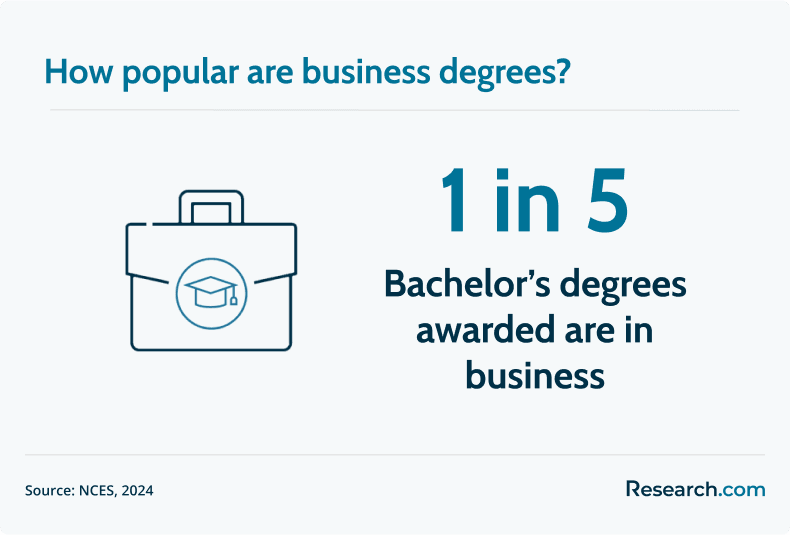
A bachelor's degree in business is a four-year undergraduate program that typically requires about 120 semester credits. It provides a broader and deeper business education than an associate degree and is commonly expected for many professional, analytical, supervisory, and management-track roles.
Students usually study core areas such as management, marketing, accounting, finance, economics, operations, information systems, and business strategy. Many programs also allow students to choose a concentration, such as finance, marketing, human resources, entrepreneurship, international business, or supply chain management. These focused tracks can help students prepare for more specific career paths.
Admission usually requires a high school diploma or equivalent. Some colleges may also consider GPA, standardized test scores, prerequisite coursework, essays, or transfer credits, depending on the institution and program format.
Beyond technical business knowledge, bachelor's programs place greater emphasis on communication, critical thinking, teamwork, research, ethics, data interpretation, leadership, and problem-solving. Students may also complete case studies, internships, group projects, or capstone assignments that require them to apply business concepts to real organizational problems.
What are the similarities between associate degree in business programs and bachelor's degree in business programs?
Associate and bachelor's degrees in business share the same starting point: both introduce students to the language, functions, and decision-making processes of business. Either option can help students build a foundation for entry-level work, entrepreneurship, or further education.
- Core business subjects: Both degrees usually include introductory coursework in accounting, management, marketing, business communication, economics, and business ethics.
- General education requirements: Students in both pathways commonly take courses in writing, mathematics, social sciences, and other general education areas that support professional communication and analysis.
- Workplace-relevant skills: Both programs help students develop problem-solving, written communication, basic quantitative reasoning, teamwork, and professional judgment.
- Flexible pacing: Although associate degrees typically take two years and bachelor's degrees typically take four years, students may study part time, transfer credits, or choose online formats. Students looking for a shorter route may also compare options such as a fast online associate degree.
- Accessible entry requirements: Both degree types commonly require a high school diploma or equivalent, making them realistic starting points for recent graduates, adult learners, and career changers.
The main similarity is that neither degree is limited to one industry. Business training can apply to retail, healthcare, finance, manufacturing, nonprofit organizations, technology companies, government offices, and small businesses. The difference is usually the level of responsibility graduates are prepared to pursue immediately after finishing the program.
What are the differences between associate degree in business programs and bachelor's degree in business programs?
The biggest differences are time, depth, cost, and career ceiling. An associate degree is usually designed for faster entry into the workforce or transfer. A bachelor's degree is usually designed for broader professional preparation, specialization, and stronger advancement potential.
| Comparison area | Associate degree in business | Bachelor's degree in business |
| Typical length | Two years | Four years |
| Typical credits | Around 60 credits | About 120 credits |
| Curriculum focus | Foundational business knowledge and practical workplace skills | Broader theory, analysis, strategy, leadership, and specialization |
| Common career entry point | Entry-level administrative, sales, customer service, bookkeeping support, or operations roles | Professional, analytical, coordinator, specialist, supervisory, and management-track roles |
| Cost profile | Usually lower overall cost because of shorter program length | Usually higher total cost, with potential for stronger long-term earnings |
| Best use case | Start working sooner, reduce upfront cost, or transfer later | Prepare for broader career options, leadership roles, or graduate study |
Associate programs often work best for students who need a lower-cost credential quickly or want to complete the first half of a bachelor's degree at a community college. Bachelor's programs often work best for students who already know they want business roles with more responsibility, higher advancement potential, or access to graduate education later.
What skills do you gain from associate degree in business programs vs bachelor's degree in business programs?
Both degrees build business skills, but they train students for different levels of responsibility. Associate programs emphasize practical execution. Bachelor's programs add deeper analysis, strategy, and leadership preparation.
Skills gained in associate degree in business programs
- Basic accounting and bookkeeping support: Students learn how to interpret simple financial records, assist with transactions, and understand the accounting cycle.
- Office and administrative operations: Coursework often builds skills in scheduling, documentation, records management, customer support, and day-to-day business coordination.
- Business communication: Students practice writing professional emails, preparing basic reports, speaking with customers, and communicating within teams.
- Spreadsheet and business software use: Many programs introduce spreadsheets, data entry, presentation tools, and business applications used in entry-level office roles.
- Customer and sales support: Students may learn basic service, sales, and problem-resolution techniques that apply to retail, call centers, small businesses, and administrative settings.
The associate degree is practical and efficient. It can help students qualify for early business roles without spending four years in school first. However, students who want to move into higher-level analysis, management, or specialized business roles may eventually need additional education. Those still comparing accessible academic paths can review easy majors while considering how each option fits their goals.
Skills gained in bachelor's degree in business programs
- Financial and managerial analysis: Students go beyond basic accounting to study budgeting, financial decision-making, performance measurement, and business planning.
- Strategic thinking: Bachelor's coursework often requires students to evaluate markets, competitors, internal operations, and long-term business risks.
- Marketing and consumer analysis: Students may learn how to plan campaigns, evaluate customer behavior, interpret market data, and measure campaign effectiveness.
- Leadership and organizational behavior: Programs typically explore motivation, team dynamics, ethics, conflict, change management, and supervisory decision-making.
- Research and problem-solving: Students often complete case studies, data projects, presentations, and capstone work that require evidence-based recommendations.
The bachelor's degree develops a wider skill set because it includes more advanced coursework and more opportunities to apply concepts to complex business problems. This broader preparation is one reason bachelor's graduates are often more competitive for roles that require analysis, coordination, supervision, or specialized knowledge.
Which is more difficult, associate degree in business programs or bachelor's degree in business programs?
A bachelor's degree in business is generally more difficult because it requires more credits, more advanced coursework, and a longer academic commitment. Bachelor's programs commonly require about 120 credits over four years, while associate programs usually require 60 credits over two years.
The added difficulty in a bachelor's program usually comes from upper-division courses in finance, strategy, operations, business analytics, organizational behavior, and specialized electives. Students may also complete longer research papers, case analyses, group consulting-style projects, internships, and capstone assignments. These experiences require stronger time management, writing, quantitative reasoning, and independent judgment.
An associate degree is not necessarily easy. The pace can feel demanding because students complete a credential in a shorter period while learning college-level writing, math, accounting, and business concepts. For students balancing work, family, or a return to school after a long break, the workload can still be challenging.
The better question is what type of difficulty fits you. If you want a shorter, applied program with quicker workforce entry, the associate degree may be more manageable. If you are prepared for a longer program with more analysis, theory, and leadership preparation, the bachelor's degree may be worth the added effort. Students planning to continue beyond an undergraduate credential can also compare future options such as low cost online master's programs.
What are the career outcomes for associate degree in business programs vs bachelor's degree in business programs?
Both degrees can lead to business-related employment, but they usually place graduates at different points on the career ladder. Associate degree graduates are more likely to begin in support, service, administrative, and operations roles. Bachelor's degree graduates are more likely to qualify for analyst, coordinator, specialist, supervisory, and management-track positions.
Career outcomes for associate degree in business programs
An associate degree can help graduates enter the workforce sooner and build experience while keeping education costs lower. The trade-off is that some employers reserve higher-level roles for candidates with a bachelor's degree or significant experience. Graduates typically earn median salaries around $41,800, reflecting the more limited scope of roles available.
- Administrative assistant: Supports managers, coordinates office tasks, prepares documents, and helps keep daily operations organized.
- Customer service representative: Responds to customer questions, resolves issues, documents interactions, and supports client retention.
- Sales associate: Helps customers, processes transactions, supports sales goals, and learns product or service operations.
These roles can be valuable starting points. Students who perform well may advance through experience, employer training, industry certifications, or later transfer into a bachelor's program.
Career outcomes for bachelor's degree in business programs
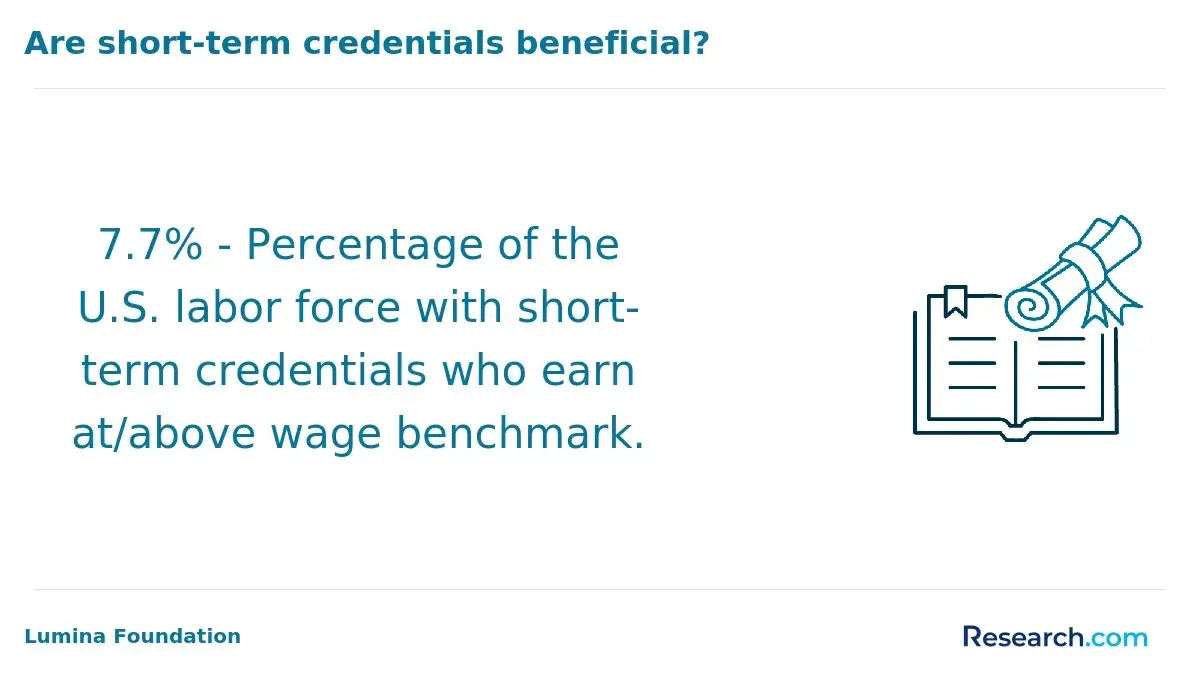
A bachelor's degree usually provides stronger access to business roles that involve analysis, planning, coordination, or supervision. Bachelor's degree holders have median annual earnings approximately 35% higher than those with an associate degree. The degree may also be required or strongly preferred for management development programs, corporate roles, and graduate school admission.
- Business analyst: Reviews data, processes, and performance measures to recommend operational or strategic improvements.
- Marketing specialist: Plans campaigns, supports brand strategy, analyzes market trends, and measures marketing performance.
- Human resources coordinator: Supports recruiting, onboarding, employee relations, compliance, and workforce administration.
Career outcomes still depend on experience, location, internships, networking, industry, and the quality of the program. A bachelor's degree is not a guarantee of a specific job or salary, but it usually creates more options and a stronger platform for advancement. Students comparing flexible colleges may want to review the top online universities as part of their program search.
How much does it cost to pursue associate degree in business programs vs bachelor's degree in business programs?
An associate degree in business usually costs less than a bachelor's degree because it takes less time and requires fewer credits. However, the total amount you pay depends on the school, residency status, online or on-campus format, fees, books, transportation, housing, and financial aid.
For associate degree programs, the total cost commonly ranges from $6,000 to $26,000, averaging close to $16,000 for the full duration. Community colleges often charge between $100 and $109 per credit hour, which can make the associate pathway one of the most affordable ways to start a business education. Scholarships, grants, employer tuition benefits, and other aid can reduce out-of-pocket costs.
Bachelor's degree programs in business usually require a larger financial commitment. Online options average about $7,547 annually in tuition and fees before aid. After financial assistance, the average yearly net price decreases to roughly $4,256 for online studies. On-campus programs tend to cost more, with annual costs near $12,047, dropping to about $6,586 after aid. Over four years, total expenses can vary widely, often falling between $30,000 and $50,000, especially at private or out-of-state institutions.
Cost should be compared by net price, not sticker price. Students should review tuition, mandatory fees, transfer policies, credit requirements, textbook costs, technology fees, and whether credits will apply to a future bachelor's degree. Completing the FAFSA is essential for both associate and bachelor's students who want access to federal aid and many institutional aid programs.
| Cost factor | Associate degree in business | Bachelor's degree in business |
| Program length | Usually two years | Usually four years |
| Common total cost | $6,000 to $26,000, averaging close to $16,000 | Often between $30,000 and $50,000 |
| Typical affordability advantage | Lower total tuition and faster completion | Higher cost, but broader career access may improve long-term value |
| Key financial aid step | Complete the FAFSA and check state, college, and employer aid | Complete the FAFSA and compare aid packages carefully |
How to Choose Between Associate Degree in Business Programs and Bachelor's Degree in Business Programs
Choose the degree that matches your near-term needs and long-term career target. An associate degree can be the smarter first step if you need a lower-cost credential, want to work sooner, or plan to transfer. A bachelor's degree is usually the stronger option if you want professional business roles, management potential, or graduate school eligibility.
- Choose an associate degree if speed matters: Associate degrees take about two years and can help you enter the workforce faster or complete lower-division credits before transferring.
- Choose an associate degree if upfront cost is the main concern: Associate degrees cost roughly $4,481 annually, compared with $19,806 per year expenses for bachelor's degrees.
- Choose a bachelor's degree if career ceiling matters: Bachelor's degrees typically open more doors to management, specialist, analyst, and corporate roles.
- Choose a bachelor's degree if earning potential is a priority: Business graduates with bachelor's degrees earn a median weekly salary of $1,432, 37% more than associate degree holders' $1,005.
- Choose based on academic readiness: Bachelor's programs usually require more reading, writing, analysis, and long-term discipline. Associate programs are shorter but still require consistent effort.
- Check transfer rules before enrolling: If you start with an associate degree, confirm whether credits will transfer into the bachelor's program you may want later.
- Consider your target job postings: Look up real job listings in your area. If most roles you want require a bachelor's degree, plan accordingly.
A practical strategy is to work backward from your target role. If you want a support role, small business position, or affordable first credential, an associate degree may be enough to start. If you want roles in finance, marketing, human resources, business analytics, operations management, or leadership, a bachelor's degree may provide a stronger foundation.
Your personality and work preferences also matter. For example, students who prefer independent or lower-interaction work may want to compare business pathways with the best high paying jobs for introverts before choosing a concentration or career direction.
What Graduates Say About Their Degrees in Associate Degree in Business Programs and Bachelor's Degree in Business Programs
- : "The associate degree in business program challenged me more than I expected, but the hands-on projects really prepared me for the fast-paced retail management sector. It was rewarding to see my GPA improve as I grasped each concept, and now I confidently lead a team as a store supervisor. This program gave me the practical skills necessary to succeed early in my career. — Truett"
- : "Pursuing the bachelor's degree in business allowed me to explore unique international case studies and engage in internships that broadened my perspective. The program emphasized strategic thinking and real-world problem solving, which set me apart during job interviews. Reflecting on this journey, I appreciate how it pushed me to develop a global business mindset. — Charlie"
- : "Graduating with a bachelor's degree in business opened doors to corporate finance roles I once thought were out of reach. The in-depth training on market analysis and financial reporting equipped me with the expertise to increase my income significantly within two years. It's been a professional milestone that validates the program's rigorous curriculum and strong industry relevance. — Daniel"
Other Things You Should Know About Associate Degree in Business Programs & Bachelor's Degree in Business Programs
Yes, many students start with an associate degree in business and then transfer credits to a bachelor's program. However, transfer policies vary by institution, and not all credits may be accepted. It's important to consult the receiving college's transfer guidelines to ensure smooth credit articulation.
An associate degree in business can qualify graduates for entry-level roles in administration, sales, and support functions. However, many managerial and specialized positions typically require a bachelor's degree. Employers often prefer candidates with a bachelor's for roles with greater responsibility and higher earning potential.
Yes. Many accredited business bachelor’s programs require a capstone in the final year, often worth 3 to 6 credits. The project usually asks students to analyze a real company, build a strategy, and present findings. Most associate degrees do not include a capstone requirement.
References
- What is the difference between BSc, BA and BBA degrees? - UBI Business School - QS Top 20 worldwide https://ubi.edu/what-is-the-difference-between-bsc-ba-and-bba-degrees
- What Can You Do With a Bachelor of Business Administration? https://go.tiffin.edu/blog/what-can-you-do-with-a-bachelor-of-business-administration-degree
- Transfer from associate degree to business bachelor’s with ease https://dcs.wisc.edu/blog/transfer-from-associate-degree-to-business-bachelors
- Learn.org - https://learn.org/articles/business_administration_bachelor_vs_associate.html
- What is a Bachelor's Degree in Business? | University of Phoenix https://www.phoenix.edu/articles/business/what-is-a-bachelors-degree-in-business.html
- What is an Associate Degree? Complete Guide https://www.londondeinternational.com/blog/what-is-associate-degree
- The Associate Degree vs. Bachelor's Degree in Business | American Public University https://www.apu.apus.edu/area-of-study/business-and-management/resources/the-associate-degree-vs-bachelors-degree-in-business
- Turning An Associate Degree into a Bachelor’s Degree https://bachelors-completion.northeastern.edu/knowledge-hub/turn-associate-degree-to-bachelors-degree
- Associate's Degree vs Bachelor's Degree: What to Choose? https://www.uopeople.edu/blog/associate-degree-vs-bachelors-degree-whats-the-difference


