
2027 Is Architecture a Hard Major? What Students Should Know

Co-Founder and Chief Data Scientist
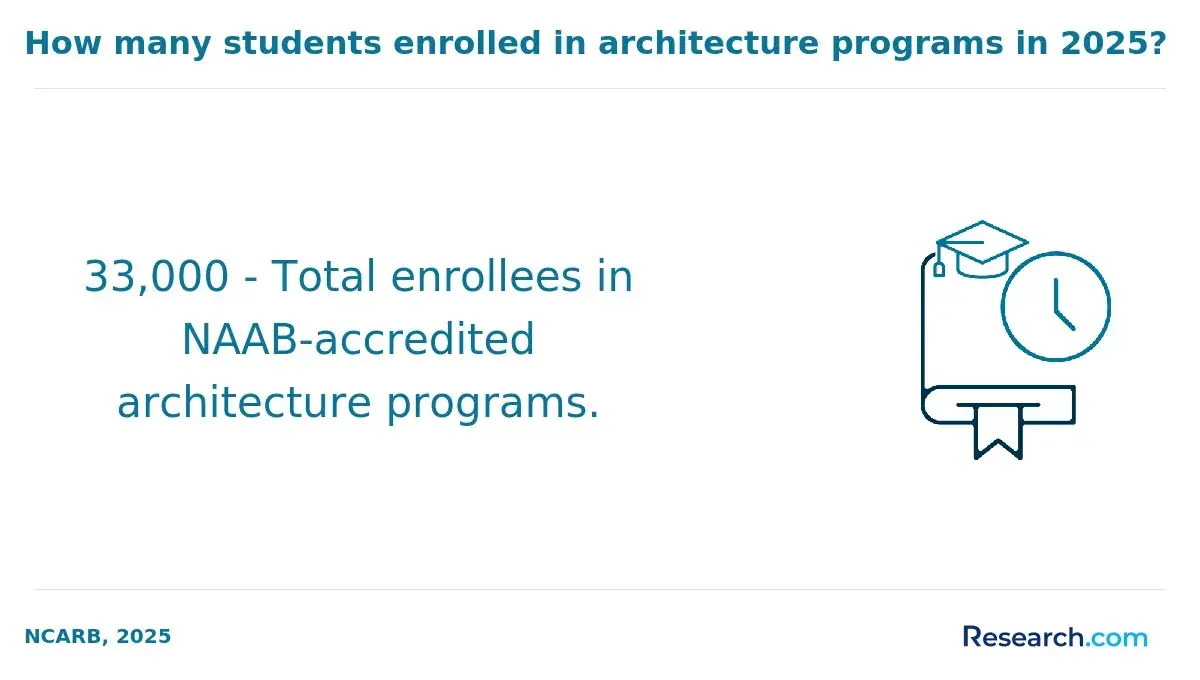
Choosing architecture is not just choosing a design major. It means committing to studio work, technical problem-solving, visual communication, frequent critiques, and long project cycles that can test your patience as much as your creativity. The major has a reputation for being difficult for a reason: about 35% of students enrolled in U.S. architecture programs complete their degree, a signal that the workload and expectations are substantial.
This guide helps you decide whether architecture is hard in the ways that matter to you. It explains where the major ranks compared with other demanding fields, what makes the coursework difficult, who tends to do well, how to reduce the strain, and what to expect from admissions, online study, accelerated formats, part-time work, careers, and salaries.
Key Benefits of Architecture as a Major
- Architecture develops critical problem-solving and creativity skills, beneficial for career changers seeking practical yet innovative applications in diverse fields.
- The program's flexible structure supports full-time workers returning to school by blending hands-on projects with theoretical learning, promoting steady academic and professional growth.
- Traditional undergraduates gain confidence managing complex coursework, with 75% reporting improved time management and resilience after immersion in demanding design studios.
Where Does Architecture Rank Among the Hardest College Majors?
Architecture is usually considered one of the harder college majors because it combines three types of difficulty at once: creative production, technical accuracy, and sustained time commitment. Unlike majors that rely mostly on exams, readings, or papers, architecture requires students to produce visible work repeatedly through drawings, models, digital files, presentations, and studio projects.
According to the National Survey of Student Engagement, architecture students typically spend over 22 hours weekly on assignments beyond class time. That workload places architecture near fields such as engineering, physics, and chemistry in many discussions of academic difficulty. The difference is that architecture also requires design judgment, visual experimentation, critique readiness, and the ability to keep improving a project after receiving feedback.
Still, “hardest” depends on the student. A person who enjoys open-ended problems, drawing, software, and spatial thinking may find architecture demanding but energizing. A student who prefers clear right-or-wrong answers, predictable weekly assignments, or exam-based grading may find the studio culture more stressful. Architecture is often tougher than majors with lighter out-of-class production demands, but some specialized engineering, pre-med, and physical science tracks can be equally or more intense depending on the institution.
The practical takeaway: architecture is not hard only because the material is complex. It is hard because the work is cumulative, public, time-sensitive, and evaluated through both technical and creative standards.
What Factors Make Architecture a Hard Major?
Architecture is difficult because students must learn to think like designers, technicians, historians, collaborators, and problem-solvers at the same time. The challenge is not one course or one skill; it is the combination of many expectations that build across the degree.
- Studio-based learning: Studio courses often drive the architecture curriculum. Students develop projects over many weeks, receive critiques, revise their work, and present final designs. This process can be rewarding, but it also creates pressure because improvement is expected throughout the project, not only at the end.
- Heavy workload and long project cycles: Architecture students usually handle a demanding credit load, often 15-19 credits per semester, while also spending significant time outside class on drawings, models, research, and revisions. At UC Berkeley, for example, students may complete 120 semester units over eight semesters.
- Creative and technical expectations: A strong project must be conceptually thoughtful and technically credible. Students may need to understand structures, materials, environmental systems, digital modeling, building codes, and presentation methods while still producing a compelling design.
- Iterative critique culture: Architecture students must become comfortable showing unfinished work and receiving direct feedback. This can be difficult for students who are used to private studying or grades based mainly on exams.
- Software and representation demands: Students must often learn CAD, BIM, rendering tools, diagramming, physical model-making, and portfolio presentation. These tools take time to master and can slow down students who enter with little technical background.
- Portfolio pressure: Architecture work does not disappear after a course ends. Students often refine projects for portfolios used in internships, graduate applications, and job searches, which adds another layer of long-term accountability.
Students who want a more flexible route should compare program formats carefully. Some may also review fast track college programs online, although accelerated options can increase pressure if the curriculum is already studio-heavy.
Who Is a Good Fit for a Architecture Major?
A good architecture student is not simply someone who can draw well. The major favors students who can combine imagination with discipline, accept criticism without losing motivation, and keep working through uncertain design problems. Talent helps, but consistency matters more.
- Creative curiosity: Strong students enjoy exploring multiple solutions instead of looking for one quick answer. They are willing to test ideas, revise, and sometimes start over when a design does not work.
- Attention to detail: Architecture requires precision. Drawings, models, dimensions, materials, and presentation boards must communicate clearly. Small errors can weaken an otherwise strong project.
- Comfort with critique: Studio feedback can be direct. Students who can separate their personal worth from criticism of their work usually grow faster and experience less frustration.
- Visual and spatial thinking: Architecture majors benefit from the ability to imagine how people move through spaces, how forms relate to one another, and how drawings translate into built environments.
- Technical persistence: Software such as AutoCAD or Revit can be frustrating at first. Students who are patient with tools, tutorials, and troubleshooting are better prepared for the workflow.
- Time management and stamina: Architecture majors often spend 22-28 hours weekly on projects and assignments. Students who plan ahead and avoid relying on last-minute production are more likely to stay healthy and perform well.
- Communication skills: Architects must explain ideas through drawings, writing, models, and presentations. Students who practice clear storytelling often perform better in reviews and collaborative projects.
Architecture may be a poor fit for students who strongly dislike ambiguity, repeated revision, public feedback, or long independent work sessions. For career changers and older learners considering design-related fields, resources on degrees for older adults may help identify programs that fit their schedule and goals.
How Can You Make a Architecture Major Easier?
You cannot make architecture effortless, but you can make it more manageable. The students who struggle most are often not the least talented; they are the ones who underestimate how early they need to start, how much revision takes, and how quickly studio deadlines compound.
- Start projects before you feel ready: Early sketches, rough models, and imperfect drafts give you material to critique. Waiting for a perfect idea usually leads to rushed work and weaker final submissions.
- Break studio projects into weekly milestones: Divide each assignment into research, concept development, diagrams, drawings, model-making, rendering, and presentation tasks. Architecture becomes less overwhelming when each week has a clear deliverable.
- Learn essential software early: Build basic confidence with CAD, BIM, layout, and rendering tools before major deadlines. Software should support your design process, not become the crisis right before a review.
- Use critiques strategically: Do not treat feedback as a judgment to survive. Write down comments, identify patterns, and decide which revisions matter most. Not every suggestion has equal weight.
- Protect your physical and mental energy: Long studio hours can make poor sleep, skipped meals, and constant all-nighters seem normal. Sustainable habits improve both design quality and decision-making.
- Build a reliable peer group: Architecture can feel isolating when everyone is working under pressure. A small group for feedback, accountability, and technical help can reduce stress and improve outcomes.
- Use campus resources early: Writing centers, fabrication labs, material libraries, software workshops, tutoring, and faculty office hours are most useful before you are behind.
One architecture graduate described the first years as a steep adjustment: deadlines arrived quickly, software felt unfamiliar, and critiques were sometimes difficult to absorb. What helped most was “developing a daily rhythm, even when projects became intense.” She also found peer support essential, explaining that “having a team to review work and share insights made tough assignments less isolating.” Her experience reflects a common lesson: architecture becomes more manageable when students build systems instead of relying on bursts of last-minute effort.
Are Admissions to Architecture Programs Competitive?
Yes. Admissions to many U.S. architecture programs are competitive because applicant interest can exceed available studio space, faculty capacity, and program resources. Selective schools may admit less than 20% of applicants, especially when they review both academic records and creative potential.
Applicants should expect architecture admissions to evaluate more than grades. A strong GPA, often above 3.7 at highly selective institutions, can help, but it may not be enough by itself. Many programs also consider a portfolio, design exercises, essays, recommendations, prior art or design coursework, and evidence that the applicant understands the demands of the field. Standardized tests are becoming optional at many institutions, but rigorous high school coursework and hands-on experience can still strengthen an application.
The portfolio is often the most unfamiliar part of the process. It does not need to show professional architectural work, but it should demonstrate observation, creativity, craft, visual thinking, and the ability to develop ideas. Sketches, photography, sculpture, digital art, design projects, and other creative work may be relevant if they show how the applicant thinks.
A professional architect described the portfolio as the most demanding part of his application. He remembered spending nights refining sketches and models, then waiting anxiously for decisions. His main lesson was that competitive admissions can be stressful, but they also force applicants to clarify why they want architecture and what kind of designer they are beginning to become.
Is an Online Architecture Major Harder Than an On-Campus Program?
An online architecture major is not automatically harder than an on-campus program, but it is harder in different ways. The academic expectations can be comparable, especially in accredited programs, yet the learning experience changes because studio feedback, collaboration, model-making, and access to facilities may depend heavily on digital systems and local resources.
- Self-direction: Online students need strong planning habits because flexible scheduling can make it easier to fall behind. Studio work still requires steady progress, even when class meetings are virtual.
- Feedback and critique: On-campus students often benefit from immediate studio interaction. Online students may receive feedback through video meetings, uploaded files, discussion boards, or recorded critiques, which requires clear communication and proactive follow-up.
- Tools and workspace: Online learners may need reliable hardware, design software, a strong internet connection, and a dedicated area for drawing or model-making. Limited access to fabrication labs can be a disadvantage.
- Collaboration: Group work is possible online, but it requires intentional coordination. Time zones, file sharing, and communication habits matter more when classmates are not in the same studio.
- Program quality and accreditation: Students should verify whether an online program supports their career and licensure goals. Comparing online accredited architecture programs can help applicants focus on options with stronger academic credibility.
Students comparing online and campus-based study should also think beyond convenience. Ask whether the program provides studio interaction, faculty access, portfolio development, software support, and any required in-person components. If you are planning graduate study, reviewing the shortest masters degree programs may also help you understand how program length affects workload and pacing.
Are Accelerated Architecture Programs Harder Than Traditional Formats?
Accelerated architecture programs are generally harder than traditional formats because they compress demanding studio, technical, and general education requirements into a shorter timeline. The content may not be more advanced, but the pace leaves less room for trial, reflection, recovery, and revision.
- Course pacing: Accelerated programs move quickly through design, history, structures, technology, and representation. Students must absorb concepts and apply them almost immediately.
- Credit load: Some accelerated paths require heavier terms, often reaching 18 or more credits per semester. That can be difficult in architecture because studio projects expand outside scheduled class time.
- Studio pressure: Design work benefits from iteration. A compressed calendar can reduce the time available to test alternatives, receive feedback, and refine a project before final review.
- Burnout risk: Year-round study, summer terms, and fewer breaks can make it harder to maintain energy. Traditional formats often provide more time to recover between intense studio sequences.
- Retention and depth: Traditional 4+2 formats may allow more time for intellectual development, internships, electives, and portfolio growth. Accelerated formats can work well for disciplined students, but they leave less margin for setbacks.
Students comparing BArch vs MArch program difficulty should be honest about their habits and outside obligations. An accelerated path may be appealing if you are focused, organized, and able to make school your primary commitment. It may be a poor choice if you need substantial work hours, caregiving flexibility, or more time to build design confidence. Students exploring other intensive academic routes may also compare pacing with short phd programs online, though architecture has its own studio-specific demands.
Can You Manage a Part-Time Job While Majoring in Architecture?
You can manage a part-time job while majoring in architecture, but it is one of the harder majors to combine with regular work. The main issue is not only the number of hours. It is the unpredictability of studio deadlines, review weeks, group projects, software problems, and model-making time. During intense project phases, architecture programs can demand more than 70 hours per week.
The students most likely to manage part-time work choose jobs with flexible schedules, short shifts, and low conflict with studio time. Campus jobs, weekend retail shifts, tutoring, front-desk roles, or assistant positions may be easier to coordinate than jobs with rigid evening hours or last-minute scheduling. Work that drains the same creative and mental energy required for studio can be especially difficult.
If you need to work, consider reducing risk before the semester begins. Avoid overloading credits, tell your employer about major review dates early, reserve protected studio blocks, and build emergency time into your schedule. It is also wise to meet with an academic advisor before committing to heavy work hours. Falling behind in architecture can be harder to recover from than in courses where one exam or paper can reset your grade.
The practical answer: part-time work is possible, but architecture students should treat work hours as a serious academic variable, not an afterthought.
What Jobs Do Architecture Majors Get, and Are They as Hard as the Degree Itself?
Architecture majors can enter design, planning, drafting, project coordination, construction-related roles, and eventually licensed architectural practice. Some jobs feel as demanding as the degree, while others are more structured and predictable. The biggest difference is that professional work usually involves clients, budgets, codes, liability, and team coordination in addition to design.
- Architect: Architects design, document, coordinate, and oversee building projects. This role can be as demanding as the major because it involves creative decisions, technical responsibility, client expectations, deadlines, and professional licensing requirements.
- Architectural Designer: Architectural designers typically work under supervision on concepts, drawings, models, renderings, and documentation. The role can be intense, but entry-level designers often have clearer responsibilities than students managing entire studio projects alone.
- Urban Planner: Urban planners focus on land use, communities, transportation, policy, and public spaces. The work can be demanding, but the difficulty is often more analytical, civic, and collaborative than studio-design intensive.
- Architectural Drafter: Drafters prepare technical drawings and construction documents. This path may be more predictable than architecture school, though it still requires accuracy, software proficiency, and knowledge of building systems.
- Project Manager: Project managers coordinate schedules, budgets, teams, deliverables, and client communication. The work may be less focused on design invention but more demanding in organization, accountability, and conflict management.
Students comparing architecture career paths and job difficulty should look at more than job titles. Firm size, project type, licensure status, region, and seniority all affect stress and responsibility. Some of the high paying architecture jobs in the US are tied to leadership and experience, not just design talent. Students considering nontraditional alternatives can also review the best paying trades to compare hands-on career routes outside the standard architecture pipeline.
Do Architecture Graduates Earn Higher Salaries Because the Major Is Harder?
Architecture graduates can earn solid salaries, but difficulty alone does not determine pay. Compensation is more closely tied to licensure, specialized technical skills, experience, project responsibility, location, and the economics of the construction and real estate markets.
The median pay for licensed architects in 2025 ranges from $97,000 to about $97,470, with seasoned professionals earning $120,000 or more. Salary growth has been modest, around 0.31-1% annually since 2024. That suggests architecture’s academic difficulty does not automatically translate into unusually fast wage growth. Instead, the market rewards professionals who can manage complex design and documentation work, meet regulatory expectations, coordinate teams, and carry responsibility for built projects.
Location and seniority matter heavily. Senior architects with 8 to 15 years of experience commonly make $120,000+, while principals or partners in cities such as New York and San Francisco often surpass $150,000. Architectural engineers earn between $91,000 and $105,000 depending on their specialty and region. West Coast firms may offer stronger compensation because of higher living costs and competition from the tech sector.
The key point is that architecture salaries are not a simple reward for surviving a hard major. Higher earnings usually come after years of experience, licensure progress, technical specialization, leadership, and the ability to deliver projects reliably.
What Graduates Say About Architecture as Their Major
- Augustus: "Pursuing architecture was definitely challenging, but the hands-on learning and creative problem-solving made it extremely rewarding. Though the cost of attendance was steep, around $20,000 per year on average, investing in this major opened doors to a fulfilling career designing sustainable buildings. For anyone passionate about innovation and design, architecture is tough but absolutely worth it."
- Antonio: "Reflecting on my time majoring in architecture, I can say it was one of the most demanding yet enriching educational experiences I've had. The high tuition fees and long studio hours made it tough, but mastering complex design principles profoundly shaped my career trajectory and personal growth. Architecture pushed me to think critically and adapt, making the cost justified by the skills and resilience I gained."
- Julian: "Architecture is undeniably a hard major, requiring intense dedication and time management, especially when balancing the significant financial burden that averages around $70,000 for a full degree. However, the professional expertise and creative confidence cultivated through this major have been invaluable in my career. I approach projects with a unique perspective thanks to those rigorous years, and despite the cost, I consider it a strategic investment in my future."
Other Things You Should Know About Architecture Degrees
In 2027, architecture students must master software like AutoCAD, Revit, and SketchUp. These tools are essential for drafting, 3D modeling, and project presentation, making them integral to both coursework and future professional practice.
Architecture students often spend a significant amount of time outside of formal class hours on projects. It is common for them to dedicate 20 to 40 hours per week to studio work, model-making, and revisions, especially during intense project phases. This workload contributes to the demanding nature of the major compared to many others.
In 2027, architecture students typically need to pass the Architect Registration Examination (ARE) to gain licensure. The exam tests candidates on practical knowledge and skills essential for professional practice and includes sections on project management, planning, and design.
Portfolio development is crucial in architecture education and career progression. Students continuously build portfolios showcasing their best designs and projects, which are essential for job applications and graduate school admissions. A strong portfolio reflects both technical skills and creativity, making it a vital part of the major.
References
- What impact have ARB reforms had on architecture courses? https://www.ribaj.com/intelligence/architecture-courses-higher-education-architects-registration-board-arb-reforms-impact/
- Everything You Must Know as a First Year Architecture Student | SAS Podcast 6 - Successful Archi Student https://successfularchistudent.com/6/
- What is the difference between the 5 yr b.arch and the 4+2 masters degree in architecture? - Architecture Majors - College Confidential Forums https://talk.collegeconfidential.com/t/what-is-the-difference-between-the-5-yr-b-arch-and-the-4-2-masters-degree-in-architecture/1650376
- Is Online Learning Really the Future of Architectural Education? https://commonedge.org/is-online-learning-really-the-future-of-architectural-education/
- Top Ten Reasons to be an Architect | Life of an Architect https://www.lifeofanarchitect.com/top-ten-reasons-to-be-an-architect/
- Your first architecture job: how to transition from university https://rmjm.com/your-first-architecture-job-how-to-transition-from-university/
- Graduate Options Architecture and Sustainability https://www.ferris.edu/CET/built-env/atfm/architectural/bsarch/Graduate-Options.html
- Architecture majors work the hardest in college, study reveals | News | Archinect https://archinect.com/news/article/149990764/architecture-majors-work-the-hardest-in-college-study-reveals
- part time job while studying architecture at Uni https://www.thestudentroom.co.uk/showthread.php


