
2027 Accelerated vs. Traditional Architecture Degrees: Pros & Cons

Co-Founder and Chief Data Scientist
The choice between an accelerated and a traditional architecture degree is not only about speed. It affects how much time you have for studio work, how you build a portfolio, how you manage internships, how you pay for school, and how prepared you feel for licensure-oriented practice.
Accelerated architecture programs can appeal to working adults, transfer students, and career changers who want a shorter route and can handle compressed deadlines. Some students finish in less than half the time of traditional routes, but the trade-off is intensity: studio critiques, technical courses, portfolio development, and career planning happen on a tighter schedule. Traditional programs usually move at a steadier pace, giving students more time for design exploration, faculty feedback, campus involvement, and professional identity-building.
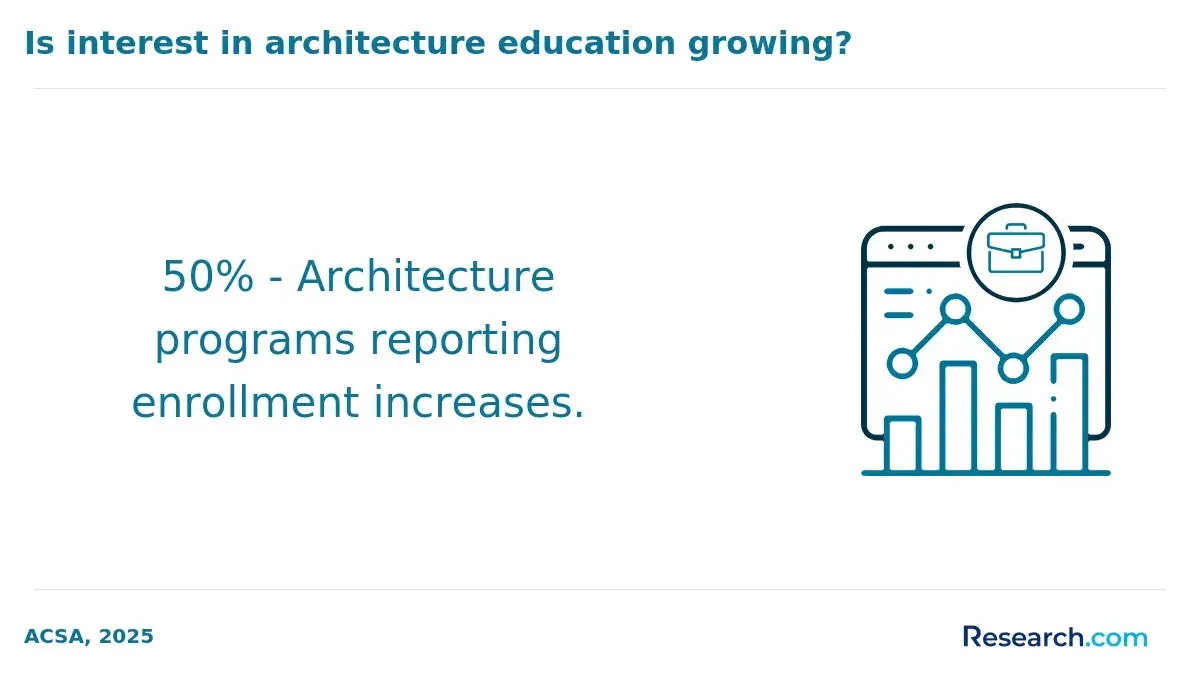
Recent trends show a 30% rise in enrollment for accelerated architecture courses in the U.S., reflecting stronger demand for efficient education options. This guide compares accelerated and traditional architecture degrees across program length, course structure, admissions, cost, financial aid, support services, employment outcomes, accreditation, and student fit so you can choose the path that matches your goals, schedule, and learning style.
Key Points About Accelerated vs. Traditional Architecture Degrees
- Accelerated architecture degrees offer flexibility for working adults and career changers, enabling completion in less than half the time of traditional programs.
- Traditional programs foster deeper academic engagement and peer collaboration, essential for mastering design principles and long-term professional networking.
- Cost efficiency and faster career entry benefit accelerated students, while traditional degrees support paced skill mastery, appealing to those valuing comprehensive education.
What Are the Differences Between Accelerated vs. Traditional Architecture Programs?
Accelerated and traditional architecture programs may cover similar academic ground, but they create very different student experiences. The main differences are pace, schedule, studio rhythm, access to feedback, and the amount of time students have to develop design judgment before graduation.
An accelerated architecture degree is usually built for students who can commit to a demanding schedule and make decisions quickly. A traditional architecture degree is better suited to students who want more time for critique, electives, campus resources, and portfolio growth.
- Pacing and intensity: Accelerated programs condense coursework into shorter, more intensive periods, sometimes as brief as 4 to 8 weeks per course. That format can help motivated students move quickly, but it leaves little room to fall behind. Traditional programs typically follow 10 to 17 weeks per term, allowing more time to absorb complex design, history, construction, and theory concepts.
- Course load and scheduling: Accelerated students may take fewer courses at once, but each course moves faster and often requires sustained weekly output. These programs may also offer multiple flexible start dates annually. Traditional programs usually follow fixed academic calendars with a more predictable semester or quarter routine.
- Studio experience: Studio is the core of architectural education. In accelerated formats, studio deadlines can be especially demanding because concept development, drawings, models, revisions, and critiques are compressed. Traditional programs often allow more time for iteration, failed experiments, peer critique, and faculty review, which can strengthen a portfolio.
- Support and community: Accelerated formats, particularly online or hybrid options, may require students to be proactive about mentorship and peer connection. Traditional campus-based programs often provide stronger day-to-day community because students spend more time in studios, labs, and critique spaces together.
- Best-fit student profile: Accelerated programs generally fit disciplined, self-directed students with clear goals and strong time management. Traditional programs often work better for students who want a broader college experience, more gradual skill development, or additional time to decide on a specialization.
Students comparing program logistics can also review related fast-track education models, including accelerated associate degrees, to understand how compressed calendars and flexible starts work across different degree levels.
How Fast Can You Finish an Accelerated vs. Traditional Architecture Program?
Accelerated architecture programs shorten the path by compressing terms, reducing breaks, accepting applicable prior credits, or combining undergraduate and graduate study. Traditional programs take longer because they follow standard academic calendars and usually give students more time between major studio milestones.
The fastest route is not automatically the best route. Architecture requires design maturity, technical competence, visual communication, and a credible portfolio. Students should evaluate whether a shorter timeline will help them enter the field sooner or whether it will reduce the time they need to build competitive work.
- Transfer credits: Students who enter with prior college credits or an associate's degree may shorten time to graduation, especially in degree-completion programs designed for transfer students. This can affect both traditional and accelerated degrees by reducing the number of remaining requirements.
- Full-time vs. part-time enrollment: Accelerated programs usually expect full-time participation and a high weekly workload. Traditional programs more often allow part-time enrollment, though part-time study extends the total timeline.
- Course intensity and scheduling: Accelerated programs use condensed terms and fewer breaks, which can mean more weekly hours for studio, readings, software work, and assignments. Traditional architecture program duration is usually longer because it follows regular semesters or quarters with scheduled breaks.
- Competency-based progression: Some non-traditional programs may allow credit for prior learning or demonstrated skills, which can help prepared students move faster. Students should confirm whether those credits apply to architecture-specific requirements, not only general education.
- Combined degree structures: Some schools offer 4+1 or 3+2 programs that create a more direct route to undergraduate and graduate architecture credentials by overlapping coursework or streamlining progression.
Students comparing educational timelines may also find broader context in resources about advanced degree speed, such as this guide to what is the easiest PhD to get.
What Are the Admission Requirements for Accelerated vs. Traditional Architecture Programs?
Accelerated and traditional architecture programs often ask for similar baseline materials: transcripts, GPA evidence, prerequisite coursework, a portfolio or design samples when required, and sometimes standardized test scores. The difference is usually in selectivity and proof of readiness. Accelerated programs need evidence that a student can handle a compressed schedule without sacrificing studio quality.
Traditional programs may offer more entry points for first-year students, transfers, or students still building a design portfolio. Accelerated tracks are more likely to favor applicants who already show academic focus, professional commitment, and the ability to manage overlapping demands.
- Academic performance: Accelerated architecture programs usually require stronger academic standing, often with a minimum 3.0 GPA and solid performance in foundational architecture classes. Traditional architecture degree program prerequisites may be more flexible, sometimes admitting students with a GPA as low as 2.75, especially transfers or students changing majors.
- Portfolio readiness: A strong portfolio can matter in both formats, but it is especially important when a program moves quickly. Students should show process, not only polished final images. Admissions reviewers often look for evidence of spatial thinking, iteration, drawing ability, model-making, digital skills, and design curiosity.
- Professional experience: Accelerated applicants may be expected to demonstrate early commitment through internships, related employment, or prior design coursework. Traditional programs often introduce professional exposure after students complete foundational studio and technical courses.
- Program pace and commitment: Accelerated architecture programs may require year-round study, summer sessions, concurrent internships, or earlier preparation for licensing-related expectations. Traditional programs more often follow a standard academic calendar with fewer off-term obligations.
- Selective admission and cohort size: Accelerated programs tend to be more competitive, with limited cohort sizes and possible interviews. Traditional programs often have larger cohorts and multiple entry points.
Applicants considering a fast-track graduate pathway can compare expectations with an accelerated master's program online to see how compressed admissions standards and academic pacing may align with their background.
How Are Accelerated Architecture Courses Structured Compared to Traditional Ones?
Accelerated architecture courses usually cover required material in a shorter period by increasing weekly expectations, shortening breaks, and sequencing courses more tightly. Traditional courses distribute the same kind of work across longer terms, giving students more time for research, critique, revision, and portfolio refinement.
The biggest structural difference appears in studio. Architecture studio is not a lecture course that can simply be sped up without consequences. Students need time to test ideas, receive critique, redraw, rebuild, and explain design decisions. Accelerated programs can still be rigorous, but students must be prepared for a faster feedback loop.
- Course length: Accelerated programs enable students to complete undergraduate and graduate requirements in as few as seven years through continuous enrollment. Traditional paths typically span five years for a bachelor's plus two to three years for a master's, with regular breaks. The shorter route can appeal to students who want to enter professional practice sooner.
- Weekly workload: Accelerated students may manage coursework, studio production, internships, and exam preparation at the same time. Traditional students generally have a more staged experience, focusing first on academics and adding internships or licensure steps later.
- Instruction style: Accelerated degrees often use blended or online formats and may connect coursework more directly to architecture firms or applied projects. Traditional programs are more likely to emphasize campus-based studio culture, in-person critique, and separation between academic training and professional practice.
- Feedback cycle: In accelerated programs, critique can be frequent but compressed. Students must revise quickly and make decisions with limited downtime. In traditional programs, students typically have more time to develop concepts, document process, and improve final presentation quality.
- Portfolio impact: A faster program can produce a portfolio quickly, but students should ask whether they will have enough time to revise projects after critique. Traditional programs may provide more opportunity to refine work for internships, graduate applications, or entry-level roles.
Both approaches can uphold educational standards set by the National Architectural Accrediting Board and include licensure preparation, but students should confirm the exact credential, accreditation status, delivery format, studio expectations, and professional outcomes before enrolling.
How Much Do Accelerated Architecture Programs Cost Compared to Traditional Programs?
Accelerated architecture programs can cost less overall when they reduce the number of semesters, housing months, campus fees, or time away from work. However, lower total time does not always mean lower out-of-pocket cost. Tuition rate, credit requirements, summer enrollment, aid eligibility, software and materials, and residency status can change the final amount.
Traditional programs may cost more over time because students remain enrolled longer, but they may also provide more predictable aid cycles, more time to work part-time, and broader access to campus-funded opportunities. The right comparison is total cost to completion, not just tuition per credit.
- Tuition rate per credit: Both program types may charge comparable tuition per credit. Accelerated programs may lower total tuition when they require fewer terms or streamline requirements, but students should verify the total credit count.
- Program duration and total cost: Traditional architecture degrees typically span two years or more, which can increase cumulative tuition and fees. Accelerated options may condense coursework into about one year, resulting in lower total charges when credit requirements and fee structures are favorable.
- Opportunity cost: Accelerated students may return to full-time work sooner, reducing lost income during school. This can be a major advantage for career changers and working adults, but only if the program schedule still allows them to perform well academically.
- Financial aid availability: Some scholarships and federal aid may not align neatly with summer terms or compressed calendars common in accelerated curricula. This can increase out-of-pocket costs even when total enrollment time is shorter.
- Living expenses: Shorter enrollment can reduce housing, food, transportation, and personal expenses. These indirect costs are often large, especially for students relocating for a campus-based program.
- Architecture-specific expenses: Students in either format should budget for design software, computer hardware, printing, modeling supplies, fabrication fees, portfolio production, and travel to project sites or reviews when required.
What Financial Aid Is Available for Accelerated vs. Traditional Architecture Degrees?
Students in accelerated and traditional architecture degree programs may qualify for financial aid, but the timing and packaging can differ. Traditional programs usually fit standard semester-based aid calendars. Accelerated programs may involve condensed terms, year-round enrollment, or summer study, which can affect when aid is disbursed and how quickly students need to renew paperwork.
Before enrolling, students should ask the financial aid office to provide a term-by-term estimate, not just an annual award letter. This is especially important in architecture because indirect costs such as materials, software, printing, and studio supplies can be significant.
- Federal aid eligibility: Both program types may qualify for federal loans, Pell Grants, and work-study when the institution and program meet eligibility rules. Accelerated students should confirm how aid applies to condensed or nonstandard terms.
- Scholarship timelines: Merit and need-based scholarships may be available in both formats. Some awards are structured around traditional academic years, so accelerated students should check whether funding applies to summer or year-round enrollment.
- Employer tuition assistance: Working professionals may find accelerated programs attractive because the shorter commitment can be easier to justify to an employer. Students should confirm reimbursement rules, grade requirements, and whether the employer pays upfront or after course completion.
- Aid disbursement and renewal: Accelerated programs can require faster planning because courses and terms move quickly. Missing a deadline may create a cash-flow problem before the next session begins.
- Work-study and part-time work: Traditional students may have more room to work during the semester. Accelerated students should be cautious about relying on heavy work hours, since studio and project deadlines can be difficult to compress.
What Kind of Student Support Do Accelerated vs. Traditional Architecture Programs Offer?
Support services can determine whether a student succeeds in an architecture program, especially in studio-heavy curricula. Accelerated students need fast, responsive support because deadlines arrive quickly. Traditional students may benefit from a wider range of services spread across a longer academic experience.
When comparing programs, students should look beyond whether support exists and ask how accessible it is. A tutoring center or career office is less useful if appointments are unavailable during studio deadlines or if online students cannot access the same resources as campus students.
- Academic advising: Accelerated programs typically provide frequent, focused advising to keep students on track with tight sequencing and prerequisite requirements. Traditional programs often allow more time for course exploration, electives, minor selection, and academic plan changes.
- Tutoring: Accelerated tracks may offer on-demand tutoring, extended hours, or group support to address immediate academic pressure. Traditional programs commonly provide scheduled tutoring, workshops, and recurring help sessions throughout the term.
- Studio and design feedback: Architecture students need critique, not only tutoring. Accelerated programs should provide reliable access to faculty feedback despite shorter timelines. Traditional programs may offer more opportunities for desk critiques, pin-ups, peer reviews, and revisions.
- Career services: Accelerated students benefit from early internship placement, portfolio reviews, resume support, and employer connections that fit compressed schedules. Traditional students often have more time to use alumni networks, career fairs, internships, and portfolio development resources.
- Peer interaction: Accelerated programs may use structured cohort activities to create connection quickly. Traditional programs often foster more organic peer relationships through long-term studio culture, student organizations, and campus events.
- Technology and online support: Students in online or hybrid formats should confirm access to software, digital fabrication resources, remote critique tools, library databases, and technical help. Those comparing online options may also want to review a best online architecture degree guide to understand how delivery format can affect support and studio participation.
Do Graduates from Accelerated vs. Traditional Architecture Programs Get Hired More Quickly?
Hiring speed depends less on whether a program is accelerated or traditional and more on portfolio strength, accreditation, internship experience, software skills, professional references, location, and the reputation of the school. A shorter program can help students enter the job market earlier, but employers still evaluate readiness.
Traditional graduates may benefit from more time to build studio work, networks, and internships. Accelerated graduates may benefit from momentum, focus, and earlier availability. Neither path guarantees faster hiring.
- Employer perception: Traditional program graduates are frequently regarded as having a more established foundation in core skills and design thinking. Some firms may value the longer studio sequence, especially for roles requiring strong conceptual development and presentation skills.
- Career readiness: Accelerated graduates enter the market faster, but some may need to prove depth through a strong portfolio, internship record, and technical competence. A March 2025 RAND study commissioned by NCARB, AIA, and ACSA shows that the divide between academia and practice remains strong, with students, emerging professionals, and architects calling for stronger emphasis on practical skills in college curricula to better prepare for managing portfolios and projects right after graduation.
- Industry demand: Growing needs for architects skilled in BIM and AI-based design benefit graduates from both program types. Online and accelerated programs are increasingly aligning curricula with these technologies, but students should verify the tools and workflows taught in each program.
- Job placement speed: Graduates of accelerated programs typically secure entry-level roles within 3 to 6 months, while those from traditional programs often find jobs slightly sooner, averaging 2 to 4 months.
- Portfolio and internship quality: A polished portfolio and relevant experience can matter more than program format. Students should prioritize programs that provide critique, internship access, career advising, and opportunities to produce employer-ready work.
Are Accelerated Architecture Degrees Accredited the Same Way as Traditional Programs?
Yes, accelerated architecture degrees can be accredited under the same standards as traditional programs when they meet the requirements of the relevant accrediting bodies. Accreditation is not based on whether a program is fast or traditional; it is based on whether the institution and program meet recognized quality standards.
This matters because accreditation can affect financial aid eligibility, credit transfer, employer recognition, graduate admission, and licensure-related planning. Students should be especially careful with architecture programs because not every design, drafting, architectural studies, or technology degree leads to the same professional outcomes.
The accreditation process, including NAAB accreditation for accelerated architecture degrees, typically applies equally to both accelerated and traditional programs, although course design and delivery may vary. Institutions offering accelerated options may condense curriculum requirements into more intensive semesters or year-round study while still meeting the same educational standards.
Regional or programmatic accrediting bodies, such as the National Architectural Accrediting Board, evaluate programs using rigorous criteria, including curriculum, faculty, facilities, and resources. Prospective students should verify institutional accreditation before enrolling to ensure the degree will be widely recognized and support their licensure goals. Students concerned with affordability and federal aid access can also review resources on the cheapest online colleges that accept FAFSA while confirming that any architecture program they consider has the appropriate accreditation for their goals.
How Do You Choose Between an Accelerated vs. Traditional Architecture Degree?
Choose an accelerated architecture degree if you have clear goals, strong time management, a stable schedule, and enough academic preparation to handle compressed studio work. Choose a traditional architecture degree if you want more time for design exploration, portfolio development, campus life, internships, and gradual skill-building.
The best choice is the one that supports licensure preparation, career readiness, affordability, and your ability to produce strong work. Speed is valuable only if the program still gives you enough support, critique, and professional preparation.
- Time commitment: Accelerated degrees, including the 5-year Bachelor of Architecture or combined 4+1/3+2 programs, can reduce total time compared with longer traditional tracks. This can suit highly motivated students who want to enter the workforce sooner. Traditional programs spread coursework over a longer period, giving students more time to absorb material and participate in campus opportunities.
- Flexibility: Accelerated programs often use condensed courses and may include online or hybrid options, which can help students balancing work or family responsibilities. Traditional degrees typically follow semester schedules and provide a steadier rhythm with more campus involvement.
- Learning style: Accelerated formats require resilience, independent planning, and comfort with frequent deadlines. Traditional programs support a more gradual learning curve, deeper exploration, and extracurricular involvement.
- Career goals: Students who want to move quickly toward licensure-oriented credentials may prefer an accelerated path, provided the program is properly accredited and respected by employers. Students who want more time for internships, research, study abroad, or specialization may benefit from a traditional route.
- Financial fit: Compare total cost to completion, not only tuition per credit. Include fees, housing, materials, software, summer terms, lost income, and financial aid timing.
- Portfolio development: Ask how many major studio projects you will complete, how often you receive critique, and whether the program helps you revise work for internships or employment. A faster degree should still leave you with a competitive portfolio.
For students assessing online delivery options within these programs, consulting a list of nationally accredited online colleges can help confirm institutional quality and legitimacy before making a final decision.
What Students of Accelerated vs. Traditional Architecture Programs Say About Their Degree
- : "The traditional architecture degree program offers a comprehensive learning experience that thoroughly prepares you for a career in design and urban planning. While the longer duration means higher overall tuition costs, the depth of critique sessions and hands-on projects are unmatched. It's demanding but incredibly rewarding-I feel ready to enter the field with confidence. Augustus"
- : "Enrolling in a traditional architecture program has been a reflective journey for me. The steady pace lets me absorb complex concepts effectively, though the expense can be tough to manage. Despite that, the robust network of peers and professors makes every challenge worthwhile. This degree has definitely shaped my professional outlook. Antonio"
- : "The accelerated architecture program is intense and fast-paced, which suits my goal of starting my career quickly, but it sometimes limits deep exploration of certain topics. The reduced duration helps lower tuition costs and overall expenses, which is a big plus. It's a trade-off between speed and depth, and for me, the quicker path was worth it. Julian"
Other Things You Should Know About Traditional vs. Accelerated Architecture Degrees
Yes. Many accelerated architecture programs compress core studio and lecture sequences into summer terms, and some require year-round enrollment to finish in less than five years. Students may take 15 to 18 credit hours per term, with limited breaks between design studios and support courses.
Traditional architecture programs often provide more networking opportunities due to their longer duration and more extensive campus activities. Students have more time to build relationships with faculty, peers, and industry professionals through internships, studios, and extracurricular events. Accelerated programs may offer fewer chances for such connections, potentially limiting professional exposure.
In 2027, employers value both accelerated and traditional architecture graduates for different reasons. Accelerated program graduates often bring eagerness and adaptability, while traditional graduates might offer deeper project experience. Ultimately, specific employer preferences can vary based on firm needs and individual candidate qualities.
References
- Ep 137: Is Architecture School Broken pt. 1 https://www.lifeofanarchitect.com/ep-137-is-architecture-school-broken/
- Accreditation Status & Professional Registration https://capla.arizona.edu/academics/school-of-architecture/accreditation-registration
- Funding Your Architectural Education: Grants, Scholarships & More https://learnarchitecture.net/schooling/scholarships/1395-funding-your-architectural-education.html
- A Preliminary Evaluation of Students' Learning and Performance Outcomes in an Accelerated 3-Year MD Pathway Program https://pmc.ncbi.nlm.nih.gov/articles/PMC8848877/
- How Long to Get an Architecture Degree? | ValidGrad.com https://validgrad.com/blog/how-long-does-it-take-to-get-an-architecture-degree-the-real-timeline-nobody-talks-about/
- How To Choose Between Online Vs. Traditional Education Programs | PLNU https://www.pointloma.edu/resources/accelerated-undergraduate/how-choose-between-online-vs-traditional-education-programs
- Zippia. (2025). Architect demographics and statistics in the US. https://www.zippia.com/architect-jobs/education/
- ZipRecruiter. (2025). Architect salary in the United States. https://www.ziprecruiter.com/Salaries/Architect-Salary


