2027 MPH Admissions With International Humanitarian Work

Co-Founder and Chief Data Scientist
International humanitarian work can make an MPH application distinctive, but a deployment history alone does not establish academic readiness or a clear reason to pursue the degree. This guide is for aid workers, nonprofit staff, clinicians, and volunteers considering US MPH programs while planning their next role.
It explains what admissions teams may look for, how to document field experience without breaching confidentiality, and which program features matter for humanitarian careers. Use it to decide whether an MPH fills a specific skills gap - and how to present your experience if you apply.
Key Things You Should Know
- Humanitarian experience can strengthen an MPH application when you document your responsibilities, population-health decisions, and what you learned, not simply where you served.
- A bachelor's degree and program-specific academic requirements still matter; field experience does not automatically replace prerequisites or satisfy a future practicum.
- Compare programs by relevant methods training, approved fieldwork opportunities, total cost, and the accreditation scope of the exact MPH degree you would enter.
What Is an MPH in International Humanitarian Public Health?
A Master of Public Health is a practice-oriented graduate degree in population health. Applied to humanitarian settings, its methods help professionals assess health needs, interpret surveillance data, plan services, evaluate interventions, and work with communities and partner organizations during displacement, disasters, or other crises.
"International humanitarian public health" may describe a student's goal or coursework rather than an officially named concentration; check the credential a school actually awards.
The degree is most useful when your current role has exposed a defined gap - for example, you can coordinate aid distribution but need stronger epidemiology and evaluation skills to design a health program. It does not replace clinical licensure, security training, language ability, or experience managing field operations.
Applicants without a completed bachelor's degree generally need to address that eligibility issue before applying to an MPH. If that describes you, choosing an online public health bachelor's program is one possible route; a recognized bachelor's degree in another field may also meet a program's degree requirement.
What Are the Admission Requirements for an MPH With Humanitarian Experience?
Most MPH applications require evidence of a completed bachelor's degree, academic records, a statement of purpose, and recommendations.
Schools set their own policies for grades, prerequisite coursework, tests, interviews, and professional experience. Humanitarian work can make an eligible applicant more competitive, but it is not a universal substitute for a degree or a required course.
Review each target program's admissions page for your intended entry term. Separate what is required from what is recommended: a school might value statistics preparation without requiring a particular statistics course, while another might require it before enrollment.
If a requirement is outstanding, ask whether completion before entry, introductory coursework, or another documented alternative is permitted; public health graduate prerequisite completion options can help frame that conversation.
If your degree was awarded outside the US, ask which credential evaluation and English-language evidence the specific school requires and whether exemptions apply.
Overseas applicants should also confirm where they may enroll from, how documents must be submitted, and whether an online or campus program meets their goals. Admission to a US degree does not itself grant a visa or permission to work in the US.
How Does International Humanitarian Work Strengthen an MPH Application?
The strongest application translates field experience into evidence of public health judgment. Rather than listing missions, explain the population served, your actual authority, the problem you encountered, the information available, your contribution, and the limits of what you could conclude.
Coordinating referrals, improving a reporting process, or working with local partners can be compelling even if your job title was not "public health officer."
Build your statement around one or two examples and connect them to a specific training need. A recommendation from someone who observed your work can corroborate your responsibilities; it need not claim that you independently led a program you helped implement.
Do not disclose identifiable patient information, restricted operational details, or a partner's unpublished data. Describe your contribution without presenting a proposed improvement as a measured success.
Substantial service does not resolve missing undergraduate eligibility. If you must finish a bachelor's degree first, compare credit evaluations and the time you can realistically devote to study; planning an accelerated public health bachelor's workload matters when deployments or shift work could interrupt tightly scheduled courses.
Choose a specialization by the work you want to do, not by whether its name sounds international. The comparison below links common areas of study to field responsibilities; availability and course depth vary by school:
| Area of study | Strongest fit | What to check |
| Epidemiology | Surveillance, outbreak investigation support, and interpreting population-level health patterns | Applied analysis, data quality, and outbreak-related coursework |
| Global health | Cross-border health systems, partnerships, and program implementation | Whether methods training and field opportunities match your target role |
| Environmental health | Water, sanitation, shelter-related exposures, and environmental risk | Technical depth and any job-specific credentials beyond the MPH |
| Health policy or management | Coordination, financing, governance, and program leadership | Budgeting, evaluation, and work with implementing organizations |
A generalist MPH with strong methods electives and an approved humanitarian practice project may serve you better than a nominally relevant concentration with few applicable courses. For a broader comparison, see choosing a public health master's specialization; confirm that any concentration you select is formally offered by the program.
An MPH commonly combines epidemiology, biostatistics, social and structural determinants of health, policy, program planning, and evaluation.
For humanitarian work, pay particular attention to surveillance with incomplete data, ethical community engagement, risk communication, and decisions made under resource constraints. A course title alone is not proof that you will practice these tasks: inspect assignments, electives, and supervised opportunities.
Many programs include an applied practice experience and an integrative project, but the school decides what activities, supervision, approvals, and deliverables count.
Existing employment or an overseas assignment may be useful, yet neither automatically satisfies a placement requirement. Ask whether a proposed host can supervise work that meets the program's competencies and what permissions you would need to use or share project data.
If your goal is to conduct independent academic research rather than improve practice, compare the MPH with a research-oriented MS before enrolling. A doctorate is a separate decision with different expectations and costs; doctoral public health study costs and career directions should not be treated as necessary preparation for an initial humanitarian public health role.
They can be, particularly if you need to remain employed or move between duty stations. Online delivery does not guarantee an asynchronous schedule, overseas enrollment, or remote fieldwork.
Check live-session time zones, group-project obligations, examinations, required campus visits, and whether the school will approve a practice site in the country where you expect to work.
Ask who finds and approves placements, who supervises students abroad, and how interruptions for deployment or connectivity problems affect course progression. Compare those answers alongside the total price when choosing a budget-friendly online MPH; a lower tuition figure may be less useful if required travel or delayed coursework raises your costs.
For applicants outside the US, confirm enrollment eligibility and payment arrangements directly with the school. An online US degree should not be confused with US immigration status, employment authorization, or automatic recognition by an employer or regulator in another country.
Completion time depends on the program's credit requirements, course sequencing, and whether you study full time or part time. Your practical timeline also depends on when fieldwork can be approved and completed. Before accepting an offer, request a course plan for your expected enrollment pattern, including what happens if a deployment interrupts a required course.
Compare the cost to finish, not only advertised tuition. Include mandatory fees, required travel, technology, fieldwork-related expenses, and income you may forgo if you reduce paid work.
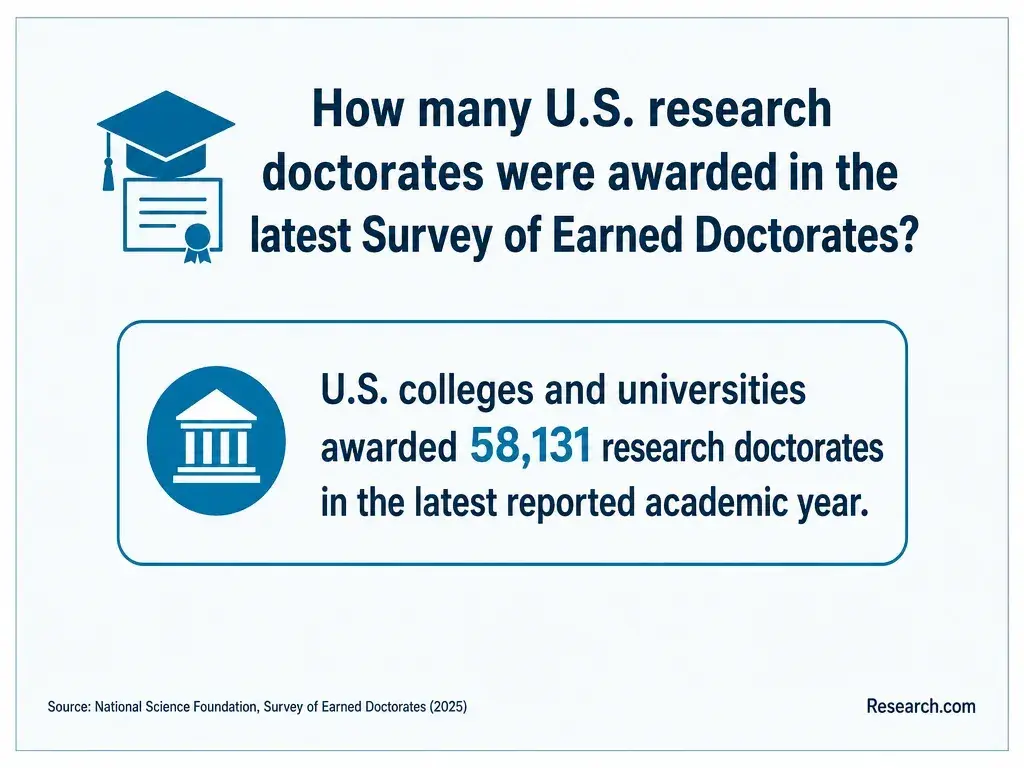
Ask whether tuition differs by residency or enrollment status, whether aid applies to your study pattern, and whether an employer will fund any portion in writing. For context when comparing degree costs with possible earnings, use public health master's tuition and salary comparisons without treating an occupational wage as a forecast of your own return.
If you already perform the work you want and need one skill, such as monitoring and evaluation, a targeted course or employer-supported training may cost less and require less time than an MPH.
Check both the institution's recognized accreditation and the public health-specific accreditation status and scope reported by the Council on Education for Public Health (CEPH).
A university's institutional accreditation does not establish that its MPH is covered by CEPH accreditation. Likewise, accreditation of one public health unit does not mean every related degree at that university is covered.
Find the exact school, unit, or program in CEPH's listing, then confirm with the institution that your intended MPH degree and entry term fall within the stated scope.
This is especially important when comparing similarly named online degrees; CEPH-accredited MPH degree options online can provide a starting list, not a substitute for checking the accreditor's record. Also check whether a particular employer, fellowship, or credential sets additional education requirements.
Possible roles include program officer, monitoring and evaluation specialist, surveillance analyst, health promotion specialist, and emergency preparedness coordinator. Their duties differ: one role may manage partner reporting, while another analyzes disease data or designs community-facing communication.
An MPH can improve your preparation, but employers may also require relevant field experience, technical methods, language skills, or eligibility to work in a particular location.
For salary research, match the job's duties and location to an occupation rather than searching for a single "humanitarian MPH salary."
The US Bureau of Labor Statistics reports US occupational wages and outlook, not salaries earned by graduates of a specific MPH program; international deployments and nonprofit pay structures may differ substantially. Average earnings after an MPH can provide context, but an actual offer and its benefits are more relevant to your decision.
If you already hold a humanitarian operations role, an MPH may help you move toward technical population-health responsibilities. If you are new to the sector, seek supervised implementation, data, or partnership work alongside your studies rather than assuming the degree will lead directly to a senior field position.
Which Certifications and Skills Are Needed for Humanitarian Public Health?
No single certification is universally required for humanitarian public health work. Prioritize the competencies named in your target vacancies: sound data collection, basic analysis, program monitoring, clear communication, coordination with local partners, and responsible handling of sensitive information.
Roles involving clinical care or specialized technical work may require separate licenses or credentials that an MPH does not provide.
The Certified in Public Health credential is distinct from an MPH degree, and its eligibility rules must be checked with the certifying organization. Short courses in topics such as emergency response or evaluation can be valuable when they address a specific gap, but a certificate cannot stand in for demonstrated field performance.
If your long-term goal is senior practice leadership or research, comparing public health doctorate entry requirements is a later step - not a reason to collect credentials before you know the responsibilities you want.
Before applying to an MPH, select several target job descriptions and mark the capabilities you already demonstrate, those an MPH would teach, and those that require supervised experience. That comparison gives you a clearer application narrative and a test of whether the degree is worth its cost.
Other Things You Should Know About Public Health
Not if doing so would violate confidentiality or security rules. Give enough context to explain your responsibilities, and ask your organization what details you may disclose.
Only with appropriate permission. Remove protected or identifying information, respect the organization's ownership and data rules, and use a description of your contribution when the original work cannot be shared.
Follow each program's instructions. A supervisor may speak to field judgment, while an academic or technical referee may better document your readiness for graduate-level study.
Yes, when you explain the transferable public health tasks you performed. Focus on the quality and scope of your work rather than assuming an international posting is inherently more valuable.
- Framework for Program Evaluation in Public Health | cdc.gov https://www.cdc.gov/mmwr/preview/mmwrhtml/rr4811a1.htm
- Community health workers in humanitarian settings: Scoping review - PMC https://pmc.ncbi.nlm.nih.gov/articles/PMC7719274/
- Epidemiology Jobs & Public Health Careers: Where to Look | Benedictine University https://online.ben.edu/programs/public-health/mph/resources/top-places-to-find-mph-jobs/
- Public Health and Humanitarian Action | Columbia University Mailman School of Public Health https://www.publichealth.columbia.edu/academics/degrees/master-public-health/certificates/public-health-humanitarian-action
- Where MPH Graduates Work: Careers Across Sectors | tufts.edu https://medicine.tufts.edu/news-events/news/where-mph-graduates-work-careers-across-sectors
- Master of Public Health (MPH) | Johns Hopkins https://publichealth.jhu.edu/academics/mph
- Public Health, M.P.H. - UWF Catalog - University of West Florida https://catalog.uwf.edu/graduate/publichealth/
- Admissions - Master of Public Health - The University of Chicago https://publichealth.bsd.uchicago.edu/about/admissions/
- Master of Public Health | UNE Online https://online.une.edu/program/master-of-public-health/
- Section 5. Ethical Issues in Community Interventions | ku.edu https://ctb.ku.edu/en/table-of-contents/analyze/choose-and-adapt-community-interventions/ethical-issues/main