2027 From Social Services Intake Worker to Public Health: Planning a Bachelor's Pathway

Co-Founder and Chief Data Scientist
Social services intake work gives you a close view of how housing, income, access to care, and agency procedures affect people's health. A public health bachelor's degree could help you move from responding to individual requests toward planning, delivering, or evaluating services for communities - but it may not be the shortest route to every job. This guide helps working intake staff identify realistic target roles, check how previous college credits apply, compare programs and costs, and decide whether a degree or a smaller training step is worth pursuing.
Key Things You Should Know
- Intake experience is relevant to community outreach, referrals, and program coordination, but analyst and health education roles may require additional methods training, supervised work, or specific credentials.
- A bachelor's degree commonly requires about 120 semester credits; even 60 accepted transfer credits do not guarantee that only 60 remain, because major, prerequisite, and residency rules still apply.
- Compare programs using an official degree audit, the schedule for required courses and fieldwork, total remaining cost, and evidence that graduates reach the roles you want.
What Is a Public Health Bachelor's Degree Pathway?
A bachelor's pathway is the sequence of admission, applicable prior credit, required coursework, and graduation requirements that leads to a BA, BS, or another undergraduate degree with a public health focus. For an intake worker, its value is learning to examine patterns across clients and communities - not simply adding another credential to a résumé.
Program titles are not interchangeable. A public health BS may emphasize science and statistics, while a BA, community health, or health education major may organize requirements differently. Compare course lists and job preparation rather than assuming one title is best. An MPH is a separate graduate degree; public health master's concentrations and careers are worth considering later if a specific target role calls for graduate training.
If your goal is a nearby move into outreach or program support, first check whether your current employer offers a lateral transfer or supervised project. A bachelor's becomes more compelling when job postings you want consistently require one or when you need the degree to build substantial planning, evaluation, and data skills.
How Can Social Services Intake Workers Transition Into Public Health?
Start with the work you already do: explaining eligibility, making referrals, documenting service needs, communicating across agencies, and noticing barriers that recur. Public health employers may value that experience, but they will also want evidence that you can work beyond individual cases - for example, improving an outreach process or summarizing service trends without exposing client information.
Use this sequence to test the transition before committing to a degree:
- Choose one target function, such as community outreach, health education support, or program coordination, and review local postings for required degrees and tasks.
- Ask your supervisor about an approved project involving aggregate referral patterns, resource materials, or a service-process improvement; obtain permission before using any client data.
- Compare the skills you can demonstrate with the postings, then fill specific gaps through coursework, employer training, or a supervised placement.
- Request degree audits from prospective schools before deciding how much education remains and whether it changes your access to the target roles.
Keep the near-term decision separate from possible graduate study. If you later pursue an MPH, finding MPH programs without recommendation letters may address one application constraint, but it does not replace checking each program's preparation requirements or career fit.
What Jobs Can You Get With a Bachelor's in Public Health?
The most plausible first move depends on your duties, not just your degree title. The comparison below separates roles close to intake work from roles that usually demand more technical preparation or experience.
| Role to investigate | Likely work | What the intake-to-public-health applicant must demonstrate |
| Community outreach or community health worker | Connect people with services, provide health information, and build community relationships | Trust-building, referrals, communication, and any employer- or state-required training |
| Program assistant or coordinator | Support activities, partners, records, and reporting | Reliable operations, spreadsheets, appropriate data handling, and evidence of project ownership |
| Health education specialist | Plan, deliver, and assess health education | Relevant bachelor's coursework, audience-appropriate materials, and requirements in specific postings |
| Entry-level evaluation or data assistant | Clean records, track measures, and prepare summaries under supervision | Statistics, spreadsheet or analysis skills, data quality judgment, and confidentiality practices |
An epidemiologist is generally a different target: the U.S. Bureau of Labor Statistics identifies a master's degree as the typical entry-level education for that occupation. Likewise, management roles usually require experience beyond a new bachelor's degree. If you eventually compare advanced positions, comparing earnings across MPH career paths is more informative than treating every public health job as one salary category.
First, verify that the institution holds recognized institutional accreditation. Then check whether the Council on Education for Public Health (CEPH) accredits the particular school, unit, or standalone program offering the degree. A university's institutional accreditation does not establish CEPH status, and a university's CEPH-accredited graduate school does not automatically mean its undergraduate degree is within that accreditation's scope.
Ask the program to identify its exact degree in the accreditor's current listing and explain whether accreditation matters for a credential or employer you are targeting. Check current status yourself before enrolling. This distinction matters at every degree level: even when reviewing less selective online public health doctoral options for a distant career goal, admissions accessibility would not establish accreditation or degree fit.
Relevant coursework typically shifts your perspective from documenting one household's needs to asking how a population-level problem is measured, prevented, and addressed. Look for introductory epidemiology and statistics; social and structural determinants of health; health communication; policy or health systems; and program planning and evaluation. Course depth differs by institution, so inspect syllabi rather than relying on catalog labels.
For intake workers, a useful applied assignment might examine how a referral pathway is designed, what an appropriate aggregate measure would show, and whose perspectives are missing. It should not involve copying identifiable client records into a class project. If you may pursue graduate study, check its actual quantitative prerequisites early; reviewing conditional public health graduate entry is not a substitute for building the statistics skills your intended work requires.
For a working intake professional, the better format is the one whose required schedule fits your job and whose placements you can complete. Online does not necessarily mean asynchronous: live meetings, group projects, exams, and fieldwork may have fixed hours. Campus study may offer more direct access to local partners and faculty but add travel and commuting time.
Ask for a term-by-term schedule of required courses, the frequency of live sessions, any campus visits, and placement rules. Confirm whether you can use your workplace for a project; employer support alone does not constitute academic approval. If graduate study is also in your longer-term plan, affordable online MPH degree programs should be compared separately from undergraduate options - the delivery format and price of one do not predict the other.
Requirements vary by school and by entry route. First-year applicants may need high school records; transfer and returning students generally need transcripts from prior colleges. A school may admit you to the university before separately admitting you to a public health major, particularly when prerequisites or a minimum academic standing apply.
Request a written evaluation that distinguishes credit accepted from requirements satisfied. Ask specifically about statistics, laboratory courses, general education, major prerequisites, course recency, and the number of credits you must complete at the new institution. If a course seems equivalent but is not applied to a requirement, ask the appropriate department or registrar about a documented substitution or appeal.
Admission also does not establish your eventual pace. If you are exploring accelerated courses in public health bachelor's study, verify prerequisites and course availability before assuming shorter terms will shorten the entire degree.
A bachelor's degree commonly totals about 120 semester credits, but the time you have left depends on credits that satisfy this school's requirements, course sequencing, and how many credits you can take while working. An associate degree or substantial previous study can help without guaranteeing a particular finish date.
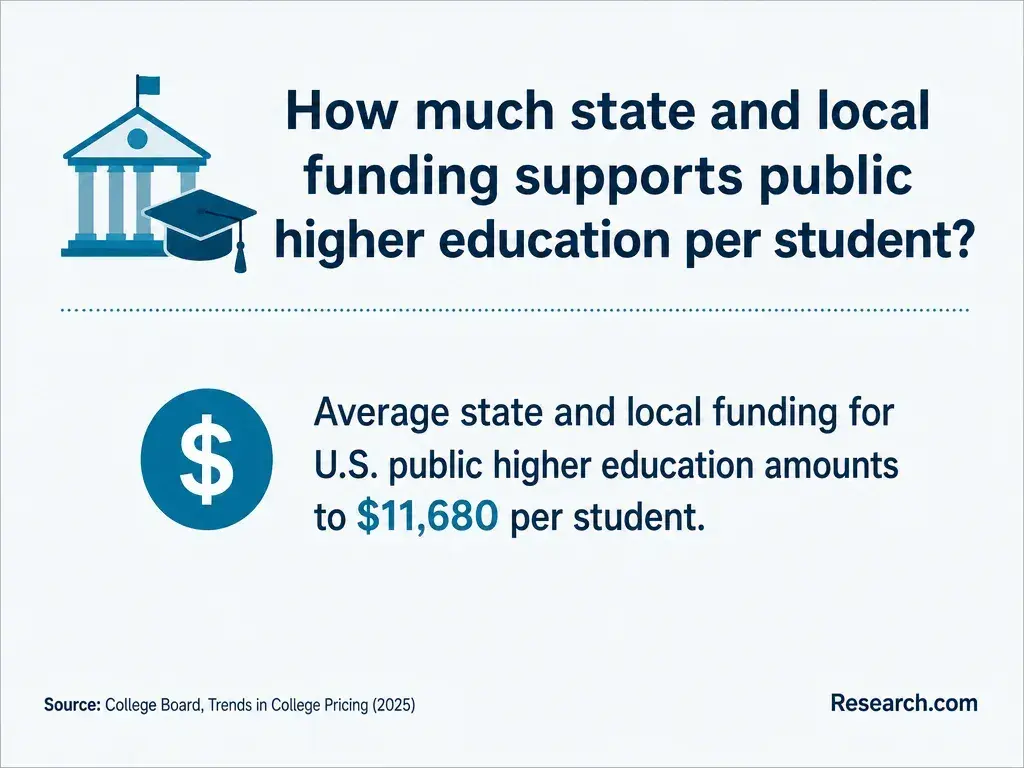
Calculate cost from the remaining approved degree plan, not an advertised annual tuition figure. Include tuition per credit or term, mandatory fees, books or software, travel, possible unpaid fieldwork, and any income you would lose by reducing work hours. Ask the financial aid office how your enrollment pace and previous study affect aid eligibility, and ask your employer whether education assistance is available.
Keep later graduate costs out of the undergraduate estimate. If an MPH might follow, online public health graduate scholarships and costs warrant their own calculation; an unconfirmed award should not be treated as money already available.
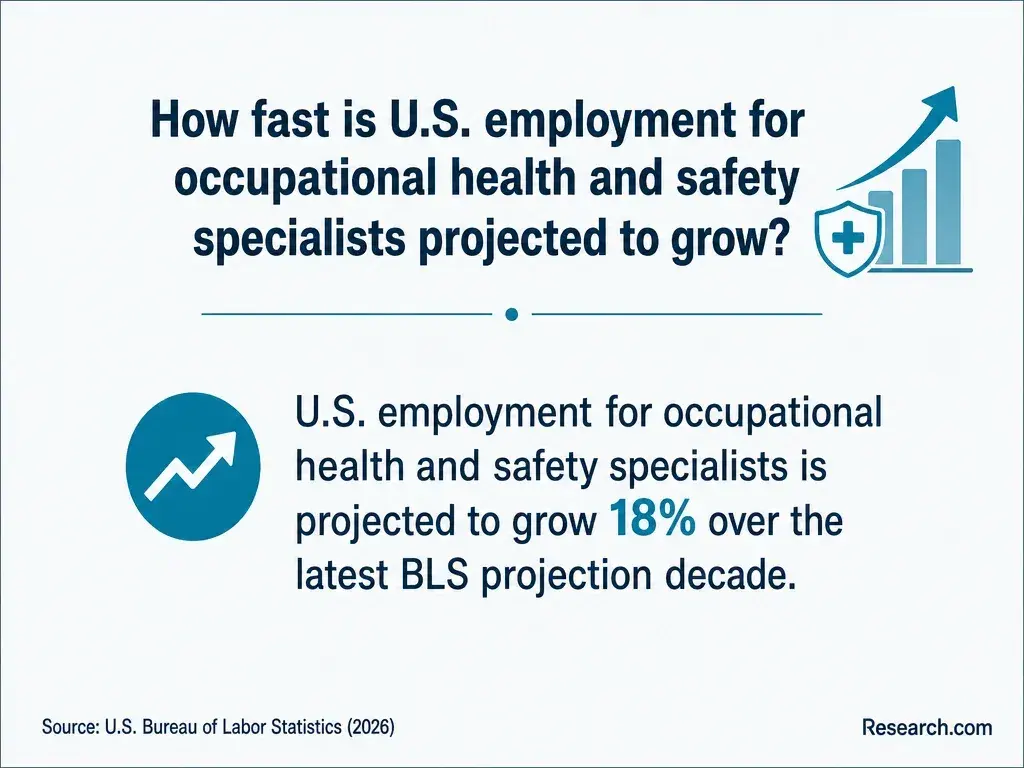
There is no single salary or growth rate for "public health graduates." The relevant comparison is the occupation you can realistically enter. U.S. Bureau of Labor Statistics Occupational Outlook Handbook figures for community health workers and health education specialists describe workers across employers and experience levels - not starting pay for someone who has just earned a public health bachelor's degree. A program assistant's pay may also fall under a different occupational classification.
For a useful estimate, compare local postings for your chosen role with the Handbook's current occupation-specific median pay and employment projection. Then weigh the likely change from your current intake pay against remaining tuition, time, and any lost earnings. The same discipline applies much later if you examine doctoral public health tuition versus career outcomes: a broad occupational median cannot establish the return on an individual degree.
Which Public Health Certifications and Licenses Might You Need?
A public health bachelor's degree does not confer a clinical license or automatically award a professional certification. For health education roles, review the National Commission for Health Education Credentialing's current Certified Health Education Specialist (CHES) eligibility rules and the coursework shown on your transcript. The Certified in Public Health (CPH) credential has separate eligibility routes set by its certifying body. Community health worker certification or registration requirements vary by state and employer.
Start with actual job postings: identify whether a credential is required, preferred, or irrelevant, then verify eligibility with the certifier or state authority before paying for preparation. If a job calls for graduate-level expertise rather than certification, compare that requirement with the public health master's fees and earning potential instead of assuming another credential will meet it.
Other Things You Should Know About Public Health
Possibly. Some outreach and program support openings accept relevant experience, while others specify a completed degree. Apply based on each posting's requirements and show what you have done in intake work.
Not without the required organizational permission and academic guidance. Ask whether an approved, appropriately protected aggregate dataset or a process-focused project can meet the assignment instead.
It may, especially when you can document community needs, partnerships, and service improvement. Each graduate program decides how it evaluates experience; your job title alone does not establish eligibility.
Check the education and state licensure pathway for the counseling role you want. An undergraduate public health degree alone does not qualify someone for licensed clinical practice.
- A narrative review of the CEPH-accredited bachelor's public health programs' curricula in the United States | nih.gov https://pmc.ncbi.nlm.nih.gov/articles/PMC11371682/
- Competencies for Public Health Professionals | cdc.gov https://www.cdc.gov/infrastructure/training-professional-development/competencies-for-public-health-professionals.html
- Credit for Prior Learning | Transfer Credit Ohio https://transfercredit.ohio.gov/students/student-programs/Prior-Learning-Assessments
- How Do Transfer Credits Work When You Go Back to School? | Whitworth Online https://online.whitworth.edu/news-articles/how-do-transfer-credits-work-when-you-go-back-to-school/
- Bachelor's Degree in Public Health | University of Kentucky https://academics.uky.edu/programs/bachelors/public-health
- Social Work - The Ohio State University https://undergrad.osu.edu/majors-and-academics/majors/detail/146
- Community Health Education (A.S.) - BMCC - CUNY https://www.bmcc.cuny.edu/academics/departments/health-studies/community-health-education/
- What can you do with a public health degree? | About the University of Cincinnati https://www.uc.edu/blog/public-health-careers.html
- Maximize Your College Transfer Credits | Explore 4 Ways | UMass Global https://www.umassglobal.edu/blog-news/4-ways-transfer-students-can-maximize-college-credits-prior-experience