2027 Public Health PhD Research: Defining a Target Trial Before Analyzing Observational Data

Co-Founder and Chief Data Scientist
An observational dataset may contain thousands of patients and still be unable to answer a causal public health question. For a PhD researcher, the first decision is not which model to run but which hypothetical randomized trial the data could credibly emulate.
That decision determines who enters the study, when follow-up begins, what interventions are compared, and which biases must be addressed. This guide shows prospective doctoral researchers and graduate methods learners how to draft that trial, assess whether available data support it, and choose training and supervision suited to the work.
Key Things You Should Know
- Write the hypothetical trial protocol before selecting an observational sample or model; align eligibility, treatment assignment, and the start of follow-up at the same time zero.
- Specify at least seven linked decisions: eligibility, treatment strategies, assignment, time zero, follow-up, outcome, and the causal effect of interest. Data that cannot establish a critical decision may not support the proposed question.
- Target trial emulation does not make observational data randomized. A defensible estimate still depends on measured confounders, comparable treatment options, reliable records, and appropriate handling of missing data and censoring.
What Is Target Trial Emulation in Public Health Research?
Target trial emulation begins by describing the randomized trial that would answer a causal question, then asks how closely existing records can reproduce its design and analysis.
The target trial is a planning device, not a claim that anyone was randomized. It makes the intended comparison explicit before researchers inspect associations in claims, electronic health records, registries, or other observational data.
For example, an illustrative study might compare offering a hypertension outreach program at enrollment with usual care among eligible adults, then assess hospitalization over the following year.
"People who ever received outreach" is a different, and potentially biased, comparison because receipt can occur after follow-up begins. The researcher must decide whether the question concerns an offer, actual participation, or sustained participation; each requires different records and assumptions.
Learning to state that distinction does not itself require doctoral enrollment. A focused methods course or an MPH may be a better first step for someone building foundational epidemiology skills; prospective students can also examine addressing prerequisite gaps before MPH enrollment.
Why Define a Target Trial Before Analyzing Observational Data?
A written trial protocol exposes design errors that a sophisticated model cannot repair. If researchers classify people by an intervention received months after enrollment but count their earlier survival time as treated follow-up, they introduce immortal time bias: treated participants had to remain alive and observable long enough to receive the intervention. Setting eligibility, assignment, and time zero together helps prevent that mismatch.
The protocol also reveals when the available data answer a narrower question than the policy question. Records may identify completed outreach visits but not who was offered outreach.
Those records cannot directly estimate the effect of an offer without additional information. Likewise, adjusting for every available variable can introduce bias if some variables arose after treatment and were affected by it.
This design-first approach helps applicants decide whether they need sustained dissertation-level causal research training or a shorter route to interpreting studies and conducting supervised analyses. When the latter is the goal, public health master's tuition and salary comparisons can inform the education trade-off, although salary figures cannot establish that a particular program teaches target trial emulation.
How Do Public Health PhD Researchers Design a Target Trial?
Start with a public health decision that could, at least conceptually, be assigned at a defined moment. The following sequence produces a protocol that a supervisor can assess:
- Define eligibility: Identify the population and the information available before assignment, such as adults with documented hypertension enrolled in a participating health system.
- Specify strategies: Compare a clearly defined offer of outreach at enrollment with usual care; describe what each strategy includes and permits.
- Define assignment and time zero: State when eligible people would be assigned in the hypothetical trial and begin observational follow-up at that same point.
- Set follow-up: Establish its end, including how death, loss of data coverage, and other events will be handled.
- Define the outcome: Specify an ascertainable measure, such as hospitalization within one year, and check whether recording differs between groups.
- Name the estimand: Decide whether the effect concerns an initial offer or adherence to an ongoing strategy, and choose the effect measure and target population.
- Plan the emulation: Map each protocol item to available fields, identify baseline confounders and missing information, then prespecify the analysis and sensitivity checks.
In the example, a record of outreach attendance cannot substitute for an unrecorded offer. Researchers should resolve that gap by obtaining suitable data, changing the question transparently, or declining the analysis, not by relabeling attendance as assignment.
They also need to confirm data-use permission, privacy protections, and applicable institutional review before accessing restricted records. Applicants without introductory epidemiology or statistics can build those foundations through targeted courses rather than assuming doctoral coursework will start at the beginning.
Those considering an initial degree can compare budget-friendly online public health degrees, while checking the actual methods curriculum rather than relying on a program's price or title.
The analysis must match the protocol and the way treatment decisions occur. For a baseline offer of outreach, researchers might use outcome regression, propensity-score weighting, or a doubly robust estimator to adjust for measured pre-assignment differences. These approaches cannot remove confounding by information that was never measured.
When strategies involve starting treatment during a grace period or continuing it over time, baseline adjustment alone may be inadequate. Researchers may use sequential trial emulation, or clone participants into compatible strategies and censor a clone when it deviates.
Inverse-probability weights can address the resulting artificial censoring and time-varying confounding, but unstable weights may signal that the data contain too few comparable participants.
These distinctions describe what the methods are designed to address, not a menu of interchangeable fixes:
| Design or method | Question it can support | Important limitation |
| Baseline confounder adjustment | Comparison of strategies established at time zero | Does not account for unmeasured confounders |
| Sequential trial emulation | Repeated opportunities to begin an intervention | Requires consistent definitions of eligibility and follow-up across opportunities |
| Cloning, censoring, and weighting | Strategies defined by initiation within a grace period | Relies on measured predictors of adherence and censoring; weights can be unstable |
Every estimate still requires scrutiny of exchangeability (adequate control of confounding), positivity (a realistic chance of each strategy for the people compared), and consistency (the observed intervention corresponds to the defined strategy). Missing outcomes, inaccurate treatment dates, competing events, and uncertainty also matter.
If a master's-level methods sequence would meet the reader's goal, compare its courses and research opportunities alongside financing options such as reducing MPH tuition with institutional awards; an award does not establish advanced causal-inference training.
Useful preparation combines epidemiologic study design, probability and statistical inference, regression, causal inference, longitudinal data analysis, and reproducible programming. Advanced work should connect causal diagrams and estimands to practical problems such as treatment timing, selection, missingness, and measurement error.
A course labeled "biostatistics" may cover only introductory analysis; inspect syllabi and dissertation examples for the depth needed.
Methods also have to serve a population-health question. Training in health systems, intervention delivery, or community context can help a researcher define a meaningful treatment strategy and recognize when an apparently simple comparison ignores access or structural differences. Supervised work with a documented analysis plan is stronger evidence of readiness than software familiarity alone.
For students still choosing an undergraduate foundation, reviewing online public health BS programs may help identify epidemiology and statistics coursework. A bachelor's degree, however, is neither a substitute for advanced causal-methods training nor a universal prerequisite for a public health PhD.
Requirements vary by university and by field within public health. Applicants generally need to document prior degree work, academic preparation, research interests, and references, but no universal rule requires an MPH, publication, GRE score, thesis, or particular software package.
A student entering from mathematics, computing, social science, clinical work, or another discipline may be competitive if their preparation fits the proposed research.
For target trial research, admissions eligibility and research readiness are different tests. A strong application can show how the applicant framed a causal question, handled data responsibly, interpreted limitations, and contributed to a supervised project.
Where quantitative preparation is thin, ask whether the program requires specific courses before admission or permits them during doctoral study. Confirm current tests, deadlines, and faculty-matching procedures with the program itself.
An applicant who needs a master's bridge should assess that route on its own terms, including options for strengthening a lower-GPA public health master's application. A master's can supply evidence of recent methods ability, but it does not guarantee later PhD admission.
First verify the university's institutional accreditation and the exact scope of any Council on Education for Public Health (CEPH) accreditation. A school or unit may hold CEPH accreditation without every doctoral degree being individually covered as a standalone program.
Accreditation matters, but it does not establish that a particular faculty member teaches target trial emulation or can supervise the proposed dissertation.
Research fit is the more discriminating test: inspect faculty publications for explicit trial protocols, appropriate causal methods, and public health questions close to yours.
Ask potential programs who could supervise the work, whether the needed datasets are accessible under approved agreements, how data access survives a funding or advisor change, and what computing, methods consultation, and committee expertise students receive. Confirm residence requirements and live meetings if comparing online or hybrid options.
Admission flexibility is separate from research fit. A reader considering less selective online public health doctoral options should still verify the exact degree, accreditation scope, dissertation support, and access to appropriate data before applying.
A PhD involves coursework, examinations or other advancement milestones, and a dissertation; completion time depends on program policy, enrollment intensity, research approvals, data access, and whether the planned emulation is feasible.
A delayed data-use agreement can affect progress more than an additional class. Ask programs for their published completion measures and definitions rather than assuming a standard finish date.
Compare each offer's tuition and fees with its net funding conditions: guaranteed versus grant-dependent years, stipend and health coverage, summer support, teaching or research duties, renewal rules, and charges after funded terms end.
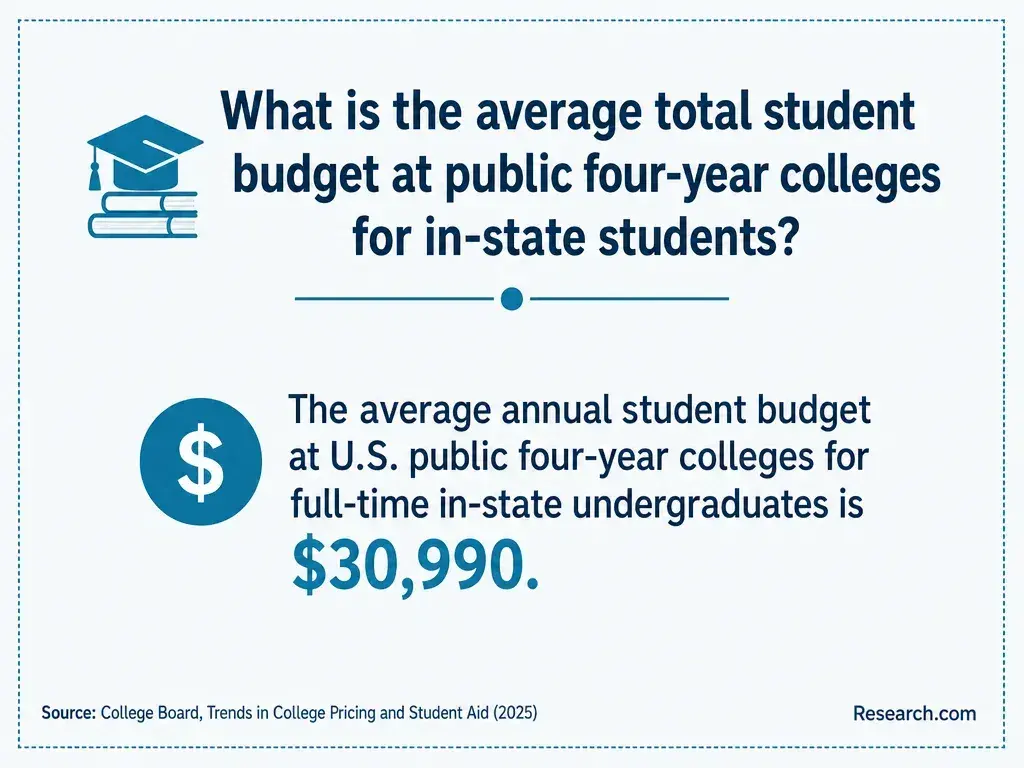
Include living expenses and earnings forgone or retained. For online study, check required campus visits and whether a dissertation can be supported remotely; lower advertised tuition is not the total cost.
Lower-tuition online PhD programs in public health can provide comparison candidates, but confirm each program's funding offer and methodological supervision directly. A funded research-intensive program may be less costly overall than a lower-tuition program without a stipend, depending on the individual offers.
Researchers trained in target trial emulation may pursue faculty or postdoctoral positions, epidemiology and health services research, government evaluation, or research roles in health systems and industry.
Tasks can include designing observational studies, negotiating data access, documenting protocols, analyzing longitudinal records, and explaining why a causal claim is or is not warranted. Faculty roles also involve teaching, mentoring, and often obtaining research support.
A PhD is most useful when the target role requires independent research leadership or sustained methodological development. An MPH or research-oriented MS, followed by supervised analytic experience, may be a more direct route to an analyst role.
Employers assess demonstrated methods, domain knowledge, communication, and relevant experience, not the degree title alone.
Before committing to doctoral study chiefly for a career change, weigh the roles you actually want against funding and time out of the workforce. Public health doctoral program cost-benefit considerations are a starting point, not evidence that any credential produces a particular job or pay increase.
What Are the Salary and Job Outlook for Public Health Researchers?
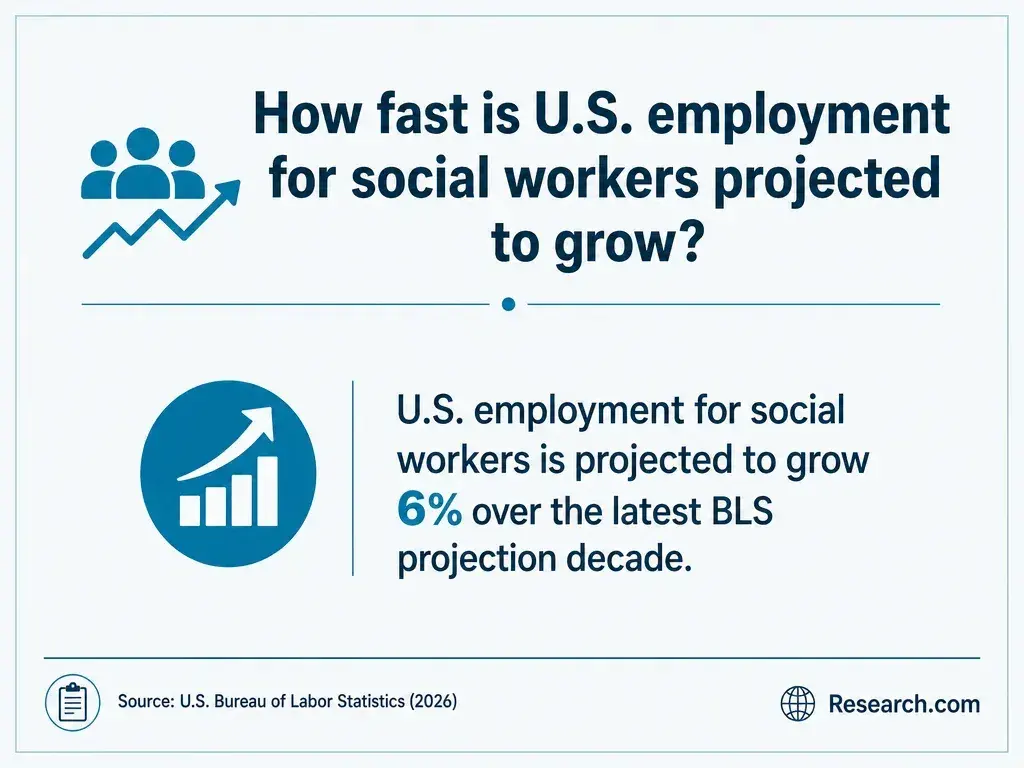
"Public health researcher" is not one uniform occupation with a single salary series. The US Bureau of Labor Statistics Occupational Outlook Handbook reports occupation-wide pay and projections for roles such as epidemiologist and statistician, but those categories have different duties and entry requirements.
Their medians should not be presented as expected earnings for public health PhD graduates, faculty applicants, or target trial specialists.
For a useful comparison, match prospective jobs to their actual occupation and employer, then check the latest Bureau of Labor Statistics wage reference year and projection period.
Examine posted salary ranges for the locations and seniority levels you would realistically seek. An entry-level research appointment and a senior methods leadership role are not equivalent, and doctoral funding affects the financial decision before post-graduation pay does.
Prospective epidemiology researchers can investigate scholarship options for epidemiology doctoral students, while confirming eligibility, renewal terms, and whether an award can be combined with an assistantship. That is more actionable than treating a broad occupational median as a return-on-investment forecast.
Other Things You Should Know About Public Health
Yes. If an intervention would be assigned to clinics, the hypothetical trial should reflect cluster assignment. Analysis must then account for outcomes within clinics being related and for the possibility that people receive care across clinic boundaries.
Describe the permitted versions of the intervention before combining sites. If "outreach" means incompatible activities with different intended effects, one pooled treatment label may not answer a useful causal question.
No. A well-chosen negative control can reveal certain residual biases, but a reassuring result cannot establish that all confounding, selection, or measurement problems have been removed.
Registration or a dated, accessible analysis plan can make decisions more transparent and distinguish planned analyses from later changes. Check the journal, funder, and institution's requirements, and document justified revisions rather than treating registration as a substitute for sound design.
- Step 4 - Gather Credible Evidence | Program Evaluation https://www.cdc.gov/evaluation/php/evaluation-framework-action-guide/step-4-gather-credible-evidence.html
- The Target Trial Framework for Causal Inference... - PubMed https://pubmed.ncbi.nlm.nih.gov/39961105/
- Guidance for best practices for clinical trials | who.int https://www.who.int/publications/i/item/9789240097711
- Chapter 9 Causal assumptions | ox.ac.uk https://www.stats.ox.ac.uk/~evans/APTS/causassmp.html
- Full article: Necessary conditions for valid causal inference from observational data | tandfonline.com https://www.tandfonline.com/doi/full/10.1080/10408444.2025.2611827
- Causal inference and effect estimation using observational data | bmj.com https://jech.bmj.com/content/76/11/960