2027 Comparing Per-Credit and Flat-Rate Tuition for a Public Health BS

Co-Founder and Chief Data Scientist
A flat tuition rate can look cheaper than paying per credit - until a required course is unavailable, a field placement changes your schedule, or you cannot take the credits needed to benefit from the rate. For prospective and returning public health BS students, the better comparison is the cost of finishing the degree, not one semester's advertised tuition.
This guide shows how to calculate both models, account for fees and financial aid, and test which rate fits your remaining courses and realistic pace.
Key Things You Should Know
- Per-credit tuition generally rises with each credit; flat-rate tuition covers a school-defined credit range for one term. Compare costs using credits you can actually complete, not the maximum advertised load.
- For a term with flat tuition F and per-credit tuition P, the tuition break-even load is F ÷ P credits, provided those credits fall within the flat-rate band and fees are comparable.
- A transfer evaluation and term-by-term degree plan can change the answer: credits that transfer but do not satisfy BS requirements may add terms under either model.
How do per-credit and flat-rate tuition models differ for a public health BS?
Per-credit tuition charges for the number of credits taken in a term. Flat-rate tuition charges one amount for a specified enrollment band, often with additional charges above its upper limit. Neither label tells you whether required fees, summer courses, or online classes are included.
Per-credit pricing can suit a student combining work or caregiving with one or two courses. Flat-rate pricing can reward a heavier load, but only when the student can enroll in useful courses and complete them. A public health methods prerequisite offered once a year, for example, may limit the value of an otherwise inexpensive full-time term.
When comparing affordable online public health colleges, identify each school's charging unit before comparing advertised rates. A per-credit price and a flat-term price are not directly comparable without a credit load.
How much does a public health BS cost under each tuition model?
There is no reliable universal price for a public health BS: schools set rates by residency, delivery mode, enrollment level, and sometimes major. The table shows calculation methods, not quoted program prices. Use the rates and credit-band rules published for your entry term.
| Cost question | Per-credit model | Flat-rate model |
| Tuition for one term | Eligible credits × price per credit | Flat term charge, plus any credits above the covered band |
| Tuition to finish | Sum of charges for credits still required | Sum of charges for terms needed to complete those requirements |
| Key uncertainty | How many additional or repeated credits will be billed? | How many terms will be needed, and how many credits will be usable in each? |
As a first check, divide the flat-term charge by the per-credit rate to find a tuition-only break-even credit load. Then calculate a term-by-term total that includes fees, summer enrollment, and likely course availability. For transfer students, use an official degree audit: accepted credits that fill elective space but leave public health prerequisites unmet may not shorten the degree.
Published lists of comparing affordable online public health degrees can help identify schools to investigate, but obtain a personalized remaining-credit estimate before treating any listed rate as your completion cost.
Which public health tuition model offers the best value for full-time students?
Flat-rate tuition often has the advantage when a full-time student can consistently complete credits near the top of the covered band. That advantage disappears if course conflicts, prerequisites, work hours, or an internship force lighter terms. Per-credit tuition may cost less across a degree if it lets the student avoid paying a full-term rate during a lighter final semester.
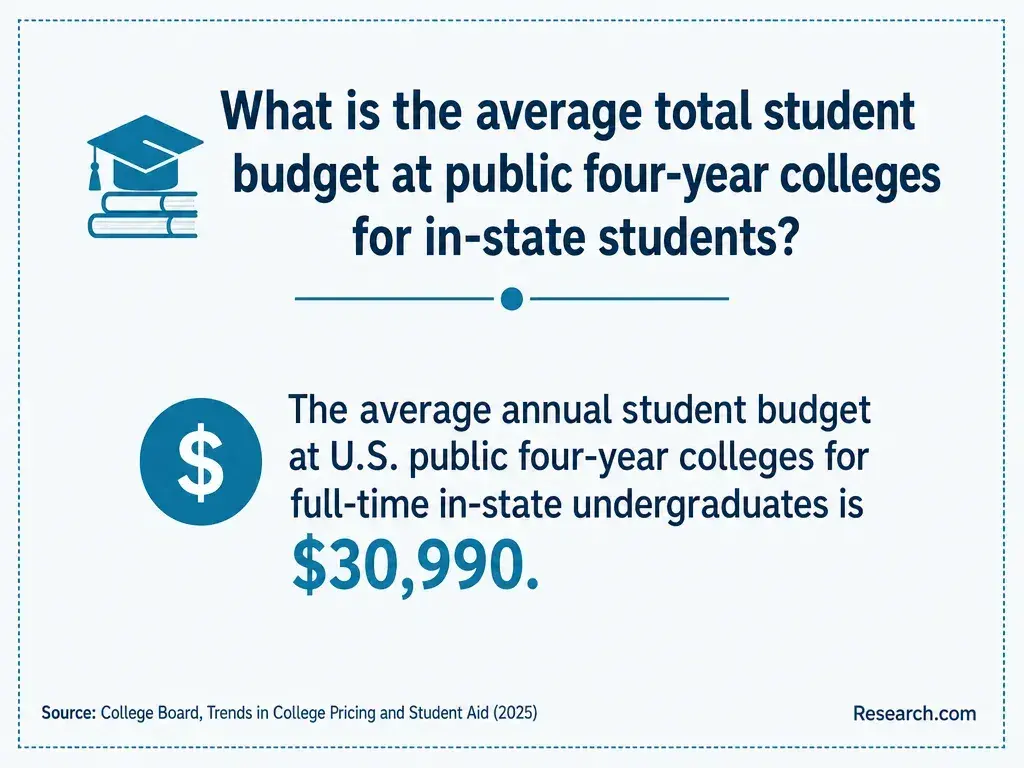
Build two realistic schedules from the same approved degree audit. Include general education, public health major courses, prerequisites, residency credits, and any supervised experience. For each term, compare tuition and mandatory fees under the rates actually available to you; do not assume a school lets students choose between both models. Check whether a heavier load would require reducing paid work or purchasing more care, since a lower tuition bill may still raise your household cost.
If you already hold a bachelor's degree, an undergraduate BS may not be the most direct route to a new public health role. Online MPH programs by tuition affordability offer a separate comparison, though graduate admission, curriculum, and total costs require their own review.
Ask for an itemized estimate covering mandatory institutional and course fees, books, technology, transportation or housing, and any costs tied to an internship or community placement. A placement may also reduce the hours available for paid work. These expenses matter even if the placement itself carries no separate fee.
Check whether flat-rate tuition covers only standard fall and spring terms. Summer courses, credits above the band, repeated courses, and certain online or laboratory fees may be billed separately. Compare net cost after grants and scholarships, not tuition alone, and ask the financial aid office how your planned enrollment affects aid eligibility and satisfactory academic progress. Never assume a lighter schedule preserves the same aid package.
Keep future education in a separate budget. For students considering advanced study, comparing public health doctorate tuition and length is a different exercise from pricing a BS; a low undergraduate term rate says nothing about later graduate costs.
Online tuition is not automatically lower. A school may charge the same rate across formats, set a separate online per-credit rate, or add distance-learning fees. Campus students may face commuting and housing costs that an online student avoids, while online students still need reliable technology and time for scheduled activities.
Compare both formats using the same remaining-credit plan and residency classification. Confirm whether online public health courses are offered when needed, whether any live sessions or campus visits are required, and how an internship can be arranged locally. Comparing online undergraduate public health programs is a starting point for examining format; the school's current catalog and tuition schedule control the actual charges and requirements.
A public health BS commonly combines general education with population health, epidemiology, introductory biostatistics or data literacy, health behavior, policy, environmental health, and program planning. Specific science and mathematics requirements vary. An internship, capstone, or community-based project may also affect when a student can graduate.
Course sequence matters more to this tuition decision than a course list alone. Ask an adviser which requirements have prerequisites, are offered only in certain terms, or must be completed before fieldwork. Those constraints determine whether you can fill a flat-rate term with degree-applicable credits. Students planning further study can separately examine graduate public health degree and concentration options; a BS elective does not itself constitute a graduate specialization.
Confirm that the institution holds accreditation recognized by the U.S. Department of Education. Also check whether the public health school, unit, or specific bachelor's program is accredited by the Council on Education for Public Health (CEPH), and whether the BS you intend to enter falls within that accreditation's scope. Institutional accreditation and CEPH accreditation answer different questions; one does not establish the other.
Accreditation is not a substitute for checking cost or fit. Verify the exact degree, catalog year, and any accreditation claim directly with the institution and accreditor before enrolling. The same scope check applies if you later explore affordable online public health PhD programs; do not infer one degree's status from a university-wide claim.
First-year applicants generally submit the institution's undergraduate application and required academic records. Transfer and returning applicants should distinguish admission to the university from admission to the public health major: a program may have separate prerequisites or progression rules.
Before comparing tuition totals, request an official evaluation showing which prior courses satisfy general education, major, prerequisite, and residency requirements. Ask who can approve a substitution or appeal and obtain a term-by-term plan. Graduate application rules are separate; for example, comparing public health master's recommendation requirements will not tell you what a BS transfer applicant must submit.
A public health BS can support applications for entry-level community health, health education, program support, and research-support roles, depending on experience and employer requirements. Useful evidence includes supervised project work, community engagement, clear writing, and responsible handling of basic data. The degree alone does not qualify a graduate for clinical practice or every analyst or management position.
For salary planning, match a target job's duties to the relevant U.S. Bureau of Labor Statistics occupation, such as community health worker or health education specialist, and check its latest published median and local openings. An occupation-wide median is not an expected starting salary for BS graduates. Likewise, MPH education and long-term earnings concerns a different qualification and should not be used as the payoff estimate for this BS tuition choice.
What certifications or graduate degrees can public health graduates pursue?
Graduates may consider the Certified in Public Health credential, health education credentials such as CHES, or later graduate study, but eligibility depends on the certifying body's current pathway and the individual's preparation. A BS does not automatically award a certification. An MPH may fit practice-oriented goals; research-focused master's or doctoral study calls for a different assessment of methods preparation, supervision, cost, and career purpose.
Do not pay for a BS on the assumption that a later credential or advanced degree is required for every public health job. Check postings for your target role first. If doctoral study is a long-term goal, online public health doctorates by admissions accessibility can prompt questions about future entry routes, but it does not establish your eligibility or justify extra undergraduate expense today.
Other Things You Should Know About Public Health
Not necessarily. Schools may bill short sessions separately or use different credit bands. Check the tuition schedule for each term you expect to attend.
Do not assume so. Ask the bursar whether the new major changes differential tuition, fees, or eligibility for a published tuition guarantee.
They can if the institution awards the credit and applies it to an unmet degree requirement. Confirm acceptance, placement, any examination fee, and the effect on your planned terms.
A lower credit load does not necessarily produce a partial refund. The outcome depends on the school's withdrawal dates, refund policy, and your aid conditions; check all three before dropping the course.
- How does a scholarship affect my other student aid? https://studentaid.gov/help-center/answers/article/how-does-scholarship-affect-student-aid
- Cost of Attendance (Budget) | 2025-2026 Federal Student Aid Handbook https://fsapartners.ed.gov/knowledge-center/fsa-handbook/2025-2026/vol3/ch2-cost-attendance-budget
- Public Health Degree Requirements: A Complete Guide | American Public University https://www.apu.apus.edu/area-of-study/nursing-and-health-sciences/resources/public-health-degree-requirements/
- Tuition and Fee Schedule: FY2026-FY2027 | New Jersey Institute of Technology https://www.njit.edu/bursar/tuition-and-fee-schedule
- Part-Time & Full-Time Enrollment - Student Payment Center https://www.payments.pitt.edu/tuition-fees/part-time-full-time-enrollment
- Billing & Fee Explanations | tamu.edu https://sbs.tamu.edu/billing-payments/billing-fee-explanations/index.html
- Frequently asked questions - Summer Term | UW-Madison https://summer.wisc.edu/faq/
- Undergraduate Tuition and Fees | Brooklyn College https://www.brooklyn.edu/bursar/tuition-and-fees/undergraduate/
- Tuition and Fees - UH Publications - University of Houston https://publications.uh.edu/content.php
- Tuition & Expenses | Student Financial Services https://financialaid.wsu.edu/tuition-and-expenses/